The Boston Commuter Rail: Zones, Fares, And How It Differs From The Subway
Boston's subway gets the attention, but the MBTA Commuter Rail is the system that actually connects the city to the region. The MBTA's own fare pages list one-way Commuter Rail fares from $2.40 in Zone 1A up to $13.25 in Zone 10, spread across more than a dozen lines that reach as far as Worcester, Providence, and Newburyport. For a visitor, that matters in one specific way: the places most out-of-towners want to day-trip to, including Salem and Concord, have Commuter Rail stations; Plymouth requires onward travel from Kingston, not on the subway. The fare table is published at mbta.com/fares, and the whole system operates under fare rules that changed on 1 September 2026.
Short answer
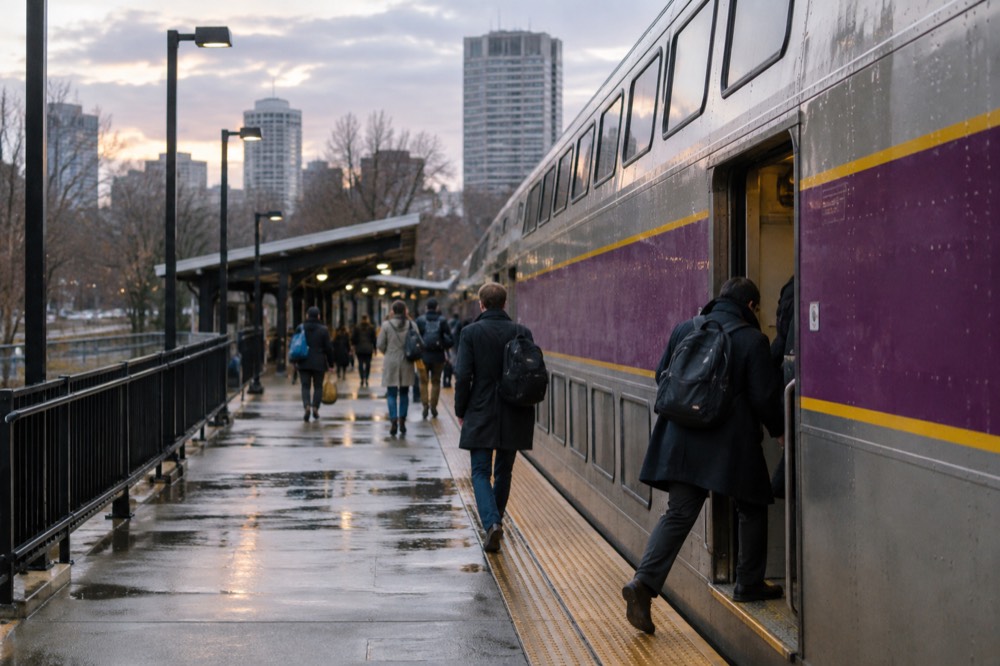
The Commuter Rail is the MBTA's regional train network, a system of more than a dozen diesel-powered lines that radiate out of Boston's two terminal stations, North Station and South Station, to towns as far as 40-plus miles from the city. Unlike the subway, it is zone-fared, largely peak-oriented, and designed for longer distances rather than stops every few blocks.
The Boston Commuter Rail: Zones, Fares, And How It Differs From The Subway
Boston's subway gets the attention, but the MBTA Commuter Rail is the system that actually connects the city to the region. The MBTA's own fare pages list one-way Commuter Rail fares from $2.40 in Zone 1A up to $13.25 in Zone 10, spread across more than a dozen lines that reach as far as Worcester, Providence, and Newburyport. For a visitor, that matters in one specific way: the places most out-of-towners want to day-trip to, including Salem and Concord, have Commuter Rail stations; Plymouth requires onward travel from Kingston, not on the subway. The fare table is published at mbta.com/fares, and the whole system operates under fare rules that changed on 1 September 2026.
Buy Commuter Rail tickets through the MBTA. For an alternative journey, compare the seasonal Salem ferry or a Boston pickup day trip to scattered sights. The ferry ticket is one-way; local tours and public rail tickets are separate purchases. Check Salem ferry directions and dates
This guide covers what the Commuter Rail is, how zone fares work, what changed with the September 2026 fare pilots, which tourist destinations each line reaches, and where the train is a better choice than the subway or a tour bus. If you are still mapping out the city itself first, the Boston Travel Guide homepage and our guide to getting around Boston are the places to start.
What Is The MBTA Commuter Rail?
The Commuter Rail is the MBTA's regional train network, a system of more than a dozen diesel-powered lines that radiate out of Boston's two terminal stations, North Station and South Station, to towns as far as 40-plus miles from the city. Unlike the subway, it is zone-fared, largely peak-oriented, and designed for longer distances rather than stops every few blocks. One-way fares run from $2.40 in Zone 1A, which covers stations inside the city core, to $13.25 in Zone 10 at the far ends of the network. Trains converge on North Station for lines serving the north and northwest, and on South Station for lines serving the south, west and southwest. The MBTA publishes the full fare and zone structure at its fares page.
The distinction from the subway is the thing most visitors trip over. The subway, the Red, Orange, Green and Blue lines plus the Mattapan Trolley and Silver Line routes SL1, SL2 and SL3, charges a flat $2.40 anywhere it goes. The Commuter Rail charges by distance, and a ride from North Station to Salem costs more than a ride from North Station to Chelsea. That is the trade: you pay by zone, and in exchange you cover distances the subway cannot, on published train schedules; journey time depends on the route.
Frequency is the other trade. Subway trains run every few minutes all day. Commuter Rail trains on some outer branches run a handful of times a day, and even on busy lines like the Newburyport-Rockport or Haverhill routes, off-peak gaps of an hour or two are normal. The practical consequence is simple: check the schedule before you commit, especially for a day trip where the last return train matters more than the first departure.
For a sense of how the two systems fit together, our Boston subway map explained guide covers the urban side, and the CharlieCard and fares guide covers payment media in detail.
How Much Does The Commuter Rail Cost, Zone By Zone?
One-way Commuter Rail fares run from $2.40 in Zone 1A to $13.25 in Zone 10, priced by how far the station sits from downtown Boston. Zone 1A covers the innermost stations including North Station, South Station and Back Bay, so a short hop within the core costs the same as a subway ride. The MBTA's fare table is the authoritative source.
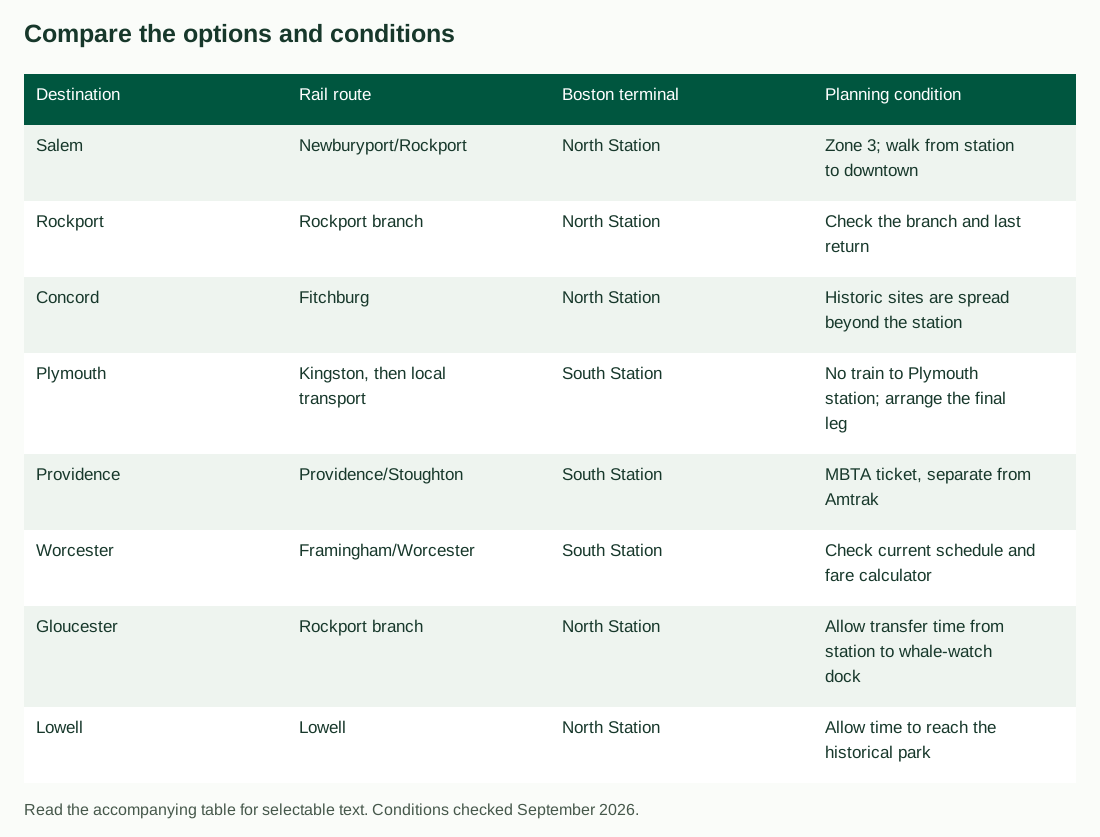
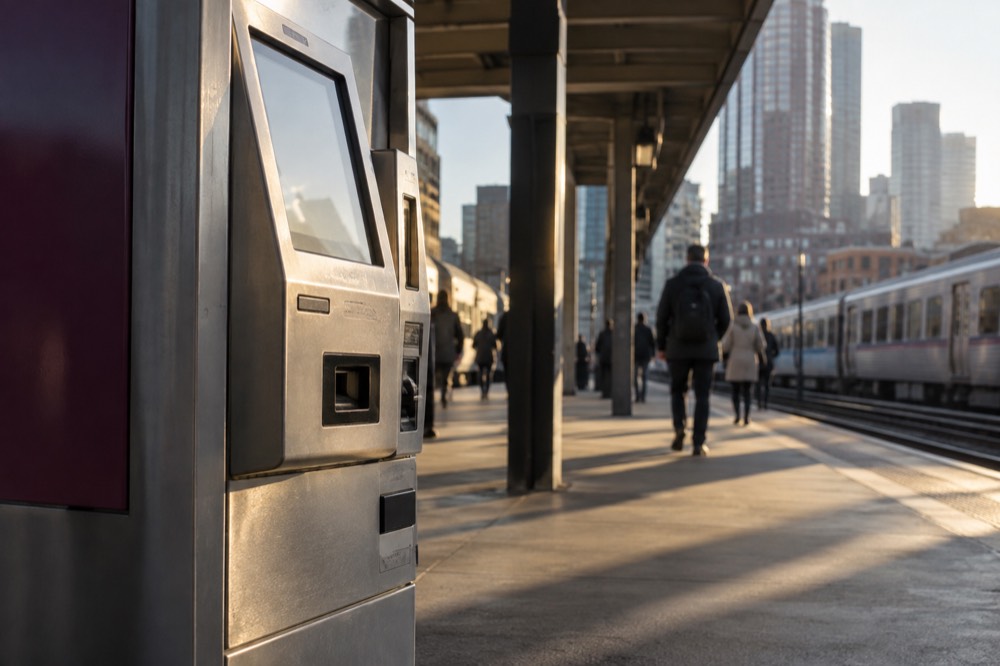
Buy tickets through mTicket or at a station ticket window or machine where available. An onboard surcharge can apply when boarding at a station with a ticket office or vending machine; having access to the app is not itself the surcharge rule. Use the MBTA fare calculator for your station pair. Salem is Zone 3, Gloucester Zone 7 and Rockport Zone 8; Worcester and Providence are Zone 8, not the end of the Zone 10 scale.
| Destination | Rail route | Boston terminal | Planning condition |
|---|---|---|---|
| Salem | Newburyport/Rockport | North Station | Zone 3; walk from station to downtown |
| Rockport | Rockport branch | North Station | Check the branch and last return |
| Concord | Fitchburg | North Station | Historic sites are spread beyond the station |
| Plymouth | Kingston, then local transport | South Station | No train to Plymouth station; arrange the final leg |
| Providence | Providence/Stoughton | South Station | MBTA ticket, separate from Amtrak |
| Worcester | Framingham/Worcester | South Station | Check current schedule and fare calculator |
| Gloucester | Rockport branch | North Station | Allow transfer time from station to whale-watch dock |
| Lowell | Lowell | North Station | Allow time to reach the historical park |
For weekend travel, compare the $10 Commuter Rail Weekend Pass with separate zone fares. It covers unlimited regular Commuter Rail travel on Saturday and Sunday and specified holidays, but not CapeFLYER or special event trains. Children aged 11 and under ride free under the MBTA’s conditions. Check seasonal services separately and leave room for the final connection; a regional train ticket does not include local transport to every attraction.
For visitors whose entire itinerary stays inside Boston, the Commuter Rail is probably irrelevant: the subway's flat $2.40, the $11.00 1-Day pass and the $22.50 7-Day pass cover many city trips; check the actual route and fare product, and those figures come straight from the MBTA fare pages. But the moment Salem, Concord or Plymouth enters the plan, the zone table above becomes the budgeting tool.
A guided regional trip may combine road transport and admissions, but it still has fixed departure times and weather or cancellation conditions. A Boston city tour or attraction pass does not replace rail transport to a regional destination. Compare the actual route and included services.
Further reading: Freedom Trail.
Curious about reaching Salem by water instead? Explore the scheduled 50-minute ferry from Long Wharf North, Gate 5. This ticket covers one direction only: check and book the return separately, then compare the total with MBTA fares or an eligible weekend pass. Check Salem ferry directions and dates
What Changed With The MBTA Fare Rules On 1 September 2026?
Three fare pilots took effect on 1 September 2026: unlimited transfers between subway, bus and ferry inside a two-hour window paying only the highest-priced leg, Express Bus fares cut to the local bus fare of $1.70, and contactless Tap to Ride extended across bus, subway and ferry. The transfer pilot replaced the old cap of two transfers, but it requires the same payment method on every leg, and single-ride Commuter Rail and ferry tickets generally do not include free transfers to the subway.
That last sentence is the one a visitor must not miss. The two-hour unlimited transfer window sounds like it covers everything, and for subway, bus and ferry legs it does: the MBTA's transfers page explains that you pay only the cost of the highest leg among those modes. But a standard single-ride Commuter Rail ticket is a different product. Certain monthly Commuter Rail passes printed on a CharlieTicket do include subway transfers, but a one-way Zone 3 ticket to Salem does not hand you a free subway ride when you get back to North Station. The MBTA states this on its subway fares page, and it is the difference between a $2.40 surprise and a planned fare.
The other changes matter mostly to commuters. Express Bus riders now pay the local $1.70 fare, and Express Bus passes are no longer sold. The contactless rollout, paying with a credit or debit card, phone or watch, is live on bus, subway and ferry. The MBTA documents Tap to Ride at its Tap to Ride page.
| Fare or pass | Price | Key rule |
|---|---|---|
| Subway one-way | $2.40 | Valid on Red, Orange, Green, Blue, Mattapan Trolley, SL1/SL2/SL3 |
| Local Bus one-way | $1.70 | Express Bus also $1.70 under the pilot |
| 1-Day Pass | $11.00 | CharlieCard: first use; CharlieTicket: purchase |
| 7-Day Pass | $22.50 | CharlieCard: first use; CharlieTicket: purchase |
| Monthly LinkPass | $90.00 | Subway and local bus |
| Commuter Rail one-way | $2.40 to $13.25 | Priced by zone, 1A to 10 |
| Two-hour transfer window | Pay highest leg only | Subway, bus and ferry; same payment method required |
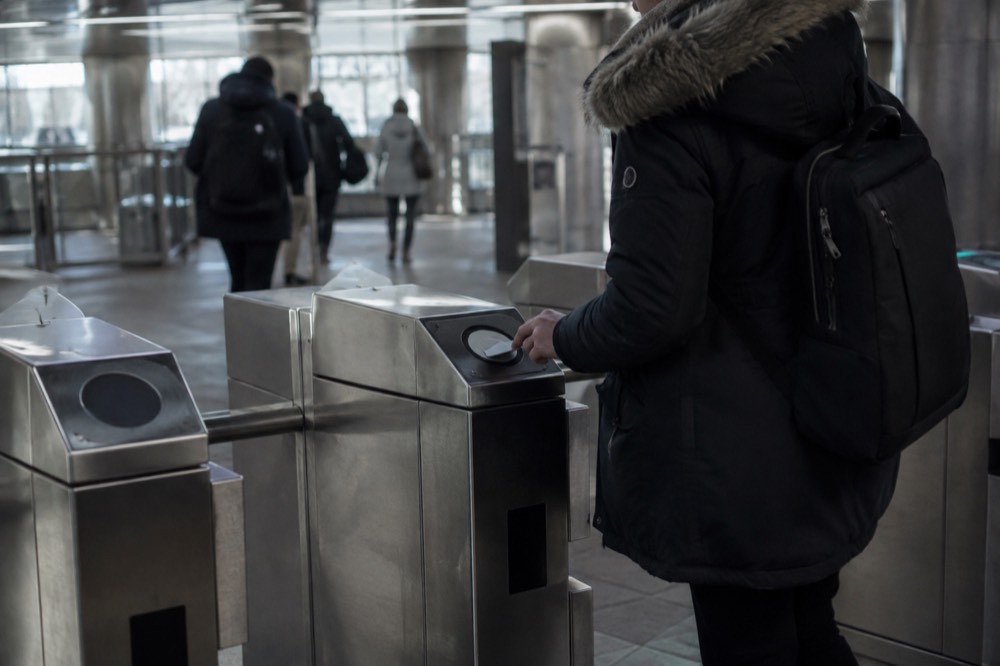
The pass-start rule is the quiet trap in that table. A 1-Day or 7-Day pass bought on a CharlieTicket starts at the date and time of purchase. The same pass loaded on a CharlieCard starts at first use. For someone who buys a pass at the airport on arrival evening and starts sightseeing the next morning, that difference is most of a day of validity. The MBTA publishes this on its fares page, and it is the single most useful sentence in the whole fare system for a visitor.
If you are weighing a pass against pay-per-ride for a city-only itinerary, the CharlieCard and fares guide works through the arithmetic, and the Boston CityPASS vs Go Boston comparison covers the attraction-pass side of the same budget.
Which Lines Reach The Places Visitors Actually Want?
Four lines carry most of the tourist traffic: the Newburyport/Rockport Line from North Station to Salem, Gloucester and Rockport; the Fitchburg Line toward Concord; the Lowell Line toward Lowell’s industrial history; and the Providence/Stoughton Line south to Providence, Rhode Island. North Station serves the northern lines, South Station serves the southern and western ones, and every line connects to the subway at its Boston terminal.
Salem is a straightforward rail day trip. The Newburyport/Rockport Line reaches Salem from North Station, and the heritage district is walkable from the station. Our Salem guide covers the visit. The seasonal high-speed ferry is a separate, scheduled transport alternative; a Salem walking tour starts in Salem and does not include the journey from Boston.
The Fitchburg Line serves Concord, but the literary houses and battle sites are spread out. The Concord and Lexington guide maps the choices. Lexington has no Commuter Rail station. Liberty Ride starts at Lexington’s visitor center, so a Concord rail ticket does not deliver you to its departure point. A Boston pickup tour is a different product.
| Destination | Independent journey | What an organized option adds |
|---|---|---|
| Salem | Direct train; walk downtown | Local guide only, unless transport explicitly included |
| Gloucester | Train then travel to the dock | Whale watch begins in Gloucester, not Boston |
| Concord and Lexington | Train plus local travel between sites | Boston pickup circuit can connect scattered stops |
| Plymouth | Kingston train plus local transport | Boston pickup and specified museum admissions |
| Providence | Direct train; explore independently | Local activities are separate purchases |
| Newport | Train to Providence then bus | Boston pickup trip includes selected mansions |
A tour can reduce the number of connections you organize, but it cannot eliminate schedule or weather risk. For Plymouth, the Kingston train leaves an onward journey to the waterfront and museums. A Boston pickup excursion combines specified stops and admissions; confirm the meeting point, return estimate and cancellation conditions. Newport likewise requires a separate bus leg after the Providence train.
Is The Commuter Rail Ever Useful Inside Boston Itself?
Yes, but only on specific corridors, and only if you understand what you are buying. Zone 1A fares cost the same as a subway ride at $2.40, and several inner segments duplicate or extend subway coverage, notably the Fairmount Line through Dorchester, Roxbury, Mattapan and Hyde Park, which runs through neighborhoods the rapid transit system barely touches. Outside Zone 1A, the price climbs above the subway fare and the frequency drops.
The Fairmount Line is the interesting one for an urban explorer. It is the only Commuter Rail line that reads like an inner-city service, with stops through some of Boston's most historically rich neighborhoods, and connects to the Red Line at South Station; Readville has no Red Line connection. For anyone staying in or exploring Dorchester or Roxbury, it is a legitimate transit option rather than a commuter novelty.
North Station and South Station are on disconnected Commuter Rail networks: there is no direct Commuter Rail train between them or from North Station to Back Bay. The Orange Line connects North Station and Back Bay. For North to South Station, use a subway connection, such as Orange to Downtown Crossing then Red. Some South Station trains also stop at Back Bay, but check the line and departure before boarding. Current subway diversions can change the best route.
Further reading: South End.
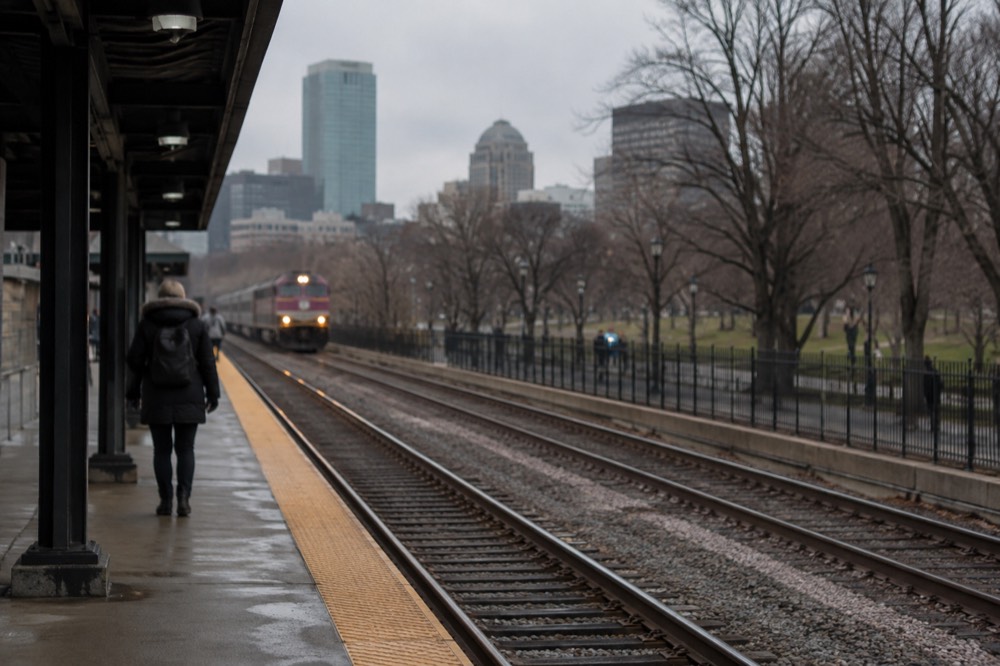
The disruption picture matters for planning. The MBTA announced multiple planned closures for track and infrastructure work in September 2026, including Orange Line segments between Forest Hills and Back Bay from September 10 to 14, Red Line work between JFK/UMass and Ashmont on September 19 and 20, and Green Line branch closures on several weekends into early October, with free shuttle buses provided. None of that is Commuter Rail, but it shapes whether the train is the fallback or the plan. The MBTA posts current advisories across its site, and the getting around Boston guide keeps the mode-by-mode picture.
How Does The Commuter Rail Connect To Logan Airport?
Logan Airport has no Commuter Rail station, so the connection runs through the subway and bus network instead. The Silver Line SL1 is free leaving the airport from the terminal curb and runs to South Station, where Commuter Rail lines from the south and west terminate, so the airport-to-South-Station leg can cost nothing. Going toward Logan, you are inside the paid system and pay the ordinary $2.40 subway fare.
That asymmetry is Massport's own published wording, and it is one of the best deals in the whole system: arriving in Boston from Logan by public transport can genuinely cost nothing. Once at South Station, a Zone 1A or onward Commuter Rail ticket starts from the same building. North Station, the other terminal, is a Red Line plus Green Line trip away, or a walkable connection from Haymarket depending on luggage.
Check current Massport construction notices before flying. The2026 Runway9/27 rehabilitation’s second phase began August 31 for roughly75 days with limited runway use; undated terminal notices should not automatically be assigned to this year. Logan Express routes have their own timetables and boarding points and are separate from the Commuter Rail.
Further reading: massport.com.
For everything on the airport side, the Logan Airport guide, the Logan to downtown route guide, airport parking and hotels near Logan cover the ground in detail.
When Should You Take The Train Versus A Guided Day Trip?
Take the Commuter Rail when your destination is a single walkable town, your dates are fixed, and you can live with the return schedule: Salem, Gloucester, Concord and Providence are the classic cases. Take a guided day trip when the destination is scattered, the route involves multiple stops, or the timing risk of a missed connection would ruin the day: Plymouth, Newport, the White Mountains and Martha's Vineyard all fall on that side of the line.
Compare like with like: rail fares buy transport, while a local walking tour buys guiding after arrival. A Boston pickup day trip may include transport and selected admissions. Add local transfers, admissions and food only where they are excluded; check the weekend rail pass before assuming two standard zone fares are the cheapest public option.
| Factor | Commuter Rail | Boston pickup day trip |
|---|---|---|
| Cost | Actual zone fares or eligible pass, plus local travel | Quoted tour price plus excluded items |
| Schedule | Published trains and your chosen return | Fixed meeting time and planned itinerary |
| Coverage | Stations plus onward walking or transport | Only the stops listed in the product |
| Disruption | Check MBTA alerts and onward connections | Check operator weather and cancellation terms |
| Best fit | Walkable towns and independent visits | Scattered stops on the specific circuit |
The White Mountains require road travel from Boston; Commuter Rail does not serve mountain viewpoints. Compare a rental car with a Boston pickup foliage trip according to your driving preference and actual route. Peak color varies with weather and location, and no booking guarantees it. Our fall foliage day trips guide explains the regional choices.
For city days, neither option applies: the subway and your own feet cover Boston proper, and the things to do in Boston page is the menu. If you are planning around weather, the Boston weather by month guide and the best time to visit Boston pages carry the NOAA numbers.
What Should A First-Time Visitor Know Before Riding?
Buy tickets in the mTicket app or at a station machine before boarding, because conductors can charge a surcharge where ticket options existed; check the return schedule before you commit to an outbound train, because outer branches run a handful of trips a day; and do not assume your Commuter Rail ticket transfers you to the subway, because single-ride tickets generally do not include subway transfers. Those three habits prevent the three most common expensive mistakes on the system.
Cambridge and Somerville are separate cities, while Brookline is a separate town. Porter Square has Fitchburg Commuter Rail and Red Line service; Kendall/MIT is a Red Line station, not a Commuter Rail stop. The Boston vs Cambridge guide explains the geography. Weekend and holiday schedules differ from weekday timetables; plan the outward and return journeys together.
For intercity travel, the Boston to New York guide covers separate train, bus and air options. Harbor transport is another distinct network. Keep the public rail journey and any local activity bookings separate, and allow transfer time between them.
Common Questions About The Boston Commuter Rail
what is the mbta commuter rail
The MBTA Commuter Rail runs from North Station and South Station through eastern Massachusetts and into Rhode Island, with zone fares from$2.40 to$13.25. Amtrak’s Downeaster is a separate intercity train serving New Hampshire and Maine; MBTA zone fares do not apply to it.
how much is the commuter rail in boston
One-way fares run from $2.40 in Zone 1A, the innermost ring including North Station and South Station, to $13.25 in Zone 10. The MBTA publishes the full zone table at its fares page, and tickets bought through the mTicket app avoid the on-board surcharge that applies on some lines.
does the commuter rail include subway transfers
Generally no. The two-hour unlimited transfer window that began 1 September 2026 covers subway, bus and ferry legs, but single-ride Commuter Rail tickets generally do not include free subway transfers. Certain monthly Commuter Rail passes printed on a CharlieTicket do.
can you take the commuter rail from boston to salem
Yes. The Newburyport/Rockport Line runs from North Station to Salem, typically in well under an hour, and Salem station is a short walk from the heritage district. Check the return schedule before you go, because off-peak gaps between trains can be an hour or more.
is the commuter rail the same as the subway in boston
No. The subway is a flat-fare urban network running every few minutes; the Commuter Rail is a zone-fared regional network running on timetables, with diesel trains converging on North Station and South Station. They share stations and payment options but are different systems with different fare rules.
does the commuter rail go to logan airport
No, Logan has no Commuter Rail station. The free link is the Silver Line SL1 from the terminal curb to South Station, where southern and western Commuter Rail lines terminate. Going toward the airport you pay the ordinary $2.40 subway fare.
how do i pay for the commuter rail in boston
Through the mTicket app, at station vending machines where available, or from the conductor on board, where a surcharge can apply when boarding at a station with a ticket office or vending machine. Contactless Tap to Ride with a card or phone is live on bus, subway and ferry, and the MBTA's Tap to Ride page documents where it works.
Compare A Specific Alternative To Your Rail Journey
These options do not match your choice. Adjust the selection or reset to explore the starting recommendation.
Compare Your Complete Rail And Alternative Journey Totals
Reader-entered estimates in USD, not live quotes. Use the same dates and travelers for both options. Include all relevant tickets, rooms, taxes, mandatory fees and transport for the entire trip once in each total. Do not add a transfer twice if your rate already includes it.
Boston–Salem High-Speed Ferry
A one-way ferry ticket between Boston Long Wharf and Salem. Choose the direction and departure; a round trip requires two one-way tickets. Check the return service before buying.
A starting option to explore. Choose dates, travelers and the exact booking option with the provider; availability and eligibility are confirmed there.
Check Salem ferry directions and dates