Boston Weather Month By Month
Boston's official climate record comes from a weather station sitting on a peninsula in the harbor at Logan Airport, and that single fact explains a lot about how the city feels. The reading is maritime: cooled by the ocean on hot afternoons, held slightly milder in winter than the inland suburbs, and a reference point rather than an exact forecast for every waterfront stop. The numbers below are NOAA's 1991-2020 climate normals for station USW00014739, the same data the National Weather Service uses, and they overturn two things most visitors assume. Boston has no rainy season at all, and its warmest month is July, not August.
Short answer
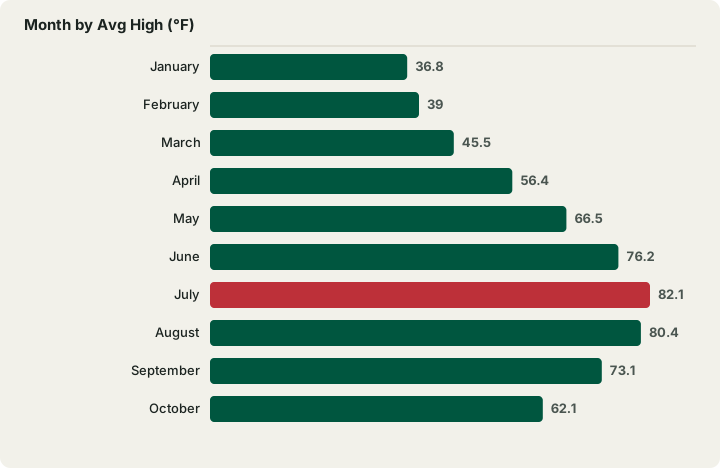
Boston is a four-season city with remarkably even rainfall: every month of the year averages between 3.21 and 4.30 inches of precipitation, a spread of barely one inch, so there is no wet season and no dry season to plan around. Temperature is the real variable. Average highs climb from 36.8°F in January to 82.1°F in July, and average lows run from 23.1°F to 66.0°F over the same span.
Boston Weather Month By Month
Boston's official climate record comes from a weather station sitting on a peninsula in the harbor at Logan Airport, and that single fact explains a lot about how the city feels. The reading is maritime: cooled by the ocean on hot afternoons, held slightly milder in winter than the inland suburbs, and a reference point rather than an exact forecast for every waterfront stop. The numbers below are NOAA's 1991-2020 climate normals for station USW00014739, the same data the National Weather Service uses, and they overturn two things most visitors assume. Boston has no rainy season at all, and its warmest month is July, not August.
Explore Museum of Science Exhibit Halls admission for an indoor activity, then check the venue’s actual opening notices. Premium shows are separate. If you prefer a boat trip or food walk, use the choices below and check weather and cancellation conditions. Check Museum of Science entry dates
What Is Boston Weather Really Like?
Boston is a four-season city with remarkably even rainfall: every month of the year averages between 3.21 and 4.30 inches of precipitation, a spread of barely one inch, so there is no wet season and no dry season to plan around. Temperature is the real variable. Average highs climb from 36.8°F in January to 82.1°F in July, and average lows run from 23.1°F to 66.0°F over the same span.
The harbor station reads slightly cool for inland neighborhoods on a sea-breeze day.
The monthly totals show precipitation in every season, but totals alone do not predict how many wet afternoons you will experience. The NOAA climate normals data service provides the long-term record; check the National Weather Service Boston office for the actual travel-date forecast.
Monthly precipitation totals do not establish the number of wet days. The practical planning question is never "which month is dry" but "what form will the water take": rain or snow according to the actual forecast, with occasional spring and autumn snow possible. Snow is where Boston's weather genuinely concentrates, and it concentrates hard.
Here is the full monthly picture, straight from the normals:
| Month | Avg High | Avg Low | Precipitation | Snow |
|---|---|---|---|---|
| January | 36.8°F | 23.1°F | 3.39 in | 14.3 in |
| February | 39.0°F | 24.6°F | 3.21 in | 14.4 in |
| March | 45.5°F | 31.1°F | 4.17 in | 9.0 in |
| April | 56.4°F | 40.8°F | 3.63 in | 1.6 in |
| May | 66.5°F | 50.3°F | 3.25 in | 0.0 in |
| June | 76.2°F | 59.7°F | 3.89 in | 0.0 in |
| July | 82.1°F | 66.0°F | 3.27 in | 0.0 in |
| August | 80.4°F | 65.1°F | 3.23 in | 0.0 in |
| September | 73.1°F | 58.2°F | 3.56 in | 0.0 in |
| October | 62.1°F | 47.5°F | 4.03 in | 0.2 in |
| November | 51.6°F | 37.9°F | 3.66 in | 0.7 in |
| December | 42.2°F | 29.2°F | 4.30 in | 9.0 in |
When Does It Snow In Boston?
Boston averages 49.2 inches of annual snowfall, with January and February contributing 28.7 inches, about 58 percent. December and March average nine inches each, April 1.6 and October 0.2. These are averages, not a guaranteed snow-cover calendar; major storms and thaws vary from year to year.
Snowfall totals do not tell you how long snow stays on sidewalks. Boston can have extended snow cover or repeated thaws, and significant March or April storms remain possible. Check the current forecast and walking conditions instead of assuming a winter trip will be snowy or an April trip snow-free.
| Period | Normal Snowfall | Planning meaning |
|---|---|---|
| January | 14.3 in | Storms and ice possible |
| February | 14.4 in | Highest monthly snowfall normal |
| March | 9.0 in | Winter conditions still possible |
| December | 9.0 in | Conditions vary by year |
| November | 0.7 in | Snow remains possible |
| April | 1.6 in | Late-season snow possible |
| May–September | 0.0 in rounded normals | Not a forecast or proof of no exceptional event |
| October | 0.2 in | Early snow possible |
Winter visitors should also know that the Freedom Trail is a year-round walk, and cold-weather visits require checking ice, snow and individual site hours. The Freedom Trail Foundation publishes the route details at thefreedomtrail.org/visit, and the National Park Service's Boston page lists which of the 16 sites are open in every season.
Weather can change or cancel an outdoor plan. Check the actual operator schedule and forecast; a listing alone does not establish year-round operation.
North End food walks and Harvard campus walks involve outdoor walking. Neither guarantees sheltered corridors or church entry. Duck Tours operate seasonally, generally April through the Sunday after Thanksgiving, and use the Charles River rather than Boston Harbor; severe weather can cancel the whole trip.
What Is Summer In Boston Like?
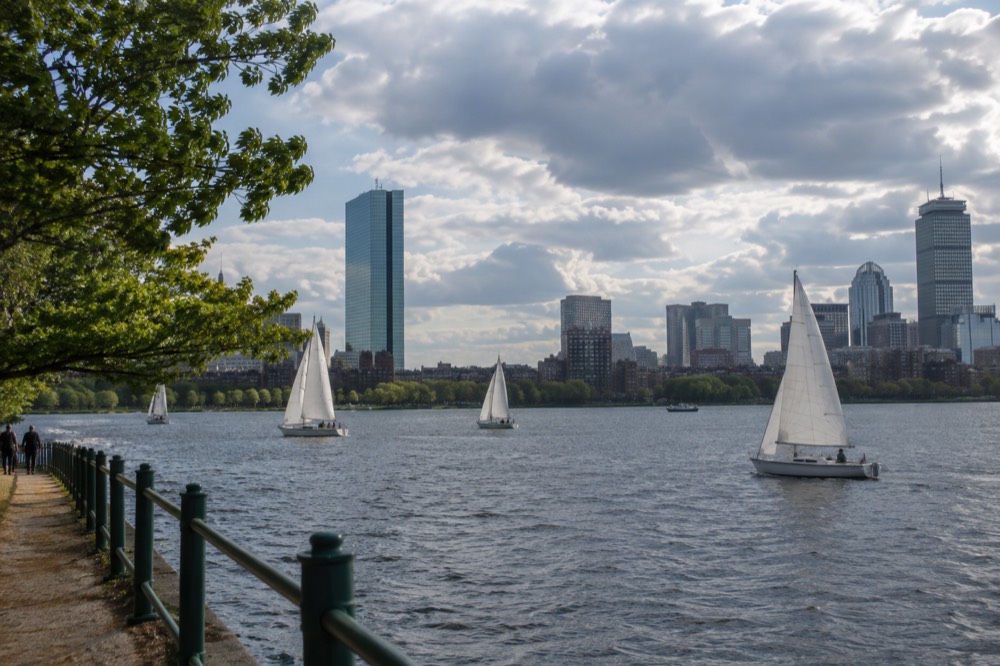
Summer brings Boston’s highest average temperatures: July averages 82.1°F by day and 66.0°F at night. Rain remains possible throughout June, July and August. Monthly totals do not establish an afternoon-only shower pattern, and heat, humidity and thunderstorms can alter outdoor plans.
July holding the top spot over August surprises people who assume late summer is the peak of the heat. The normals say otherwise: August's average high drops to 80.4°F, and by September the slide to 73.1°F is well underway. Humidity is real in all three months, with lows staying in the 60s overnight, so the classic Boston summer experience is warm mornings, a hot afternoon, and variable breezes and conditions along the waterfront.
Summer is also when Boston's seasonal attractions are fully switched on. The Harbor Islands ferry runs its summer schedule into early September, the Red Sox play evening games at Fenway, and the harbor cruises run at full frequency. The trade-off is crowds and price: summer is high season, and the months on either side of it, especially September and early October, can offer comfortable walking temperatures, though event dates and crowds vary.
What Is The Best Month To Visit Boston?
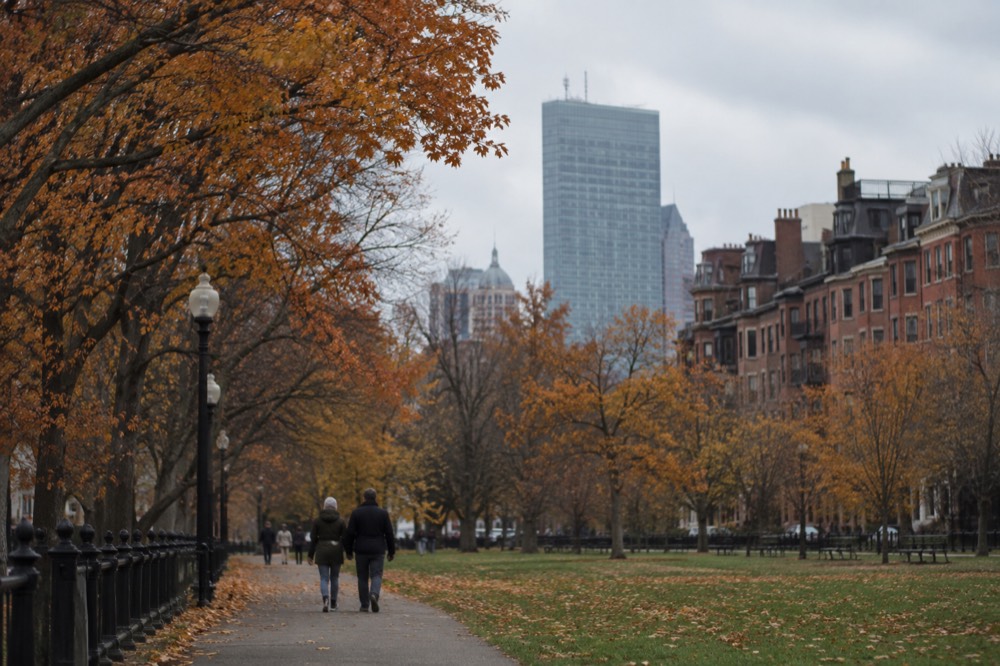
For weather alone, the normals point to September and early October: September averages 73.1°F highs with 58.2°F lows and zero snow, while October still reaches 62.1°F before the precipitation peak arrives in December. May and June are the spring counterparts, with May at 66.5°F and June at 76.2°F. These months have roughly three to four inches of precipitation in the normals, so the choice between them is about temperature and crowds, not dryness.
September is the month the locals quietly claim. Students return in September and average temperatures ease from midsummer, but humidity, water temperature and foliage depend on actual conditions. October adds the foliage and cools toward an average high of 62.1°F, which for walking a city of 2.5-mile historic routes is a feature, not a bug. The full comparison, including price and crowd factors beyond weather, is in our guide to the best time to visit Boston, and the plain question what's the best month to visit boston? gets a direct answer on its own page.
The North End food walk deserves a specific mention in any month discussion as an optional outdoor activity. The two-hour route through the Italian neighborhood works equally well under a June sun or an October chill, with cannoli serving as thermal compensation either way. Check actual neighborhood event dates rather than assuming decorations or festivals run throughout fall.
Curious about Italian food and history between outdoor walks? Explore the two-hour North End tasting tour. It involves roughly two kilometers outside between stops, so check the forecast and your comfort with conditions; dietary requests need at least twenty-four hours’ notice. Check North End food walk dates
What Should You Pack For Boston?
Pack for a temperature swing between day and night in every season, plus rain gear in all twelve months: July runs 82.1°F down to 66.0°F, and even January swings from 36.8°F to 23.1°F. Layers matter more than a single heavy coat in winter, because Boston's cold is interrupted by thaws, and waterproof shoes matter more in February than in any summer month. An umbrella is a year-round item, since no month averages under 3.21 inches of rain.
Use removable layers and the actual forecast. Summer evenings, boat decks and air-conditioned buildings can need a light layer; winter may require an insulated coat as well as mid-layers. An average daytime high is not a promise that a particular January afternoon will be warm. Other planning pages are gathered on Boston Travel Guide.
| Season | Typical Day Range | The Essentials | The Item People Forget |
|---|---|---|---|
| Winter (Dec-Feb) | 23.1-42.2°F | Insulated coat, hat, gloves, waterproof boots | A mid-layer for afternoon thaws above freezing |
| Spring (Mar-May) | 31.1-66.5°F | Light jacket, umbrella, comfortable walking shoes | A warm layer for March, which still averages 9 in of snow |
| Summer (Jun-Aug) | 59.7-82.1°F | Shorts, sunscreen, refillable water bottle | A light layer for over-air-conditioned museums |
| Fall (Sep-Nov) | 37.9-73.1°F | Layers, rain shell, sturdy shoes | Glove-level warmth by November, when lows hit 37.9°F |
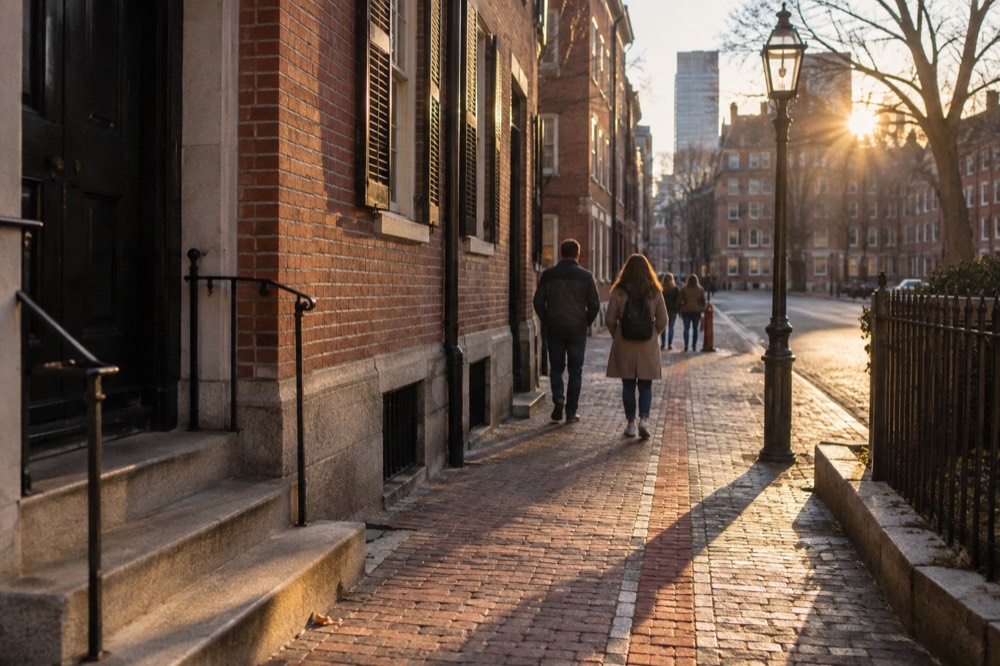
Footwear deserves its own sentence in every season: Boston is a walking city, the Freedom Trail alone is 2.5 miles, and the brick sidewalks and cobblestones in neighborhoods like Beacon Hill and the North End punish thin soles and smooth leather in rain or ice. Waterproof shoes with real tread are the single most useful item for a November-through-March visit.
How Does Boston Weather Affect Getting Around?
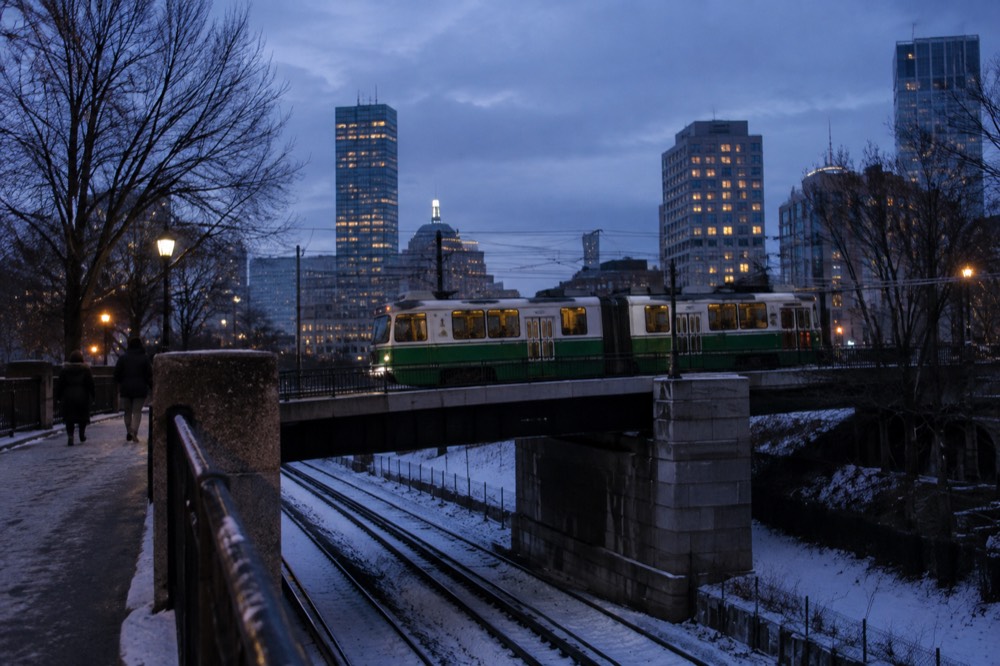
Snow, ice, heavy rain and wind can disrupt Boston transport. Check actual MBTA alerts, including planned construction, in every season. The $22.50 seven-day pass and $11 day pass are fare products, not guarantees of service; the two-hour transfer window is not all-day travel.
The transfer change is the one that matters for a visitor zigzagging between neighborhoods in mixed weather. Since 1 September 2026, a rider can move between subway, bus and ferry as many times as they like inside two hours, paying only the most expensive leg, provided every tap uses the same payment method. The MBTA's own fare pages publish the details at mbta.com/fares. One quirk worth knowing: a 1-Day or 7-Day pass on a CharlieTicket starts at purchase, while the same pass on a CharlieCard starts at first use, which can cost or save most of a day depending on when you buy it. Our CharlieCard and fares explained page covers the full mechanics.
Check MBTA route alerts before travel in any season. Replacement shuttles and weather disruptions can add time, while sidewalk clearance varies locally. The getting around Boston guide explains routes; allow extra time for actual conditions rather than assuming the subway always runs normally.
Does The Harbor Change How Boston Weather Feels?
Yes, and measurably: the official Boston station sits at Logan Airport on a harbor peninsula, so the published normals are a maritime reading, typically a touch cooler than inland neighborhoods on a summer sea-breeze afternoon and slightly milder on winter nights. The harbor's tides add a second layer, with a mean range of about 9.5 feet and a range that varies with the tide and weather, which visibly reshapes the waterfront twice a day.
The tide range is enormous for a major US city, and it is the reason photographs of the same harborfront spot can look like different shorelines depending on the hour. NOAA's station 8443970 at Boston records two highs and two lows a day, alternating in the classic semidiurnal pattern, with lows that can run below zero on the chart datum. For a visitor this means the Harborwalk, the island landings and the North End waterfront all have a "best light and best water" window that shifts daily, and a quick check of the tide table is worth it before any harbor photography or island ferry day.
Sea breezes can change local temperatures, but Logan’s normal does not predict a fixed five-degree difference or a guaranteed afternoon breeze. Open waterfront paths can feel windy in any season. Choose the actual forecast and boat conditions over a general rule that every summer evening is comfortable.
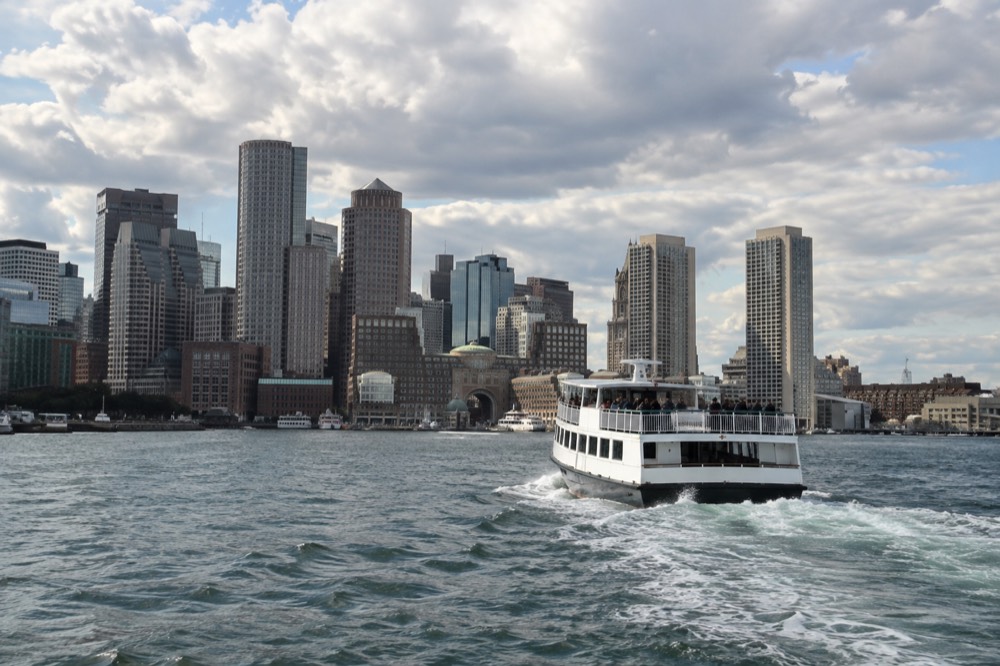
A narrated harbor-history cruise offers a different perspective on the city, but an enclosed area does not make a boat weather-proof. Check the selected departure and operator notices. It is not necessarily the cheapest way onto the water; public ferry routes serve a different transport purpose.
Which Boston Plans Survive Bad Weather?
Indoor museums are useful alternatives when walking or boating conditions deteriorate. Outdoor Freedom Trail walks, campus walks and boat trips remain weather-dependent. Check venue opening notices during severe weather, and confirm seasonal services rather than treating rain tolerance as a guarantee.
The museum layer is Boston's weather insurance. The Museum of Science is mid-renovation, with the new Bloomberg Public Science Common targeted to open in late 2026, and a few older exhibits permanently closed, but the Exhibit Halls run through the work. Eight eighteenth-century rooms in the MFA’s Art of the Americas wing reopened on 19 June 2026 after a five-month closure, redisplayed for the America 250 anniversary, not the entire wing. Check individual free-entry terms. Some offers require residency or other eligibility, while Harvard Art Museums is free and reserved Thursday evenings at ICA and Gardner provide other options. MFA Third Thursdays have their own ticket terms; child-age benefits vary by museum.
| Plan | Weather planning | Booking distinction |
|---|---|---|
| Freedom Trail | Outdoor route; ice/heat/storms matter | Guided walks do not include all interiors |
| Museum of Science | Indoor alternative; check opening alerts | Exhibit halls, premium shows separate |
| MFA | Indoor alternative; check opening alerts | Free/discount event eligibility varies |
| Harbor cruise | Operator’s weather decision | Enclosed area does not guarantee sailing |
| Island ferry | Seasonal route/date schedule | Current return fare, not an old table |
| North End food walk | Outdoor walking between stops | Dietary needs and cancellation terms |
| Fenway tour | Partly exposed, route can vary | Standard tour is not a game ticket |
The seasonal closures deserve their own paragraph because they are the errors most likely to ruin a specific day. The Swan Boats' own site states plainly that they are closed for the season with a return in April 2027, so no autumn or winter itinerary should include them. The Harbor Islands ferry's 2026 season ends on Monday 12 October, with sailing days varying by island and date; a mid-October visitor planning a Spectacle Island picnic is planning around a boat that has stopped running. Whale watching heads to Stellwagen Bank National Marine Sanctuary, and the bookable cruises run on their own seasonal schedules, which our Boston whale watching page tracks.
For the days when the weather is good and you simply want the city's greatest hits, the master list lives at things to do in Boston, and the short-notice options are collected in things to do in Boston this weekend.
A Freedom Trail walking tour is not an indoor bad-weather substitute: the verified small-group route does not include the meeting houses and church interiors. Choose a museum for an indoor plan, or keep the walk for conditions your party can comfortably manage.
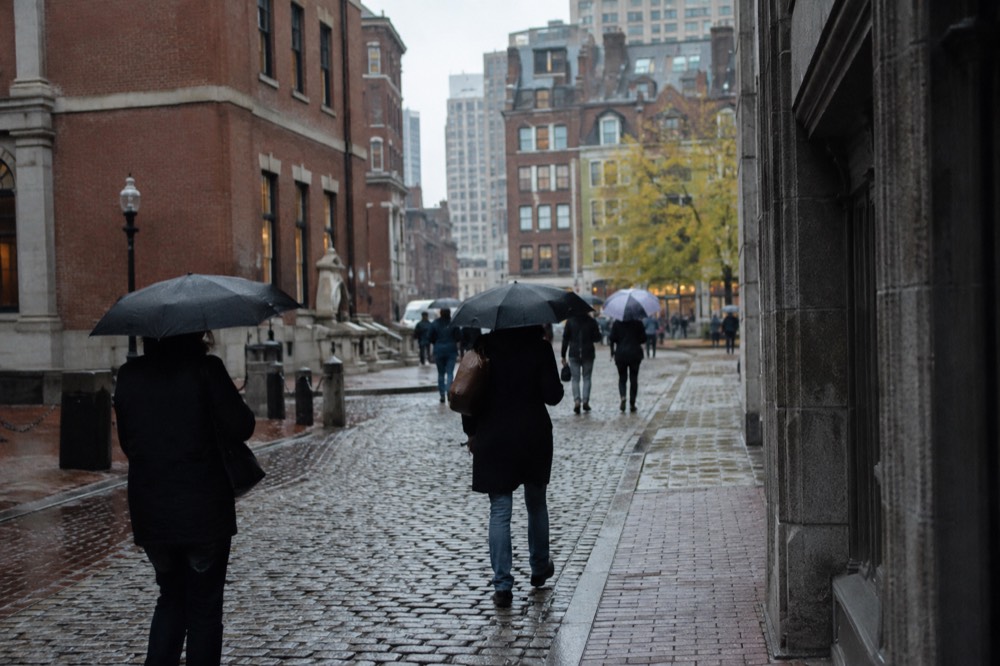
Want an indoor alternative to an exposed walking route? Explore Museum of Science Exhibit Halls admission. Planetarium, Omni and 4D shows are separate, and opening alerts still apply during severe weather. Check Museum of Science entry dates
Where Should You Stay When The Weather Matters?
For a weather-conscious visit, compare exact hotel-to-venue and station walks in Back Bay and downtown; our where-to-stay guide ranks the neighborhoods for exactly this. In winter, proximity can be useful, but the value of a view or a shorter walk is your own preference. Summer visitors should weigh the harbor breeze, which makes waterfront areas measurably cooler on the hottest afternoons.
Choose a hotel near the places you actually intend to visit. Downtown and Back Bay do not put every museum within fifteen minutes, and many subway platforms and transfers are indoors. Consult the where-to-stay guide, compare Boston stay quotes, and see hotels near Logan for early departures.
Match the actual date and conditions to the activity: outdoor food and campus walks are different from indoor museums, and Duck Tours have a seasonal schedule. No one option is guaranteed to fit every forecast.
Check Boston Marriott Long Wharf if staying beside the Aquarium suits your actual itinerary. Compare room capacity, complete rate terms and walking routes to your plans. The location does not make every Boston museum a short or sheltered walk. Check rooms at Boston Marriott Long Wharf
Common Questions About Boston Weather
what's the best month to visit boston?
For weather, September: it averages 73.1°F highs, 58.2°F lows, no snow, and it comes after the peak summer crowds. May and early October are close behind. Every month carries 3 to 4 inches of rain, so dryness is never the deciding factor.
What Is the Rainiest Month in Boston?
December, at 4.30 inches of precipitation in the 1991-2020 normals, and much of it can fall as snow. But the spread is tiny: the driest month, February, averages 3.21 inches. No month in Boston is dramatically wetter or drier than any other.
Does Boston Get a Lot of Snow?
Its 1991–2020 normal is 49.2 inches annually. January and February contribute about 58 percent; March and December average nine inches each, April 1.6 and October 0.2. Actual storms, snow cover and thaws vary by year.
Is Boston Humid in Summer?
Summer can be humid, and heat or thunderstorms can affect plans. Nighttime temperature averages alone do not establish humidity, and a harbor breeze is not guaranteed. Check the actual forecast and heat guidance for your visit.
What Is the Coldest Month in Boston?
January, with an average high of 36.8°F and an average low of 23.1°F, the lowest of the year. February is a close second at 39.0°F and 24.6°F, and it actually edges January for snowfall at 14.4 inches.
Does the Weather Ever Stop Boston Sightseeing?
Yes. Severe weather can close venues, interrupt transport or cancel boat trips. Indoor museums are useful alternatives when open; outdoor tours remain exposed, and an enclosed boat deck does not guarantee sailing.
Match Your Booking To The Forecast And Date
These options do not match your choice. Adjust the selection or reset to explore the starting recommendation.
Compare Your Alternative Activity Or Stay Totals
Reader-entered estimates in USD, not live quotes. Use the same dates and travelers for both options. Include all relevant tickets, rooms, taxes, mandatory fees and transport for the entire trip once in each total. Do not add a transfer twice if your rate already includes it.
Museum Of Science Exhibit Halls Admission
Admission to the Exhibit Halls at 1 Science Park. Present the ticket at the entrance without joining the box-office purchase line; this does not promise to bypass security or exhibit queues. Planetarium, Omni and 4-D shows, food and drinks are separate. Check free eligibility before buying; children under three enter free.
A starting option to explore. Choose dates, travelers and the exact booking option with the provider; availability and eligibility are confirmed there.
Check Museum of Science entry dates