The North End, Boston: What To See, Eat And Skip In The Oldest Neighborhood
The North End brings together Revolutionary sites, Italian American food and a compact residential street grid. The Freedom Trail includes Paul Revere House, Old North Church and Copp’s Hill Burying Ground here; Paul Revere Mall is an additional public landmark, not a fourth official trail stop. Public walking is free, with separate admission and hours for historic interiors. This guide covers routes, meals, transport and distinct booking choices.
Short answer
The North End is known for three things stacked on top of each other: Revolutionary-era history, including the Paul Revere House and the Old North Church of the famous two-lantern signal; a long-standing Italian American food culture concentrated on Hanover and Salem streets; and a dense, walkable street grid that survived urban renewal when the neighboring Scollay Square did not. It is Boston's oldest residential neighborhood, and it holds more Freedom Trail sites per block than any other part of the city.
The North End brings together Revolutionary sites, Italian American food and a compact residential street grid. The Freedom Trail includes Paul Revere House, Old North Church and Copp’s Hill Burying Ground here; Paul Revere Mall is an additional public landmark, not a fourth official trail stop. Public walking is free, with separate admission and hours for historic interiors. This guide covers routes, meals, transport and distinct booking choices.
Want a guide to connect the North End’s food and stories? Explore the Italian tasting walk, then compare history-only, pastry and longer walking options below. Paid church and house interiors are separate. Check North End food walk dates
Further reading: hours-and-fees page for Boston National Historical Park.
What Is The North End In Boston Known For?
The North End is known for three things stacked on top of each other: Revolutionary-era history, including the Paul Revere House and the Old North Church of the famous two-lantern signal; a long-standing Italian American food culture concentrated on Hanover and Salem streets; and a dense, walkable street grid that survived urban renewal when the neighboring Scollay Square did not. It is Boston's oldest residential neighborhood, and it holds more Freedom Trail sites per block than any other part of the city.
The history layer comes first in most visitors' plans, and the numbers explain why. The Freedom Trail's own site describes a 2.5-mile route linking 16 sites spanning "over 250 years" of history, and the trail's North End stretch carries the two most famous buildings in the story: the Paul Revere House, the oldest surviving structure in downtown Boston, and the Old North Church, where the two-lantern signal was arranged. The National Park Service operates and maintains several of the free sites nearby, including Faneuil Hall and the Charlestown Navy Yard across the water, and its published fee page confirms that USS Constitution and the Bunker Hill Monument charge nothing.
The food layer is not a tourist invention. The neighborhood has been an immigrant port of entry for generations, first Irish and Jewish, then Italian, and the Italian presence consolidated into the restaurants and pastry shops that still define Hanover Street. The lines outside the pastry counters on a Saturday are locals and visitors in roughly equal measure, and the North End Italian restaurant guide on this site covers where to eat in depth.
The third layer is the one people underestimate: the neighborhood is small enough that everything is a five-minute walk. From the harbor edge at Long Wharf to Copp's Hill at the top of the hill is under a mile on foot, and the waterfront and Long Wharf area connects directly to it. You do not plan a North End visit in blocks, you plan it in hours.
What Should You See On A North End Boston Walking Route?
A full North End walking route covers the Paul Revere House, the Paul Revere Mall, the Old North Church and Copp's Hill Burying Ground in about 90 minutes at a steady pace, with the harbor edge at the end for the skyline view. Admission is $6.00 at the Paul Revere House and $10.00 for the Old North Church's Discovery Pass, per the National Park Service fee page, while the mall and the burying ground are free.
Start at Haymarket or Aquarium station and walk up into the neighborhood from the commercial edge. The Paul Revere House sits on North Square, and its own hours page shows the museum open daily April 15 to October 31 from 10:00 to 5:15, with adult admission at $6.00, seniors and college students $5.50 and youths 5 to 17 at $1.00. The National Park Service's fee page independently lists the same $6.00 adult rate, which is the figure to trust.
From North Square, continue through the neighborhood toward Paul Revere Mall, the Prado between Hanover and Salem streets near Old North Church. It does not start at North Square. The public mall includes the Revere statue; the Old North Church guide explains general admission and the additional bell-chamber option.
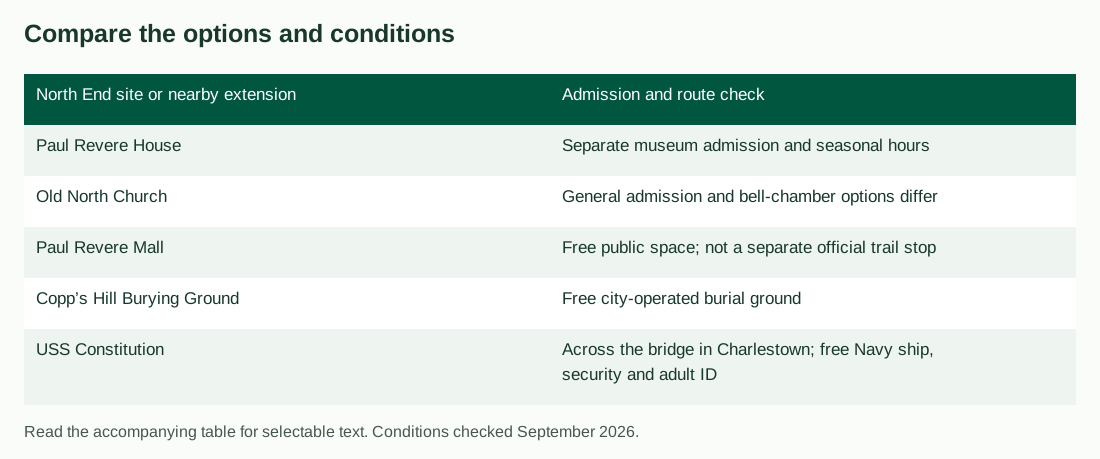
| North End site or nearby extension | Admission and route check |
|---|---|
| Paul Revere House | Separate museum admission and seasonal hours |
| Old North Church | General admission and bell-chamber options differ |
| Paul Revere Mall | Free public space; not a separate official trail stop |
| Copp’s Hill Burying Ground | Free city-operated burial ground |
| USS Constitution | Across the bridge in Charlestown; free Navy ship, security and adult ID |
Copp's Hill Burying Ground at the top of Hull Street is the last stop inside the neighborhood, and its upper terrace looks across the water at the Charlestown Navy Yard, where USS Constitution and the Bunker Hill Monument are both free per the NPS. The Freedom Trail's red line continues across the Charlestown bridge, so a full trail day can start here and keep going without backtracking.
For travelers who would rather have a guide carry the narrative, the small-group Freedom Trail walk is the strongest option in the neighborhood's category. Its listing shows it rated 4.9 from 7,835 reviews at from $39 per person for two and a half hours, and it covers the downtown and North End stretch of the trail.
A longer version exists for people who want the whole 2.5 miles in one go. The Freedom Trail Walking Tour with Bunker Hill and USS Constitution runs four hours from $79 per person, rated 5.0 from 864 reviews on its listing, and it finishes at the two free Charlestown sites.
Where Should You Eat In The North End?
The North End's food reputation rests on three streets, Hanover, Salem and Prince, where the restaurant and pastry lineup runs from red-sauce Italian institutions to seafood counters and a modern wave of smaller kitchens. The bookable food tours run $70 to $91 per person, per the operators' listings, and the five-hour combined food and history walk at from $91 is the most complete option because it folds in the Freedom Trail and Beacon Hill.
Want to taste your way down Hanover Street? Book a North End pizza walking tour here.
Dinner planning in this neighborhood is a timing problem more than a choice problem. The established restaurants on Hanover Street fill from 6pm onward in every season, and many do not take reservations for small tables, which is why the pastry-counter line moves faster than the restaurant line on a weekend night. The site's best restaurants in Boston coverage and the dedicated North End Italian restaurant guide sort the options by budget and style.
The guided options are worth separating, because they solve different problems. The Boston's Food and History tour, from $91 per person and rated 4.9 from 1,888 reviews on its listing, spends five hours across the North End, the Freedom Trail and Beacon Hill, which makes it a full afternoon rather than a lunch. The North End food tour focused on Italian flavors runs from $70 per person, rated 4.9 from 1,635 reviews, over two hours in a small group. The pizza walk with three slices and a cannoli sits between them at from $89, rated 4.8 from 172 reviews.
The five-hour version combines food and history in one substantial outing: it covers the neighborhood's history and its food in one loop, and it ends in Beacon Hill, which is where most visitors would walk next anyway. Travelers with only a morning free should take the two-hour Italian flavors walk instead and spend the saved hours in the pastry lines.
| Food or history outing | Typical time | Important distinction |
|---|---|---|
| Food and History | About five hours | Roughly five miles; tastings in North End |
| Italian Food Walk | About two hours | Bakery, pizza and deli; dietary requests in advance |
| Pizza and Cannoli Walk | About 2.5 hours | Three slices and cannoli; dietary and stair constraints |
| Historic Pub Crawl | About 2 hours 15 minutes | Faneuil Hall area, 21+ with ID; food/drinks extra |
The pub crawl is a separate downtown outing around Faneuil Hall, not a North End tasting menu. It visits four pubs, requires guests to be 21 or older with ID, and excludes the cost of food and drinks.
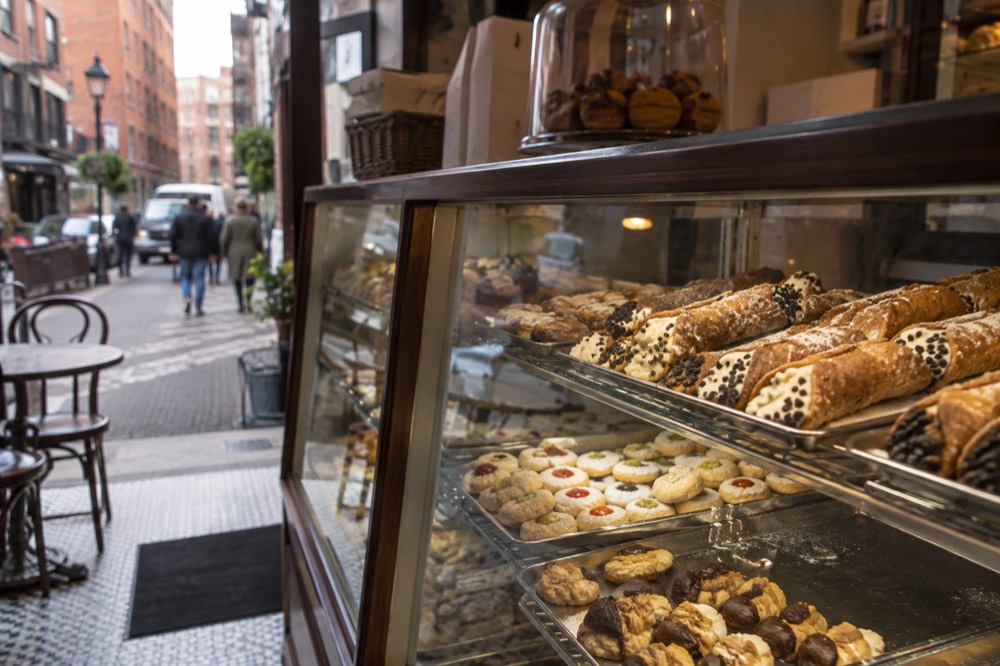
Pastry deserves its own paragraph because it is the thing most first-time visitors get wrong. Pastry selection and queues vary by counter and time, and the two most famous ones are across the street from each other, which turns the choice into a neighborhood sport. Order at the counter and follow the bakery’s storage and handling instructions for any pastries you keep for later.
Is The North End In Boston Walkable, And How Do You Get There?
The North End is entirely walkable, roughly one square mile with no internal need for transit, and the MBTA serves it from two edges: Haymarket station on the Green and Orange lines and Aquarium station on the Blue Line, both a $2.40 subway fare. The MBTA fare table also shows a $11.00 1-Day pass and a $22.50 7-Day pass, and since September 1, 2026, transfers within a two-hour window are unlimited, paying only the highest-priced leg.
The transit facts matter here because the neighborhood has no station inside it, and that is deliberate. The streets are too narrow and too old for anything else. Haymarket sits at the southwest corner, served by the Green and Orange lines, and Aquarium sits at the southeast corner on the Blue Line, so most hotel districts in Boston reach the North End with one transfer at most. The MBTA's fare page lists the subway one-way at $2.40 and the local bus at $1.70, with the 1-Day pass at $11.00 and the 7-Day pass at $22.50.
The September 2026 fare change is the detail most printed guides have already missed. The MBTA's fare pilot page describes unlimited transfers between subway, bus and ferry within a two-hour window, paying only the cost of the highest-priced leg, provided the same payment method is used across all legs. Before the change, riders got at most two transfers. The practical effect for a visitor is that a day of hopping between the North End, Charlestown and downtown now costs meaningfully less than the same day a year ago.
| MBTA option | Price | What it covers |
|---|---|---|
| Subway one-way | $2.40 | Red, Orange, Green, Blue lines, Mattapan Trolley, Silver Line SL1-SL3 |
| Local Bus one-way | $1.70 | Local bus network, and Express Bus under the 2026 pilot |
| 1-Day Pass | $11.00 | Unlimited travel for 24 hours |
| 7-Day Pass | $22.50 | Unlimited travel for 7 days |
| Two-hour transfer window | No extra charge | Unlimited transfers, highest leg only, same payment method |
One pass mechanic from the MBTA's fare page catches even careful planners: a 1-Day or 7-Day pass bought on a CharlieTicket is valid from the date and time of purchase, while the same pass on a CharlieCard starts at its first use. Buy on arrival evening, sightsee from the next morning, and the CharlieCard version is the better deal.
On foot, the neighborhood connects outward in every direction. The downtown and Financial District sits across the Greenway to the south, the waterfront and Long Wharf wraps the harbor edge, and the Rose Kennedy Greenway, the parkland built over the sunken expressway, is now the main pedestrian link between the North End and the rest of downtown. Crossing the Charlestown bridge on foot to USS Constitution takes about 15 minutes from Copp's Hill.
When Is The Best Time To Visit The North End?
Choose a North End visit around the places and events you actually want to see. Morning can suit a quieter walk, but no day guarantees short pastry lines. Boston’s similar monthly precipitation totals do not establish an equal chance of rain; use the forecast and current venue hours.
The weather data settles a question older guides waffle on. The NOAA monthly climate normals for the Boston Logan station, 1991 to 2020, show average highs of 82.1 °F in July down to 36.8 °F in January, with precipitation spread almost flat across the year. There is no dry window to chase. What does vary sharply is snow: the normals show 49.2 inches annually, and 28.7 inches of it, 58 percent, falls in January and February alone. A winter North End visit is cold but rarely rained out, and the neighborhood's restaurants and pastry shops are all indoors. More of these guides are collected on Boston Travel Guide.
The seasonal attractions have hard dates, and they matter. The Paul Revere House is open year-round, with shorter 10am–4:15pm hours from November 1 through April 14. It closes Mondays in January, February and March, plus listed holidays. The Swan Boats in the Public Garden across downtown are closed for the season entirely, with their own site stating "See you in April 2027." The Harbor Islands ferry across the water ends its 2026 season on Monday, October 12, per the islands' ferry schedule page. None of these break a North End itinerary, but all of them break an older one.
| Season | North End conditions | What to expect |
|---|---|---|
| Spring (April-May) | Paul Revere House begins longer hours April 15 | Average highs 56.4-66.5 °F, thin crowds before Memorial Day |
| Summer (June-August) | Peak season, longest days | Average highs 76.2-82.1 °F, Hanover Street crowds peak Saturday evenings |
| Fall (September-October) | Best balance of weather and lines | Average highs 62.1-73.1 °F, longer house hours through October 31, ferry ends October 12 |
| Winter (November-March) | Quiet, cold, indoor-focused | Average highs 36.8-51.6 °F, snow concentrated in January-February, shorter house hours and some closing days |
August has one more wrinkle worth knowing. The Highland Street Foundation's free-admission program is now published as August Adventures, one venue per day across Massachusetts, and older guides still recommend its predecessor, "Free Fun Fridays," which no longer runs under that name. In the North End specifically the free sights are free year-round anyway, so the program matters less here than elsewhere in the city.
Would a bakery-focused walk suit your visit? Explore the North End pastry and cafe route. It includes outdoor walking between tasting stops, so dress for your actual forecast and confirm allergies before booking. Check bakery walk dates and tastings
What Does A North End Visit Cost?
A North End day can cost almost nothing: 12 of the 16 Freedom Trail sites charge no admission, the Paul Revere House is $6.00 and the Old North Church Discovery Pass is $10.00, so the full historic core runs $16.00 per adult before food. Add a $2.40 subway fare each way, or an $11.00 1-Day pass if the rest of the city is on the itinerary. From there the day costs whatever dinner costs, and the neighborhood's counters make that a wide range.
The public trail is free, while several interiors charge. Paul Revere House and Old North are in the North End; Old State and Old South downtown share a ticket, and King’s Chapel church charges separately from its burying ground. Choose the interiors you want, and check current grounds and building access even on a free independent walk.
| North End budget item | Cost | Source |
|---|---|---|
| Paul Revere House, adult | $6.00 | NPS hours-and-fees page |
| Old North Church Discovery Pass, adult | $10.00 | NPS hours-and-fees page |
| Old North Church with Bell Chamber Tour, adult | $15.00 | NPS hours-and-fees page |
| Subway fare, each way | $2.40 | MBTA fare page |
| 1-Day pass, whole city | $11.00 | MBTA fare page |
| USS Constitution Museum | Pay-what-you-wish | Museum's own savings page |
| Copp's Hill Burying Ground | Free | City of Boston |
The USS Constitution Museum across the bridge runs on a suggested donation rather than a fixed price, per the museum's own ways-to-save page, which makes the Charlestown extension of a North End day effectively free. The ship itself, USS Constitution, is Navy-operated and charges nothing.
For the museum-minded, one Boston-wide trap deserves a warning here because the Museum of Fine Arts is a separate Fenway-area journey, rather than a nearby North End stop. The MFA's free open-house days are Massachusetts-resident benefits, the museum's own page requires a valid Massachusetts zip code, and one widely accessible discount is the $5 Third Thursdays pay-what-you-wish evening, with the MFA publishing Thursday, September 17, 2026 and Thursday, October 15, 2026 as upcoming dates. The ICA's free Thursday nights, 5 to 9pm, are open to all visitors with advance tickets.
How Does The North End Compare With Other Boston Neighborhoods?
The North End is denser, older and more food-focused than any comparable Boston neighborhood, with the historic sites and pastry culture in the same square mile, whereas Beacon Hill offers quiet cobblestone streets without the restaurant concentration, and the Seaport offers new construction and harbor views without the history. For most first-time visitors the North End and Beacon Hill pair naturally in one day, and the food and history tour that covers both in five hours is built exactly around that pairing.
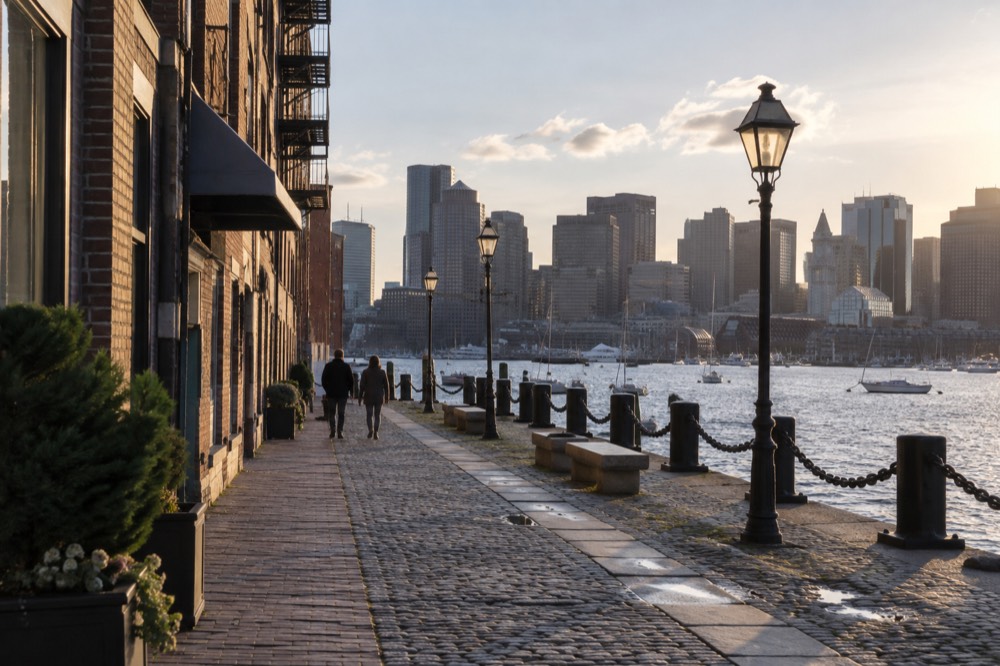
Beacon Hill, covered on this site's Beacon Hill guide, is the closest thing to a sister neighborhood: brick, walkable, photogenic, and a 15-minute walk across downtown. The difference is what fills the streets. The North End's blocks are lined with restaurants and pastry counters, Beacon Hill's with residences and a few famous lamps. The Back Bay adds shopping and grand Victorian squares but spreads across a much larger grid, and the Seaport is the modern counterpoint, glass towers and a contemporary art scene where the North End is clapboard and cannoli.
For a longer Boston stay, the neighborhood works as an anchor because it sits at the walking-distance center of everything historic. The South End and Jamaica Plain hold their own dining scenes worth a dedicated trip, and Chinatown is the other food-first neighborhood downtown, but none of them carry the density of sights per block that the North End does.
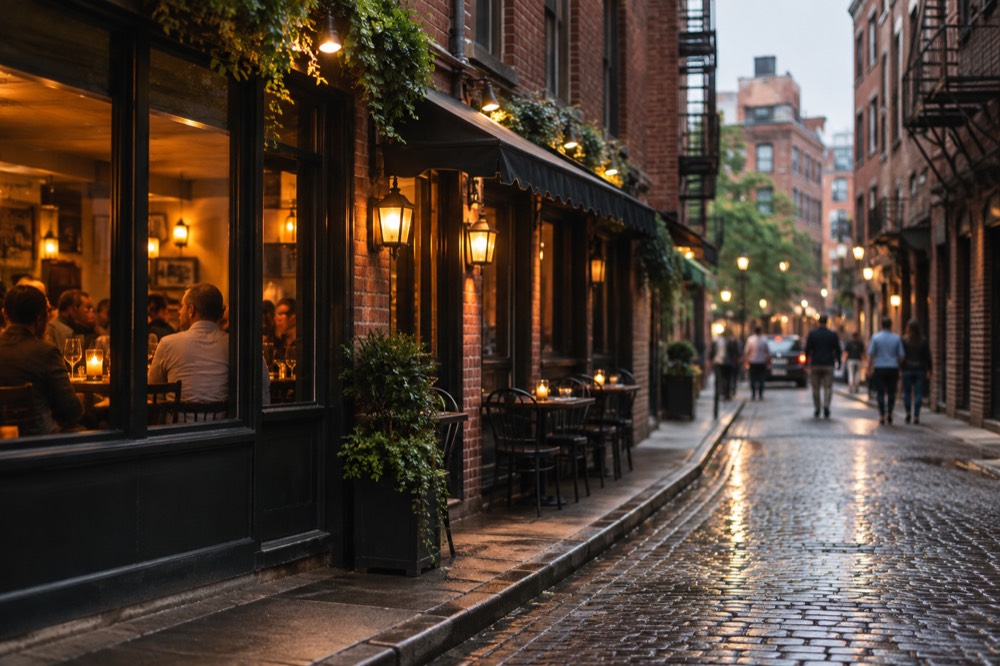
Check the longer food-and-history walk’s schedule if you want the North End, downtown and Beacon Hill together. Allow around five hours and five miles on foot; food stops are in the North End, not a meal in each neighborhood. Check food and history walk dates
What Else Is Worth Doing Near The North End?
The best add-ons around the North End are the harbor itself and Charlestown across the bridge: a one-hour narrated harbor cruise runs from $46 per person, the tall ship sail from $40, and the harbor sunset cruise from $31, all per their listings, while USS Constitution and the Bunker Hill Monument across the water are free. The duck boat tour that drives into the Charles River from the harbor side runs from $62 per person, rated 4.6 from 10,003 reviews.
Compare water outings by dock and format: the narrated harbor cruise boards at Long Wharf, the selected sunset cruise at Rowes Wharf, and Liberty Star/Fame sailing at Fan Pier in the Seaport. They are not interchangeable North End departures. NOAA’s Boston mean tidal range is about 9.49 feet; current fares vary by date and option.
The duck boat deserves its solo mention because it is the one that adds a Charles River splashdown to the city drive: the amphibious vehicle drives off a ramp and floats, and its listing shows from $62 per person, rated 4.6 across 10,003 reviews over an hour and 20 minutes. It boards near the Aquarium, a two-minute walk from the North End's edge.
Charlestown adds the Navy Yard and Bunker Hill, with free public sites subject to access hours. USS Constitution is Navy-operated, not NPS-operated, and has security requirements; the monument climb depends on capacity and conditions. The Freedom Trail guide maps the wider route.
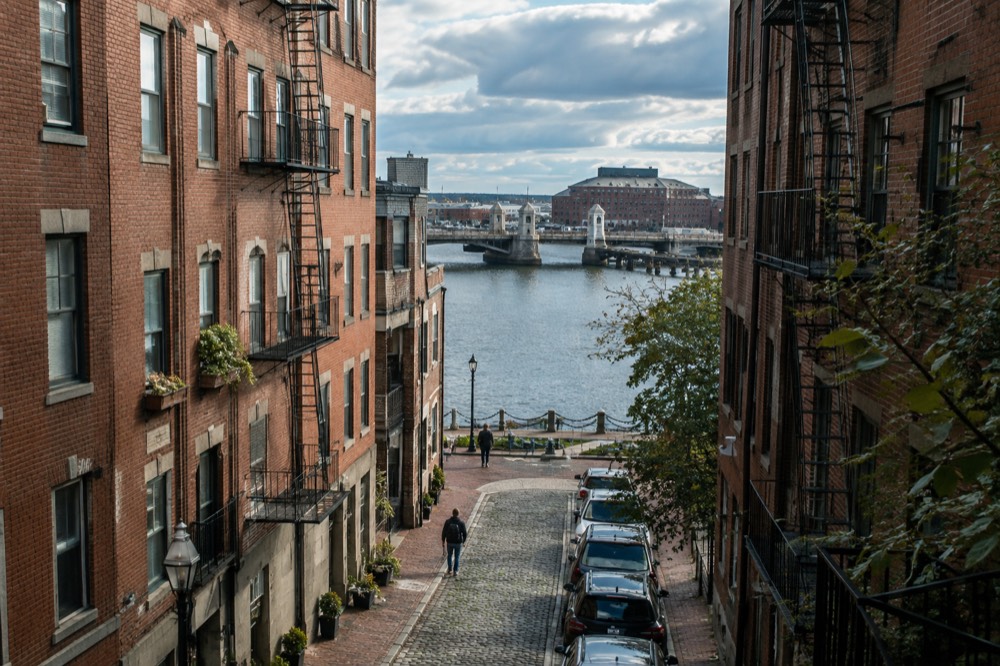
Want a harbor perspective after your walk? Explore the one-hour narrated cruise from downtown Long Wharf. This is a separate boat outing, with refreshments extra; Charlestown’s free sites remain reachable independently. Check harbor cruise departure times
Common Questions About The North End In Boston
Is the North End in Boston worth visiting?
Yes, for Revolutionary history and Italian American food. Paul Revere House, Old North Church and Copp’s Hill are the three official trail stops here; the Prado is an additional public landmark. Independent walking is free, while interiors and guided tastings have separate costs.
How long do you need in the North End Boston?
Two hours covers the walking route of Paul Revere House, the mall, the Old North Church and Copp's Hill at a steady pace. Four to five hours adds a pastry stop, a long lunch or dinner, and the walk across the Charlestown bridge to USS Constitution. The five-hour guided food and history tour exists precisely because the neighborhood pairs so well with the Freedom Trail and Beacon Hill in one afternoon.
What is the best street to walk in the North End?
Hanover and Salem streets offer different food and historic stops, with Prince Street connecting them. Paul Revere Mall is near Old North Church between Hanover and Salem, not a walkway starting at North Square. Hull Street leads toward Copp’s Hill.
Is the North End safe for tourists?
The neighborhood is one of the most heavily visited and most policed areas of Boston, with residential streets that stay busy into the evening. The standard big-city cautions apply late at night around the bar edges of the adjacent districts, but the North End's core is a family neighborhood that fills with tourists daily.
Can you drive and park in the North End?
You can, but it is the wrong plan. Street parking is scarce and tightly permitted, and the neighborhood's narrow streets predate the automobile. The MBTA serves both edges, Haymarket and Aquarium, at a $2.40 fare, and the whole point of the area is that it is best on foot. This site's parking guide covers the garage options downtown if driving is unavoidable.
whats going on in the north end of boston this weekend
Check the actual dates on Paul Revere House, venue and feast organizers’ calendars. The site’s weekend guide provides planning context; it is not a live feed confirming which event occurs this weekend.
Further reading: what's going on in the North End this weekend.
Choose Your North End Walk Or Waterfront Outing
These options do not match your choice. Adjust the selection or reset to explore the starting recommendation.
Compare Your North End Outing Totals
Reader-entered estimates in USD, not live quotes. Use the same dates and travelers for both options. Include all relevant tickets, rooms, taxes, mandatory fees and transport for the entire trip once in each total. Do not add a transfer twice if your rate already includes it.
North End Food Walk
A small-group North End walk with bakery, pizza and Italian deli tastings. Notify the operator of dietary requests at least 24 hours ahead.
A starting option to explore. Choose dates, travelers and the exact booking option with the provider; availability and eligibility are confirmed there.
Check North End food walk dates