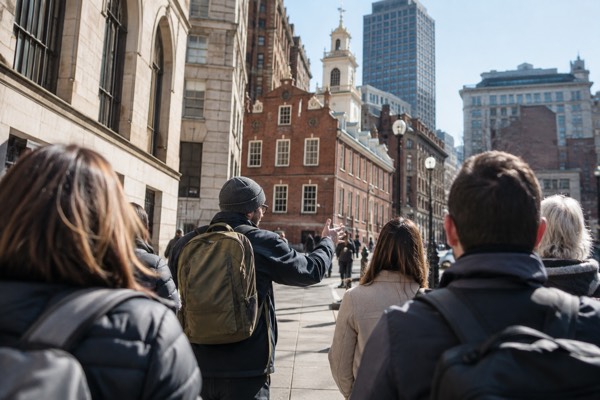
Downtown And The Financial District
Downtown Boston is the narrow peninsula where the city was founded in 1630, and almost nothing here is far from anything else. The Freedom Trail's red line starts on the Common and threads through the middle of it, past Faneuil Hall, the Old State House, and the Granary Burying Ground, before crossing into the North End. The National Park Service, which operates several of the sites, counts 16 historically significant stops along the trail's 2.5 miles, and most of them sit inside or on the edge of this one neighborhood. The Financial District wraps around the eastern edge of it, a grid of glass towers standing on some of the oldest street lines in the country.
Short answer
Downtown Boston is the roughly half-mile area bounded by Boston Common to the west, the harbor to the east, the Rose Kennedy Greenway to the north, and Chinatown and the Theater District to the south. The Financial District is the eastern half of it, the blocks between the Greenway, State Street, and South Station. Downtown Crossing, the pedestrian shopping stretch on Washington Street, sits in the middle. Every one of these zones is walkable from every other in under 15 minutes.
Downtown Boston is the narrow peninsula where the city was founded in 1630, and almost nothing here is far from anything else. The Freedom Trail's red line starts on the Common and threads through the middle of it, past Faneuil Hall, the Old State House, and the Granary Burying Ground, before crossing into the North End. The National Park Service, which operates several of the sites, counts 16 historically significant stops along the trail's 2.5 miles, and most of them sit inside or on the edge of this one neighborhood. The Financial District wraps around the eastern edge of it, a grid of glass towers standing on some of the oldest street lines in the country.
Using Downtown as your base? Compare hotel locations on the map against your evening plans, station and ferry dock. The final choices also cover the history, food and airport journeys described below. Compare Boston stays
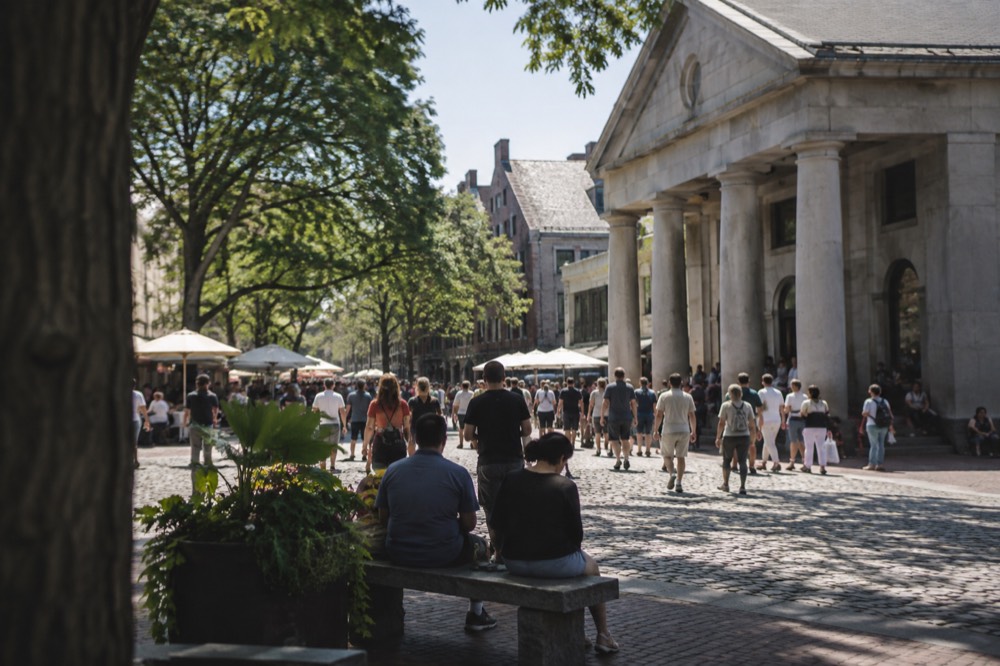
The area has a rhythm most guides understate. On a weekday it belongs to office workers, and lunchtime lines at the Quincy Market colonnade can be long. On a weekend it empties out: plenty of restaurants close, some streets feel almost abandoned by early evening, and the crowds shift to the waterfront. Anyone planning a stay here should understand that split before booking a hotel. This page from Boston Travel Guide covers what to see, how to get in from the airport, what the area costs, and how it compares to staying in Back Bay or the North End.
What Counts As Downtown Boston?
Downtown Boston is the roughly half-mile area bounded by Boston Common to the west, the harbor to the east, the Rose Kennedy Greenway to the north, and Chinatown and the Theater District to the south. The Financial District is the eastern half of it, the blocks between the Greenway, State Street, and South Station. Downtown Crossing, the pedestrian shopping stretch on Washington Street, sits in the middle. Every one of these zones is walkable from every other in under 15 minutes.
The boundaries matter for hotel bookings more than for sightseeing. A "Downtown" hotel address can mean a block from the Common or a block from the aquarium, and those are different experiences. The Financial District addresses cluster around State Street, Federal Street, and Post Office Square, and the Post Office Square park itself is one of the better small green spaces in the city, with a lawn that fills with office workers at lunch and sits nearly empty on Saturdays.
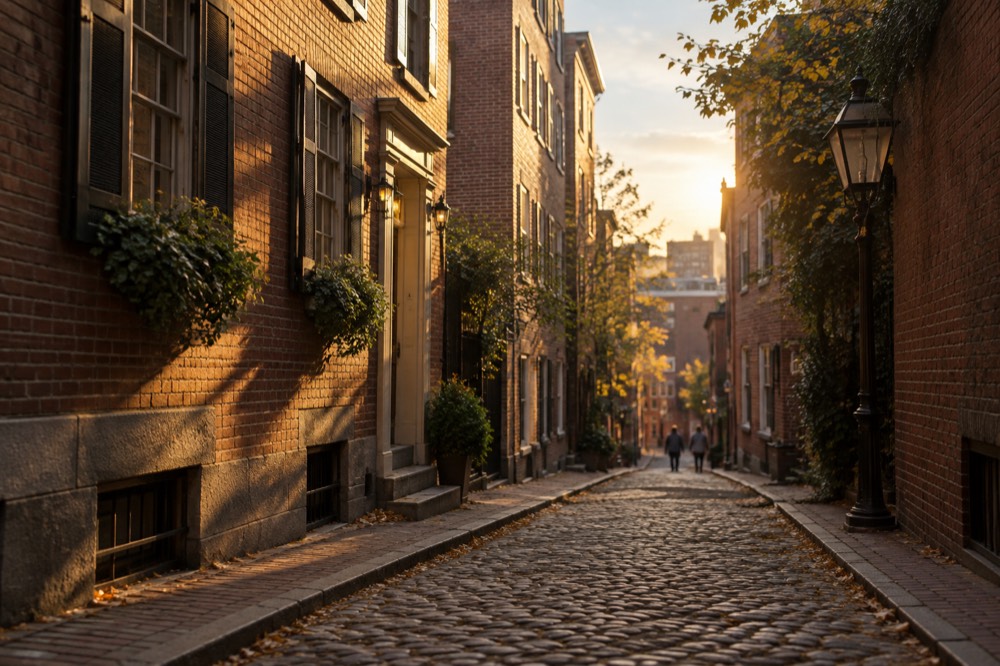
The area's street plan predates the automobile by two centuries, which is why the blocks feel irregular and why driving here frustrates visitors. City planners never regridded this part of Boston, so the colonial lanes were simply paved. That is also the area's charm: the narrow lane of Acorn Street in Beacon Hill gets the photographs, but Downtown has the older building stock and the denser concentration of 18th-century sites.
What Should You See In Downtown Boston?
Downtown sights include Faneuil Hall, Quincy Market, Old State House, Granary Burying Ground, Old South Meeting House and the Greenway. Check the actual walking route and individual hours. Faneuil Hall’s public hall is free when open; Old State and Old South have an $18 combined adult ticket.
The Freedom Trail is the organizing spine, and the NPS hours-and-fees page for Boston National Historical Park is the reliable source on which stops cost money: only 4 of the 16 sites charge, and USS Constitution and Bunker Hill, both a little farther out in Charlestown, are free. Within Downtown itself, the paid stops are the Old State House, the Old South Meeting House, the Old North Church, and the Paul Revere House, the last two in the North End. The Granary Burying Ground, where Samuel Adams, John Hancock, and Paul Revere are buried, is free and open most daylight hours.
A reasonable half-day route: start at the Common, walk the trail east past the Granary, stop at the Old South Meeting House where the Tea Party argument began, continue to the Old State House, site of the Boston Massacre, then finish at Faneuil Hall and Quincy Market for lunch. The Greenway, the linear park built over the buried highway, runs the length of the waterfront side and connects everything to the North End in one flat walk.
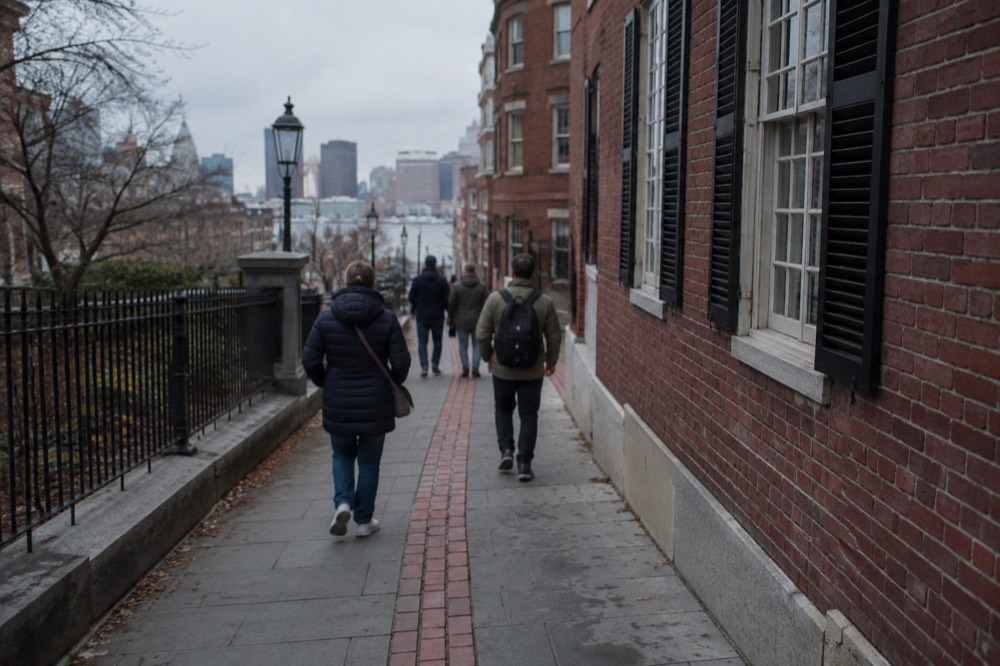
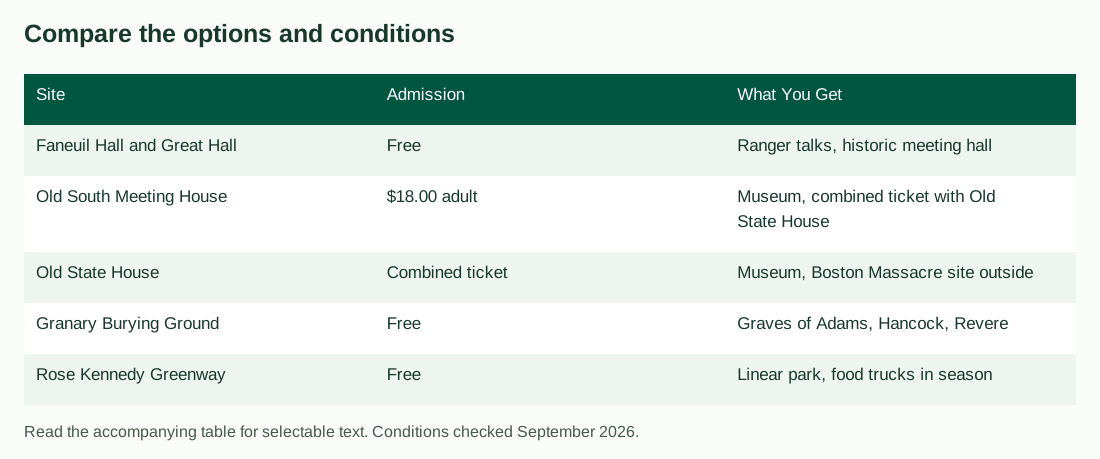
The Freedom Trail Foundation publishes the route's details at its own visit page, and the fee structure comes straight from the National Park Service's hours and fees page. The table below is the short version for the Downtown stretch.
| Site | Admission | What You Get |
|---|---|---|
| Faneuil Hall and Great Hall | Free | Ranger talks, historic meeting hall |
| Old South Meeting House | $18.00 adult | Museum, combined ticket with Old State House |
| Old State House | Combined ticket | Museum, Boston Massacre site outside |
| Granary Burying Ground | Free | Graves of Adams, Hancock, Revere |
| Rose Kennedy Greenway | Free | Linear park, food trucks in season |
The guided options are worth knowing about. A small-group walk keeps the history digestible, and the Freedom Trail History Small Group Walking Tour runs 2 hours 30 minutes and covers the central sites. Compare the guided route with a free independent walk before choosing.
Is The Financial District A Good Place To Stay?
The Financial District works well for travelers who want walkability to the Freedom Trail and the waterfront and do not care about nightlife, because it goes quiet after the office crowd leaves. Hotel rates here often undercut Back Bay on weekends for exactly that reason. The tradeoff is food: the neighborhood's restaurant scene is built around weekday lunches, and a meaningful share of kitchens close on Saturday and Sunday. Anyone who wants evening energy within a short walk should compare the North End or Seaport first.
The honest comparison is on the site already: the question is it better to stay downtown or Back Bay in Boston gets a direct answer, and the short version is that Downtown wins on history and airport access, Back Bay wins on restaurants and evening life. The Seaport is the newer, pricier alternative across the harbor with a much louder weekend scene.
For a first visit, the case for Downtown is simple: you can walk to the Common, the Greenway, the North End, and the harbor ferry dock without ever boarding a train. A first-timer's planning write-up on this site lays out the full case, and the one-day city itinerary starts here because most visitors' clocks start at the Common.
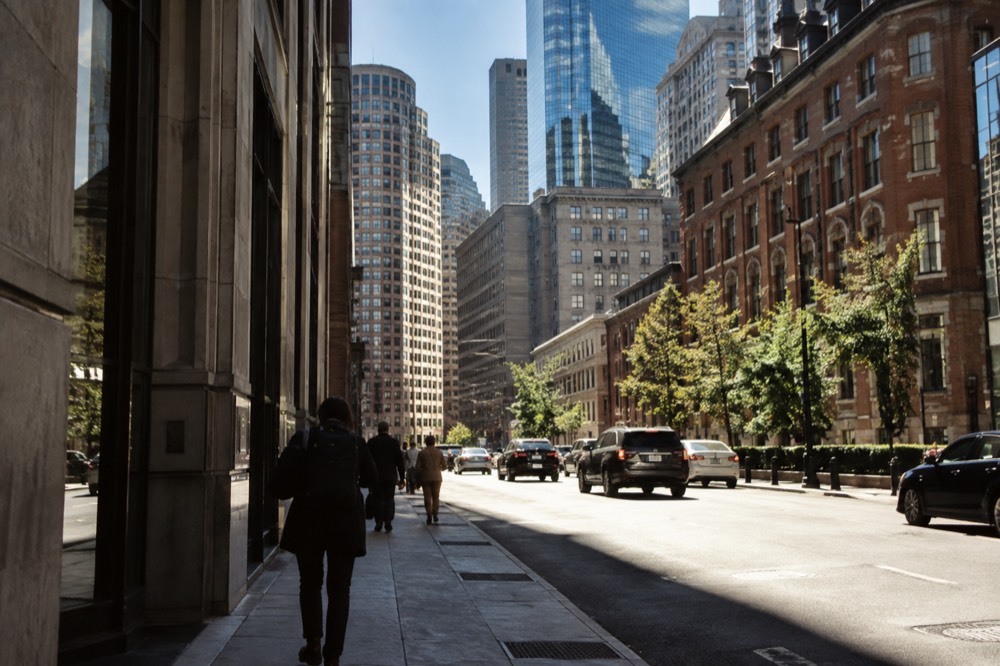
Compare exact downtown room totals before assuming a weekend discount. Check the property’s position on the map and nearby evening dining; “Downtown” covers more than the office blocks. Compare Boston stays
How Do You Get From Logan Airport To Downtown Boston?
The cheapest way from Logan to Downtown is the MBTA Silver Line SL1, which is free leaving the airport: you board at the terminal curb and no fare is collected, and the bus runs to South Station where you connect to the Red Line. Massport states this plainly on its own airport page. Going the other way, toward Logan, you pay the ordinary $2.40 subway fare. A taxi or rideshare covers the same trip in about 15 to 20 minutes without traffic.
That free leg is the single most useful transport fact for a Downtown visitor, and a remarkable number of guides get it backwards. The Massport airport page is the source, and it also lists the free on-airport shuttle to the Blue Line at Airport station, which is the faster route to the waterfront side of Downtown if you do not mind paying the $2.40.
Massport’s phase-two Runway 9–27 work began August 31, 2026, with very limited availability expected for about 75 days. Check the current airport notice and airline status; the project does not establish a delay for every flight or a guaranteed extra curb wait. Do not attach a 2026 date to older terminal notices.
Further reading: construction updates page.
The full airport-to-hotel breakdown, including water taxi options and the Logan Express suburbs, is in the Logan Airport to Downtown Boston guide.
Would a prebooked pickup make arrival simpler for your party? Explore Logan-to-hotel quotes with your flight, bags and exact address. The free outbound SL1 remains an alternative, and road traffic affects private rides. Get a Logan pickup quote
What About The MBTA Changes Visitors Should Know?
MBTA fare rules changed on 1 September 2026: riders can now make unlimited transfers between subway, bus, and ferry within a two-hour window, paying only the highest-priced leg, provided the same payment method is used throughout. A 1-Day pass costs $11.00 and a 7-Day pass $22.50, and both start at purchase on a CharlieTicket but at first use on a CharlieCard. The MBTA's fare pages publish all of this.
The CharlieCard detail catches people who buy a pass on arrival day and expect it to start the next morning: on a CharlieTicket the clock starts when you buy, on a plastic CharlieCard it starts when you first tap. For a visitor, the 7-Day pass at $22.50 costs less than ten separate $2.40 subway fares, which a busy five-day itinerary easily clears.
There is also a live disruption to plan around. Symphony station on the Green Line E branch has been closed since June with closure scheduled through spring 2029, and the MBTA ran a full central Green Line suspension over the weekend of 19 to 20 September 2026 as part of rolling track work, with free shuttle buses provided. The Red and Blue lines, which serve Downtown directly, have been the steadier lines this year. The MBTA fares page carries the current pilot details.
| MBTA Option | Cost | Notes |
|---|---|---|
| Subway one-way | $2.40 | Red, Orange, Green, Blue, Mattapan, Silver Line |
| Local Bus one-way | $1.70 | Express Bus dropped to this rate in the pilot |
| 1-Day Pass | $11.00 | 24 hours; starts at purchase on CharlieTicket |
| 7-Day Pass | $22.50 | Starts at first use on a CharlieCard |
| Silver Line SL1 from Logan | Free | Leaving the airport only |
Where Should You Eat In And Around Downtown?
Quincy Market's colonnade is the default Downtown lunch spot, with dozens of stalls under one roof, but the better food sits one neighborhood north in the North End, where a guided Italian-flavors walk covers heritage bakeries and salumerias, or south in Chinatown, which stays open on weekends when the Financial District does not. Downtown Crossing's Washington Street adds quick-service options and the classic department-store history.
The North End food walk is the strongest eating experience near Downtown: the Boston's North End Food Tour runs 2 hours, is rated 4.9 from 1,635 reviews on its listing, and covers the Italian flavors and heritage of a neighborhood that is a five-minute walk from the Greenway. The North End area guide covers the restaurant landscape if you would rather go independently.
Chinatown offers another dining area, but both it and the Financial District contain restaurants with individual opening schedules. Check the place you want rather than assuming one neighborhood is closed and the other universally open. The Chinatown guide has more detail.
The food tour option pairs naturally with a Downtown base because both neighborhoods sit on the same flat walk. Check availability on the tour's live listing if a food-focused afternoon fits your itinerary.
What Is There To Do In Downtown Boston At Night?
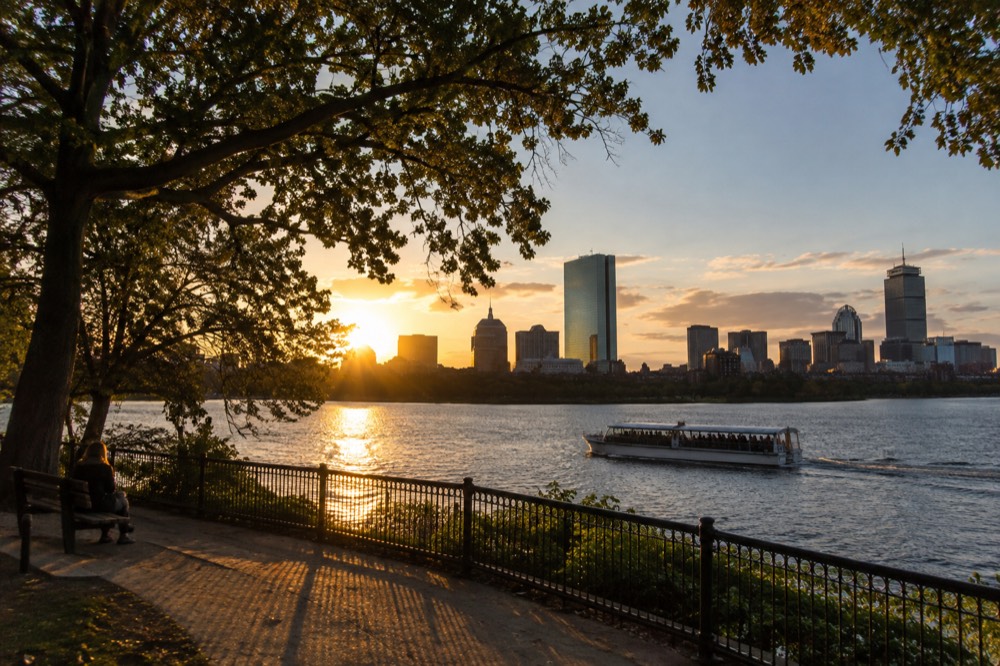
Evening choices include the Theater District, restaurants and pubs, and separately scheduled harbor outings. The selected sunset cruise departs from Rowes Wharf, while the narrated historical cruise uses Long Wharf. They do not share a single boarding point or necessarily the same operating hours.
Check the boarding point on the specific ticket: the narrated harbor cruise is about one hour from Long Wharf, and the evening cruise is about 90 minutes from Rowes Wharf. The waterfront and Long Wharf guide covers one part of this broader waterfront; allow walking time between docks.
The Theater District sits at Downtown's southern edge, and the Theater District area guide lists what is playing where. Note the spelling: the district's venues use the British "Theatre" in their own names, and the rest of the site uses "theater."
Want historical stories with your evening pub visit? Explore the four-pub crawl near Faneuil Hall. It is for ages 21+ with ID; food and drinks cost extra. Check history pub crawl dates
How Much Time Should You Spend Here?
Most visitors need one full day for Downtown and the Financial District proper: a morning on the Freedom Trail's central sites, lunch at Quincy Market or the North End, an afternoon at the harbor or a museum, and an evening cruise or show. Two days lets you add the North End's food scene properly and a harbor cruise without rushing. Anything less and you are choosing between the history and the waterfront.
The question of how many days Boston needs overall has its own answer elsewhere on the site, and the tradeoffs get worked through in the dedicated days-in-Boston planning piece. For a citywide plan that starts here, the three-day itinerary uses Downtown as its base for days one and two.
The Duck Boat tour is the efficient compromise when time is short: the Boston Duck Boat Sightseeing City Tour with Cruise covers the city streets and the Charles River splashdown in 1 hour 20 minutes, rated 4.6 from 10,003 reviews, from $62. It departs from the Museum of Science and other points, all reachable from Downtown by transit.
| Itinerary Shape | Time Needed | Best For |
|---|---|---|
| Freedom Trail central sites only | Half day | History-focused visitors |
| Trail plus Quincy Market lunch | Full day | First-time visitors |
| Trail, North End food walk, cruise | Two days | Food and history together |
| Downtown plus day trips | Three-plus days | Salem, Cambridge, harbor islands |
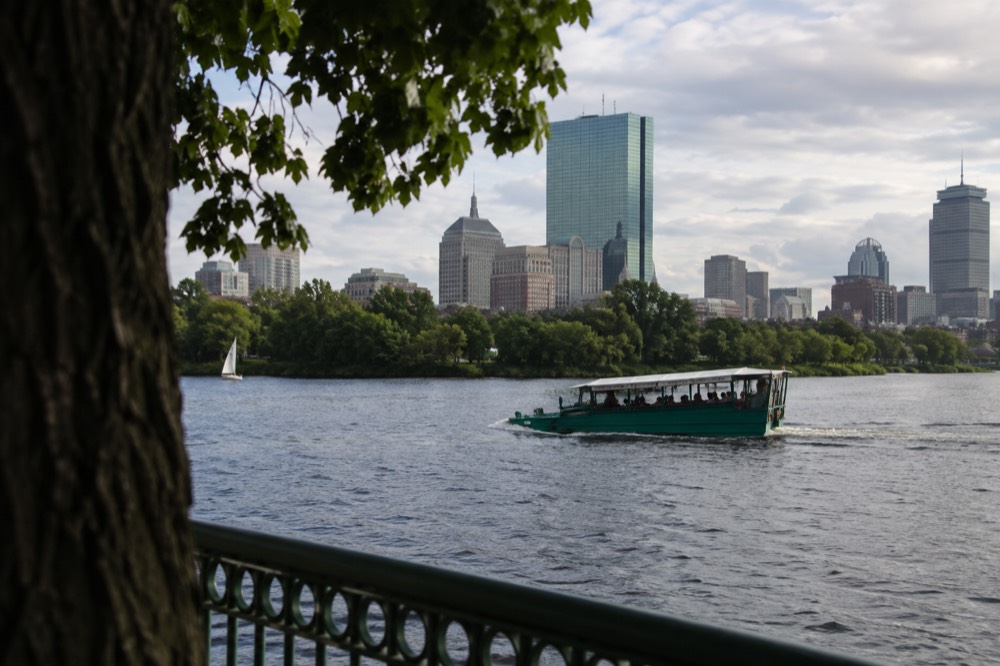
Check the 80-minute Duck Tour’s departure and boarding point when time is limited. The river portion is on the Charles and does not replace a Boston Harbor cruise. Check Duck Tour dates
What Are The Free Things To Do In Downtown Boston?
The free list in Downtown is long: Faneuil Hall's Great Hall, the Granary Burying Ground, King's Chapel's exterior and burying ground, the Greenway, the Harborwalk, and the view from the Custom House steps all cost nothing. The Old State House and Old South Meeting House charge, but Revolutionary Spaces joined the Museums for All program in March 2026, offering free or $0 to $3 admission to EBT and SNAP cardholders for up to six people with ID.
For a higher look over the whole city, book a View Boston observation deck ticket here.
That Museums for All detail is new and worth knowing: it is a benefit-card program, not a residency requirement, so it applies to cardholders from any state. The MFA’s Open House days require Massachusetts residency, while other discount and free-admission programs have different eligibility, and the site's free-things write-up keeps the residency distinctions straight for every museum in the city.
The Harborwalk provides waterfront stretches near the Aquarium and Long Wharf, with individual access points and potential diversions. Boston’s mean tidal range is about 9.49 feet at NOAA station 8443970; use the actual tide prediction for a planned visit.
What Day Trips Work From Downtown?
Downtown is the region's best day-trip base because South Station and the Long Wharf ferry dock sit inside it. Salem is reachable by high-speed ferry in 50 minutes or by Commuter Rail from North Station, Cambridge is reachable on the Red Line, and the Harbor Islands ferry leaves from Long Wharf through 12 October 2026. Martha's Vineyard and Plymouth run as organized coach trips from Downtown hotel pickups.
The Salem high-speed ferry runs from $42 on its listing, rated 4.5 from 771 reviews, and lands at Salem Ferry Center after a crossing of about 50 minutes, with a further walk into central Salem. Check the Harbor Islands ferry’s current adult fare, but the 2026 season ends 12 October, with operating days varying by island and date. The day trips guide ranks every option from the city.
Cambridge deserves the opposite treatment: it is not a day trip but a half-day, and the Red Line from Downtown drops you in Harvard Square in about 15 minutes. The Harvard Square and Cambridge guide covers the yard, the museums, and the square itself.
The Harvard University Campus Guided Walking Tour is the efficient version: 1 hour 10 minutes, from $23, rated 4.7 from 3,864 reviews, led by students who cover the yard's history and the statues. It pairs with a Downtown base better than almost anything else in the region, because the transit connection is direct.
If you would rather compare all the Harvard and campus options first, the tour's own page on this site lists the details: the Harvard campus guided walking tour. Check availability if the date is firm.
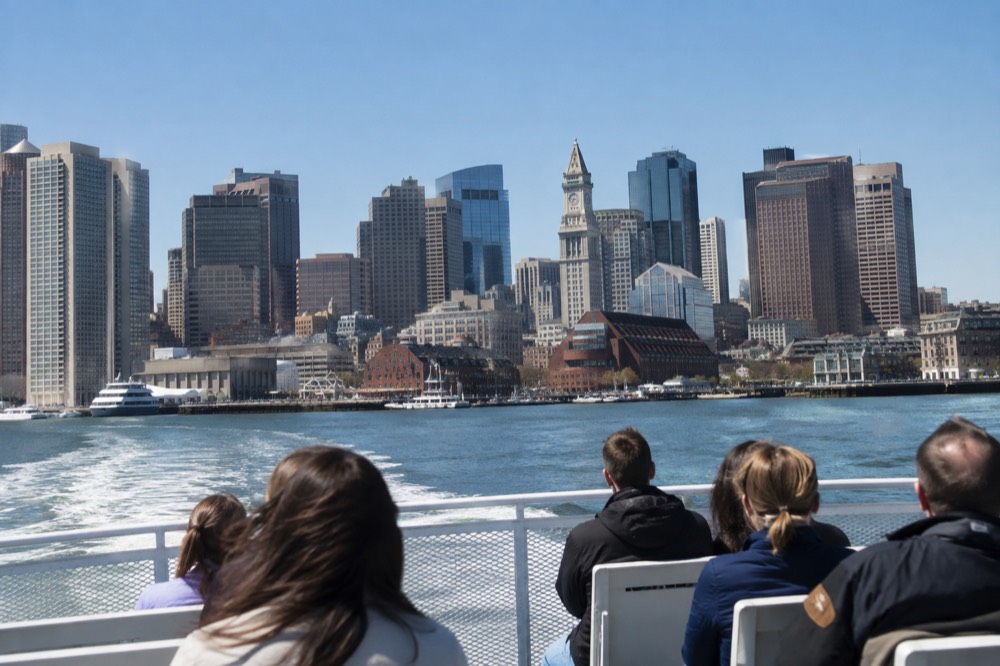
Would a water crossing suit your Salem day? Explore the seasonal ferry from Long Wharf. The ticket is one way and Salem’s landing needs onward walking; match your return before booking. Check Salem ferry directions and dates
How Does Downtown Compare To Boston's Other Neighborhoods?
Downtown beats every other Boston neighborhood on walkable history and airport access, loses to Back Bay on shopping and restaurants, loses to the Seaport on nightlife, and loses to the North End on food per square block. Beacon Hill is prettier, the South End has better brunch, and Cambridge has the universities. For a first visit of three days or fewer, Downtown is the strongest base because it sits at the center of the transit map.
The site has a full area-by-area breakdown in the where to stay in Boston guide, and the short comparison below covers the ones visitors actually weigh against Downtown.
| Area | Route check | Main interests |
|---|---|---|
| Back Bay | Actual downtown start to Copley/Newbury | Shopping, library and hotels |
| North End | North of Faneuil Hall | Italian food and historic sites |
| Beacon Hill | West toward the Common | Architecture and Black history |
| Seaport | Cross Fort Point Channel | ICA, dining and waterfront |
| South Boston | Substantially farther for Castle Island | Parks, shoreline and neighborhood visits |
Cambridge and Somerville are separate cities, while Brookline is a separate town. Check the property’s actual address and full rate; a broad Boston destination label does not establish its municipality, station or journey time.
Compare rooms at The Newbury if you prefer a Public Garden and Back Bay base. Check the full stay total and route to your downtown plans; a different neighborhood does not imply a better rate. Check rooms at The Newbury Boston
Common Questions About Downtown Boston
Is Downtown Boston the same as the Financial District?
No. Downtown is the larger area including Downtown Crossing, the Common's eastern edge, and the Theater District; the Financial District is the office-core eastern half between the Greenway and South Station. Visitors use the names interchangeably, but a hotel in one puts you in a different evening scene than the other.
Is Downtown Boston walkable?
Very. The entire area is under a mile across, flat, and threaded with the Freedom Trail's red line. The North End, the waterfront, Beacon Hill, and Chinatown are all within a 15-minute walk of the Old State House, and the MBTA's Red, Blue, Orange, and Green lines all touch the neighborhood's edges.
Is Downtown Boston quiet on weekends?
The Financial District is, yes. Its restaurants and coffee shops are built for the weekday office crowd, and a meaningful share close on Saturday and Sunday. Faneuil Hall, the Greenway, and the waterfront stay busy on weekends, so the visitor-facing parts of Downtown do not empty out the way the office blocks do.
How do I get from Logan Airport to Downtown Boston for free?
Board the MBTA Silver Line SL1 at the terminal curb. Massport states the service is free between the airport terminals and South Station, and South Station connects to the Red Line. The free direction is leaving the airport; the return trip toward Logan costs the standard $2.40 subway fare.
What is the best way to see the Freedom Trail from Downtown?
Walk it. The trail's central sites sit inside this neighborhood, and the National Park Service's own page confirms 12 of the 16 sites are free. A small-group guided walking tour adds the context, and the 2-hour-30-minute Freedom Trail History Small Group Walking Tour covers the central stretch.
Where should I eat near the Financial District on a weekend?
Compare restaurants within downtown with the North End and Chinatown. Opening hours vary by venue; a weekend does not mean every Financial District kitchen closes or every alternative stays open. Allow walking time from your exact starting point.
Choose Your Downtown Base Or Next Outing
These options do not match your choice. Adjust the selection or reset to explore the starting recommendation.
Compare Your Downtown Trip Totals
Reader-entered estimates in USD, not live quotes. Use the same dates and travelers for both options. Include all relevant tickets, rooms, taxes, mandatory fees and transport for the entire trip once in each total. Do not add a transfer twice if your rate already includes it.
Boston Hotel Search
Compare Boston hotels for the same dates and party. Use the map to check the actual property location; taxes, room types and cancellation conditions vary.
A starting option to explore. Choose dates, travelers and the exact booking option with the provider; availability and eligibility are confirmed there.
Compare Boston stays