Faneuil Hall And Quincy Market: Hours, Food, History And What To Know Before You Go
Faneuil Hall has been called the Cradle of Liberty for more than two centuries, and the nickname is not marketing. The National Park Service, which co-manages the building, calls it "The Cradle of Liberty" and notes that Bostonians have gathered here for over 275 years to assert their rights. The hall became a stage for organized opposition to British taxation in the decade before the Revolution. Peter Faneuil, a wealthy merchant, funded the hall as a gift to the city in the colonial era, and architect Charles Bulfinch expanded it in the early nineteenth century. Quincy Market followed a few decades later to handle the overflow of the harbor trade. Today the complex draws millions of visitors a year, and nearly all of the history in it is free to see.
Short answer
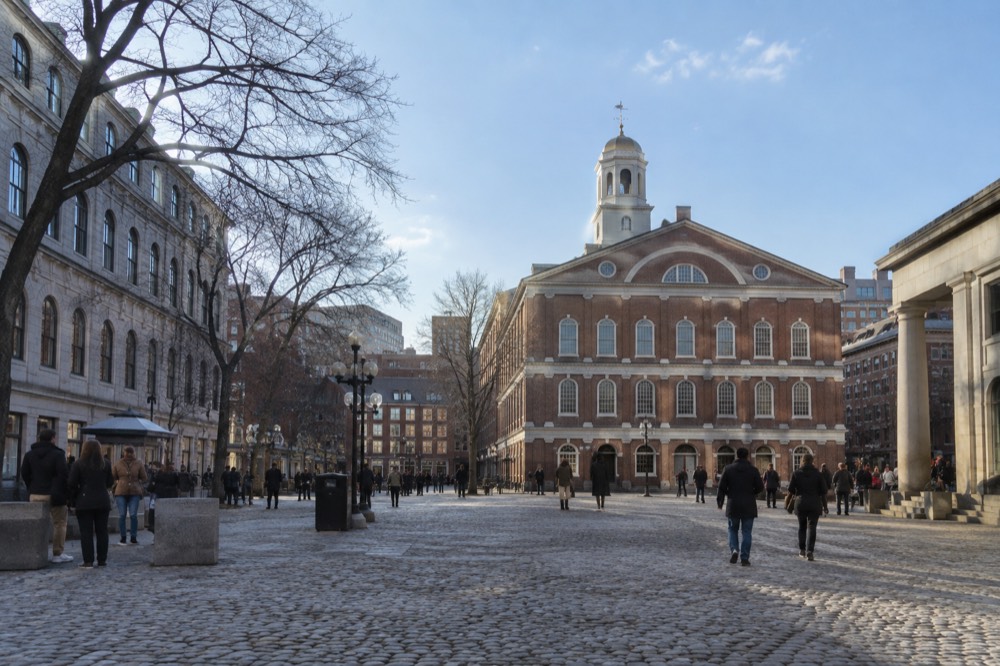
Faneuil Hall is a colonial-era market hall and meeting house, gifted to Boston by merchant Peter Faneuil and later expanded by Charles Bulfinch, whose second-floor Great Hall hosted the town meetings where colonists first organized resistance to British rule. The National Park Service calls it the Cradle of Liberty because the arguments that became the American Revolution were rehearsed inside it. Admission to the building and the Great Hall is free.
Faneuil Hall has been called the Cradle of Liberty for more than two centuries, and the nickname is not marketing. The National Park Service, which co-manages the building, calls it "The Cradle of Liberty" and notes that Bostonians have gathered here for over 275 years to assert their rights. The hall became a stage for organized opposition to British taxation in the decade before the Revolution. Peter Faneuil, a wealthy merchant, funded the hall as a gift to the city in the colonial era, and architect Charles Bulfinch expanded it in the early nineteenth century. Quincy Market followed a few decades later to handle the overflow of the harbor trade. Today the complex draws millions of visitors a year, and nearly all of the history in it is free to see.
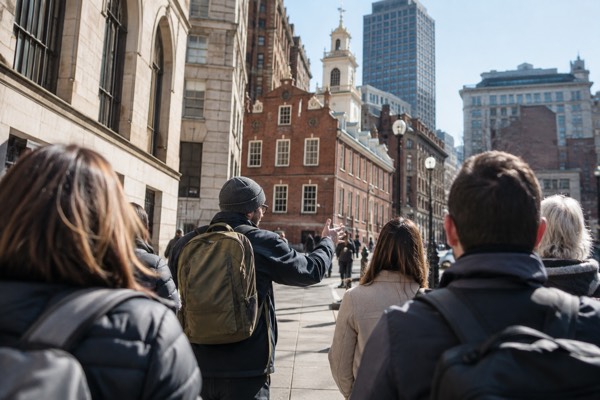
Faneuil Hall and Quincy Market are free to enter. Want the Revolutionary stories connected by a guide? Explore the downtown Freedom Trail walk, which starts at Boston Common and reaches the North End; allow time to reach the actual meeting point. Check Freedom Trail walk dates
This page covers what to expect on a visit: what is free, what the hours are, what to eat, how the site fits into the Freedom Trail, and which guided experiences are worth the money. The short version is that a visit can cost nothing at all and still deliver a full afternoon, and that the neighborhood around the market square holds enough for a second afternoon on its own. For a wider view of the city, start with our things to do in Boston overview and circle back here, or read the Boston Travel Guide homepage for the full picture.
What Is Faneuil Hall And Why Is It Called The Cradle Of Liberty?
Faneuil Hall is a colonial-era market hall and meeting house, gifted to Boston by merchant Peter Faneuil and later expanded by Charles Bulfinch, whose second-floor Great Hall hosted the town meetings where colonists first organized resistance to British rule. The National Park Service calls it the Cradle of Liberty because the arguments that became the American Revolution were rehearsed inside it. Admission to the building and the Great Hall is free.
The building has always done two jobs at once. The ground floor was built as a public market, and it still operates as one. The second floor was built as a meeting hall for the town, and in that hall Boston held the town meetings that organized opposition to British taxation. James Otis, Samuel Adams and other revolutionary figures spoke there regularly, and the phrase "no taxation without representation" was popularized from that stage.
The gilded grasshopper weathervane on top of the cupola has watched over the square since the hall was first built. It is modeled on the grasshopper on the London Royal Exchange, a deliberate nod to Boston's identity as a trading city, and it is one of the oldest weathervanes in the United States. The National Park Service, which operates the visitor center inside the hall, publishes details of the building's history and current programming on its Boston National Historical Park pages at nps.gov/bost.
A few practical notes shape every visit. The hall is a working civic building, so the Great Hall occasionally closes for city events, ceremonies or private functions even when the rest of the building is open. The National Park Service ranger desk on the ground floor is the best first stop, because rangers can confirm on the spot whether the Great Hall is open that day and what talks are scheduled.
What Are The Hours And Admission For Faneuil Hall?
Faneuil Hall is free to enter, and the Great Hall on the second floor is free as well, with no ticket required at any point. The National Park Service lists the building among the free sites of Boston National Historical Park, alongside Faneuil Hall's Great Hall, Bunker Hill Monument, the Charlestown Navy Yard and USS Constitution. Only a handful of sites on the Freedom Trail charge admission at all, and this is not one of them.
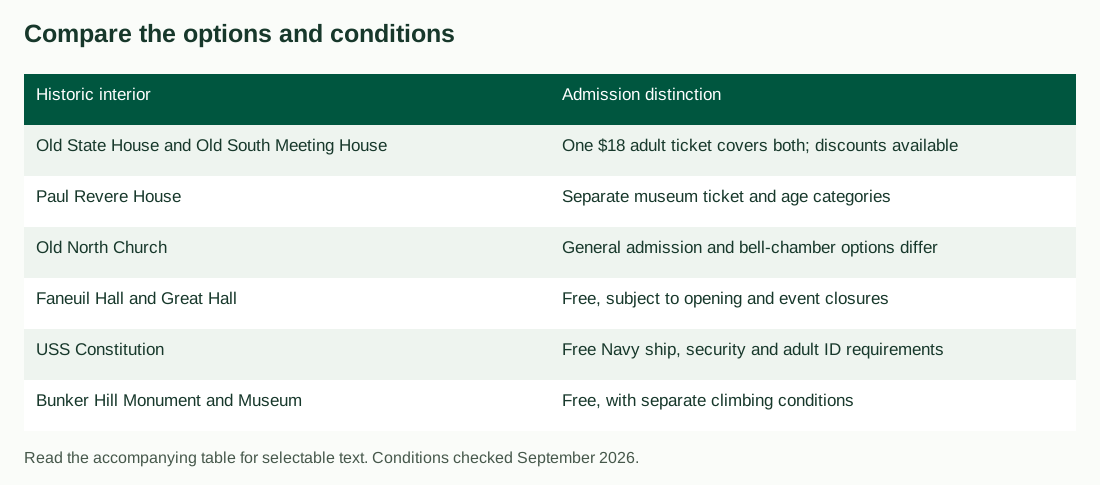
The Freedom Trail Foundation publishes the trail's basic facts at thefreedomtrail.org/visit: a 2.5-mile red-lined route connecting 16 historically significant sites spanning more than 250 years. Of those 16, only four charge admission. Here is the full pricing picture, taken from the National Park Service's own hours-and-fees page, because it answers the question every visitor eventually asks.
| Historic interior | Admission distinction |
|---|---|
| Old State House and Old South Meeting House | One $18 adult ticket covers both; discounts available |
| Paul Revere House | Separate museum ticket and age categories |
| Old North Church | General admission and bell-chamber options differ |
| Faneuil Hall and Great Hall | Free, subject to opening and event closures |
| USS Constitution | Free Navy ship, security and adult ID requirements |
| Bunker Hill Monument and Museum | Free, with separate climbing conditions |
The USS Constitution Museum, next to the ship in the Charlestown Navy Yard, is a separate institution and runs on a pay-what-you-wish suggested donation rather than a fixed price. The Paul Revere House keeps museum season hours from April 15 to October 31, 10:00 to 5:15, open daily through spring, summer and autumn; our Paul Revere House guide covers the details.
Because Faneuil Hall sits early on the trail, it makes a natural first stop or a midpoint rest. The building is fully indoors, which matters in a city whose weather turns quickly, and the market square around it has seating, restrooms and food within a few steps. If you are building a route through the rest of the trail, our Freedom Trail guide lays out the full 2.5 miles stop by stop.
A guided walk changes the experience considerably, because the hall's stories are the point and a guide brings them out. The small-group option is the strongest one on the market.
The Freedom Trail History Small Group Walking Tour runs from $39 per person, rated 4.9 across 7,835 reviews on its listing, and covers the downtown-to-North-End portion in about 2 hours 30 minutes. For visitors who would rather hear the downtown and North End story in one guided walk with a guide doing the pacing, it is the efficient choice, and it pairs naturally with a self-guided afternoon in the market afterward.
Want a guide to connect the meeting hall’s debates with the surrounding streets? Explore the roughly 2.5-hour Freedom Trail walk from Boston Common to the North End. Paid interior admission and Charlestown are not included; Faneuil Hall itself remains free. Check Freedom Trail walk dates
What Is Quincy Market And What Is Inside It?
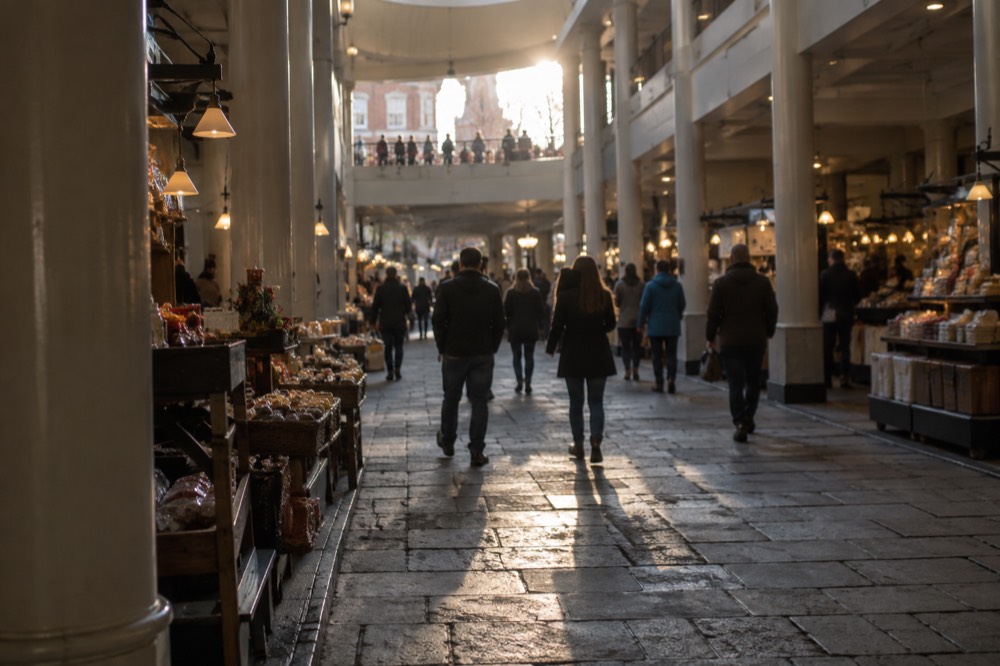
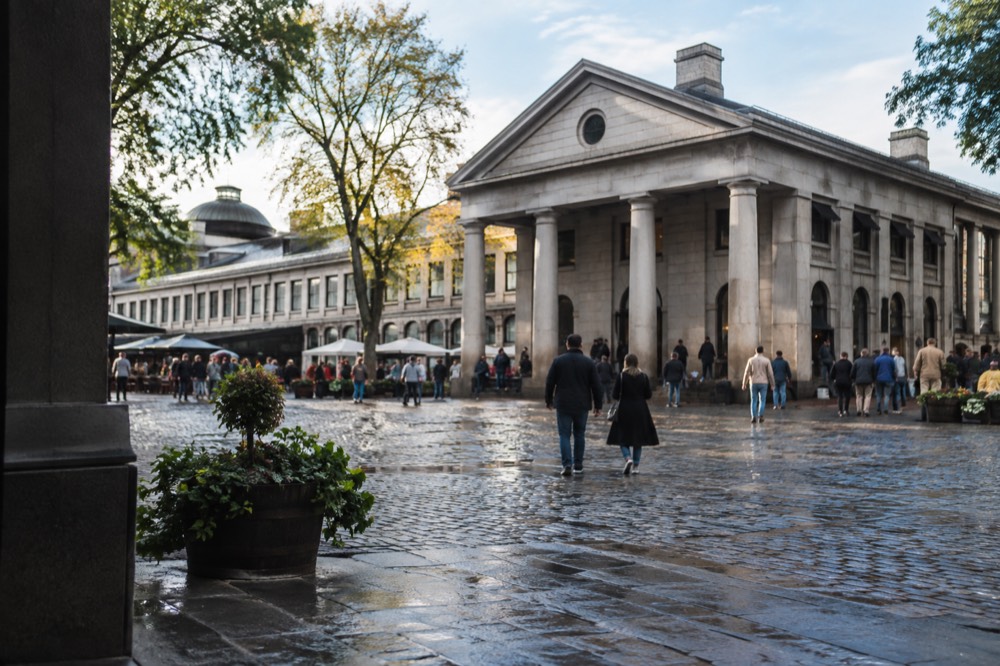
Quincy Market is the Greek Revival market building behind Faneuil Hall, designed by Alexander Parris as a permanent expansion of the city's market space, and today it functions as a food hall with a long central colonnade of stalls under one roof. The building and its two flanking wings, North Market and South Market, form a U-shaped marketplace that is free to enter and open to the public every day.
Mayor Josiah Quincy supported the market expansion as Boston’s trade grew. Quincy Market’s granite facade and Doric columns remain a major architectural feature of the marketplace. Faneuil Hall is the official Freedom Trail stop; Quincy Market and its flanking buildings are nearby landmarks, not additional stops among the sixteen.
Inside, the central hall is a food hall in the modern sense, though it predates the concept by a wide margin. The colonnade runs the length of the building with stalls on both sides and shared seating down the middle, and the two side wings hold shops and larger restaurants. Street performers work the square outside, a tradition the marketplace has leaned into for decades, and the cobblestone plaza between the buildings is where most of the street life happens.
The market's position makes it a useful base for the rest of downtown. The Boston Tea Party Ships sit a short walk along the waterfront, the New England Aquarium is a few minutes east on Central Wharf, and the Rose Kennedy Greenway runs between the market and the harbor. Visitors with a full day can start at the market, work the waterfront in the afternoon, and finish back at the square for dinner.
Nearby outings have different meeting points. Select the Aquarium departure for a Duck Tour close to the marketplace; other Duck departures are elsewhere. The downtown guided history walk starts at Boston Common. For a whale watch, follow the current booking’s exact dock instructions and allow three to four hours or longer plus early check-in.
What Should You Eat At Quincy Market?
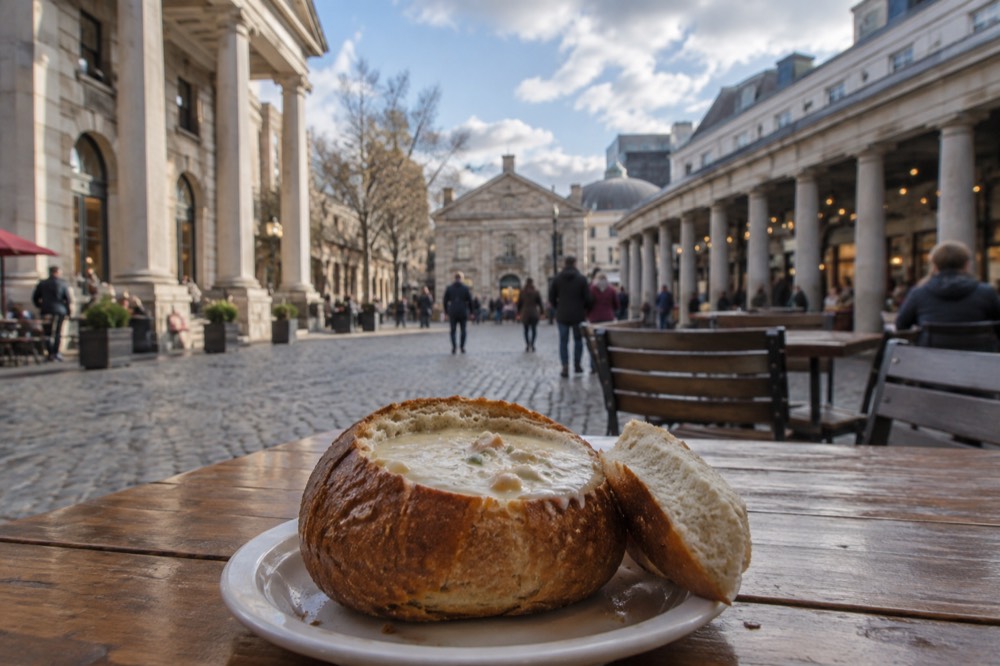
Quincy Market is best known for clam chowder and lobster rolls served in bread bowls and at raw bars along the central colonnade, alongside a rotating spread of stalls selling pizza, cannoli, baked goods, sandwiches and international dishes. The market's own food identity is New England seafood, and the chowder-in-a-sourdough-bowl combination is the item most visitors come specifically to try.
The honest framing is that the market is a food hall with a seafood emphasis, not a single famous kitchen. Stalls change over time, and the useful approach is to walk the full colonnade before committing, because the hall is longer than it looks from either end. The seafood stalls cluster toward the middle, the baked goods and dessert stalls toward the ends, and the seating in the center clears and refills in waves through the lunch hour.
Lunch is the crush. The colonnade fills between noon and 2:00 pm on any decent-weather day, and the shared tables go fastest. Two strategies work: eat early, closer to 11:00 am, or eat late, after 2:00 pm, and use the middle of the day for the Great Hall and the rest of the trail. The plaza outside has more seating in warm months, and the Greenway a block east has benches and lawn space for a takeout lunch.
For visitors organizing a whole food day around the city, the North End sits a 15-minute walk north, and it holds the city's densest concentration of Italian restaurants and pastry shops. The Old North Church is on the same walk, which turns a food trip into a history trip with no extra effort. Our North End food tour coverage goes deeper on that neighborhood if the market whets your appetite.
A separate guided food-and-history route can combine tastings with neighborhood context; it is not a Quincy Market meal voucher.
Boston's Food and History walk lists from $91 per person, rated 4.9 from 1,888 reviews, and runs 5 hours through the North End, the Freedom Trail and Beacon Hill with tastings built in. It is the strongest option for visitors who want the eating and the sightseeing handled as one itinerary rather than two.
Is Faneuil Hall The Same As Quincy Market?
No. Faneuil Hall is the original meeting hall and market at the head of the square, and Quincy Market is the separate market building behind it, added decades later to expand the city's trade space. The two buildings belong to different eras and were built for different reasons, and they are often confused because they share one marketplace and one name in most visitor shorthand, "Faneuil Hall Marketplace."
The distinction matters for planning. Faneuil Hall is the National Park Service site: ranger desk, Great Hall, museum exhibits, free admission, occasional closures for civic events. Quincy Market is the food hall: no admission, no ranger, open long hours, all commerce. A visitor who shows up expecting a museum and finds a food court has walked past the hall without realizing it, which happens constantly because the hall's ground floor is itself a market and looks commercial.
The marketplace's official umbrella name, Faneuil Hall Marketplace, covers Faneuil Hall, Quincy Market, North Market and South Market together. That name is the source of most of the confusion, and it is worth using the building names precisely when planning, because hours, events and closures differ between them.
How Do You Get To Faneuil Hall And Quincy Market?
Faneuil Hall sits on the Freedom Trail at the corner of Congress Street and North Street, a short walk from the waterfront, and the nearest MBTA subway stations are Government Center on the Green and Blue lines, Haymarket on the Green and Orange lines, and Aquarium on the Blue line. The MBTA charges $2.40 for a one-way subway ride, and a 1-Day pass costs $11.00.
The MBTA's fare pages at mbta.com/fares carry the full fare table, and two details matter for visitors. First, fares changed on 1 September 2026: riders can now make unlimited transfers between subway, bus and ferry within a two-hour window and pay only the cost of the highest-priced leg, provided the same payment method is used throughout. Second, a 1-Day or 7-Day pass behaves differently depending on the medium: on a CharlieTicket it is valid from the moment of purchase, while on a CharlieCard it starts at first use. For a visitor who buys on arrival and starts sightseeing the next morning, that difference is most of a day.
| Approach | Route | Fare notes |
|---|---|---|
| Subway, Green or Blue line | Government Center station, 2 blocks west | $2.40 one-way |
| Subway, Orange or Green line | Haymarket station, 2 blocks north | $2.40 one-way |
| Subway, Blue line | Aquarium station, 3 blocks east | $2.40 one-way |
| 1-Day pass | Unlimited travel for 24 hours | $11.00, starts at purchase on a CharlieTicket, first use on a CharlieCard |
| 7-Day pass | Unlimited travel for 7 days | $22.50 |
| On foot from the North End | Along the Freedom Trail red line | Free, about 15 minutes |
| On foot from South Station | Along Congress Street | Free, about 15 minutes |
Visitors flying in should know one quirk that saves money immediately: the Silver Line SL1 provides free service from the Logan terminal curb to South Station, as Massport itself states on its airport transport page. The free leg is the one leaving the airport, so arriving in Boston by public transit can genuinely cost nothing. From South Station it is a 15-minute walk to the market square, or one subway leg.
Parking is the expensive option downtown, and the honest advice is to avoid it. Our getting around Boston guide covers the subway in full.
When Is The Best Time To Visit Faneuil Hall?
The best time to visit is a weekday morning close to opening, when the Great Hall is quiet and the food lines are short, or a weekday after 2:00 pm once the lunch crowd clears. Summer weekends bring the biggest crowds and the street performers, while winter weekdays are the quietest, and the indoor market makes the complex a reliable rainy-day stop in any season.
Boston's weather supports year-round visiting, with a caveat. NOAA's 1991 to 2020 climate normals for the city show every month between 3.21 and 4.30 inches of precipitation, which means Boston has no wet season and no dry season to plan around. July is the warmest month at an average high of 82.1 °F, and January and February carry 58% of the year's 49.2 inches of snow between them. The market's indoor colonnade is the reason it stays busy in February.
| Season | Crowd level | What to expect |
|---|---|---|
| Summer, June to August | Highest | Street performers, full stall lineup, longest lunch lines |
| Fall, September to November | Moderate | Foliage elsewhere in the city, comfortable walking weather |
| Winter, December to February | Lowest | Indoor market, holiday shopping season spikes in December |
| Spring, March to May | Moderate | Unpredictable weather, thinning crowds before summer |
Two seasonal notes apply to the surrounding neighborhood rather than the market itself. The Swan Boats in the Public Garden are closed for the season until April 2027, per their own site, so any itinerary pairing the market with a garden visit this winter needs a substitute. The Boston Harbor Islands ferry season ends 12 October 2026, with fall sailing days varying by island and date. The Boston Common and Public Garden and the Boston Harbor Islands pages cover both.
What Tours Start Near Faneuil Hall?
The tours that depart within walking distance of the market square include the small-group Freedom Trail walk, the duck boat amphibious tours, harbor sightseeing cruises from Long Wharf, whale watching trips, and the hop-on hop-off trolley, which stops nearby. Prices on the live listings run from $39 for the Freedom Trail walk to $86 for whale watching, and the harbor history cruise lists from $46.
The market square's position, between downtown and the waterfront, puts it within a few blocks of more departure points than anywhere else in the city. This table compares the main options with the figures from each operator's live listing.
| Tour | Approximate duration | Planning condition |
|---|---|---|
| Downtown Freedom Trail walk | 2.5 hours | Meets at Boston Common, ends North End |
| Duck Tour | 80 minutes | Choose the actual one of three departure points |
| Boston whale watch | 3–4 hours or longer | Follow ticketed dock and allow 45 minutes for check-in |
| Harbor history cruise | 1 hour | Long Wharf; early boarding |
| Old Town Trolley | Loop and hop-off time vary | Current 17-stop network, check connecting loops |
| Ghosts and Gravestones | About 2 hours | Includes substantial walking; age restrictions |
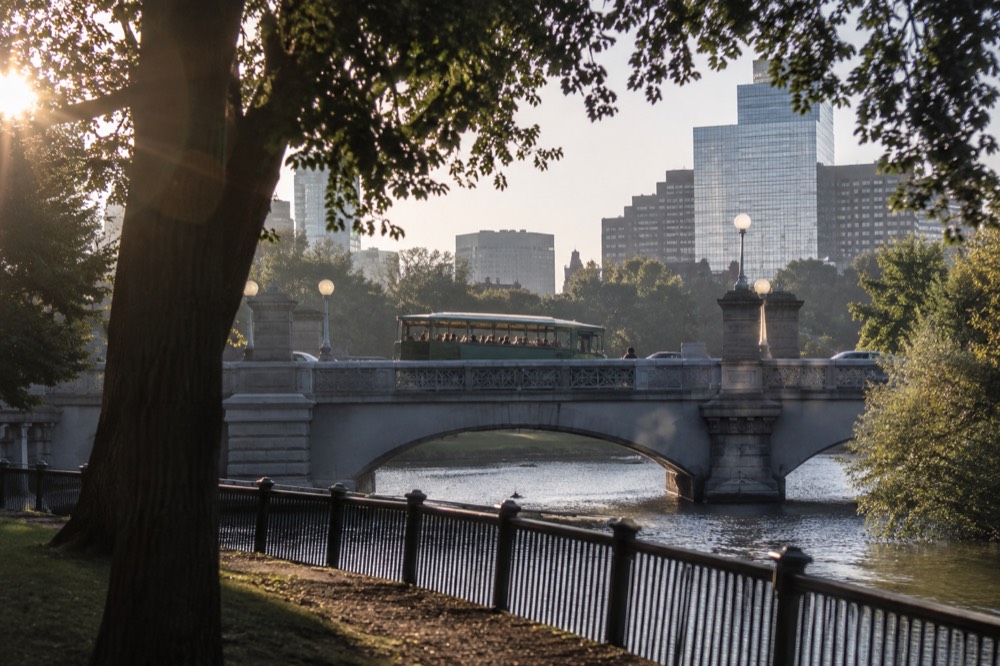
The duck boat tour deserves a specific note because it is the city's signature sightseeing product. The Boston Duck Boat Sightseeing City Tour with Cruise lists from $62 per person, rated 4.6 across 10,003 reviews, and its listing describes the river splashdown as the centerpiece: the vehicle drives straight off a ramp into the Charles. Another listing for the same Boston Duck Tours operator, lists from $62 at 80 minutes and rates 4.65 from 4,619 reviews. Both are bookable through their live listings.
For the evening, the ghost trolley is the neighborhood's dark-history option. The Boston Ghosts and Gravestones Trolley Tour lists from $46, rated 4.5 from 2,621 reviews, and covers the burying grounds and crime stories that the daytime trail skips. Our Boston ghost tours guide compares the full set.
Curious about the burying grounds after dark? Book a ghost trolley tour here.
The whale watching cruise is the half-day commitment, and it is worth the walk to the wharf if the weather cooperates.
The Boston whale watch heads toward Stellwagen Bank with a naturalist, generally taking three to four hours and sometimes longer. The Aquarium announced the 2026 season from May 18 into November, subject to actual scheduled departures. Check the current price and ticketed dock; sea conditions may cancel trips and sightings are not guaranteed.
Further reading: stellwagen.noaa.gov.
What Is Within Walking Distance Of Faneuil Hall?
Within a 15-minute walk of the market square sit the Boston Tea Party Ships, the New England Aquarium, the Rose Kennedy Greenway, the North End, the Old State House and the Old South Meeting House, plus the waterfront piers at Long Wharf. The Freedom Trail itself runs through the square, connecting it to the Old North Church and the Paul Revere House to the north and Bunker Hill across the river.
This density is the practical argument for basing a visit here. A visitor can spend a full day inside a half-mile radius without repeating a block. The Old State House anchors the trail's downtown stretch, and the USS Constitution and Bunker Hill Monument close the trail across the bridge in Charlestown. USS Constitution and Bunker Hill are free during their operating hours. Old State House is a separate paid museum, and the Navy operates the ship.
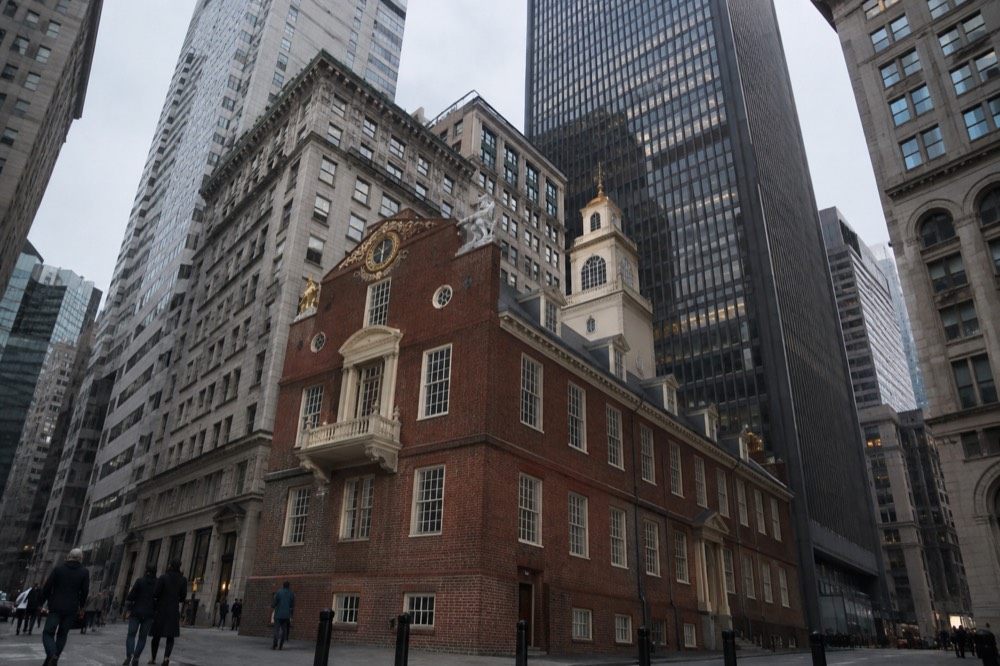
For indoor hours, the Museum of Fine Arts is a short hop by subway, and the Museum of Science is on the same Green Line corridor. Visitors with more time should read our how many days in Boston planning piece before committing to an itinerary.
What Do Locals Say About Faneuil Hall Marketplace?
The honest local consensus, reflected in years of Boston coverage, is that the marketplace is a tourist destination first and a food destination second, and that the immediate neighborhood holds the better eating: the North End for Italian, the waterfront for seafood, and Haymarket for produce. None of that makes the market a bad visit, because the history is genuinely central and the food hall is genuinely convenient, but it sets expectations.
The fair reading is that Faneuil Hall and Quincy Market do three things at a high level: free Revolution history in a working civic building, a fast lunch in any weather, and a central square from which the rest of downtown radiates. The food is reliable rather than exceptional, and the prices reflect the location. Visitors who want the city's best eating should treat the market as a stop, not a destination, and continue into the North End or toward the Seaport.
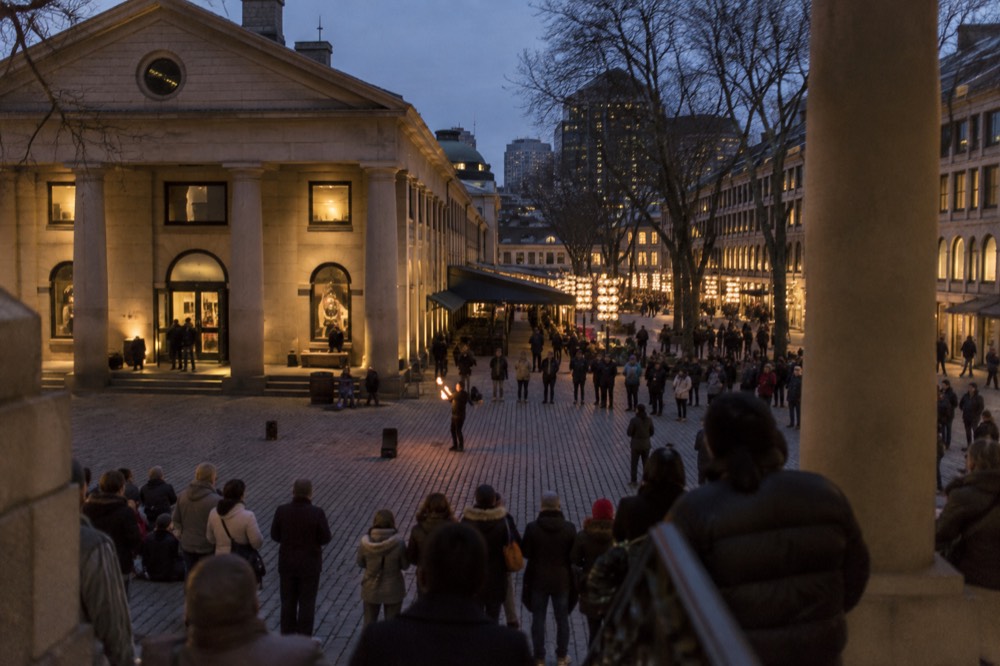
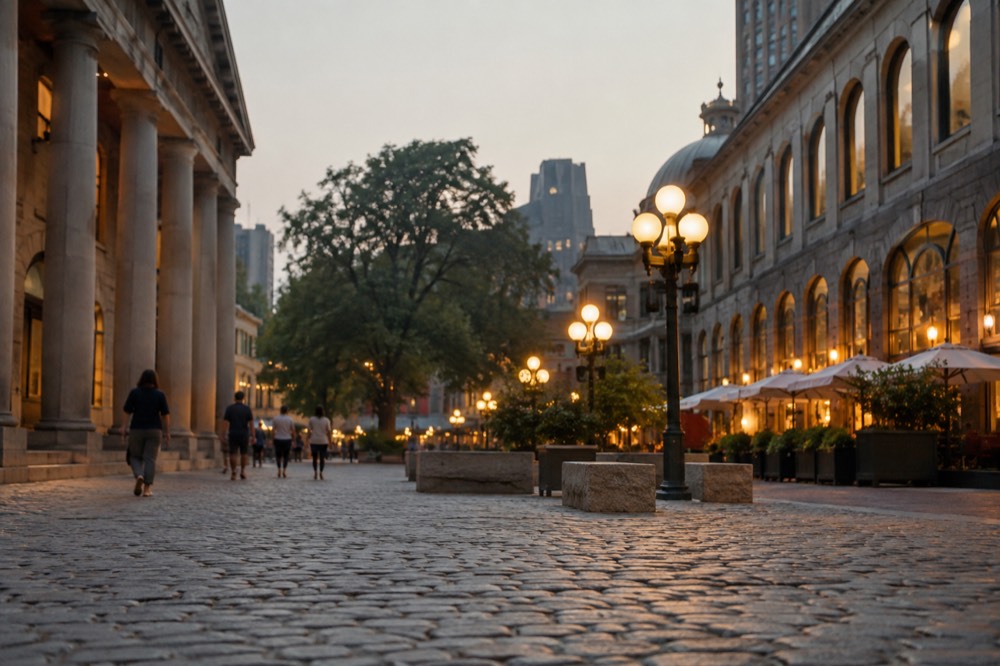
What the market does better than anywhere else in the city is atmosphere. The cobblestone square, the street performers, the grasshopper on the cupola and the harbor two blocks east add up to a public space that photographs well and functions better, and on a summer evening with the lamps on, it is one of the few downtown squares in America that feels like a stage set for a city that knows it is being watched.
One practical note on the museum landscape, because it affects planning around this neighborhood. The Museum of Fine Arts' free "Open House" days are restricted to Massachusetts residents, who must supply a valid Massachusetts zip code, and the Aquarium's discount covers residents of six New England states. Tourist-accessible discounts include MFA Third Thursdays with a $5 minimum. Free options include ICA and Gardner Thursday evenings and the Harvard Art Museums; check reservations and current hours. Never plan around "Free Fun Fridays," which no longer exists; the Highland Street Foundation's current program is August Adventures. The cheap things to do in Boston guide keeps the full list current.
Check the nearby history pub crawl’s date and age rules before planning an evening around it. The four-pub walk is for ages 21+ with ID, and food and drinks are purchased separately. It is a short local route, not the full Freedom Trail. Check history pub crawl dates
Common Questions About Faneuil Hall And Quincy Market
is faneuil hall free to enter?
Yes. Faneuil Hall and the Great Hall are free, listed by the National Park Service among the free sites of Boston National Historical Park. Quincy Market's colonnade is a public walkway with no admission either. Only 4 of the 16 Freedom Trail sites charge, and none of them is here.
how much time do you need at faneuil hall and quincy market?
Plan on 90 minutes to two hours: 30 to 45 minutes for the Great Hall and the ranger exhibits, and an hour for the market colonnade and the square. Visitors eating a full lunch in the market should add another hour, and anyone joining a walking tour from the square should plan around the tour's duration.
what is the difference between faneuil hall and quincy market?
Faneuil Hall is the original meeting hall, later expanded by Charles Bulfinch, where the revolutionary town meetings were held. Quincy Market is the separate market building behind it, added decades later, now a food hall. They share one marketplace but are different buildings with different histories, hours and functions.
is quincy market worth visiting?
As a food hall and a public space, yes: the colonnade is one of the most convenient lunch spots in downtown Boston and the building itself is a landmark. As a destination meal, the North End a 15-minute walk north holds the stronger food. The fair plan is lunch at the market, dinner in the North End.
is faneuil hall on the freedom trail?
Yes, it is one of the 16 official sites on the 2.5-mile red-lined route, which the Freedom Trail Foundation describes as spanning over 250 years of history. Faneuil Hall sits early on the trail, between Boston Common and the Old North Church, and it is free when open, with current access and programming to check.
what should i eat at quincy market?
The market's signature items are clam chowder served in a bread bowl and lobster rolls from the seafood stalls along the central colonnade. The full spread also includes pizza, cannoli, baked goods and international stalls. Walk the whole colonnade before choosing, because the hall is longer than it looks from either end.
Choose The Outing Around Your Market Visit
These options do not match your choice. Adjust the selection or reset to explore the starting recommendation.
Compare Your Market And Tour Day Totals
Reader-entered estimates in USD, not live quotes. Use the same dates and travelers for both options. Include all relevant tickets, rooms, taxes, mandatory fees and transport for the entire trip once in each total. Do not add a transfer twice if your rate already includes it.
Freedom Trail Small-Group Walk
A guided walk exploring the Revolutionary history along the Freedom Trail. The trail can also be walked independently. Review the meeting point and route before booking.
A starting option to explore. Choose dates, travelers and the exact booking option with the provider; availability and eligibility are confirmed there.
Check Freedom Trail walk dates