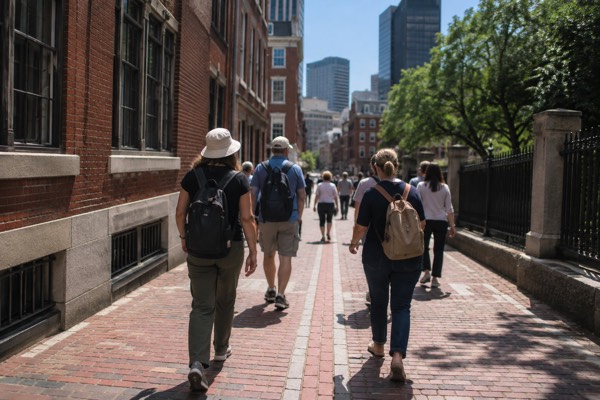
Granary Burying Ground: What To See At Boston's Most Famous Cemetery
The Granary Burying Ground fronts Tremont Street beside Park Street Church, a short walk from Boston Common. It is one of the 16 sites on the 2.5-mile Freedom Trail, with an exceptional concentration of Revolutionary names. Entry is free during posted opening hours.
Short answer
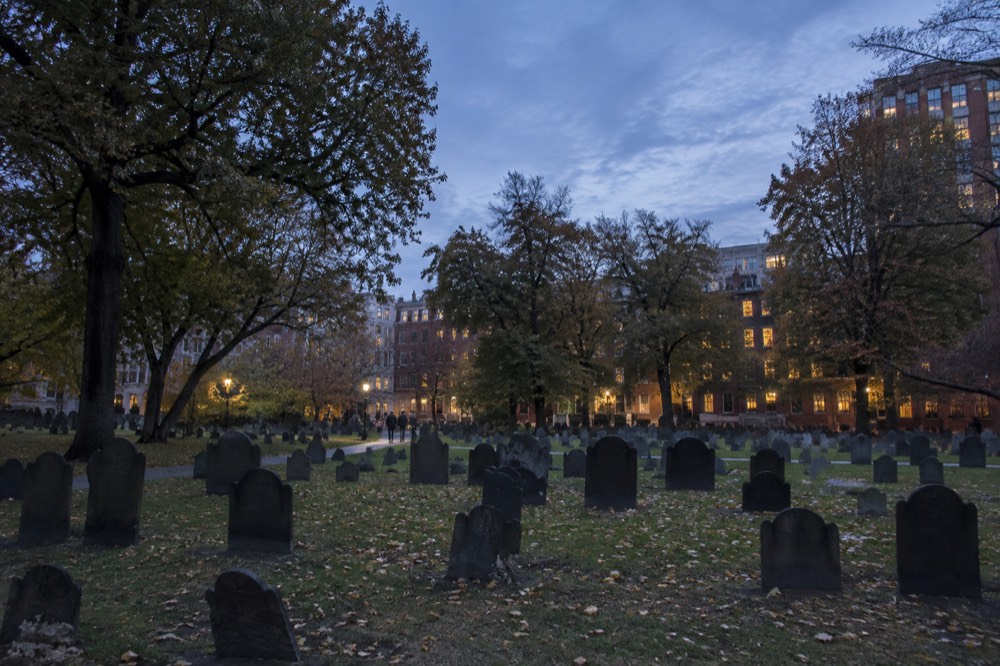
The Granary holds the graves of Paul Revere, Samuel Adams, John Hancock, James Otis, Robert Treat Paine, the five victims of the Boston Massacre, Benjamin Franklin's parents, and thousands of ordinary Bostonians from the 1600s and 1700s, all inside a single city block. No other cemetery in America packs this many recognizable Revolutionary names into so small a space.
The Granary Burying Ground fronts Tremont Street beside Park Street Church, a short walk from Boston Common. It is one of the 16 sites on the 2.5-mile Freedom Trail, with an exceptional concentration of Revolutionary names. Entry is free during posted opening hours.
Granary entry is free. Want the lives behind the headstones connected to the surrounding Revolution sites? Explore the guided downtown Freedom Trail walk, keeping the cemetery’s public opening hours in your plan. Check Freedom Trail walk dates
Who Is Buried In The Granary Burying Ground?
The Granary holds the graves of Paul Revere, Samuel Adams, John Hancock, James Otis, Robert Treat Paine, the five victims of the Boston Massacre, Benjamin Franklin's parents, and thousands of ordinary Bostonians from the 1600s and 1700s, all inside a single city block. No other cemetery in America packs this many recognizable Revolutionary names into so small a space.
That list is the reason people come. Paul Revere's grave carries a small flag and is usually the easiest to find, near the rear of the yard. Samuel Adams, the organizer whose name now sells beer across the country, lies here too, as does John Hancock, the first man to sign the Declaration of Independence and the reason the word "signature" has a synonym. James Otis argued against writs of assistance in a case John Adams later called the start of the Revolution, and Robert Treat Paine signed the Declaration alongside Hancock.
The five victims of the Boston Massacre, including Crispus Attucks, share a monument near the center of the ground. Their deaths in March 1770 gave the Patriot cause its first martyrs, and the funeral that processed through Boston drew a crowd large enough to alarm the British garrison. Josiah Franklin and Abiah Folger, Benjamin Franklin’s parents, are commemorated by the central obelisk, a detail visitors with a fondness for the younger Franklin's Boston origins often miss.
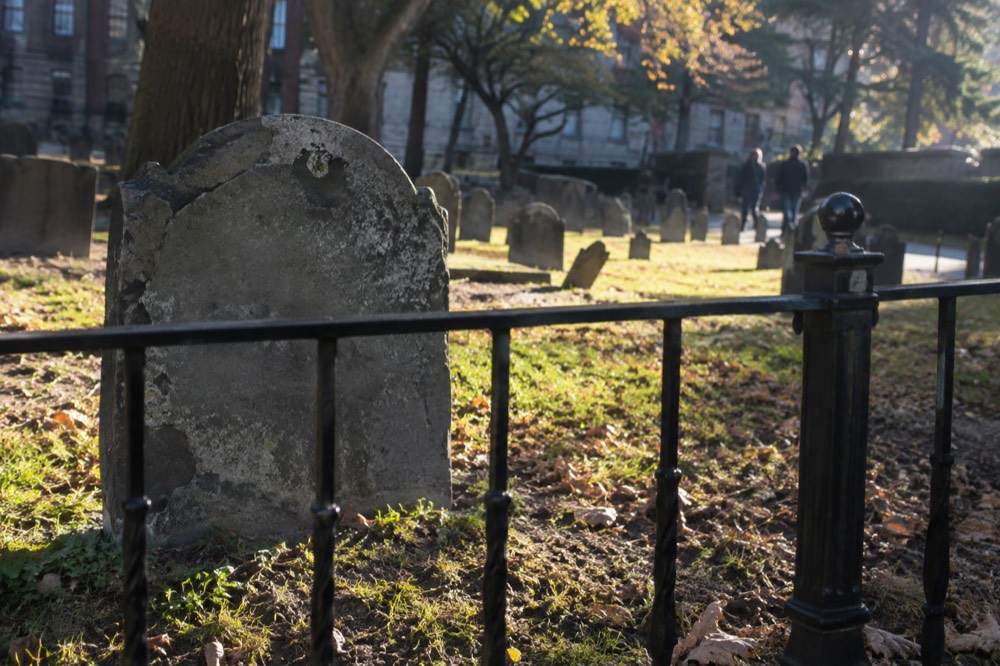
The carvings range from winged skulls to later faces, urns and willows. Look at inscriptions and styles, but do not assume the present rows form a burial chronology or reliably identify an undated stone’s age.
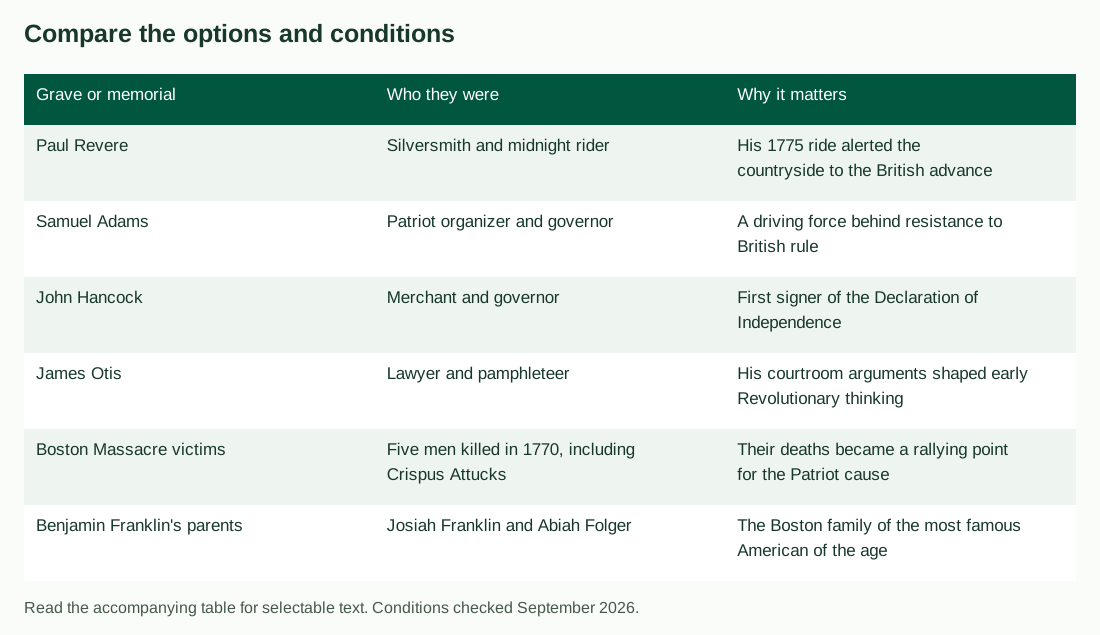
| Grave or memorial | Who they were | Why it matters |
|---|---|---|
| Paul Revere | Silversmith and midnight rider | His 1775 ride alerted the countryside to the British advance |
| Samuel Adams | Patriot organizer and governor | A driving force behind resistance to British rule |
| John Hancock | Merchant and governor | First signer of the Declaration of Independence |
| James Otis | Lawyer and pamphleteer | His courtroom arguments shaped early Revolutionary thinking |
| Boston Massacre victims | Five men killed in 1770, including Crispus Attucks | Their deaths became a rallying point for the Patriot cause |
| Benjamin Franklin's parents | Josiah Franklin and Abiah Folger | The Boston family of the most famous American of the age |
How Much Does It Cost And When Can You Visit?
Entry to the Granary Burying Ground is free, with no tour or admission ticket required. Check posted opening hours. Other free historic visits include Faneuil Hall, USS Constitution and Bunker Hill when open; several trail interiors, including King’s Chapel, charge separately.
The practical point for a visitor is that this stop costs nothing but time. The Freedom Trail Foundation's visit page notes the trail spans more than 250 years of history across its 16 sites, and the burying ground is one of several you can walk into off the street. Hours vary seasonally, as they do for most outdoor city sites, and the City of Boston's parks department administers the ground, so checking posted hours at the Tremont Street gate before planning an early-morning or evening visit is the reliable move.
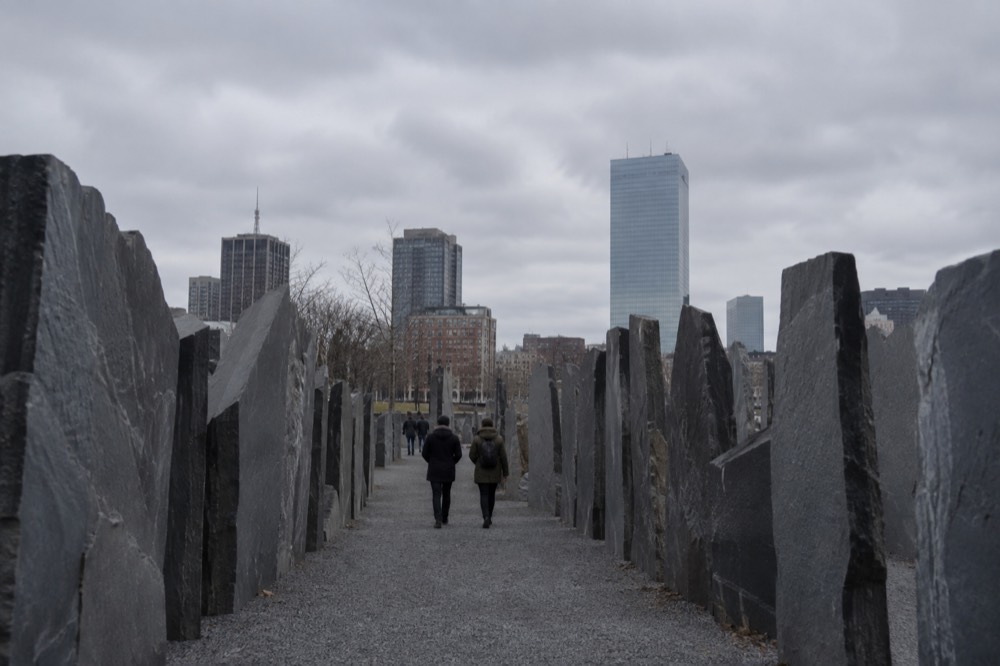
Because it is free, the burying ground works as a budget anchor for a downtown day. A visitor pairing it with other free sites, Faneuil Hall's Great Hall, the USS Constitution in Charlestown, the Bunker Hill Monument, can build an entire Revolutionary-themed day in Boston without buying a single attraction ticket. The NPS publishes the full free-and-fee split on its hours and fees page for Boston National Historical Park, which is worth a read before any Freedom Trail itinerary.
| Freedom Trail site | Admission | Notes |
|---|---|---|
| Granary Burying Ground | Free | Open ground, seasonal hours |
| Faneuil Hall and Great Hall | Free | National Park Service ranger talks inside |
| USS Constitution | Free | Active Navy ship, security screening applies |
| Bunker Hill Monument | Free | Climb is first-come, first-served |
| Old South Meeting House | $18 adult | Combined ticket covers Old State House |
| Old State House | Combined ticket | $0.00 with an Old South ticket |
| Paul Revere House | $6.00 adult | Youths 5 to 17 pay $1.00 |
| Old North Church | $10.00 Discovery Pass | Bell Chamber tour option costs more |
Choose the interiors that interest you and add only those admission costs. King’s Chapel church admission is separate from its free burying ground; Old South and Old State share one combined ticket.
After a morning among the graves, plenty of visitors want a panorama that puts the whole route in perspective. The View Boston observation deck at the Prudential Center sells timed entry, and the deck's own listing shows the current price and availability.
Where Does The Burying Ground Sit On The Freedom Trail?
The Granary sits early on the Freedom Trail, between Boston Common and King's Chapel, the fourth official stop if you start at the Common as most walkers do. From Park Street station it is a two-minute walk, and from Government Center or Downtown Crossing it is under ten minutes on foot.
That position matters for planning. The Freedom Trail's own site gives the route as 2.5 miles, and the burying ground lands in the downtown cluster where stops come thick and fast: the Common, the State House, Park Street Church, this graveyard, King's Chapel, the site of the first public school, the Old Corner Bookstore, the Old South Meeting House. A walker who reaches the Granary has already covered the civic heart of the trail and is minutes from the Old State House, where the Massacre happened in the street outside.
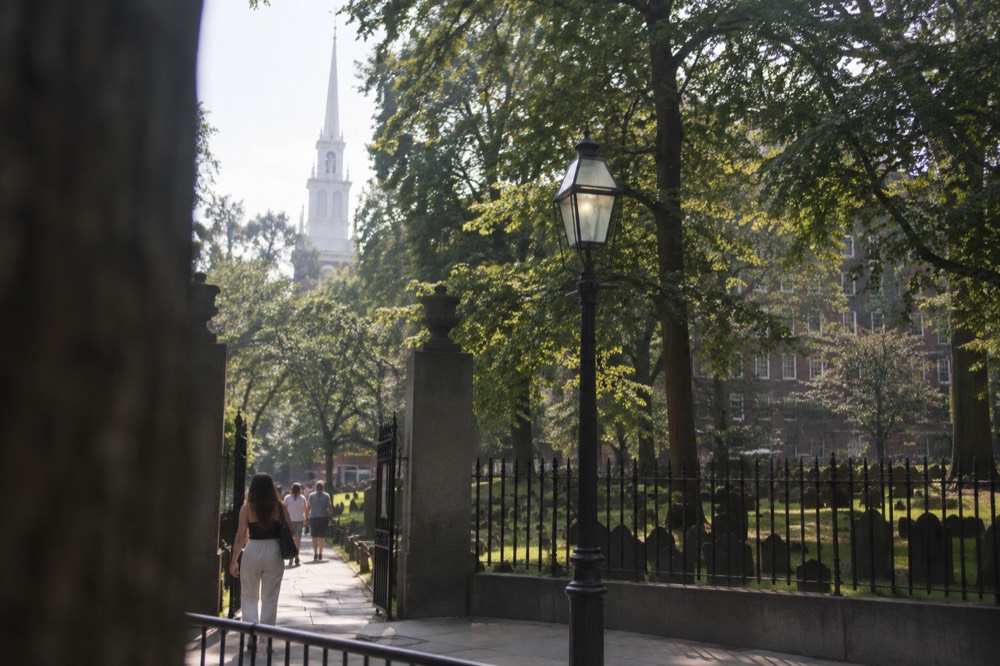
Established in 1660, the burying ground took its name from a nearby grain-storage building. Park Street Church later occupied the granary site; it is not a converted granary. Thousands of people are buried here, many without surviving individual markers.
The roughly 2.5-hour Freedom Trail History Small Group Walking Tour offers guided context from Boston Common to the North End. Check the current total and route for your date; Granary entry itself remains free.
The trail continues past the burying ground toward the North End and Charlestown, and the full Freedom Trail guide breaks the whole 2.5 miles into walkable chunks with the free sites flagged.
What Should You Actually Look For Among The Stones?
Look for the slate headstones with winged skulls, the central obelisk marking the tomb of Benjamin Franklin’s parents, Paul Revere’s markers near the rear, and the way the stones lean and crowd, because the ground ran out of space long before it stopped receiving burials. Each of these takes minutes to find and rewards a slow loop.
Enter at Tremont Street and use the posted map to locate the main memorials. The central obelisk commemorates Franklin’s parents, while Revere’s smaller stone and later large marker are toward the rear. Stay on the paths and leave fragile stones untouched.
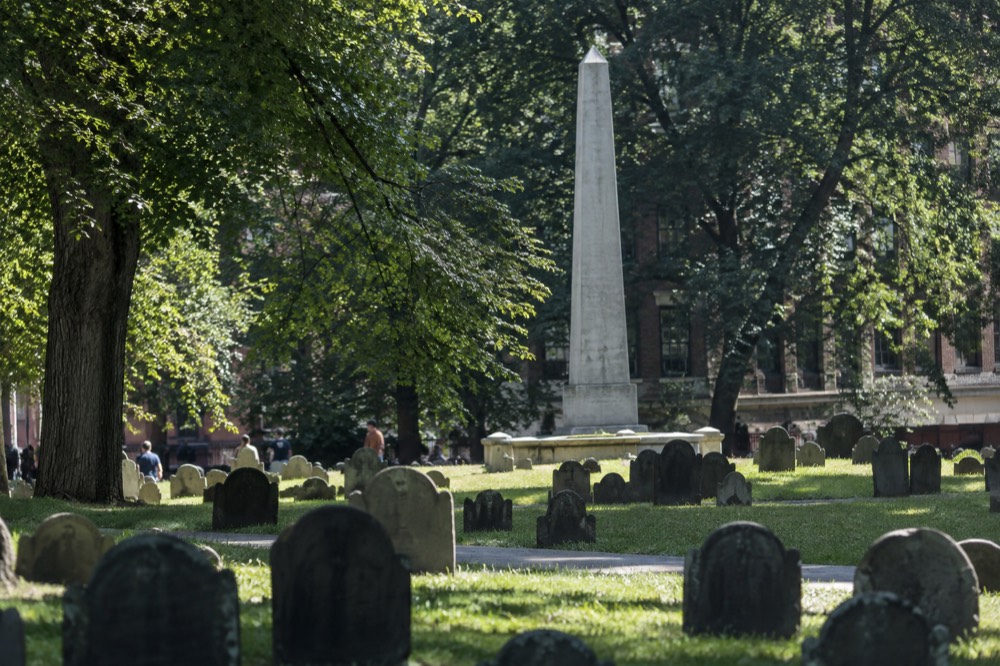
The Boston Massacre victims have their own memorial; the tall central obelisk belongs to Franklin’s parents. The five victims’ names carry the history of 1770, and Crispus Attucks in particular has drawn historians for generations: a man of African and Native descent, the first to fall, and therefore a contested symbol almost from the moment he died. John Adams defended the British soldiers at trial and still called the evening's dead the foundation of the Revolution's moral case.
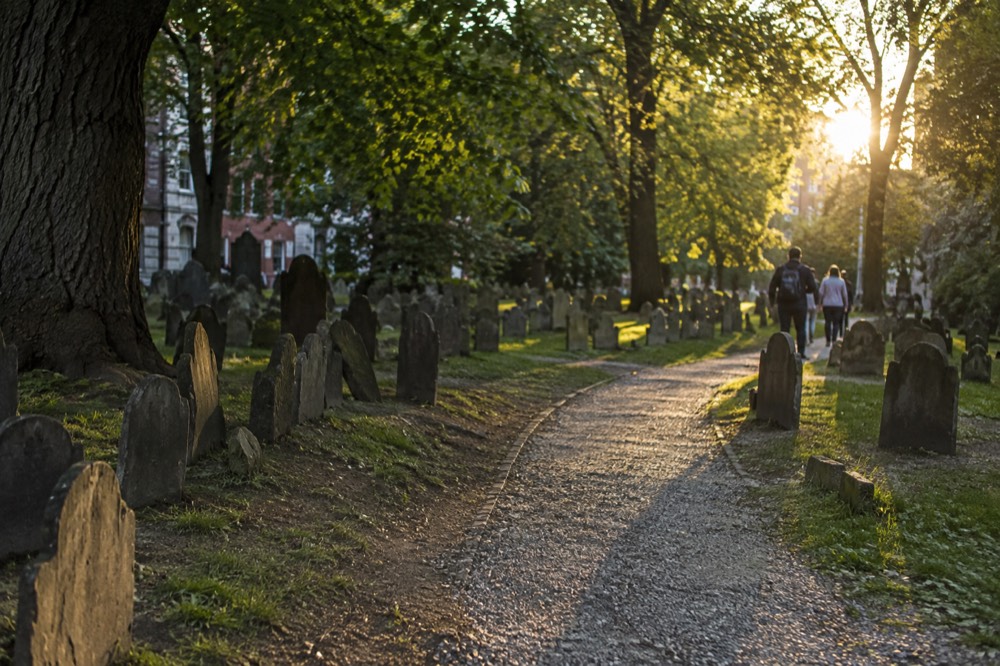
Do not expect lawns and long views. The paths are gravel, the trees are mature and shady, and the stones crowd the ground so tightly that reading several in a row without moving your feet is normal. Photographers should know the light: the walls and tree cover make midday the flattest hour, and the ground photographs best in the morning when the sun comes low across Tremont Street.
| What to find | Where in the ground | What to notice |
|---|---|---|
| Paul Revere's grave | Near the rear, beside a larger marker | Small stone for so large a legend |
| Boston Massacre memorial | Use the site map | Commemorates the victims of 1770 |
| Samuel Adams | Central rows | Later addition, governor's prominence |
| John Hancock | Near the Adams area | Large marker for the era |
| Franklin family tomb | Central obelisk | Parents of Benjamin Franklin |
| Winged-skull stones | Along the older walls | 1600s carving style, pre-Revolution |
How Do You Fit The Granary Into A Day In Boston?
Pair the burying ground with Boston Common, Park Street Church and King's Chapel in a single one-hour loop, then continue down the trail to the Old South Meeting House and the Old State House, and you will have covered eight Freedom Trail sites before lunch. The Granary itself needs 20 to 30 minutes, longer if you read the stones.
Park Street station is nearby. Boston Common lies across Tremont Street, while the Public Garden is farther west beyond the Common. King’s Chapel and its separate burying ground are farther along Tremont Street at School Street. Use the site map inside Granary to find the Massacre victims’ memorial.
For a longer day, the trail's second half crosses into the North End, where the Paul Revere House, at $6.00 adult admission per the NPS fee page, and the Old North Church, at $10.00 for its Discovery Pass, are the two paying sites in that neighborhood. The Paul Revere House guide and the Old North Church guide cover both in detail, including the combined-ticket trick at Old South and the Old State House that saves money downtown.
Visitors with kids should know the ground is compact, stroller-navigable on gravel, and short enough to hold a child's attention if you turn it into a scavenger hunt for the famous names. The things to do in Boston page places the burying ground in a full city itinerary, and the Boston Common and Public Garden guide covers the green space you walk through to reach it.
A Duck Tour offers a separate city-and-Charles-River experience after a walking visit. It takes about 80 minutes and has several boarding locations; match the selected departure to your journey rather than assuming pickup at the cemetery.
Check the longer walk’s route and physical demands before setting aside your day. The roughly four-hour option reaches the Charlestown end, with the operator recommending ages 12+; paid interiors, ship boarding and the monument climb are not guaranteed. Check the full Freedom Trail route and dates
Is The Granary Burying Ground Worth Visiting With Kids?
Yes, with framing. Children old enough to recognize Paul Revere from school, roughly eight and up, get the most from the ground, and the visit works best as a 20-minute story stop rather than a long stay. Entry is free, so a short visit costs nothing to abandon if attention runs out.
The trick is to make it a story rather than a graveyard. The Massacre memorial is the hook: five people killed in the street a few blocks away, buried together, their funeral so large the British garrison took note. From there the names build, Revere the midnight rider, Hancock the man with the enormous signature, Adams the agitator. A child who has heard any of those names in a classroom will connect them here faster than in any museum.
For a spookier take on the city's old graveyards, book a ghost trolley tour here.
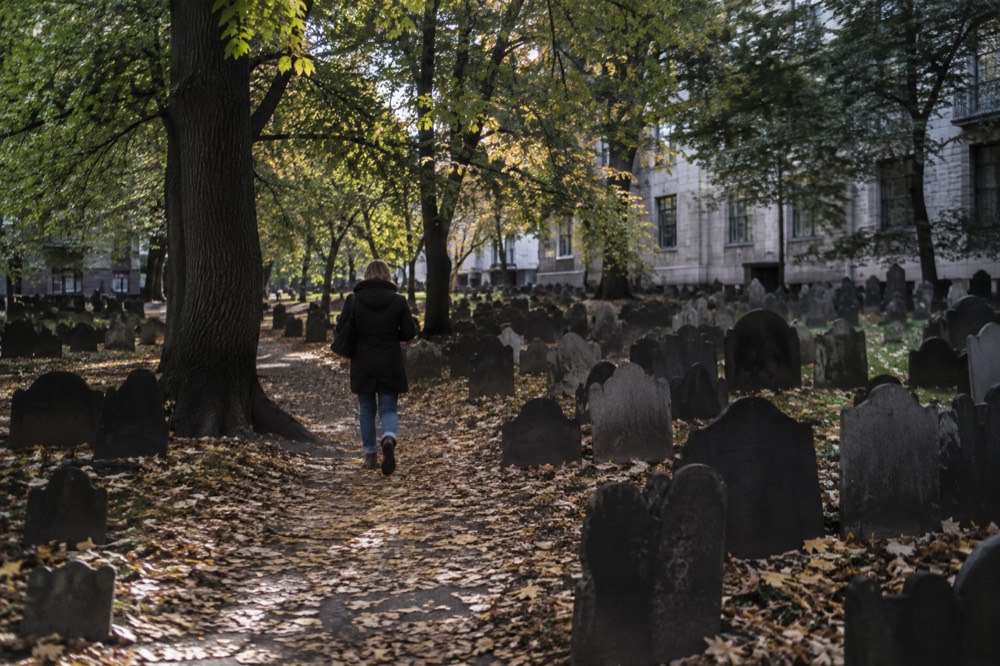
Respect matters, and the ground is still a place of burial. The paths are the place to stand, the stones are fragile, and rubbing or leaning on them damages slate that has already survived three centuries of New England weather. The ground is small enough that a parent can see the whole yard from most points, which makes supervision easy.
What Is Nearby Once You Leave The Burying Ground?
Within five minutes' walk you have Park Street Church, King's Chapel and its burying ground, the Massachusetts State House, Boston Common, and the start of the Freedom Trail's downtown stretch, plus the Red and Green lines at Park Street for anywhere else in the city. The Granary sits at the hinge of downtown, so almost every classic Boston stop is a short walk or one subway ride away.
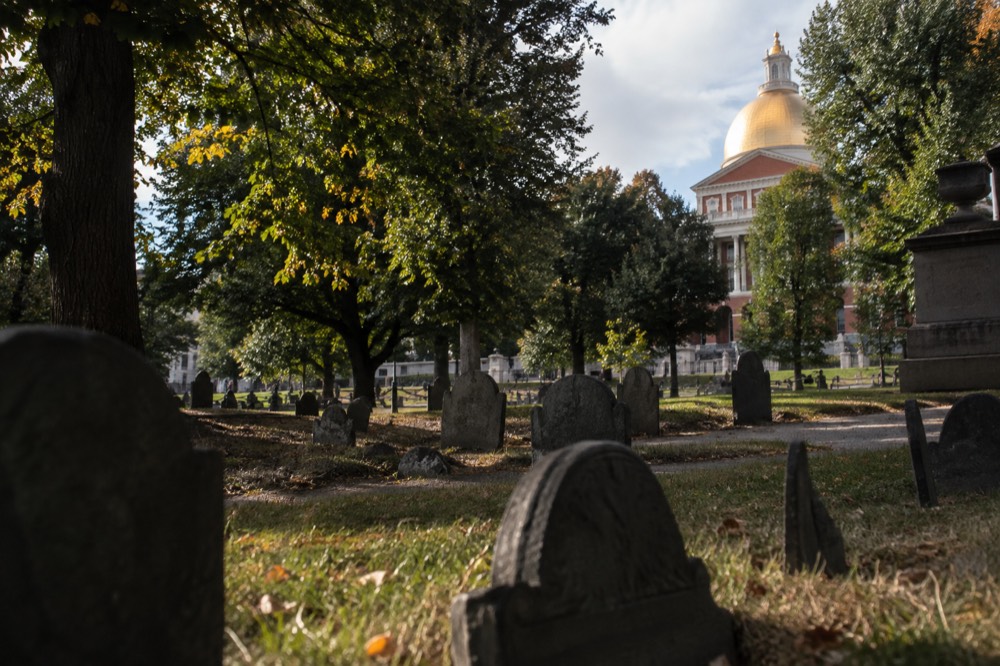
The State House's golden dome is visible from the burying ground's gate, up the hill past the Common. The Massachusetts State House guide covers tours, and the King's Chapel guide covers the church and its adjacent graveyard, which predates the Granary and holds different names. Park Street Church stands beside the cemetery on the former granary site; the church is not the old grain-storage building.
For a longer arc, the Faneuil Hall and Quincy Market guide covers the food and shopping cluster ten minutes down the trail, and the USS Constitution guide covers the free warship across the bridge in Charlestown. The Freedom Trail Foundation's official visit page publishes the route's 2.5-mile length and 16-site count for anyone planning the full walk.
| Nearby stop | Walk from the Granary | Admission |
|---|---|---|
| Park Street Church | Beside the cemetery | Free to visit the exterior and when open |
| King's Chapel burying ground | 3 minutes | Free |
| Massachusetts State House | 5 minutes uphill | Free, tours vary |
| Boston Common | 2 minutes | Free public park |
| Faneuil Hall | 10 minutes | Free |
| Old South Meeting House | 6 minutes | $18 adult, combined ticket |
| Park Street station (Red and Green lines) | 2 minutes | MBTA fare applies |
The MBTA fare table shows a subway ride at $2.40 one-way, and the fare rules changed on 1 September 2026: transfers within a two-hour window are now unlimited when you use the same payment method, paying only the highest-priced leg. For a day of hopping between downtown sites, that pilot makes the subway cheaper than it has ever been for multi-leg trips.
Common Questions About The Granary Burying Ground
Is the Granary Burying Ground free?
Yes. Entry is free during posted opening hours, with no tour or ticket required. The City of Boston manages the cemetery.
Who is buried in the Granary Burying Ground?
Paul Revere, Samuel Adams, John Hancock, James Otis, Robert Treat Paine, the five victims of the Boston Massacre including Crispus Attucks, Benjamin Franklin's parents, and thousands of ordinary Bostonians buried between the 1660s and the early 1800s.
How long does a visit take?
Plan on 20 to 30 minutes for a loop of the ground with stops at the famous graves, longer if you read the headstone carvings. The yard is small, so even a slow visit rarely exceeds an hour.
How do I get to the Granary Burying Ground?
Take the Red or Green line to Park Street station. The burying ground's Tremont Street gate is about a two-minute walk from the station exit, beside Park Street Church.
Can you take photos in the Granary Burying Ground?
Yes, photography is normal and common. Morning light is the most flattering because the walls and mature trees flatten midday sun, and visitors should stay on paths and never rub or lean on the fragile slate stones.
Is the Granary Burying Ground part of the Freedom Trail?
Yes. It is one of the 16 sites on the trail's 2.5-mile route, sitting between Boston Common and King's Chapel in the downtown stretch most walkers cover first.
For visitors building a full downtown day, the View Boston observation deck entry pairs naturally with a Freedom Trail morning, and its live listing carries current availability.
The burying ground rewards the visitor who slows down. Every stone is a name, half the famous ones belong to people a schoolchild can place, and the whole thing costs nothing but the attention you bring through the Tremont Street gate. Walk in, find Revere, find the Massacre memorial, and the rest of the Freedom Trail reads differently afterward, because this is where its cast of characters ended up.
Choose Guided Context For Your Free Granary Visit
These options do not match your choice. Adjust the selection or reset to explore the starting recommendation.
Compare Your Guided History Day Totals
Reader-entered estimates in USD, not live quotes. Use the same dates and travelers for both options. Include all relevant tickets, rooms, taxes, mandatory fees and transport for the entire trip once in each total. Do not add a transfer twice if your rate already includes it.
Freedom Trail Small-Group Walk
A guided walk exploring the Revolutionary history along the Freedom Trail. The trail can also be walked independently. Review the meeting point and route before booking.
A starting option to explore. Choose dates, travelers and the exact booking option with the provider; availability and eligibility are confirmed there.
Check Freedom Trail walk dates