Massachusetts State House
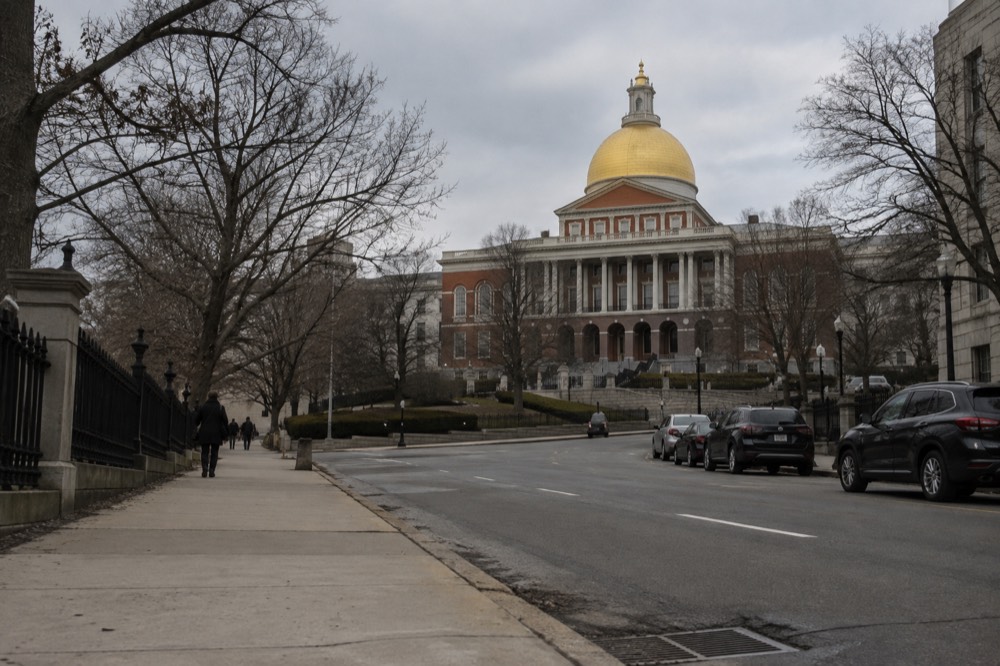
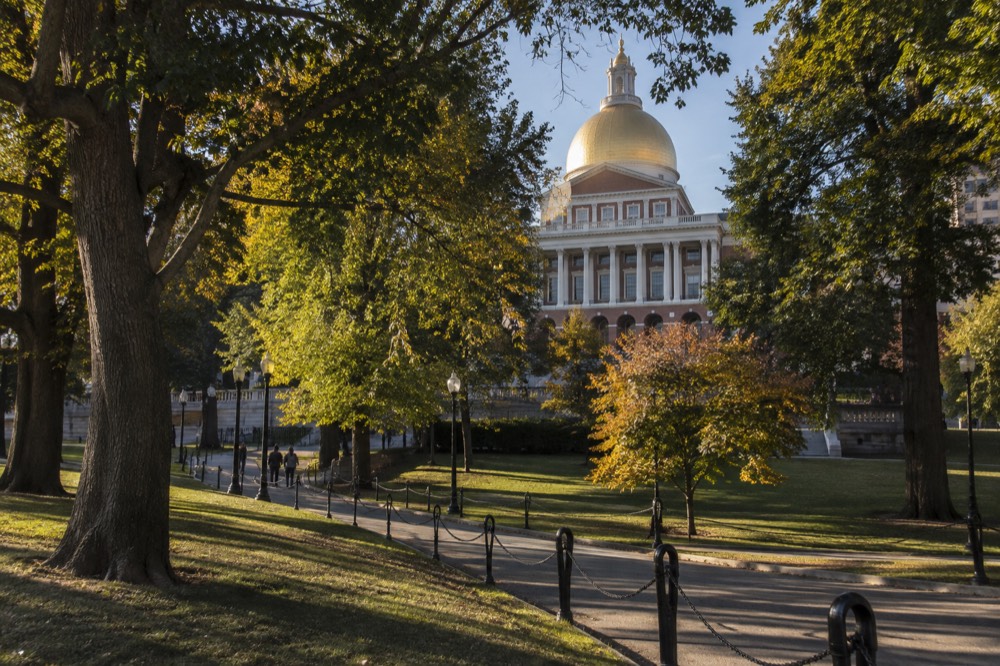
The Massachusetts State House stands at the top of Beacon Hill, its gold-leafed dome one of the most recognizable silhouettes on the Boston skyline. Oliver Wendell Holmes Sr. famously called this building "the hub of the solar system," and the nickname stuck to the whole city: Boston still brands itself as the Hub. Designed by Charles Bulfinch, the building anchors the Beacon Hill neighborhood, faces Boston Common across Beacon Street, and serves as the working seat of Massachusetts government, with the governor's office and both chambers of the state legislature inside. For a visitor, it is one of the few major Boston landmarks that costs nothing to enter, and it sits within a ten-minute walk of several of the city's other headline sights, which makes it an easy anchor for a morning on this side of downtown. This guide from Boston Travel Guide covers what you can see inside, how the free admission works, how to reach it by subway, and what to pair it with.
Short answer
The Massachusetts State House is the seat of Massachusetts state government, a Bulfinch-designed landmark with a gilded dome at the top of Beacon Hill, overlooking Boston Common. It houses the governor's office, the state Senate and the state House of Representatives, and it remains a working government building that admits visitors for free.
Massachusetts State House
The Massachusetts State House stands at the top of Beacon Hill, its gold-leafed dome one of the most recognizable silhouettes on the Boston skyline. Oliver Wendell Holmes Sr. famously called this building "the hub of the solar system," and the nickname stuck to the whole city: Boston still brands itself as the Hub. Designed by Charles Bulfinch, the building anchors the Beacon Hill neighborhood, faces Boston Common across Beacon Street, and serves as the working seat of Massachusetts government, with the governor's office and both chambers of the state legislature inside. For a visitor, it is one of the few major Boston landmarks that costs nothing to enter, and it sits within a ten-minute walk of several of the city's other headline sights, which makes it an easy anchor for a morning on this side of downtown. This guide from Boston Travel Guide covers what you can see inside, how the free admission works, how to reach it by subway, and what to pair it with.
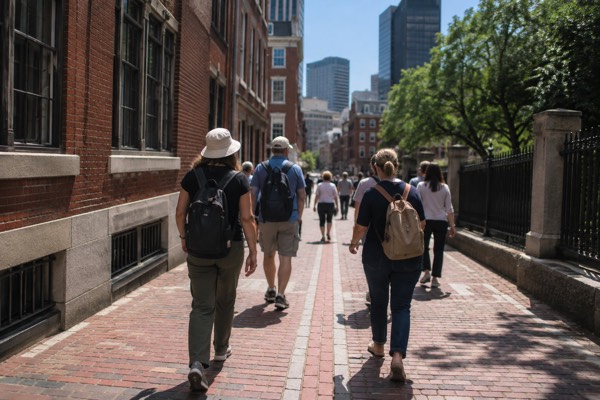
State House interior tours are free and arranged through the state’s tour office. Want guided context for the surrounding historic streets? Explore the Freedom Trail walk from Boston Common; it views the State House from outside. Check Freedom Trail walk dates
What Is The Massachusetts State House?
The Massachusetts State House is the seat of Massachusetts state government, a Bulfinch-designed landmark with a gilded dome at the top of Beacon Hill, overlooking Boston Common. It houses the governor's office, the state Senate and the state House of Representatives, and it remains a working government building that admits visitors for free. It is not a museum in the ordinary sense. Debates, hearings and ceremonies happen here on legislative days, and the corridors double as a gallery of portraits, battle flags and memorials that trace the state's history from the Revolution forward.
The dome itself is the visual signature. It was originally covered in wooden shingles, then sheathed in copper by Paul Revere and Sons in 1802, and was later gilded with gold leaf, which is what gives the building its glow on a clear afternoon. The dome has been temporarily returned to a gray or painted finish at various points in the building's life, most memorably during wartime as a protective measure, and the gold you see today was restored in a modern re-gilding project.
The building's position matters as much as its architecture. It sits at the physical and symbolic head of Beacon Hill, the neighborhood that takes its name from the beacon that once stood on this slope to warn of danger. From the front steps you look straight down Park Street toward the Common, and from several angles downtown the dome floats above the treeline like a compass point. First-time visitors consistently use it as an orientation landmark, and it earns that role honestly: the building is visible from the waterfront, from parts of the Freedom Trail, and even from the harbor on clear days.
The literary connection is worth knowing before you go. Holmes's line about the hub of the solar system was affectionate satire, but Boston adopted it, and the slogan "the Hub" appears on maps, businesses and transit art across the city. Standing in front of the building, you are standing at the origin point of the city's favorite joke about itself.
Is The Massachusetts State House Free To Visit?
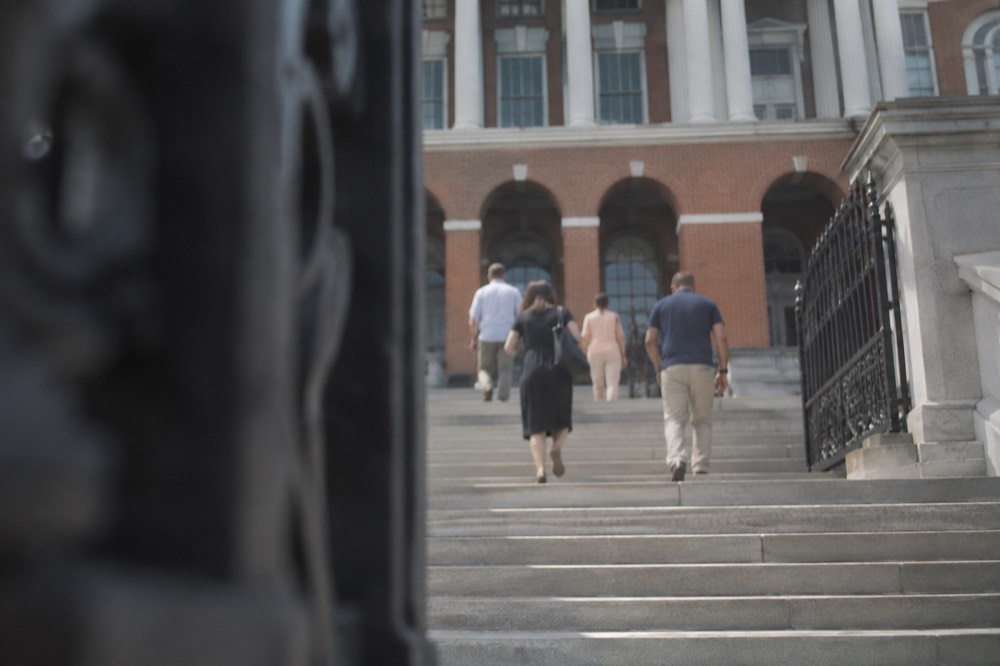
Yes, admission to the Massachusetts State House is free, and the building welcomes walk-in visitors as well as scheduled groups. Free guided tours are offered on weekdays; call the tour office to schedule your visit, and self-guided visits are possible during normal public hours, with security screening at the entrance. That makes it one of the most accessible major landmarks in Boston, and it stands in welcome contrast to several nearby historic sites that do charge.
The free-admission landscape in Boston is genuinely confusing, because the city is full of "free" headlines that turn out to be residency benefits. The MFA's open house days, for example, require a valid Massachusetts zip code, and the New England Aquarium's discount is for residents of six New England states. The State House is different: it is a public government building, open to any visitor regardless of where they live, and no ticket or pass is required. Check the building's official visit information for current tour times and any security updates before you go, since legislative schedules can shift what is open on a given day.
For context, here is how the State House compares with the historic sites around it. The National Park Service publishes the fee table for Boston National Historical Park, but individual historic interiors set their own fees, including King’s Chapel:
| Site | Admission | Notes |
|---|---|---|
| Massachusetts State House | Free | Public building, security screening applies |
| Faneuil Hall and the Great Hall | Free | NPS-operated |
| USS Constitution | Free | U.S. Navy-operated active ship |
| Bunker Hill Monument and Museum | Free | NPS-operated |
| Old South Meeting House | $18 adult | $16 senior/student, $10 ages 6–17; under six free |
| Paul Revere House | $6.00 adult | $5.50 senior and college student, $1.00 youth 5 to 17 |
| Old North Church | $10.00 Discovery Pass adult | $5.00 child 6 to 12, free under 5 |
Source for the fee figures: the NPS hours and fees page for Boston National Historical Park. The combined Old State House and Old South Meeting House ticketing arrangement is also explained there. The practical takeaway is simple: a walk that includes the State House, Faneuil Hall and the Charlestown Navy Yard costs nothing in admission, while the small museum sites along the way carry modest fees. Our overview of things to do in Boston groups these options by budget if you are building a fuller day.
What Can You See Inside The Massachusetts State House?
Inside the Massachusetts State House you can see the House and Senate chambers, the Hall of Flags, Doric Hall with its statues and memorial plaques, the Nurses Hall, the grand staircase, and a corridor of governors' portraits, plus the famous carved codfish hanging in the House chamber. Most of these spaces are viewable on a free staff-led tour, and several can be seen from public corridors even when chambers are in session.
The Sacred Cod is the item visitors ask about most. A carved wooden codfish hangs in the House chamber as a symbol of the fishing industry that built Massachusetts, and it has been part of the chamber's history since the building's early years. The Senate chamber has its own fish, a painted and carved mackerel known informally as the Holy Mackerel. Both are small details with outsized reputations, and a guide will usually point them out.
The Hall of Flags displays battle flags carried by Massachusetts units, and the adjacent memorial spaces honor service members from the Civil War forward. Doric Hall, just inside the main entrance, holds statues and plaques and functions as the building's formal reception space. The staircase rising from it is one of the most photographed interiors on Beacon Hill, and the dome's oculus above floods the upper corridors with light on a sunny day. The governors' portrait collection lining the corridors is a crash course in state history, with each portrait captioned.
| Space | What You See | Visitor Notes |
|---|---|---|
| House chamber | Sacred Cod, representatives' desks, visitor gallery | Gallery viewable when the House is not in session |
| Senate chamber | Holy Mackerel, formal chamber design | Smaller and quieter than the House chamber |
| Hall of Flags | Massachusetts battle flags and memorials | Adjacent to memorial corridors |
| Doric Hall | Statues, plaques, formal entrance hall | First stop on most tours |
| Nurses Hall | Civil War nurses memorial, rotunda access | Connects to the grand staircase |
| Grand staircase and dome interior | Oculus light, marble and ironwork | Best interior photo opportunity |
Room and gallery access depends on official visitor rules, proceedings and events. Do not assume you can enter a chamber whenever it is empty. Call 617-727-3676 to arrange a free staff-led tour and follow the guide’s access instructions.
How Do You Get To The Massachusetts State House?
The easiest way to reach the Massachusetts State House is by subway to Park Street station, which sits at the foot of Beacon Street directly below the building and is served by the Red and Green lines; Government Center station on the Green and Blue lines is a slightly longer walk on the other side of the hill. From Park Street station you walk uphill along Park Street to Beacon Street and the front steps are in front of you, so the whole transfer from train to doorstep takes minutes.
The MBTA's own fare table is the authority on what the ride costs, and it changed in a significant way on 1 September 2026. A one-way subway trip is $2.40, a local bus ride is $1.70, a 1-Day pass is $11.00 and a 7-Day pass is $22.50. The new fare pilot introduced unlimited transfers within a two-hour window, paying only the highest-priced leg, provided you use the same payment method throughout. That matters for a Beacon Hill itinerary, because a day that hops between the State House, the Common and the waterfront is exactly the kind of multi-leg day the transfer window rewards.
| MBTA Fare | Price | Notes |
|---|---|---|
| Subway one-way | $2.40 | Red, Orange, Green, Blue lines, Mattapan Trolley, Silver Line SL1-SL3 |
| Local Bus one-way | $1.70 | Express Bus fares dropped to this level in the 2026 pilot |
| 1-Day Pass | $11.00 | Unlimited travel for 24 hours from first use |
| 7-Day Pass | $22.50 | Unlimited travel for 7 days from first use |
| Two-hour transfers | Highest leg only | Same payment method required, from September 1, 2026 |
Source: the MBTA fares page. One detail worth knowing before you buy: a 1-Day or 7-Day pass loaded on a CharlieTicket starts at purchase, while the same pass on a CharlieCard starts at first use. If you buy on arrival day and start sightseeing the next morning, that difference is most of a day.
Walking is the other good answer. The State House sits on the Freedom Trail's route through downtown, and the red line painted on the sidewalks leads past the Granary Burying Ground, the Old State House and down toward Faneuil Hall and Quincy Market. Coming the other way, the building is a short uphill walk from the Boston Common and Public Garden. If you are driving, be warned that Beacon Hill parking is scarce and expensive, and Boston parking generally cannot be relied on for a day of sightseeing; the subway is the better plan.
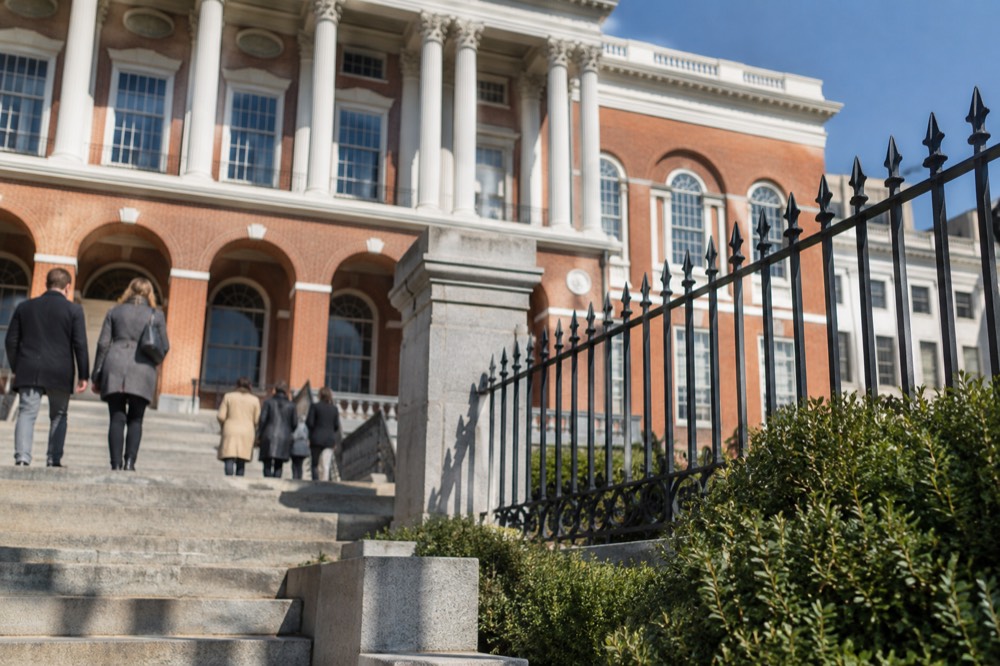
What Is Near The Massachusetts State House?
The Massachusetts State House is surrounded by a dense cluster of major sights: Boston Common and the Public Garden at its front steps, Beacon Hill's Acorn Street and Charles Street below it, the Freedom Trail's downtown sites a few blocks away, and the Charles River Esplanade a short walk west. Few Boston landmarks sit in a richer neighborhood for walkable sightseeing, and a half day built around the State House can absorb four or five headline stops without any transit at all.
Start downhill. The Common is literally across the street, and the Public Garden beyond it holds the lagoon and the swan boat lagoon area, though the Swan Boats themselves are closed for the season and will not run again until April 2027, per their own site. The Granary Burying Ground sits between the State House and the Common's Park Street corner, with the graves of Samuel Adams, John Hancock and Paul Revere. The Paul Revere House is a longer walk across downtown into the North End, but it pairs naturally with a Freedom Trail morning.
| Nearby Attraction | Direction From the State House | Why Go |
|---|---|---|
| Boston Common and Public Garden | Across Beacon Street | Oldest public park in the country, lagoon, swan boat setting |
| Granary Burying Ground | Down Park Street | Revolutionary-era graves, Freedom Trail stop |
| Freedom Trail downtown sites | Downhill on the red line | Old State House, Old South Meeting House, Faneuil Hall |
| Charles River Esplanade | West along Beacon Street | Riverfront walking and cycling path |
| Museum of Fine Arts | Further down Huntington Avenue | Art of the Americas galleries, reopened for the America 250 anniversary |
| Newbury Street and Back Bay | Southwest via the Common | Shopping, dining, brownstone architecture |
Beacon Hill itself deserves the walk down its own streets. Charles Street at the bottom of the hill is lined with independent shops and small restaurants, and the residential side streets above it, including the famously photographed Acorn Street, are the best-preserved stretch of nineteenth-century Boston anywhere. The neighborhood is quiet and residential, so treat doorsteps and doorways with respect, but the walking is the attraction.
For indoor stops, the Museum of Fine Arts and the Boston Public Library are both reachable without a car, and the Prudential Center and View Boston observation deck gives you the reverse view: from up there you can pick out the State House dome in the Beacon Hill streetscape, which is a satisfying way to end a day that started at its front steps.
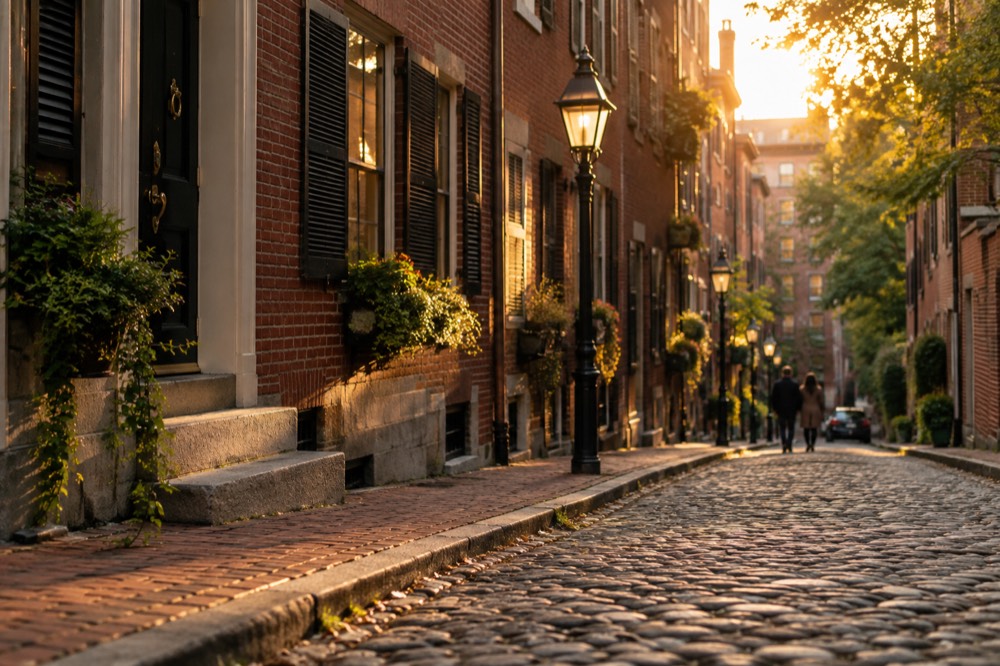
How Long Should You Spend At The Massachusetts State House?
Most visitors should plan on one to two hours at the Massachusetts State House: about forty to forty-five minutes for a guided tour of the chambers and halls, plus time for security screening, the front steps and the view down Beacon Street. Add another hour if you want to linger in the Hall of Flags or catch a legislative session from a gallery, and plan a half day if the State House is anchoring a wider Beacon Hill and Common walk.
The security screening is the main reason to build in buffer time. This is a working government building, and entry procedures can resemble an airport checkpoint on busy days. Arriving a little before a scheduled tour start is the reliable move. Weekday mornings tend to be quieter than afternoons, and days when the legislature is in session are livelier but more restricted in the chambers.
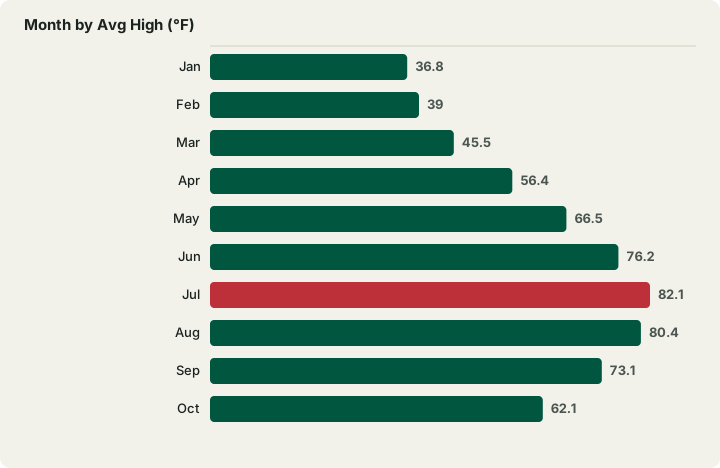
Weather barely needs to factor into the timing, which is worth saying plainly because Boston weather folklore is loud. The NOAA climate normals for the city show that every month of the year averages between 3.21 and 4.30 inches of precipitation: Boston has no wet season and no dry season. What it does have is snow, 49.2 inches annually on average, with 58 percent of it falling in January and February. A State House visit is largely indoors, so it works in any season, and it is one of the better picks for a raw winter day.
| Month | Avg High (°F) | Avg Low (°F) | Precip (in) | Snow (in) |
|---|---|---|---|---|
| Jan | 36.8 | 23.1 | 3.39 | 14.3 |
| Feb | 39.0 | 24.6 | 3.21 | 14.4 |
| Mar | 45.5 | 31.1 | 4.17 | 9.0 |
| Apr | 56.4 | 40.8 | 3.63 | 1.6 |
| May | 66.5 | 50.3 | 3.25 | 0.0 |
| Jun | 76.2 | 59.7 | 3.89 | 0.0 |
| Jul | 82.1 | 66.0 | 3.27 | 0.0 |
| Aug | 80.4 | 65.1 | 3.23 | 0.0 |
| Sep | 73.1 | 58.2 | 3.56 | 0.0 |
| Oct | 62.1 | 47.5 | 4.03 | 0.2 |
| Nov | 51.6 | 37.9 | 3.66 | 0.7 |
| Dec | 42.2 | 29.2 | 4.30 | 9.0 |
Source: NOAA's Boston-area climate pages, from the 1991 to 2020 monthly normals recorded at Logan Airport. July, not August, is the warmest month at an 82.1 °F average high, and the airport station's harbor location makes those readings slightly maritime compared with inland neighborhoods.
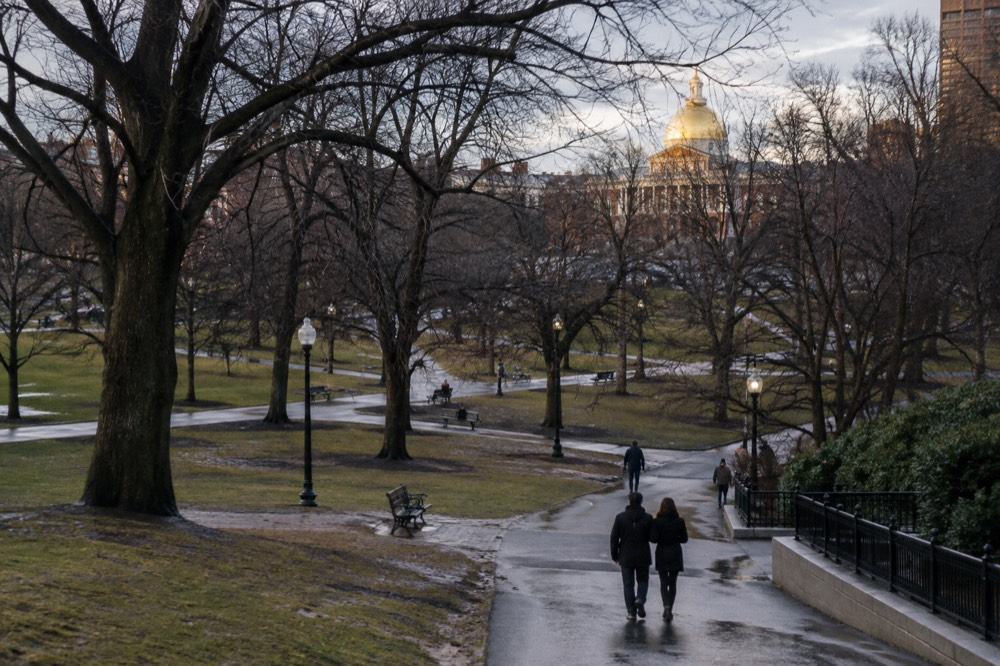
Can You Tour The Massachusetts State House With A Guide?
Yes: free guided tours of the Massachusetts State House are run by the building's own staff on weekdays, covering the chambers, the Hall of Flags and the major memorials, and the exterior Freedom Trail walk recommended here does not include interior access. The official staff tours provide a free guided interior visit, and they are free, which makes this one Boston landmark where booking something adds nothing.
That said, the State House is a regular stop on Boston's commercial walking itineraries, viewed from outside, and those tours are worth considering for the surrounding context rather than the building itself. A Freedom Trail walk connects the State House to the Revolution-era sites downhill and explains how this building fits the story that begins at Boston Common. A duck boat tour passes through the downtown streets and splashes into the Charles River, giving a completely different angle on the skyline the dome anchors.
If the Revolution story pulls you onward, book a museum admission ticket here.
| Separate outing | Approximate duration | Planning condition |
|---|---|---|
| Freedom Trail walk | 2.5 hours | Exterior history, no State House interior entry |
| Duck Tour | 80 minutes | Selected Boston boarding point, no State House pickup |
| Old Town Trolley | Depends on stops | 17-stop Boston route; check last pickup |
| View Boston | Allow 1–1.5 hours | Prudential Center, separate admission |
| Harbor cruise | One hour | Long Wharf, arrive at least 15 minutes early |
Compare current prices and route details for any paid outing. The Freedom Trail History Small Group Walking Tour supplies wider downtown interpretation; the State House itself offers free official interior tours. Tip-based walks are another format, with gratuities expected rather than a guaranteed zero-cost guided experience.

What Should You Know Before Visiting The Massachusetts State House?
Before visiting the Massachusetts State House, know three things: admission is free but security screening applies, weekday visits offer the staff-led tours and the liveliest working-building atmosphere, and the surrounding Beacon Hill streets reward an extra hour of walking more than almost any other neighborhood in Boston. Everything else is detail, but a few details genuinely change the day.
First, check the building's official visitor information for the current tour schedule before you set out. Legislative calendars shift, and a day with big hearings can close galleries that were open the week before. The building remains open to the public through routine government business, but the difference between a quiet Tuesday and a busy session day is real.
Compare actual paid journeys with a pass before buying. Park Street serves the Red and Green lines, while many nearby sites are walkable. The two-hour transfer window runs from the initial tap, not from the end of an attraction visit.
Third, do not skip the neighborhood. Visitors who walk the State House, photograph the dome and leave miss the best part of the visit, which is the walk down through Beacon Hill to the Common. The brick sidewalks, the gas-lamp style fixtures and the preserved rowhouses are the setting that makes the building make sense.
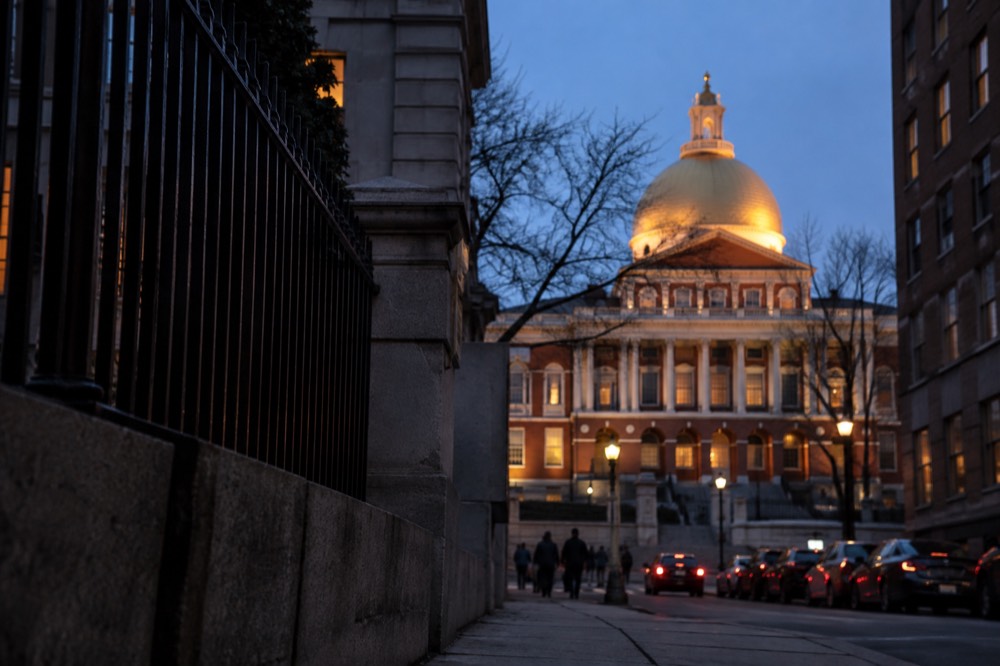
A sample morning starts with the free State House tour, then a walk down Park Street and along Tremont to Granary’s entrance. The cemetery is not a through-route to the Common. Continue across to the Common and Public Garden, then choose lunch on Charles Street or Newbury Street. Allow a separate journey for any afternoon observation deck or harbor cruise.
Families should note that the building works fine for older kids, who tend to enjoy the Sacred Cod story and the flag hall, but the tour's pacing suits patient listeners better than toddlers. Anyone with mobility concerns should check the accessible entrance information on the official site before visiting, since the hill and the front steps are part of the experience. Photographers will get the best dome shots from the Common side in mid-morning light, when the sun is behind you looking uphill from the park.
Want to follow the morning’s land-based history with the harbor story? Explore the narrated one-hour cruise from Long Wharf. Allow time to reach the waterfront and arrive 15 minutes before departure; the cruise does not collect you from Beacon Hill. Check harbor cruise departure times
Common Questions About The Massachusetts State House
Is the Massachusetts State House free to visit?
Yes. Admission is free, the building is open to the public regardless of residency, and free guided tours led by staff run on weekdays. Security screening applies at the entrance, so build in a few extra minutes.
What can you see inside the Massachusetts State House?
The House and Senate chambers, the Hall of Flags, Doric Hall, the Nurses Hall, the grand staircase, the governors' portrait corridors, and the carved Sacred Cod hanging in the House chamber. Gallery access depends on whether the legislature is in session.
How do you get to the Massachusetts State House?
Take the Red or Green Line to Park Street station, which sits directly below the building, then walk uphill along Park Street to Beacon Street. Government Center station on the Green and Blue lines is a slightly longer walk around the other side of the hill. A one-way subway ride is $2.40.
How long should you spend at the Massachusetts State House?
One to two hours covers a staff tour, the halls and the front steps. Half a day is the right budget if you are also walking Beacon Hill, the Common and the Public Garden, which most visitors should.
Can you tour the Massachusetts State House with a guide?
Yes, and the guide is free: the building's own staff lead weekday tours. Commercial Boston walking tours include the State House area on their routes but view it from outside, so book those for the surrounding context rather than for interior access.
What is near the Massachusetts State House?
Boston Common and the Public Garden across the street, the Granary Burying Ground a block downhill, the Freedom Trail's downtown sites within a short walk, and the Charles River Esplanade to the west. Beacon Hill's Charles Street and Acorn Street sit directly below the building.
Plan The Paid Outing Around Your Free State House Visit
These options do not match your choice. Adjust the selection or reset to explore the starting recommendation.
Compare Your Free-Landmark And Paid-Outing Totals
Reader-entered estimates in USD, not live quotes. Use the same dates and travelers for both options. Include all relevant tickets, rooms, taxes, mandatory fees and transport for the entire trip once in each total. Do not add a transfer twice if your rate already includes it.
Freedom Trail Small-Group Walk
A guided walk exploring the Revolutionary history along the Freedom Trail. The trail can also be walked independently. Review the meeting point and route before booking.
A starting option to explore. Choose dates, travelers and the exact booking option with the provider; availability and eligibility are confirmed there.
Check Freedom Trail walk dates