Boston History For Visitors
Boston was founded in 1630 by Puritan colonists led by John Winthrop, on land already inhabited by Indigenous people. Revolutionary resistance left sites across downtown, while the Siege of Boston extended around the city, including Charlestown and Dorchester Heights. The Freedom Trail links16 sites along a2.5-mile route. This guide explains what survives, what costs admission and how guided experiences differ.
Short answer
Boston matters because Boston was a center of Revolutionary resistance, while the opening battles took place in Lexington and Concord. The Massachusetts Bay Colony had a century and a half of self-government, printing and shipbuilding behind it when Parliament began taxing the colonies directly. The Stamp Act protests, the Boston Massacre, the Tea Party, and the punitive acts that closed Boston's port form a single escalating chain, and the British march to Concord began to seize military supplies stored in Concord.
Boston was founded in 1630 by Puritan colonists led by John Winthrop, on land already inhabited by Indigenous people. Revolutionary resistance left sites across downtown, while the Siege of Boston extended around the city, including Charlestown and Dorchester Heights. The Freedom Trail links16 sites along a2.5-mile route. This guide explains what survives, what costs admission and how guided experiences differ.
Explore the small-group outdoor history walk, then compare the longer Charlestown route or separate interior tickets. A guide and an admission pass buy different things. Choose the exact sites and check opening hours before reserving; the outdoor trail remains free. Check Freedom Trail walk dates
Further reading: 16 historic sites strung along a 2.5-mile red-lined route.
Why Is Boston So Important To American History?
Boston matters because Boston was a center of Revolutionary resistance, while the opening battles took place in Lexington and Concord. The Massachusetts Bay Colony had a century and a half of self-government, printing and shipbuilding behind it when Parliament began taxing the colonies directly. The Stamp Act protests, the Boston Massacre, the Tea Party, and the punitive acts that closed Boston's port form a single escalating chain, and the British march to Concord began to seize military supplies stored in Concord.
The Siege of Boston ended the war's first phase when the British evacuated the city.
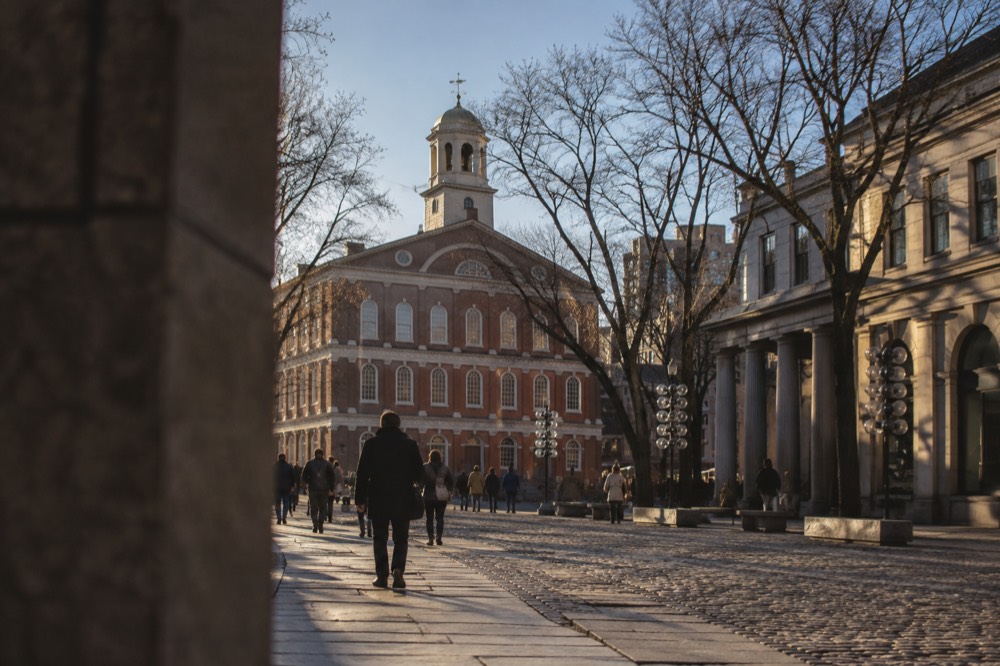
That chain of events left physical marks. The Old South Meeting House, where the Tea Party plot was finalized, still stands at Washington and Milk streets. The Granary Burying Ground holds the graves of Samuel Adams, John Hancock, Paul Revere and the victims of the Boston Massacre. The Old North Church, where the famous revolutionary lanterns were hung, holds services to this day. Faneuil Hall, where generations of anti-British rhetoric was delivered from the second floor, is now part of a National Historical Park and is free to enter.
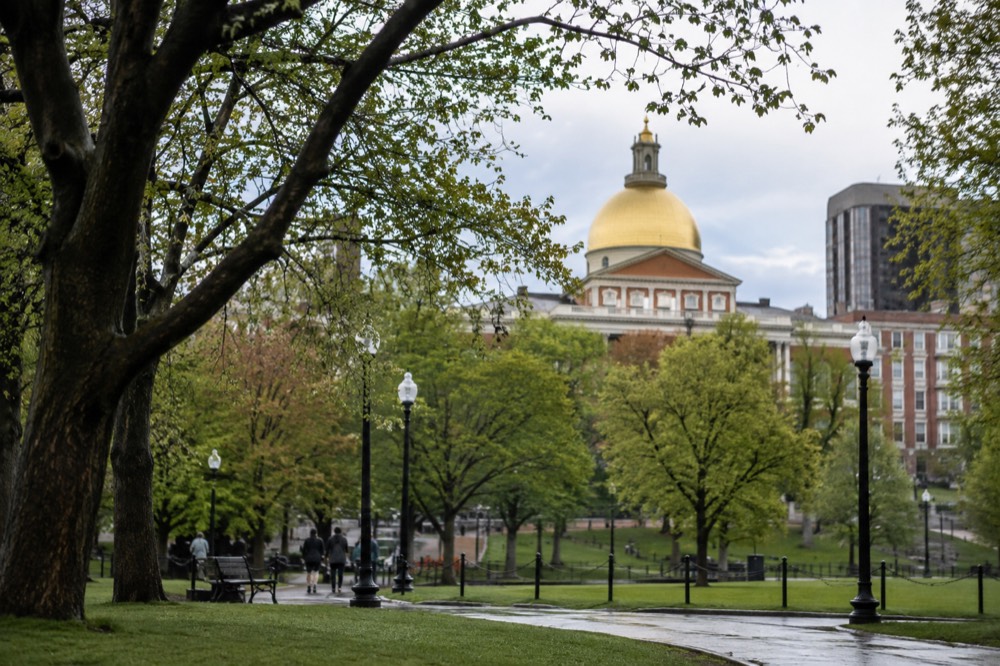
The Freedom Trail Foundation describes the route as covering "over 250 years" of history, which is accurate but slightly undersold: the trail's sites also include the 1713 Old State House, the 1723 Old North Church, and the 1798 Massachusetts State House, whose dome began with wooden shingles, received Revere copper in 1802 and was first gilded in 1874. The trail ends in Charlestown at the Bunker Hill Monument, a 221-foot granite obelisk on Breed’s Hill, the main battlefield of the1775 Battle of Bunker Hill.
For a first visit, the practical takeaway is that Boston's historic core is unusually intact and unusually compact. A visitor staying in or near Back Bay or downtown can walk to almost every major Revolutionary site without ever boarding a train, and the ones that require transport sit at the ends of the trail rather than scattered across the metro area.
What Is The Freedom Trail And How Does It Work?
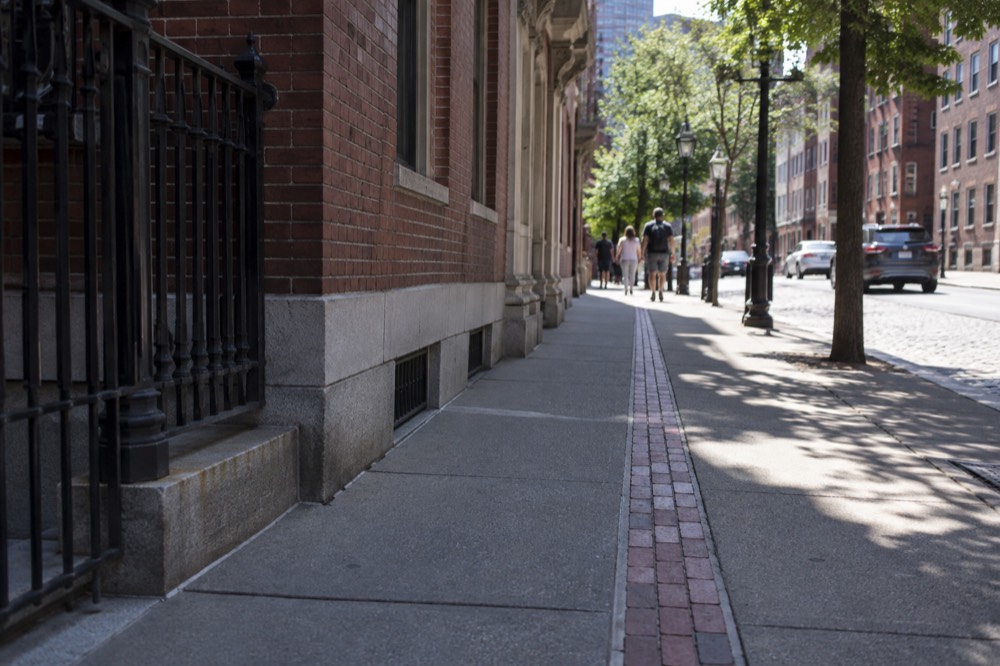
The Freedom Trail is a 2.5-mile walking route marked by a red brick or painted line on the sidewalk, connecting 16 historic sites from Boston Common to the Bunker Hill Monument in Charlestown. It was conceived in 1951 by local journalist William Schofield and dedicated by Mayor John Hynes in June 1951. The Freedom Trail Foundation's visit page gives the route's length as 2.5 miles and its site count as 16.
The National Park Service operates free ranger programs at several of the sites, including Faneuil Hall and the Charlestown Navy Yard, and a full walk takes most people between 2 and 4 hours depending on how many interiors are visited.
The line itself is the navigation system: follow the red brick in the sidewalk downtown, and painted or embedded markers where brick is impractical. The route crosses the Charlestown Bridge to reach the USS Constitution and Bunker Hill, and the return trip is a walk or a short ride back over the bridge.
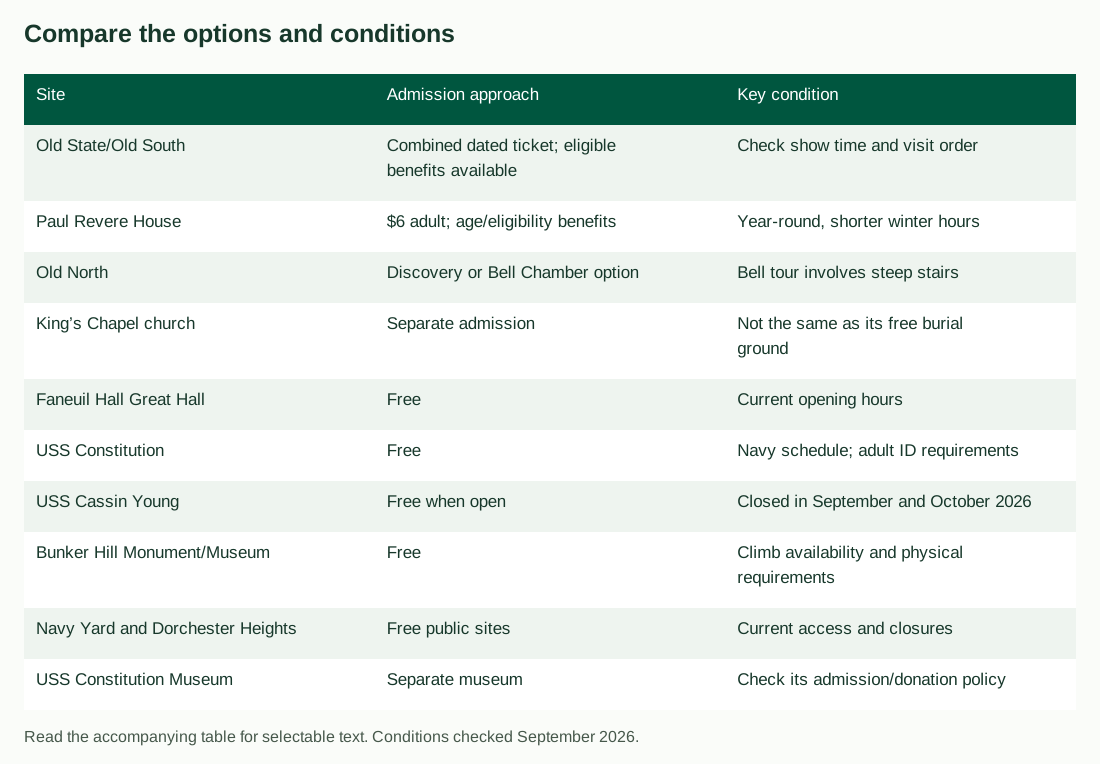
Walking the outdoor trail requires no ticket. Individual museums, churches and houses have separate admission and access rules, including King’s Chapel church. The NPS visiting page and each venue’s current conditions help plan the specific interiors you want.
| Site | Admission approach | Key condition |
|---|---|---|
| Old State/Old South | Combined dated ticket; eligible benefits available | Check show time and visit order |
| Paul Revere House | $6 adult; age/eligibility benefits | Year-round, shorter winter hours |
| Old North | Discovery or Bell Chamber option | Bell tour involves steep stairs |
| King’s Chapel church | Separate admission | Not the same as its free burial ground |
| Faneuil Hall Great Hall | Free | Current opening hours |
| USS Constitution | Free | Navy schedule; adult ID requirements |
| USS Cassin Young | Free when open | Closed in September and October 2026 |
| Bunker Hill Monument/Museum | Free | Climb availability and physical requirements |
| Navy Yard and Dorchester Heights | Free public sites | Current access and closures |
| USS Constitution Museum | Separate museum | Check its admission/donation policy |
The USS Constitution Museum is separate from the ship. Paul Revere House is open year-round, with shorter winter hours and specified holiday and January–March Monday closures; April 15–October 31 is its longer-hours period, not its entire season. Check the date before visiting.
Guided walks cover different lengths. The 2.5-hour small-group route runs from Boston Common to the North End and does not include Charlestown or paid interiors. A longer four-hour route reaches Bunker Hill and the USS Constitution area, without guaranteeing ship boarding or the monument climb. Compare the actual endpoint rather than assuming every “Freedom Trail” title covers all 16 sites.
Further reading: Freedom Trail History Small Group Walking Tour.
Which Boston Historical Sites Cost Money And Which Are Free?
The outdoor trail is free, but several historic interiors charge admission. Combined and multi-site tickets can help only if their exact inclusions match the visits you want. Check free age, residency and benefit-card eligibility first. A discounted pass is not automatically better value than direct entry.
Museum benefits vary by venue. Some MFA Open House dates have Massachusetts residency rules, while other programs depend on age, military status or a specific card. The Aquarium also offers access-related benefits beyond its regional discounts. Read the relevant admission conditions; there is no universal rule that tourists cannot obtain free entry.
What a tourist can actually use is a shorter list. The MFA runs "$5 Third Thursdays," a pay-what-you-wish evening with a $5 minimum on every third Thursday of the month, in person on the day. The ICA is free for all visitors on Thursday nights from 5:00 to 9:00pm with advance tickets. The Gardner Museum is free for anyone 17 or under, and, in a standing quirk the museum publishes itself, free for anyone named Isabella.
| Museum or historic attraction | What to compare | Check |
|---|---|---|
| MFA | Direct admission, pass choice and benefits | $5 Third Thursdays and other eligibility |
| Museum of Science | Exhibit Halls admission or included pass choice | Separate shows and discount programs |
| Gardner | Direct entry or eligible Go City choice | Free Thursday evenings, youth and other benefits; reservation |
| ICA | Direct admission or free Thursday evening | Timed reservation; not on the current pass menus |
| Old State/Old South | Combined ticket or eligible benefits | Same-date access and Ruckus show time |
| Tea Party Ships | Exact timed ticket | Replica ships, performance and exhibits |
One dated warning: the old "Free Fun Fridays" program no longer exists. Highland Street Foundation replaced it with August Adventures, a month of free admission days across Massachusetts venues, but most Boston guides still recommend the dead program by name. Do not plan around it.
For several attractions, use the CityPASS versus Go City comparison to compare your actual paid visits. CityPASS offers four choices from its current list, not four compulsory attractions. A maximum advertised saving does not establish your party’s saving.
Check the Boston 250 ticket only if its five named interiors fit your plans. This adult-only ticket covers Paul Revere House, Old North, Old State, Old South and King’s Chapel over its stated validity period, without a guide. Compare direct youth and eligibility benefits before paying. Check Boston 250 pass dates and eligibility
What Should You See If You Only Have One Day For Boston History?
A full Freedom Trail day can link downtown, the North End and Charlestown, but visiting every interior may require more time. Check opening hours and prioritize the places you want most. Ship boarding, the Bunker Hill climb and paid museum visits have separate conditions; do not assume an early downtown start guarantees access to everything by afternoon.
The order matters less than the timing. The USS Constitution, the world's oldest commissioned warship still afloat, operates on the Navy's schedule and closes earlier than the shore-side sites; an itinerary that leaves Charlestown for last should aim to arrive before mid-afternoon. The Bunker Hill Monument's climb is free but the stairway capacity is limited, so a summer midday can mean a wait. The full index of guides sits on Boston Travel Guide.
Lunch belongs in the North End, Boston's oldest residential neighborhood and its Italian district, where the Paul Revere House and Old North Church sit among pastry shops and restaurants. The best restaurants in Boston guide covers the neighborhood's dining in depth, and the North End pizza walking tour, from $89 and rated 4.8 from 172 reviews on its listing, folds three slices and a cannoli into the history walk.
For visitors with more than a day, the one day in Boston and 3 day Boston itinerary guides expand this route with harbor time and Cambridge. The historical core, though, fits in one long day, and most of it is free.
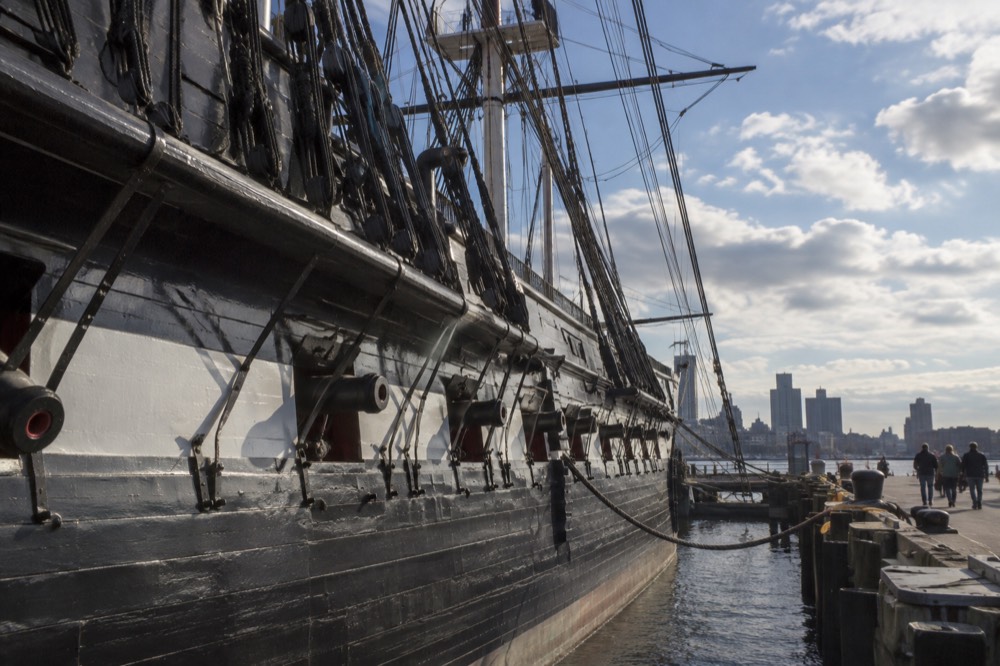
Want a guided route that continues to Charlestown? Explore the four-hour walk including the Bunker Hill and USS Constitution area. It is a longer physical commitment; ship entry and the monument climb are not guaranteed inclusions. Check the full Freedom Trail route and dates
What Boston History Can You See From The Water?
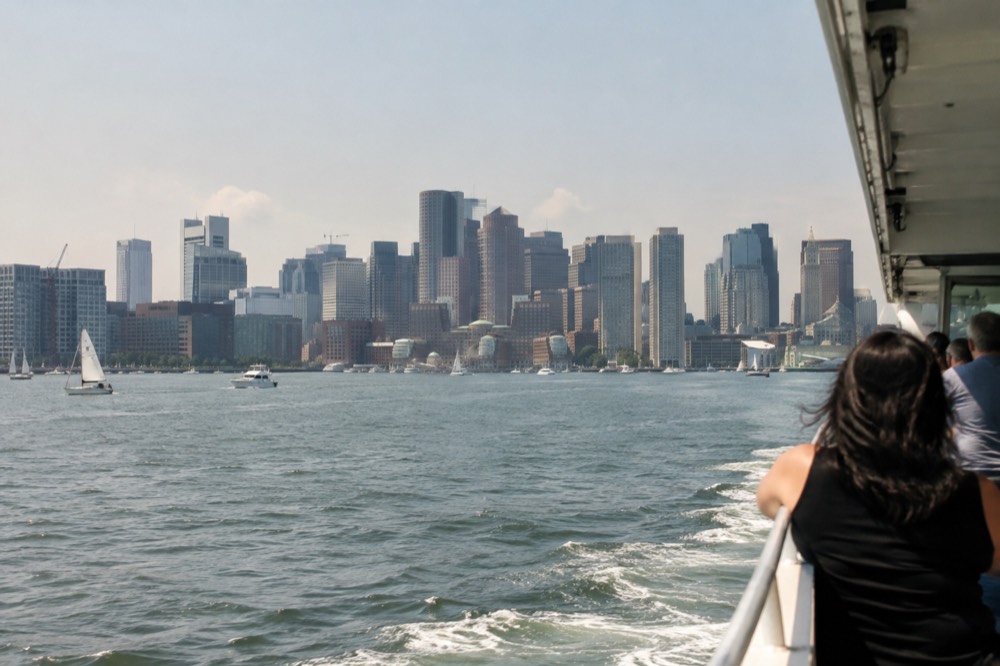
A narrated harbor cruise provides a waterside view of Boston’s maritime history, including the Navy Yard and waterfront. It is a loop without museum admission or an island landing. A Charles River cruise covers a different waterway, and the amphibious duck ride combines streets with a shorter Charles River segment.
Boston Duck Tours uses modern amphibious vehicles and operates from three boarding locations. Different reseller titles can describe the same operator. The Duck Tours guide explains the 80-minute format, departure choices and separate attraction admission.
For Civil War history, Fort Warren is on Georges Island. Check that island’s current sailing calendar before buying; Spectacle’s fall dates and the published 2025 fare table do not establish a 2026 Georges trip. The Harbor Islands guide distinguishes the routes and return arrangements.
What Is There Beyond The Revolution?
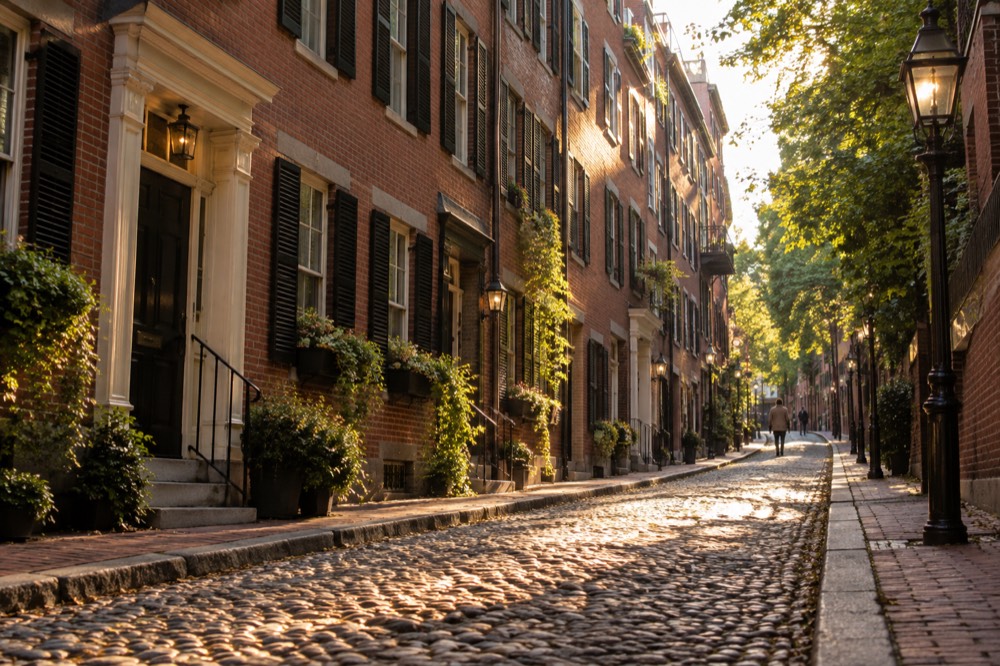
Boston's history does not stop at independence: the city's story runs from 1630 Puritan settlement through the abolitionist movement, the Civil War, immigration, and the intellectual and industrial booms of the 19th and 20th centuries. The Black Heritage Trail, a 1.6-mile NPS route on Beacon Hill, connects 15 sites tied to Boston's free and fugitive Black community before the Civil War, including the 1806 African Meeting House, the oldest surviving Black church building in the United States. The Boston Public Library, founded in 1848, was the first large free municipal library in the country. Fenway Park, opened in 1912, is the oldest ballpark in Major League Baseball. Beacon Hill's Federal-style rowhouses and the Back Bay's planned boulevards show how the city rebuilt and expanded in the generations after independence.**
The immigration story is concentrated in the North End, which was Irish, then Jewish, then Italian across the 19th century, and in the South End's Victorian rowhouse districts. Cambridge adds the colonial-era Harvard Yard, founded in 1636, and the literary history of Longfellow's House on Brattle Street, where George Washington headquartered during the siege.
The intellectual layer is also physical. The Boston Athenaeum, one of the oldest independent libraries in the country, sits on Beacon Hill near the State House. The Mapparium at the How Do You See the World? experience, a three-story stained-glass globe from 1935, is walk-through-able and unlike anything else in the region. The city's deeper layers reward a second day, and the hidden gems guide collects the less-crowded corners, while the full things to do in Boston roundup places the historic sites in the wider context of everything the city offers.
How Do You Get Around Boston's Historic Sites?
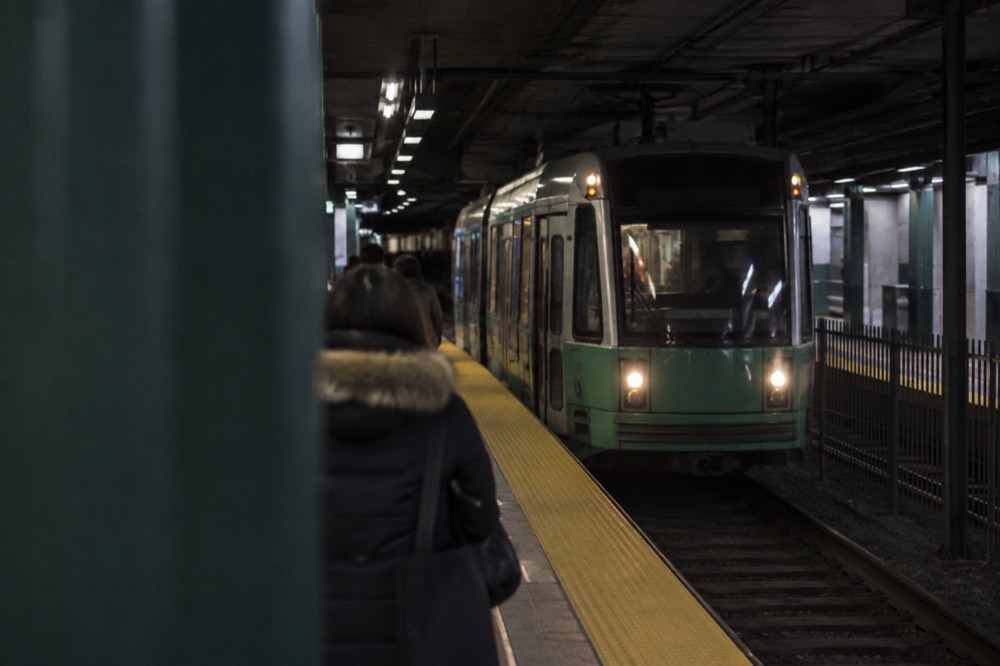
The subway is the practical tool for Boston's historic core: a one-way fare is $2.40, a 1-Day pass is $11.00 and a 7-Day pass is $22.50, and since September 1, 2026, riders get unlimited transfers within a two-hour window, paying only the highest-priced leg. The MBTA fare table publishes all of those figures. The passes also behave differently by medium: a 1-Day or 7-Day pass on a CharlieTicket starts at purchase, while the same pass on a CharlieCard starts at first use, a difference worth most of a day for a visitor who buys ahead.**
The historic sites themselves barely need the subway. The Freedom Trail is a walk, and the trail's endpoints, Boston Common and Charlestown, are linked by a substantial walk through downtown and across the Charlestown Bridge, or by public transport. The subway matters for reaching Cambridge, the Museum of Fine Arts and the Seaport, and for getting in from Logan, where the Silver Line SL1 is free from the terminal curb to South Station, per Massport's own airport page.
One current disruption deserves a note: Symphony station on the Green Line E branch has been closed since June 2026 for accessibility work, with closure scheduled through spring2029, and the MBTA has been running rolling weekend diversions on the central lines through the fall. The getting around Boston guide and the CharlieCard and fares guide carry the full fare mechanics, and the Boston subway map explained page decodes the lines for first-time riders.
| Trip | Best option | Cost |
|---|---|---|
| Logan Airport to downtown | Silver Line SL1 from terminal curb | Free |
| Downtown to Freedom Trail start (Boston Common) | Walk | Free |
| Downtown to Charlestown (USS Constitution) | Walk over bridge, or bus | Free walk / $1.70 bus |
| Downtown to Harvard Yard | Red Line from Downtown Crossing | $2.40 |
| Downtown to Museum of Fine Arts | Green Line E to Museum of Fine Arts | $2.40 |
| Full-day sightseeing | 1-Day pass | $11.00 |
| Week-long visit | 7-Day pass | $22.50 |
When Is The Best Time To Visit Boston For History?
Spring and fall can offer comfortable walking weather, while winter still allows many historic interiors. Paul Revere House operates year-round with shorter winter hours. Check each venue’s calendar rather than treating free sites as always open or paid sites as summer-only. Lexington and Concord require a separate regional journey.
The weather numbers back this up. NOAA's climate normals for Boston show July as the warmest month at an 82.1°F average high, and every month of the year carries between 3.21 and 4.30 inches of precipitation, meaning Boston has no wet season and no dry season to plan around. The real seasonal variable is snow: 49.2 inches falls in an average year, and 58 percent of it lands in January and February alone, which is why the Boston in winter and best time to visit Boston guides steer cold-weather visitors toward the indoor museums and the Freedom Trail’s free sites during their actual winter opening hours.
| Season | Planning priority | Check |
|---|---|---|
| Spring | Variable temperatures and longer opening hours | Individual venue dates |
| Summer | Heat, walking pace and timed admissions | Water, breaks and actual departures |
| Fall | Shorter daylight and changing boat calendars | Chosen route and return |
| Winter | Cold or icy walks; indoor alternatives | Shorter hours and holiday closures |
Want to see the opening battle landscape beyond Boston? Explore the seven- to eight-hour Lexington and Concord trip with specified Boston pickups and Concord Museum entry. Literary houses may be pass-by stops; confirm the exact itinerary and meeting point. Check Lexington and Concord day tour dates
Which Guided Tours Best Bring Boston History To Life?
Choose a guided history walk for interpretation, a harbor cruise for maritime context, or the Tea Party Ships and Museum for an interactive presentation with replica ships. A whale watch focuses on wildlife, so it should not be sold as a Revolutionary history tour.
Choose the part of history you want to explore. An outdoor guide explains sites without necessarily taking you inside. A multi-site admission ticket buys named interiors without a guide. A harbor cruise provides views from the water, while a Tea Party visit is a separately timed museum experience.
For visitors who want the deeper cut, the Freedom Trail tours guide compares every walkable option, and the free-walk layer is worth knowing about: GuruWalk hosts a free, tip-based Highlights of Boston tour led by a local guru, rated 4.76 from 864 reviews over 2.5 hours. It costs nothing up front and the guru works for tips, which makes it a genuine budget option rather than a discount one.
Keep the free outdoor route and NPS programs in the comparison. Price only the guided services and interiors your party actually wants, using eligible discounts and the correct ticket conditions.
Common Questions About Boston History For Visitors
what is the famous walk around boston
The famous walk is the Freedom Trail, a 2.5-mile red-lined route connecting 16 historic sites from Boston Common to the Bunker Hill Monument in Charlestown. It was conceived in 1951 and covers, in the Freedom Trail Foundation's own phrasing, over 250 years of history.
Do you need tickets for the Freedom Trail?
No ticket is needed to follow the outdoor route. Individual church, house and museum interiors have their own admission rules; several major sites offer free visits under their opening and access conditions.
How long does it take to walk the Freedom Trail?
Allow several hours for the2.5-mile route and more for interiors, security checks, queues and breaks. The linked2.5-hour small-group tour ends in the North End; the longer four-hour option continues into Charlestown without guaranteeing ship boarding or the monument climb.
What is the most historic part of Boston?
Downtown Boston holds the densest concentration: Boston Common, the Massachusetts State House, the Granary Burying Ground, the Old South Meeting House, the Old State House and Faneuil Hall all sit within a few blocks of each other. The North End adds the Paul Revere House and Old North Church, and Charlestown adds the USS Constitution and Bunker Hill.
Is the Paul Revere House open year-round?
Yes. April 15–October 31 is the longer-hours period. Winter hours are shorter, with specified holiday and January–March Monday closures; check the museum’s calendar for your day.
Can you board the USS Constitution for free?
Yes. The ship is free to board, per the National Park Service's hours-and-fees page for Boston National Historical Park. It is an active-duty Navy vessel, so adults need a photo ID, and boarding hours follow the Navy's schedule, which closes earlier than the shore-side sites.
Choose Guided History, Interior Admission Or A Regional Day
These options do not match your choice. Adjust the selection or reset to explore the starting recommendation.
Compare Your Guided History And Independent Admission Totals
Reader-entered estimates in USD, not live quotes. Use the same dates and travelers for both options. Include all relevant tickets, rooms, taxes, mandatory fees and transport for the entire trip once in each total. Do not add a transfer twice if your rate already includes it.
Freedom Trail Small-Group Walk
A guided walk exploring the Revolutionary history along the Freedom Trail. The trail can also be walked independently. Review the meeting point and route before booking.
A starting option to explore. Choose dates, travelers and the exact booking option with the provider; availability and eligibility are confirmed there.
Check Freedom Trail walk dates