Best Restaurants In Boston
Boston's dining reputation rests on three things: an Italian neighborhood that has been feeding the city for generations, a working harbor that still lands fish a few miles from downtown, and a wave of newer kitchens spread across the Seaport, the South End and Cambridge. The city is compact enough that no dinner decision locks you into a long ride, but the neighborhoods are different enough that the wrong one wastes a meal. This guide from Boston Travel Guide lays out where to eat, what to order, what it costs, and how to plan around the waits that come with the best-known streets.
Short answer
Boston's best restaurants cluster in five areas: the North End for Italian and pastry, the South End for chef-driven New American cooking, the Seaport for upscale seafood and waterfront dining, Chinatown for dumplings and late hours, and Cambridge for Harvard Square casual dining and Kendall Square innovation; these are different parts of that city. Each area walks differently, prices differently and closes at a different hour, so picking the neighborhood first is the single biggest decision you make.
Boston's dining reputation rests on three things: an Italian neighborhood that has been feeding the city for generations, a working harbor that still lands fish a few miles from downtown, and a wave of newer kitchens spread across the Seaport, the South End and Cambridge. The city is compact enough that no dinner decision locks you into a long ride, but the neighborhoods are different enough that the wrong one wastes a meal. This guide from Boston Travel Guide lays out where to eat, what to order, what it costs, and how to plan around the waits that come with the best-known streets.
Explore the North End’s Italian food on a guided walk, or choose a seafood, South End, Chinatown or Harvard Square route. These are distinct tours with different dietary rules and meeting places. A restaurant reservation remains the simpler option if you want one particular kitchen. Check North End food walk dates
Where Are The Best Restaurants In Boston, By Neighborhood?
Boston's best restaurants cluster in five areas: the North End for Italian and pastry, the South End for chef-driven New American cooking, the Seaport for upscale seafood and waterfront dining, Chinatown for dumplings and late hours, and Cambridge for Harvard Square casual dining and Kendall Square innovation; these are different parts of that city. Each area walks differently, prices differently and closes at a different hour, so picking the neighborhood first is the single biggest decision you make.
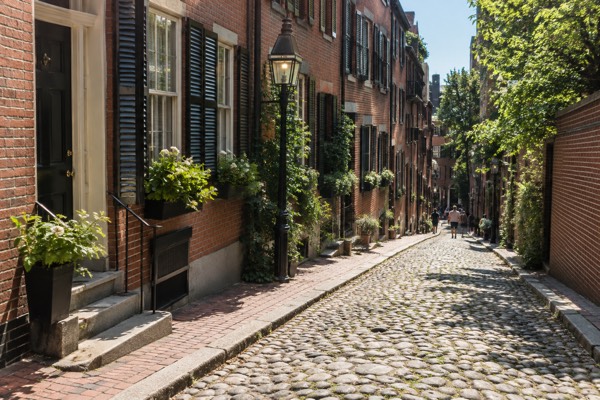
The North End is the one most visitors already know. It is Boston's oldest residential neighborhood, a dense grid of narrow streets where the Italian community that settled there established restaurants, bakeries and pastry shops that still line Hanover Street and Salem Street today. The catch is popularity: on summer evenings the main strip is packed, and the pastry lines are their own attraction.
The South End, around Tremont Street, is where the city's newer kitchens concentrate. It is a brownstone neighborhood with a restaurant row feel, and it draws a local crowd rather than a tourist one, which is exactly why tables there can be easier to get on a weeknight than in the North End.
The Seaport is the newest of the group, built on former industrial land along the harbor, and it carries the highest concentration of large, design-forward restaurants with water views. Chinatown, sitting between downtown and the Theater District, is the practical choice: fast service, generous portions, and kitchens that stay open later than almost anywhere else in the city.
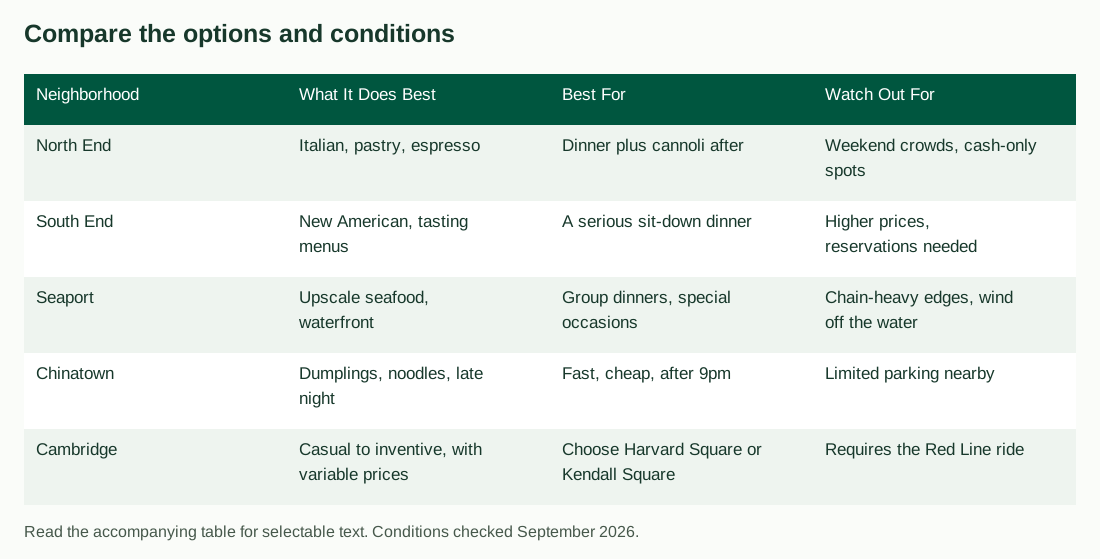
| Neighborhood | What It Does Best | Best For | Watch Out For |
|---|---|---|---|
| North End | Italian, pastry, espresso | Dinner plus cannoli after | Weekend crowds, cash-only spots |
| South End | New American, tasting menus | A serious sit-down dinner | Higher prices, reservations needed |
| Seaport | Upscale seafood, waterfront | Group dinners, special occasions | Chain-heavy edges, wind off the water |
| Chinatown | Dumplings, noodles, late night | Fast, cheap, after 9pm | Limited parking nearby |
| Cambridge | Casual to inventive, with variable prices | Choose Harvard Square or Kendall Square | Requires the Red Line ride |
Curious about the South End beyond a single dinner booking? Explore its three-hour neighborhood food walk with meal-sized tastings. Ages 12+ only; no infants, toddlers or strollers. Confirm the limited dietary adjustments and meeting point before booking. Check South End food walk dates and dietary terms
What Should You Actually Eat In Boston?
The dishes worth planning a trip around are clam chowder, the lobster roll, North End Italian pasta and pastry, fresh Atlantic seafood landed at the historic fish pier, and the roast beef sandwich, a Massachusetts specialty most national guides miss. Oysters are strong here too, because New England waters supply the city's raw bars year-round. If you eat only one meal in Boston, make it seafood, because the harbor is the reason the city exists at all.
Clam chowder is the signature. It is a cream-based soup, and in Boston it comes dense with clams and potatoes, never with tomatoes. The lobster roll is the other pillar: chilled lobster meat, lightly dressed, on a buttered grilled roll, though you will also see Connecticut-style warm versions with butter on many menus. If you are choosing between the two, our dedicated pages on the best lobster rolls and Boston's seafood restaurants break the decision down by neighborhood and budget.
The North End's Italian tradition is the third pillar. Pasta is the center of most menus, and the pastry shops on the side streets sell cannoli filled to order, which is the detail that separates the good ones from the ones filling them by the batch hours earlier.
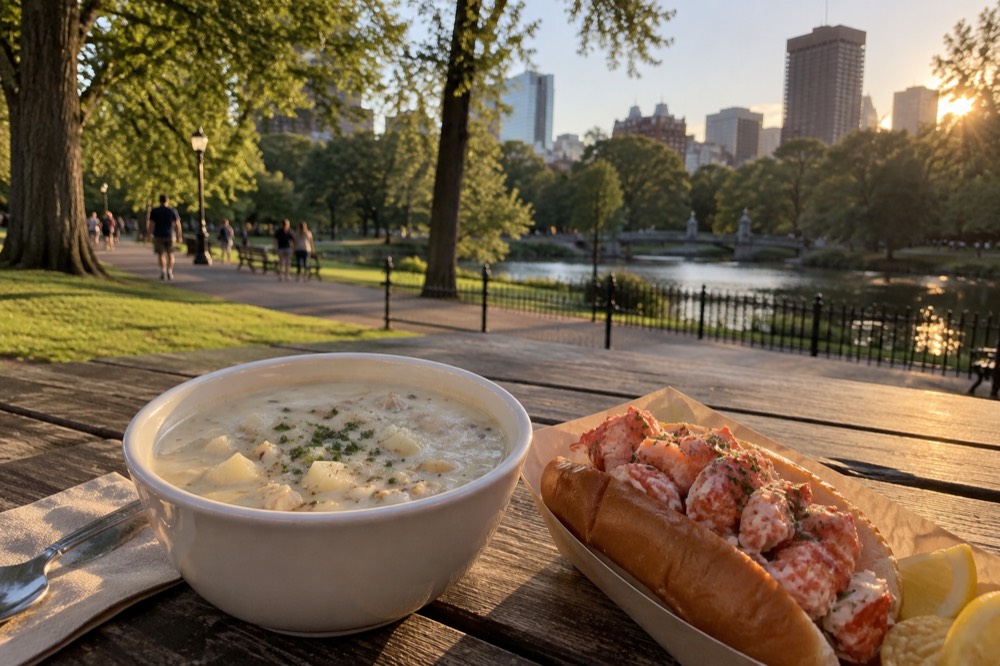
| Dish | What It Is | Where It Peaks |
|---|---|---|
| Clam chowder | Cream-based clam and potato soup | Waterfront and chowder houses citywide |
| Lobster roll | Chilled lobster meat on a buttered roll | Seaside stands and seafood counters |
| Cannoli | Fried pastry shell filled to order | North End pastry shops |
| Roast beef sandwich | Thin-sliced rare roast beef, sauce, onion roll | Suburbs and Route 1 stands |
| Oysters | New England raw bar shellfish | Seaport and South End raw bars |
If you want the seafood story told rather than just served, the Boston Seafood Tour: Behind the Scenes at the Historic Fish Pier runs 2 hours 30 minutes, from $81 per person, and its listing shows a 4.9 rating from 557 reviews. It is one of the few ways to see the working side of a harbor most visitors only see from a restaurant window.
Is The North End Worth It For Dinner?
Yes, the North End is worth it for dinner, and it is also worth it for lunch, which most visitors never consider. The neighborhood has the highest concentration of Italian restaurants in the city, its pastry shops stay open into the evening, and its streets are walkable from downtown in about ten minutes. The trade-off is that the best-known Hanover Street rooms fill up on weekends, so either reserve ahead or go early, before 6pm, or on a weekday.
The North End's dining identity comes from the Italian immigrant community that shaped the neighborhood over generations, and it has kept its bakeries, its espresso counters and its red-sauce traditions alongside newer chef-driven Italian kitchens. The practical structure is simple: Hanover Street carries the highest-profile rooms and the biggest crowds, Salem Street and the cross streets carry quieter options that locals rate just as highly, and the pastry shops cluster within a few blocks of each other so dessert is never a detour.
Our North End Italian restaurants page covers the neighborhood in detail, and the Freedom Trail tours page matters here too because the trail itself runs straight through the neighborhood, past the Paul Revere House. The National Park Service's published hours-and-fees page for Boston National Historical Park lists the Paul Revere House at $6.00 for adults, so a history stop and a dinner reservation pair naturally into one evening.
The single best way to eat the neighborhood, if you would rather not gamble on one reservation, is the Boston's North End Food Tour: Italian Flavors and Heritage Walk. It runs 2 hours, from $70 per person, its listing shows a 4.9 rating from 1,635 reviews, and it moves through the neighborhood's Italian food and heritage with a guide who knows which counters matter. There is also a pizza-focused option, the North End Pizza Walking Tour with 3 Slices and Cannoli, from $89 per person with a 4.79 rating across 172 reviews on its listing, if slices are more your speed than a sit-down dinner.
How Do You Get A Table Without The Wait?
Check your chosen restaurant’s reservation window, opening hours and party-size rules. Earlier or weekday meals may offer more choices, but neither timing nor neighborhood guarantees a walk-in table. Chinatown also has venue-specific queues and closing times. Calling can clarify availability; do not assume every kitchen keeps unlisted phone-only seats.
Boston's restaurant rooms are small. The North End's historic buildings cap dining room sizes, the South End's brownstones do the same, and the Seaport's big rooms are the exception rather than the rule. That means the standard big-city tactics apply with extra force here: off-peak hours are the reliable lever, and weekday dining is the second one.
Lunch is the underrated slot citywide. Some restaurants offer easier walk-in availability at weekday lunch; check that the kitchen serves then, and the North End in particular is a different neighborhood at lunch, quieter, with the pastry shops at their freshest in the morning.
| Tactic | What to confirm |
|---|---|
| Reserve ahead | Venue-specific release window and cancellation policy |
| Early or late meal | Kitchen hours and actual availability |
| Weekday visit | Selected restaurant’s operating days |
| Walk-in alternative | Current queue and whether the group can be seated |
| Food tour | Included tastings, dietary rules, pace and meeting point |
What Does A Meal Cost In Boston?
Plan on casual meals running roughly $15 to $25 per person, mid-range dinners roughly $40 to $70 before drinks, and upscale tasting menus well above that. Check the actual lobster-roll menu price and portion size, and a sit-down seafood dinner in the Seaport can double that quickly. Boston is not a cheap eating city, but its sandwich and counter culture keeps lunch affordable while dinner prices climb.
These are planning ranges, not operator promises, and individual restaurants set their own prices, so treat them as a budgeting frame rather than a quote. The structure of the city's costs is consistent though: breakfast and lunch stay reasonable because the counter-service layer is deep, while dinner carries the premium, especially anywhere with a harbor view.
The affordable end is genuinely affordable. A slice and a cannoli in the North End, a bowl of noodles in Chinatown, a chowder and a roll at a counter: those meals keep a day of sightseeing fed without straining the budget. Our Boston on a budget page covers the full cheap-eats landscape, and the cost of a trip to Boston page puts food in context against hotels and transit.
| Meal Type | Typical Planning Range Per Person | Notes |
|---|---|---|
| Counter lunch, slice or roll | $15-$25 | North End, Chinatown, food halls |
| Casual sit-down dinner | $30-$50 | Pasta, chowder houses |
| Mid-range dinner | $40-$70 | South End, Seaport |
| Upscale or tasting menu | Well above $100 | Reserve ahead, wine extra |
What About Food Tours Instead Of A Reservation?
A food tour solves three problems at once: it provides tastings at multiple food businesses in one outing; kitchen access is not guaranteed, a guide introduces selected neighborhood food businesses, and you learn the history between bites instead of after dinner. Boston's food walk options cover the North End's Italian heritage, the city's seafood industry at the historic fish pier, and a longer five-hour walk that combines food with the Freedom Trail and Beacon Hill.
The roster of bookable walks is deeper than most visitors realize. The five-hour Boston's Food and History: North End, Freedom Trail, Beacon Hill tour runs from $91 per person with a 4.9 rating from 1,888 reviews on its listing, and it is the choice if you want one long outing that feeds you and walks you through the Revolutionary core at the same time. The Freedom Trail History Pub Crawl, 2 hours 15 minutes from $60 per person with a 4.9 rating across 1,053 reviews, visits historic taverns, but drinks and food are extra on the listed product.
| Tour format | Duration | Main distinction |
|---|---|---|
| North End Italian walk | About 2 hours | Bakery, pizza and Italian deli tastings |
| North End pizza walk | About 2.5 hours | Three slices and cannoli; stairs and diet limits |
| Seaport seafood | About 2.5 hours | Seafood tastings and fish-pier context; shellfish essential |
| Food and history | About 5 hours | About five miles; tastings in the North End |
| History pub crawl | About 2 hours 15 minutes | Ages21+; food and drinks extra |
| Guided brewery outing | About 3.5 hours | Ages21+; tastings and snack, not a full meal |
The brewery option deserves a mention for groups: the Boston Signature Guided Brewery Tour runs 3 hours 30 minutes from $105 per person, rated 4.8 from 185 reviews on its listing, and our Boston breweries and taprooms page covers the scene for anyone planning their own crawl.
Check the five-hour food-and-history walk if you want one longer outing through the North End, Freedom Trail and Beacon Hill. It covers about five miles, with tastings in the North End. Confirm dietary needs in advance; historic-site interiors and every meal on your day are not included. Check food and history walk dates
Where Should You Eat Near The Major Sights?
Eat in the North End if your day centers on the Freedom Trail's northern half, eat at Faneuil Hall Marketplace if you are between the trail and the waterfront, and eat in Chinatown if you are coming from the Theater District, because it sits within a ten-minute walk of it. The Seaport's restaurant row pairs with the ICA and the harbor, and Kenmore Square feeds a Fenway Park day. Planning the meal against the sight, rather than doubling back across town, saves an hour a day.
Boston's geography makes this easy because the sights cluster. The Freedom Trail's 2.5-mile red-lined route, as the Freedom Trail Foundation's own visit page describes it, passes 16 sites spanning more than 250 years of history, and its northern stretch ends in the North End and Charlestown, both of which have their own food identity. Faneuil Hall and Quincy Market sit mid-trail with a food hall's worth of options, though the marketplace is the most tourist-priced eating in the city, so treat it as a convenience rather than a destination.
| Sight or Area | Closest Good Eating | Walk Time |
|---|---|---|
| Freedom Trail, north half | North End | 0-10 minutes |
| Faneuil Hall and Quincy Market | Marketplace food hall, North End | 5 minutes |
| Theater District | Chinatown | 10 minutes |
| ICA and the Seaport | Seaport restaurant row | 5 minutes |
| Fenway Park | Kenmore Square and Lansdowne Street | 5 minutes |
If a Red Sox day is the plan, the Red Sox game guide covers event logistics. The linked standard Fenway tour is roughly one hour with Gate D check-in. The separate short Gate B format runs on limited seasonal dates, so do not assume a 15-minute option is available whenever a dinner reservation leaves a gap. Game tickets are separate.
Further reading: the Red Sox' own tours page.
Curious about Chinatown’s food and Chinese American history before a show? Explore the 2.5–3-hour walk and leave a buffer before curtain time. The operator does not accommodate food allergies or dietary restrictions other than no alcohol; ages 12+ are recommended, with no infants or strollers. Check Chinatown food walk dates and conditions
How Do You Get Between Boston's Dining Neighborhoods?
The subway connects every dining neighborhood in this guide for a $2.40 one-way fare, and the MBTA's fare table shows a 1-Day Pass at $11.00 and a 7-Day Pass at $22.50. Since 1 September 2026, unlimited transfers within a two-hour window cost only the highest-priced leg, so a dinner trip with a connection costs no more than a single ride. Walking covers most of it anyway: downtown, Chinatown and the North End form one connected pedestrian zone.
The MBTA's own fare pages are the authority on this, and the September 2026 transfer pilot is the detail that makes a multi-stop food crawl cheap. One caveat from the same pages: the transfer window requires the same form of payment across every leg, so tap the same card or phone each time.
The walkability is the bigger point. A visitor staying downtown can reach Chinatown, the North End and the waterfront on foot in under twenty minutes in any direction, and the getting around Boston page maps the full picture. If you are flying in for a food weekend, the Silver Line SL1 is free leaving Logan from the terminal curb, as Massport's own airport page states, and our Logan Airport to downtown Boston and where to stay in Boston pages cover the rest of the arrival.
Common Questions About The Best Restaurants In Boston
What is the best neighborhood for restaurants in Boston?
The North End has the densest concentration of Italian restaurants and pastry shops, the South End has the strongest chef-driven kitchens, and the Seaport carries the upscale waterfront rooms. For variety in one walkable zone, downtown plus Chinatown plus the North End forms a single connected area with the widest range of prices.
What food is Boston most famous for?
Clam chowder and the lobster roll, followed by North End Italian food and fresh Atlantic seafood. Oysters from New England waters and the Massachusetts roast beef sandwich round out the list most locals would give you.
Is the North End in Boston worth visiting for food?
Yes. It is the city's oldest residential neighborhood and its Italian dining core, with pasta kitchens, espresso counters and pastry shops filling cannoli to order. Go before 6pm or on a weekday to avoid the weekend crowds on Hanover Street.
How much does dinner cost in Boston?
Plan on roughly $30 to $50 per person for a casual sit-down dinner and $40 to $70 at mid-range rooms, before drinks. Upscale tasting menus run well above $100. Counter lunches stay in the $15 to $25 range, so the affordable meals exist if you time them right.
Do I need reservations for Boston restaurants?
For high-profile rooms on Friday and Saturday nights, yes, and booking windows vary by restaurant; check when your chosen venue releases tables. Weeknights and early seatings are far easier, and Chinatown works as a walk-in fallback because its kitchens turn tables fast and stay open late.
Are food tours in Boston worth it?
They can suit visitors who want several tastings and neighborhood context in one outing. Compare the actual menu, dietary restrictions, walking distance and current party total with the restaurant meal you would otherwise choose. The North End walk focuses on Italian foods; the five-hour combined route involves much more walking.
Choose Your Food Neighborhood And Check Dietary Fit
These options do not match your choice. Adjust the selection or reset to explore the starting recommendation.
Compare Your Food Tour Or Restaurant Meal Totals
Reader-entered estimates in USD, not live quotes. Use the same dates and travelers for both options. Include all relevant tickets, rooms, taxes, mandatory fees and transport for the entire trip once in each total. Do not add a transfer twice if your rate already includes it.
North End Food Walk
A small-group North End walk with bakery, pizza and Italian deli tastings. Notify the operator of dietary requests at least 24 hours ahead.
A starting option to explore. Choose dates, travelers and the exact booking option with the provider; availability and eligibility are confirmed there.
Check North End food walk dates