Best Lobster Rolls In Boston
Boston's signature sandwich is a study in restraint: cooked lobster meat, a bun, and one decision, cold with mayonnaise or warm with drawn butter. The Freedom Trail Foundation's own visit page describes its route as 2.5 miles linking 16 historic sites, which means the route passes within reach of some of the best lobster roll counters in New England. This guide covers the two styles, the neighborhoods that do each best, and how to plan the eating around the sightseeing.
Short answer
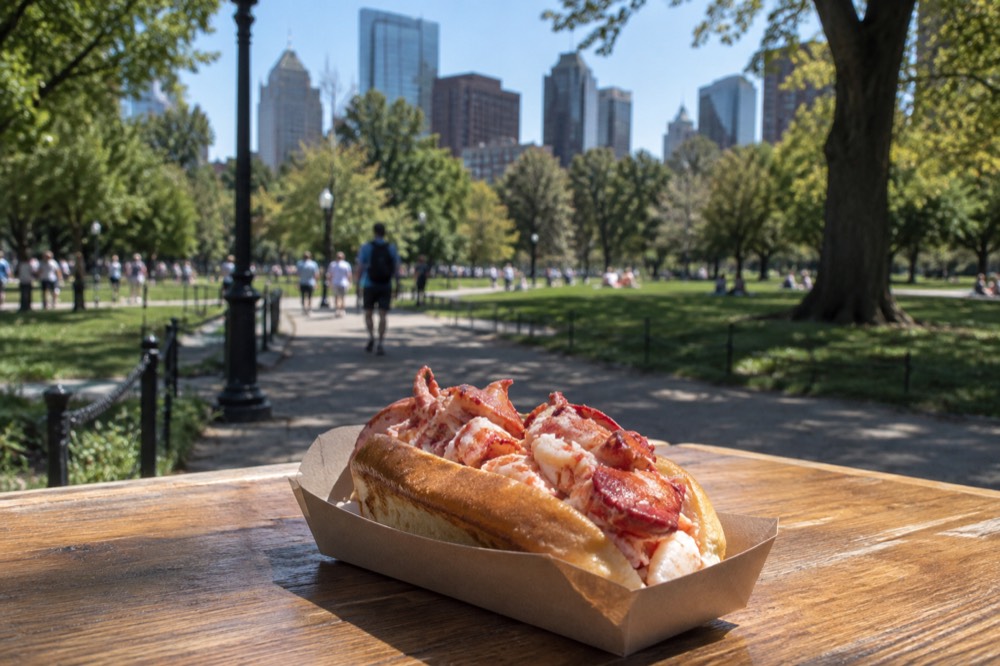
A great Boston lobster roll is defined by three things in fixed order: large intact chunks of claw and knuckle meat rather than shredded filler, a top-split New England bun that is buttered and griddled so it holds together, and restraint with whatever binds the meat, whether that is a thin coat of mayonnaise or warm drawn butter. Everything else, the chips, the pickle, the view, is a side issue.
Boston's signature sandwich is a study in restraint: cooked lobster meat, a bun, and one decision, cold with mayonnaise or warm with drawn butter. The Freedom Trail Foundation's own visit page describes its route as 2.5 miles linking 16 historic sites, which means the route passes within reach of some of the best lobster roll counters in New England. This guide covers the two styles, the neighborhoods that do each best, and how to plan the eating around the sightseeing.
Explore the Classic Bites walk for lobster roll, chowder and other Boston specialties. The Seaport seafood walk adds fish-pier context, while the longer food-and-history route focuses on North End tastings and historic neighborhoods without promising a lobster roll. Compare the actual inclusions and dietary terms. Check classic Boston food walk dates
What Makes A Great Lobster Roll In Boston?
A great Boston lobster roll is defined by three things in fixed order: large intact chunks of claw and knuckle meat rather than shredded filler, a top-split New England bun that is buttered and griddled so it holds together, and restraint with whatever binds the meat, whether that is a thin coat of mayonnaise or warm drawn butter. Everything else, the chips, the pickle, the view, is a side issue.
The meat matters first. A roll built from whole claw and knuckle pieces tastes of lobster; a roll built from shredded meat often tastes of whatever it was mixed with. The counter staff at any serious seafood spot will tell you, if you ask, whether the meat is picked on site or brought in, and you can ask about preparation and sourcing rather than relying on review counts.
The bun matters almost as much. A top-split New England hot dog bun, buttered and toasted on a flat top until the faces are golden, is the standard. A side-split bun, the kind used for an ordinary hot dog, lets the filling fall out though bun styles vary by kitchen.
Restraint is the third test. The classic Maine-style dressing is a small amount of mayonnaise, just enough to bind, and nothing else. The Connecticut-style version uses no mayonnaise at all, just warm butter poured over or brushed through the meat. When a menu lists a lobster salad with celery, tarragon, citrus or chili, that can be delicious, but it is a lobster salad sandwich, and it is worth knowing the difference before ordering.
Maine-Style Or Connecticut-Style: Which Lobster Roll Should You Order?
Maine-style is the cold version, lobster meat tossed lightly in mayonnaise, sometimes with a whisper of lemon, served chilled in a toasted top-split bun. Connecticut-style is the warm version, the same meat dressed only in drawn butter, served hot. Boston serves both well because the city sits between the two traditions. Neither is the wrong order.
The cold version is dressed with mayonnaise and the warm version with butter, though recipes vary. Both are sold in different settings, including counter service. Order the style you want and eat it promptly; table service is not a requirement for a warm roll.
| Style | Meat temperature | Dressing | Best eaten | Typical setting |
|---|---|---|---|---|
| Maine-style | Cold | Light mayonnaise, sometimes lemon | Within the hour | Takeout windows, picnic tables, food halls |
| Connecticut-style | Warm | Drawn butter only | Within minutes | Table-service restaurants, raw bars |
| Hybrid | Cold or warm | Butter plus a thin mayo line | Ask the counter | Varies by kitchen |
Ask before assuming. Many Boston menus list simply "lobster roll" and default to the cold version, and a counter that sells out of cold rolls late in the day will sometimes offer the warm one instead. The question "cold or warm?" is understood everywhere that sells them.
Where Are The Best Lobster Rolls In Boston By Neighborhood?
The strongest lobster roll neighborhoods in Boston are the North End and the waterfront for historic counter-service and raw-bar settings, the Seaport for modern seafood restaurants with harbor views, Charlestown for pub-style rolls near the Navy Yard, and Quincy Market at Faneuil Hall for the most central, if most touristy, options. Cambridge and Somerville are separate cities with their own dining options; allow the travel time if adding them.
The North End is the natural anchor. Boston's oldest neighborhood packs its seafood tradition into a few walkable blocks, and a roll eaten there comes with a side of 17th-century streets. The Seaport, a short walk across the Fort Point Channel, is where the newer kitchens are, many of them serving the warm buttered version with a view of the harbor. Charlestown, reached by a short ferry ride or a walk across the Charlestown Bridge, pairs its rolls with the free USS Constitution and Bunker Hill Monument, two free historic stops during their posted hours, per the National Park Service's own hours-and-fees page.
| Area | Roll character | Setting | Best combined with |
|---|---|---|---|
| North End | Counter and trattoria rolls, old-school | Narrow streets, historic blocks | Freedom Trail sites, Italian bakeries |
| Waterfront and Long Wharf | Raw-bar and cruise-adjacent counters | Harbor views | Harbor cruises, the Aquarium |
| Seaport | Modern kitchens, warm buttered versions | New construction, patios | ICA free Thursday nights, Harborwalk |
| Charlestown | Pub-style, generous portions | Navy Yard pubs | USS Constitution, Bunker Hill |
| Quincy Market | Fast, central, variable quality | Food hall stalls | Faneuil Hall, shopping |
One planning note that most first-time visitors miss: Quincy Market's stalls are the most convenient and the least consistent. The same roll that is excellent at a North End counter at 11:30am can be disappointing from a stall that has had the meat sitting in dressing since morning. Order where the turnover is fast.
How Much Does A Lobster Roll Cost In Boston?
Lobster roll prices in Boston move with the lobster market, so this guide does not print fixed menu prices, and any specific figure in an older article is likely stale. What is stable is the structure: counter-service rolls sit in the range of a casual dinner main, warm buttered versions at table-service restaurants cost more, and premium builds with extra meat cost the most. Check the restaurant's own current menu before you budget.
The honest way to plan is by meal, not by sandwich. A visitor eating one roll, a side and a drink at a counter should budget a casual-dinner amount, not a fast-food one, and anyone ordering at a raw bar should expect table-service pricing. The lobster supply, and therefore the price, shifts through the year, and coastal New England's summer demand pushes menu numbers up exactly when the tourist crowds arrive.
Two ways to soften the cost. First, lunch portions at some counters run smaller and cheaper than the dinner version of the same roll, and asking is free. Second, the free side of the city is genuinely free: the National Park Service confirms that Faneuil Hall's Great Hall, Bunker Hill, the Charlestown Navy Yard and the USS Constitution all cost nothing, so the sightseeing around the meal can be a zero line on the budget. For a fuller picture of the city's dining scene at every price level, see our best restaurants in Boston guide.
What Should You Order With A Lobster Roll?
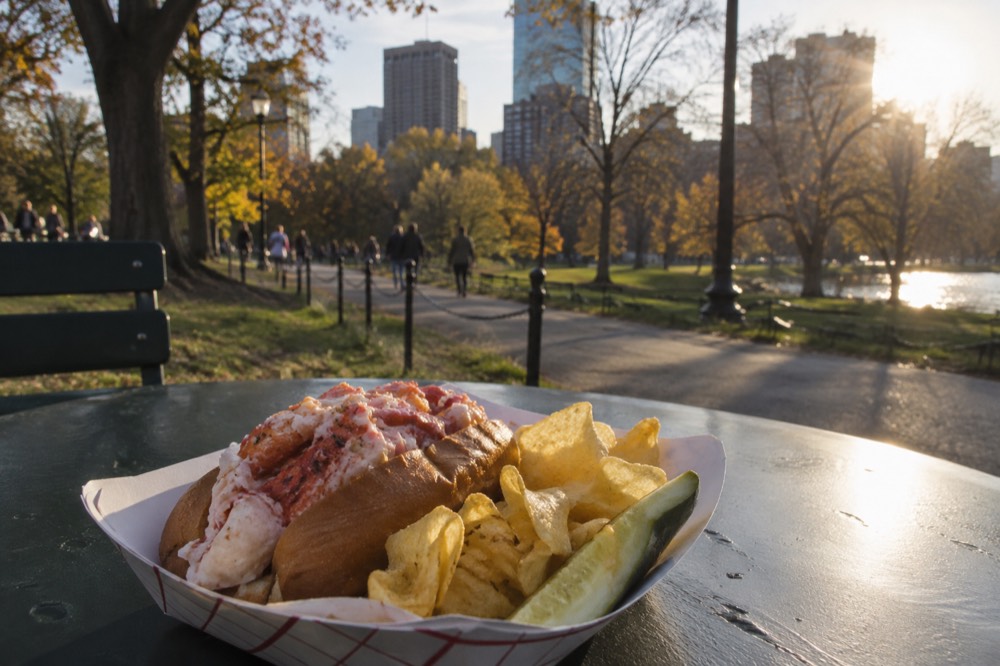
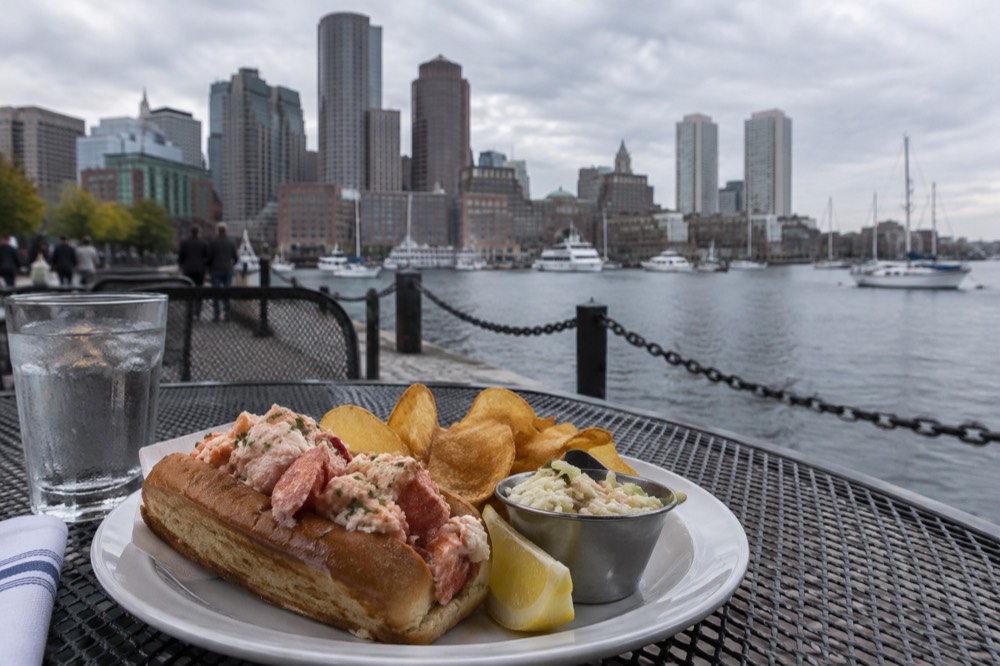
The traditional accompaniments are a bag of plain potato chips, a half-sour or bread-and-butter pickle, and either a cup of clam chowder or a lemonade, and the best counters serve exactly that combination without offering much else. Onion rings, coleslaw and fries all appear on Boston menus, but the chips-and-pickle pairing exists because the roll is rich and the sides are there to cut it. The chowder is the one upgrade worth making.
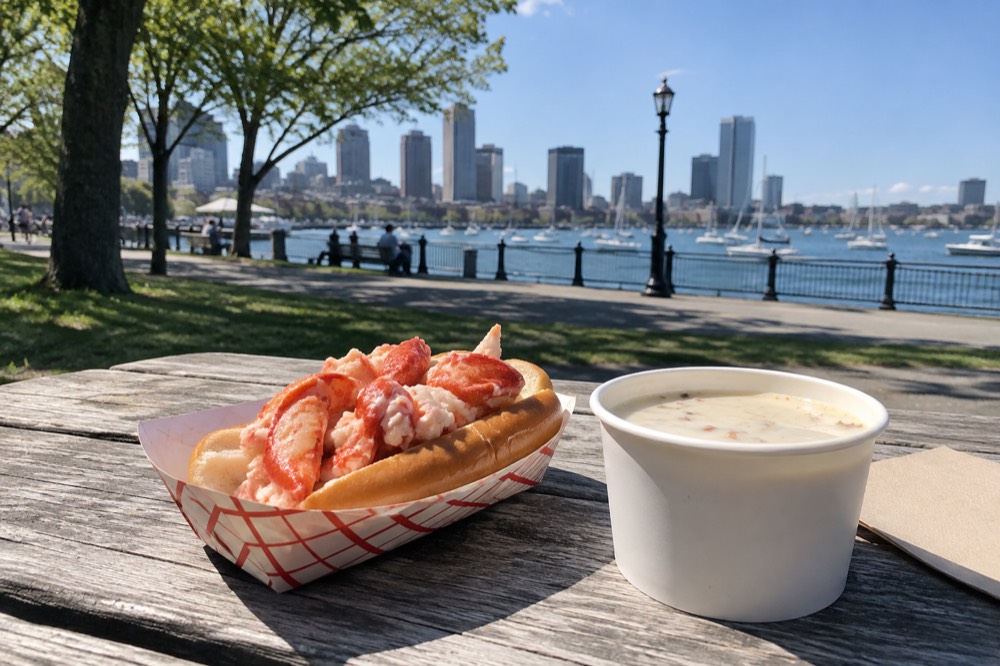
The chowder point is worth pressing. Boston serves New England chowder with milk or cream, in textures that vary by kitchen, and a small cup alongside a cold Maine-style roll is the classic two-course lunch of the waterfront. The pairing shows up on menus all along the harbor, and it is the single most reliable way to try two Boston food signatures in one sitting. Everything else covered here is indexed on Boston Travel Guide.
| Side | Why it works | Where it is standard |
|---|---|---|
| Plain potato chips | Salt and crunch against the rich meat | Nearly everywhere |
| Half-sour pickle | Acid to reset the palate | Counter-service spots |
| Cup of New England clam chowder | The second Boston signature | Waterfront counters, raw bars |
| Lemonade or iced tea | Cuts the mayonnaise or butter | Takeout windows |
| Coleslaw | Works better with the cold style | Table-service restaurants |
Drinks are simple. A local lager is the pub pairing in Charlestown, and a cold lemonade is the takeout-window standard on a hot harbor afternoon. Save the wine pairing for the table-service rooms in the Seaport.
Can You Build A Whole Boston Day Around Lobster Rolls?
Yes, and the geography cooperates: start with a North End counter before 11:30am to beat the line, walk the Freedom Trail's free sites through the early afternoon, cross to the waterfront or Charlestown for a second roll or a chowder cup, and finish with a warm buttered version at a Seaport table in the evening. The 2.5-mile Freedom Trail connects the eating neighborhoods on foot, and the MBTA's fare table shows a $2.40 subway ride covers anything the walk does not.
The timing rule that matters most is the lunch line. The best-known counters in the North End and at Quincy Market build queues from around noon, and an earlier meal may mean a shorter wait; the clock alone does not establish freshness. The reverse applies at dinner: the table-service rooms in the Seaport fill their patios at sunset, so a reservation or an early arrival is the move.
Transport is cheap and the fare rules recently changed in the rider's favor. The MBTA's fare pilots page describes unlimited transfers within a two-hour window for the price of the highest leg, in effect from September 1, 2026, which means a subway-plus-bus hop between neighborhoods costs no more than the single subway fare. The full fare picture, including the CharlieCard quirk that starts a pass at first use rather than purchase, is in our getting around Boston guide and our CharlieCard and fares explainer.
What Is The Best Season For Lobster Rolls In Boston?
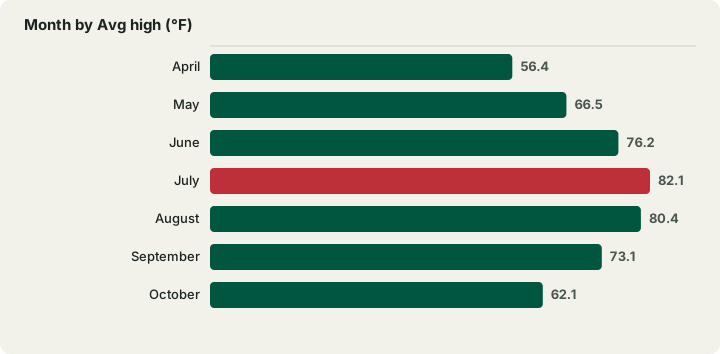
The best months for lobster rolls in Boston are May through October, when the counters and patios are open, the harbor ferry season is running, and the weather supports eating outdoors, with July the warmest month at an 82.1 °F average high according to NOAA's climate normals for the Boston station. There is no rainy season to dodge: every month of the year in Boston receives between 3.21 and 4.30 inches of precipitation, so the planning variable is temperature, not rainfall.
The outdoor-eating window is the real constraint. NOAA's 1991-2020 normals for the Logan Airport station put April's average high at 56.4 °F and October's at 62.1 °F, with September at 73.1 °F, which makes late spring and early fall the comfortable months for a bench overlooking the water. Winter rolls exist, mostly at indoor counters and raw bars, but the patio scene closes.
| Month | Avg high (°F) | Avg low (°F) | Outdoor roll weather |
|---|---|---|---|
| April | 56.4 | 40.8 | Cool, workable at midday |
| May | 66.5 | 50.3 | Good |
| June | 76.2 | 59.7 | Very good |
| July | 82.1 | 66.0 | Best, occasionally hot |
| August | 80.4 | 65.1 | Very good |
| September | 73.1 | 58.2 | Excellent, thinner crowds |
| October | 62.1 | 47.5 | Good with a jacket |
The seasonal footnote most guides miss: the Swan Boats in the Public Garden are closed for the season and will not run again until April 2027, per the operator's own site, and the Boston Harbor Islands' published ferry schedule ends the 2026 season on Monday, October 12. Check the schedule for the particular island; the season’s final date does not apply to every route. More month-by-month detail is in our best time to visit Boston guide and Boston weather by month.
Which Food Tours In Boston Include Seafood Stops?
Choose Classic Bites or the Seaport seafood walk when lobster roll is the priority tasting. Classic Bites is a roughly three-hour downtown food route; the Seaport walk takes about 2.5 hours and includes fish-pier context. The North End Italian walk and five-hour food-and-history route serve different interests and do not promise lobster roll.
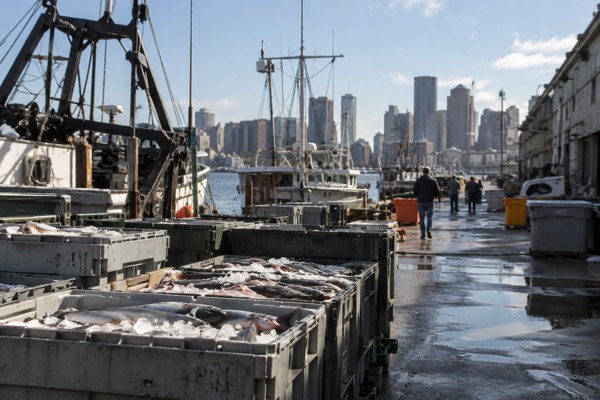
A guided walk solves a real problem in the North End: the neighborhood offers many counters and bakeries, and a guide who knows the block saves a visitor the trial and error. The fish pier tour goes further, showing the wholesale side of the industry that supplies the rolls, which is the closest thing Boston has to a lobster supply-chain field trip.
The longer five-hour walk suits a visitor who wants the eating and the Revolution history in one ticket. It covers the Freedom Trail's downtown stretch and Beacon Hill alongside the food stops, which is a fair trade for anyone who would otherwise spend the morning on the trail and the afternoon eating. Its listing shows a 4.9 rating from 1,888 reviews, and the combination is the reason it sells.
For a visitor who wants the sandwich without a tour commitment, the counters themselves are the answer, and the things to do in Boston page maps how the eating neighborhoods sit against the sightseeing ones. The pier tour below is the one to pick if the supply chain, not just the sandwich, is the interest.
What Lobster Roll Mistakes Do Visitors Make In Boston?
The five common mistakes are ordering at the most central stall rather than the freshest counter, eating a warm buttered roll too slowly, expecting a fixed price and budgeting from an outdated article, skipping the chowder, and treating Cambridge or Somerville as a Boston neighborhood when planning the day. Each one is avoidable with one piece of knowledge, and none of them requires spending more, only ordering better.
Cambridge and Somerville are separate cities, and Brookline is a separate town. Crossing a municipal boundary is not a reason to rule out a restaurant; compare its location and actual travel time with the rest of your day. The Red Line serves Cambridge and parts of Somerville, while other locations need different routes.
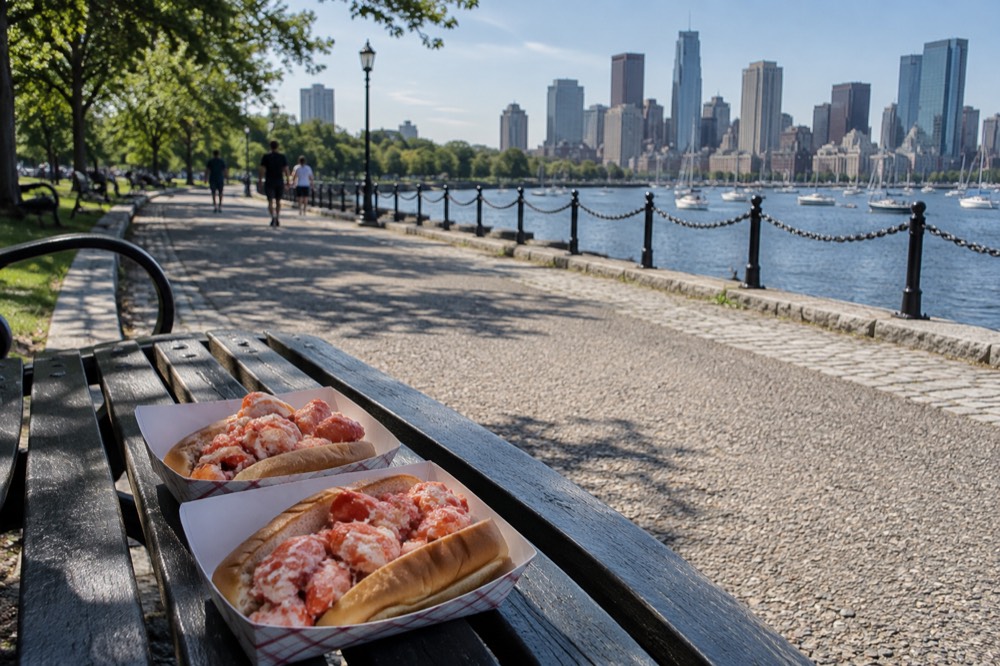
The timing mistake is the quiet one. A Connecticut-style roll dressed in warm butter has a working life of a few minutes. Visitors who order one, then photograph it, then carry it to a bench half a block away, are eating a cooled, congealed version of what left the kitchen. Order it where you plan to stand or sit.
How Do You Plan A Lobster Roll Crawl With Kids Or A Group?
For families, the workable plan is counter-service rather than table service: Quincy Market and the North End windows let a group split up, order at different speeds and eat at shared tables, and the children's fallbacks, pizza slices and cannoli, are within the same blocks. For adult groups, pick two or three counters within a fifteen-minute walk, split one roll per stop, and finish at a sit-down room for the warm version.
The split-and-share tactic is standard practice among locals and tour guides alike: one cold roll, one warm roll, one cup of chowder, divided across the group, tells everyone which style the table prefers before anyone commits to a full portion. It also turns a single lunch into a tasting itinerary.
For families planning a wider trip, our Boston with kids guide covers the attraction side, and the things to do in Boston this weekend guide tracks what is actually running on the dates you are in town, which matters for seasonal counters as much as for ferries.
Common Questions About Lobster Rolls In Boston
what is a must-eat in boston?
A lobster roll is the single most defensible answer, alongside a cup of New England clam chowder. Both are served all over the city, but the strongest versions cluster in the North End, the waterfront, the Seaport and Charlestown, and the choice between cold Maine-style and warm Connecticut-style is the first decision at any counter.
where can i get the best lobster roll in boston?
The best-known counters sit in the North End and along the waterfront, with strong table-service versions in the Seaport and pub-style rolls in Charlestown. Rather than one name, judge a counter by turnover: a fast-moving line may reduce waiting, but does not prove fresher meat, and asking whether the meat is picked on site is a fair question at any seafood counter.
how much does a lobster roll cost in boston?
Budget a casual-dinner amount per person at a counter, more at a table-service seafood restaurant, and check the restaurant's own current menu before planning, because numbers shift weekly in season.
what is the difference between maine-style and connecticut-style lobster rolls?
Maine-style is cold lobster meat bound lightly in mayonnaise; Connecticut-style is warm lobster meat dressed only in drawn butter. The cold version travels and dominates takeout windows, while the warm version should be eaten within minutes of leaving the kitchen.
when is lobster roll season in boston?
Counters and patios run hardest from May through October, with July the warmest month at an 82.1 °F average high in NOAA's climate normals. Winter service continues indoors at raw bars and year-round restaurants, but the outdoor eating scene, and the harbor ferry that pairs with it, runs on the warm-month calendar.
is boston or maine better for lobster rolls?
Maine invented the cold mayonnaise version and has the working wharf atmosphere to match, but Boston serves both styles well and also offers a walkable historic core where a roll fits between Revolution-era sites. A visitor in Boston does not need to travel north for a great roll, and the city's fish pier supplies many of its best counters directly.
Choose A Tour That Actually Includes Your Priority Food
These options do not match your choice. Adjust the selection or reset to explore the starting recommendation.
Compare Your Food Tour Or Independent Meal Totals
Reader-entered estimates in USD, not live quotes. Use the same dates and travelers for both options. Include all relevant tickets, rooms, taxes, mandatory fees and transport for the entire trip once in each total. Do not add a transfer twice if your rate already includes it.
Boston Classics Food And History Walk
A three-hour downtown walk with four food stops: baked beans and brown bread, chowder, lobster roll and Boston cream pie. Most tastings are seated; walking between venues is outdoors. Vegan and gluten-free diets cannot be accommodated. Recommended ages 12+; no infants, toddlers or strollers. Alcohol is an optional paid upgrade.
A starting option to explore. Choose dates, travelers and the exact booking option with the provider; availability and eligibility are confirmed there.
Check classic Boston food walk dates