Parking In Boston: What It Actually Costs And Whether You Need A Car
Boston was laid out as a colonial peninsula town, and its streets still behave like one. The street grid meanders, the blocks are short, and the city's own tourism economy is built around a red line you walk rather than a loop you drive. The practical question for most visitors is not where to park but whether to park at all, and the honest answer, laid out across this guide, is that downtown Boston is a park-once-or-not-at-all city. The numbers that follow come from the MBTA's fare pages, Massport's airport guidance, and the National Park Service's fee schedules, not from parking aggregators.
Short answer
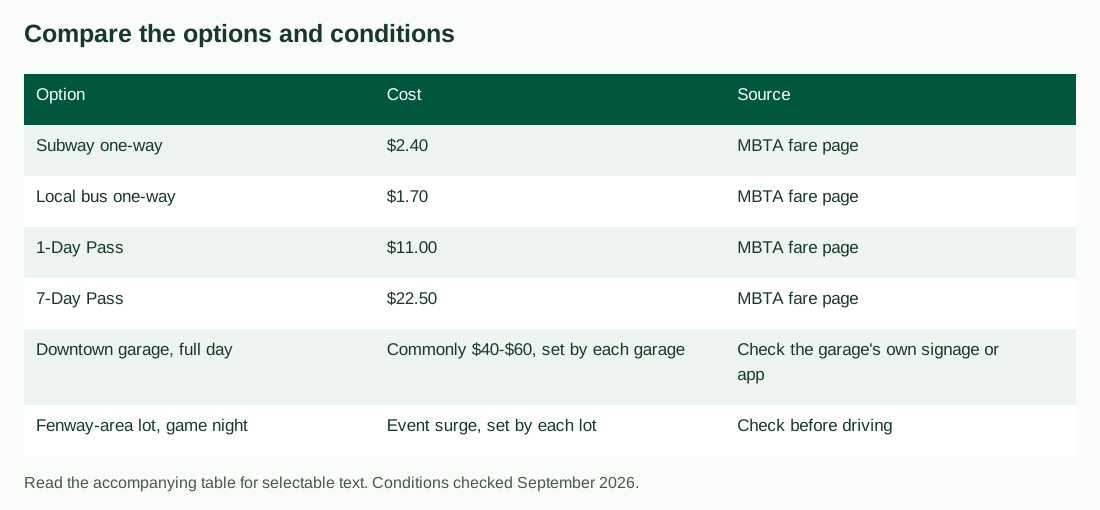
Downtown Boston garage parking routinely runs among the highest rates of any US city, commonly $40 to $60 for a full day in the Financial District, Back Bay and near Faneuil Hall, with event-night surge pricing at Fenway-adjacent lots going well beyond that. Rates are set by each private garage and change without notice, so no figure here is a promise. Compare that with the MBTA: a 7-Day unlimited pass is $22.50 and a 1-Day pass is $11.00, per the fare table.
Boston was laid out as a colonial peninsula town, and its streets still behave like one. The street grid meanders, the blocks are short, and the city's own tourism economy is built around a red line you walk rather than a loop you drive. The practical question for most visitors is not where to park but whether to park at all, and the honest answer, laid out across this guide, is that downtown Boston is a park-once-or-not-at-all city. The numbers that follow come from the MBTA's fare pages, Massport's airport guidance, and the National Park Service's fee schedules, not from parking aggregators.
If your itinerary includes rural places poorly served by transit, compare a rental for those days only. Check pickup and return offices, hours, deposit and parking costs. For a city-only stay, walking and public transit may remove the need for a rental entirely. Compare Boston car rentals
How Much Does Parking In Boston Cost?
Downtown Boston garage parking routinely runs among the highest rates of any US city, commonly $40 to $60 for a full day in the Financial District, Back Bay and near Faneuil Hall, with event-night surge pricing at Fenway-adjacent lots going well beyond that. Rates are set by each private garage and change without notice, so no figure here is a promise. Compare that with the MBTA: a 7-Day unlimited pass is $22.50 and a 1-Day pass is $11.00, per the fare table.
The comparison is the whole argument. A week of unlimited subway and bus travel costs less than a single day in many downtown garages. The MBTA's own fare page publishes the numbers: subway one-way is $2.40, local bus is $1.70, the 1-Day Pass is $11.00 and the 7-Day Pass is $22.50, with a monthly LinkPass at $90.00 (MBTA fare table).
| Option | Cost | Source |
|---|---|---|
| Subway one-way | $2.40 | MBTA fare page |
| Local bus one-way | $1.70 | MBTA fare page |
| 1-Day Pass | $11.00 | MBTA fare page |
| 7-Day Pass | $22.50 | MBTA fare page |
| Downtown garage, full day | Commonly $40-$60, set by each garage | Check the garage's own signage or app |
| Fenway-area lot, game night | Event surge, set by each lot | Check before driving |
One more fare change matters to anyone doing the arithmetic. Since 1 September 2026, the MBTA has run a pilot allowing unlimited transfers between subway, bus and ferry within a two-hour window, paying only the cost of the highest-priced leg, provided you use the same payment method throughout (MBTA fall fare pilots). A day of hopping between neighborhoods costs meaningfully less than it used to.
If you are weighing the broader trade-offs, the getting around Boston guide covers the transit network in full, and where to stay in Boston explains why a hotel near a subway stop beats one with "free parking" three miles out.
Where Can You Park In Downtown Boston?
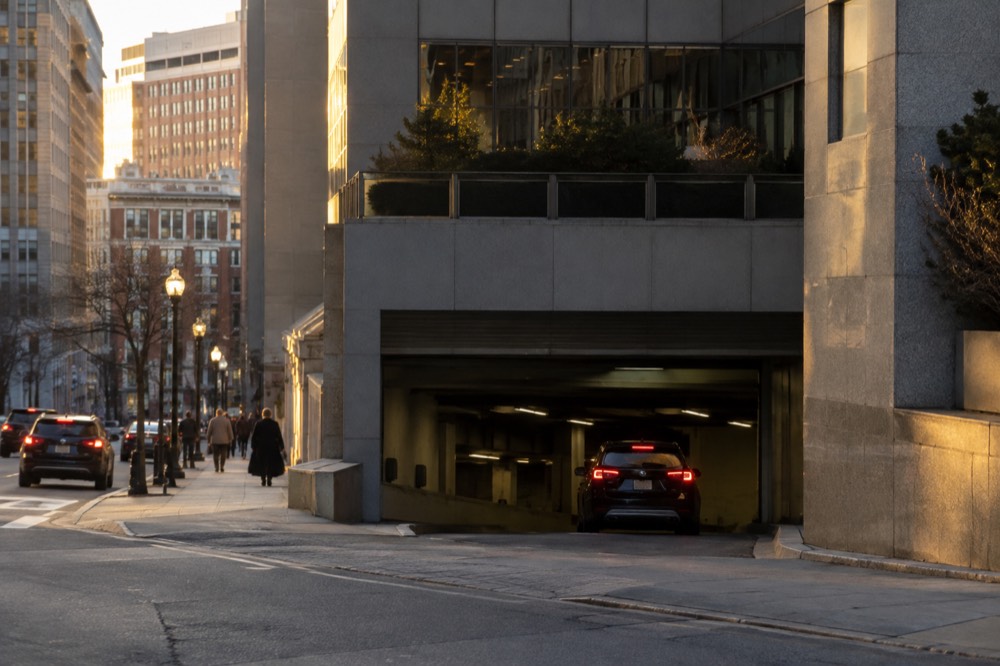
Downtown options include commercial garages, hotel parking and legal metered or signed visitor spaces. Compare the charge for your exact arrival and departure times. Some meters are free outside chargeable hours, including Sundays, but other restrictions still apply. A legal space is not guaranteed.
Park once where feasible and choose a manageable walk. The Freedom Trail is a 2.5-mile outdoor route, per the Foundation’s visit page. It is free to follow, while interiors have separate admission. The NPS hours page covers its own sites, not all sixteen institutions.
| Parking approach | Best for | Watch out for |
|---|---|---|
| Commercial garage (Financial District, Back Bay) | A full day of walking sightseeing | Overnight rates differ from hourly; validate where offered |
| Hotel garage | Winter visits, late returns | Often $40-$60 per night added to the room |
| Metered street space | Short errands, evenings | Time limits, resident zones, snow emergencies |
| Peripheral garage + subway | Multi-day stays | Adds a transit leg each way, at $2.40 per subway ride |
The peripheral play deserves a sentence of explanation. Garages a subway ride out of the core are often cheaper for multi-day stays, and with the two-hour transfer window now in effect, the round trip is one fare each way rather than a stack of separate payments. The Boston subway map explained page shows which lines reach which garages.
After parking, check the walking distance to your actual first stop. A guided history walk is optional and does not replace a parking reservation or guarantee a nearby departure.
Is Street Parking In Boston Worth Trying?
Honest answer: almost never for a visitor, and rarely for long. Most central residential streets sit inside resident-permit zones that ticket and tow aggressively, metered spaces carry short time limits, and a declared snow emergency bans street parking on arterial roads and triggers towing citywide. Street parking in Boston is a system built for residents with permits, not for tourists hoping to luck into a space near Faneuil Hall.
Read every sign on the block, including resident-only periods, visitor spaces, time limits and temporary restrictions. Do not assume a nonresident receives a one- or two-hour grace period in a resident-only space. Beacon Hill and other central neighborhoods have varying posted rules.
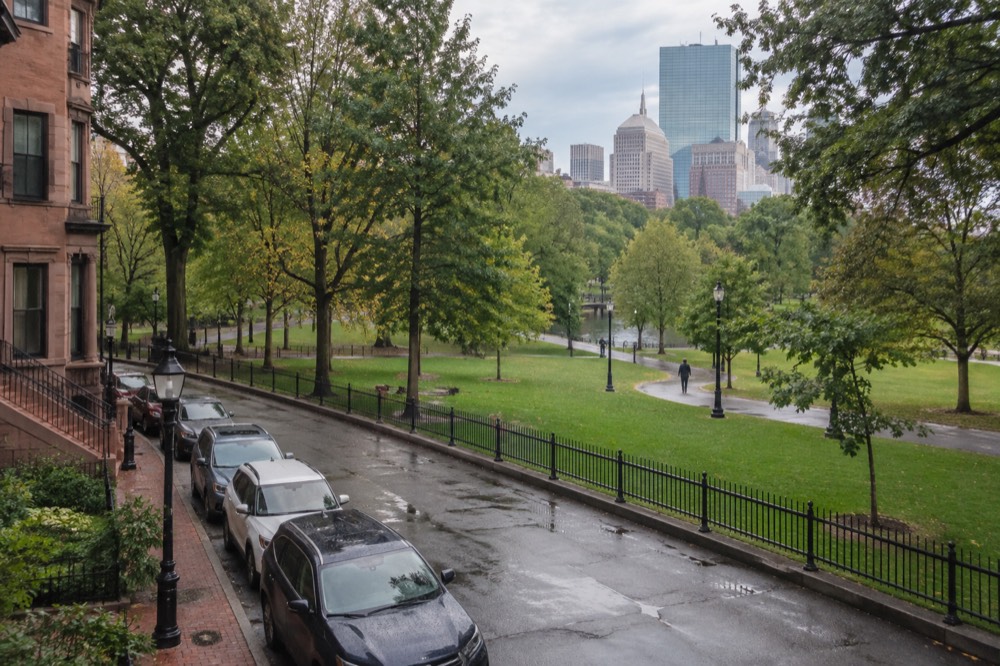
Meters, where they exist, use the city's pay-by-plate system: you enter your plate number at a kiosk or in the app, take the receipt, and the time limit on the meter is the real limit, not a suggestion. Feeding a meter past its maximum is a ticket regardless of how much you paid.
Snow emergencies deserve their own warning because they override everything else. Boston averages 49.2 inches of snow per year at the official Logan Airport station, and 28.7 inches of it, 58 percent, falls in January and February alone, per the NOAA 1991-2020 climate normals. When the city declares a snow emergency, street parking is banned on posted arteries and the tow trucks work through the night. If you are visiting between December and March, check the city's status before leaving a car on any street. The month-by-month picture is in the Boston weather by month guide.
| Street-parking obstacle | What happens |
|---|---|
| Resident permit zone | Follow the posted permit restriction; no general nonresident grace period |
| Meter time cap | Ticket after the posted time limit; payment does not extend it |
| Snow emergency | Street parking banned on arteries, towing enforced citywide |
| Street cleaning schedules | Ticketing and towing during posted sweeping windows |
The workaround is not a cleverer street strategy. It is not bringing the car into those neighborhoods at all, which is the theme of every section in this guide.
Should You Bring A Car To Boston At All?
For a city-focused visit, compare walking and transit with your actual access needs and party size before renting. Salem and Concord have Commuter Rail stations; rural or scattered stops can be harder to reach. Renting only for the road-trip days may reduce parking costs, but compare full quotes and office hours rather than assuming it always wins.
The geography backs this up. Boston, Cambridge, Somerville and Brookline together form a dense core where a car is a liability, and note that Cambridge, Somerville and Brookline are separate municipalities with their own permit rules, not Boston neighborhoods. The MBTA's fare structure now rewards riding: the two-hour unlimited transfer window means a Green Line to Red Line to bus journey costs one fare, the highest leg, when you tap the same card or phone throughout (MBTA fares and transfers).
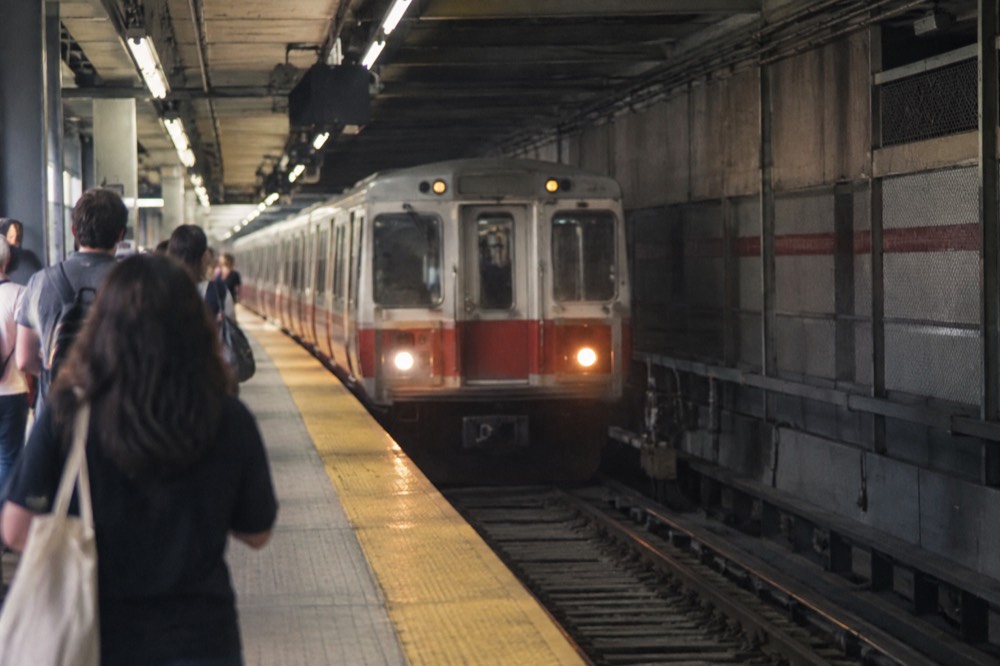
For day trips, the calculus flips. The best time to visit Boston pages and the day-trip guides cover where a car genuinely helps: fall foliage in the White Mountains, the Cape, Newport. Rent for those days, return the car, and keep the hotel-garage nights to a minimum.
Want flexibility for rural Cape or mountain stops beyond convenient transit? Compare a Boston rental for the road-trip days only. Check the exact office, opening hours, driver eligibility, deposit and mileage; include destination parking and any one-way charges. Compare Boston car rentals
Where Do You Park For Fenway Park And Big Events?
For Red Sox games, most fans use commuter-rail and subway connections rather than driving, because Fenway-adjacent lots surge on game nights and streets around the park sit in permit zones. If you do drive, pre-booking a garage space beats circling, and arriving early matters: the Red Sox's own tours page notes weekend tour schedules shift around game times. For a game-day plan without a car, the Red Sox game guide covers transit routes in detail.
Fenway Park sits at the junction of the Green Line's Kenmore and Fenway-adjacent stops, and the MBTA runs extra service on game days. The streets immediately around the park are among the most aggressively permitted and ticketed in the city, so the "free space two blocks away" almost never exists on a night 37,000 people are trying to find one. The rest of the planning pages sit on Boston Travel Guide.
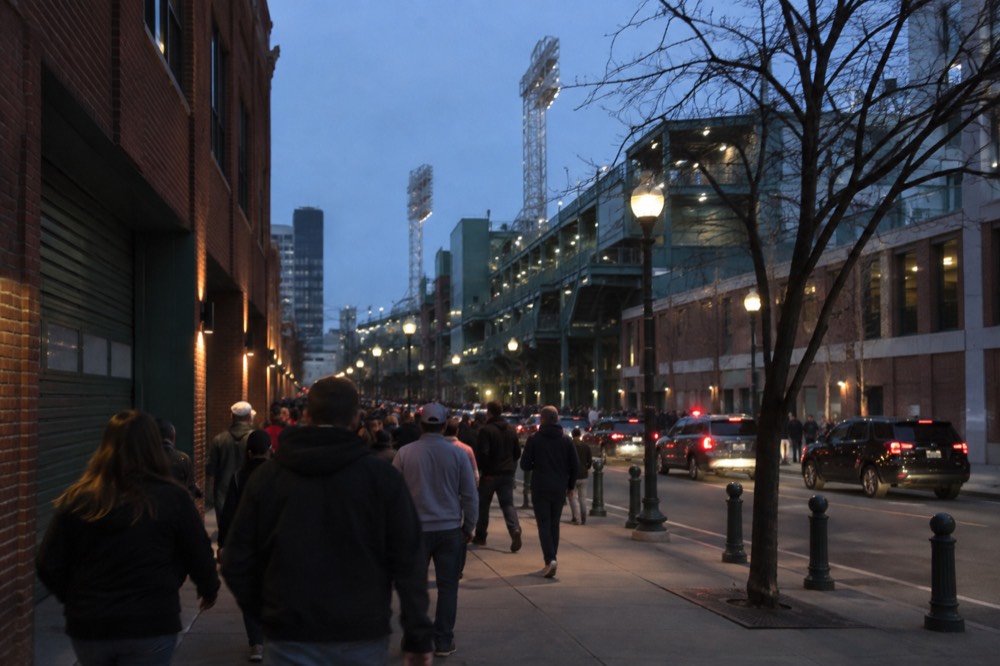
A stadium tour and parking are separate purchases. The standard Fenway tour lasts about an hour; the short GateB format has limited seasonal dates. Neither provides game entry or parking. The Fenway tour guide explains the choices.
Further reading: Red Sox ballpark tours.
| Venue | Driving reality | Better option |
|---|---|---|
| Fenway Park, game day | Permit streets, surged lots | Green Line to Kenmore |
| TD Garden, event night | Congestion around Causeway Street | Green or Orange Line to North Station |
| Theater District | Garage rates, evening minimums | Any downtown stop, walk |
| North End dinner | Almost no legal visitor street parking | Haymarket or Aquarium stops |
The North End row in that table is worth underlining. Boston's Italian neighborhood has some of the least visitor parking in the city and some of its best restaurants, per the best restaurants in Boston guide. Compare a legal reserved garage with the actual transit route and walking distance; neither guarantees a fixed arrival time.
What About Parking Near Logan Airport?
Compare the full airport journey before driving from a downtown hotel. SL1 is free leaving Logan, while the trip toward the airport normally requires a fare. If you need a rental only for a later road trip, compare collecting it later rather than paying rental and airport parking charges during your city stay.
The Logan Airport parking guide covers on-airport rates and off-airport lots.
Massport's own page states the quirk plainly: the MBTA Silver Line SL1 provides free service between South Station and all airport terminals, from the terminal curb (Massport, to and from Logan). The free leg is the one leaving the airport. Board at the curb, ride to South Station, and you have joined the subway network without paying a fare. Heading toward Logan later, you pay the ordinary $2.40.
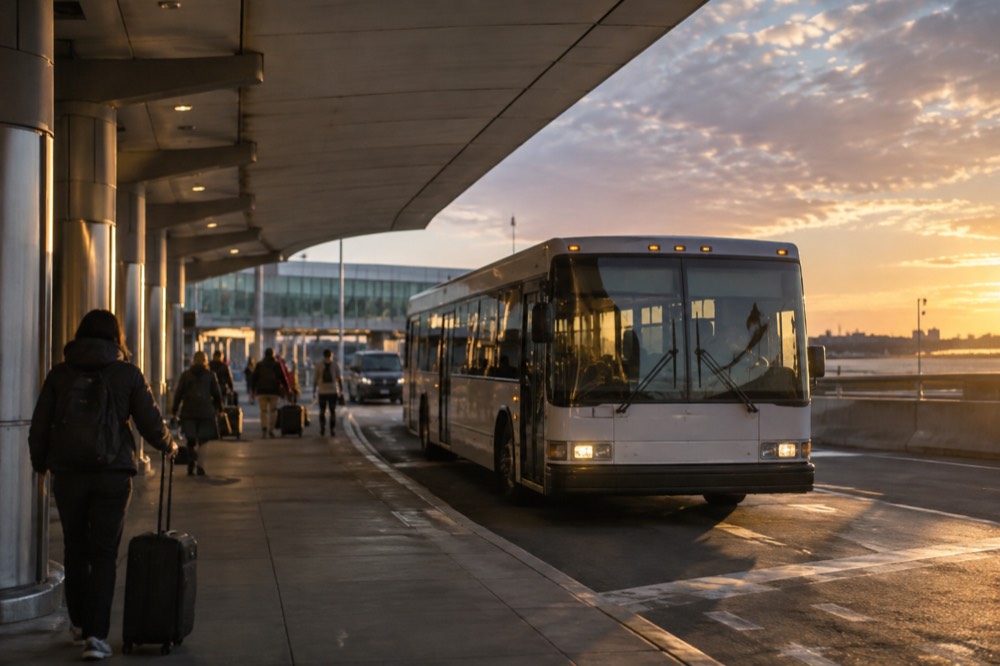
Other options Massport lists: a free on-airport shuttle connecting terminals to the Blue Line at Airport station, free inter-terminal shuttle buses, Logan Express service to Back Bay, Braintree, Framingham, Danvers and Woburn, plus taxis, rideshares and water taxis. Construction is active at Logan through the season, including Terminal B pedestrian bridge and Terminal E roadway work, so allow extra time on the curb approaches; the Logan Airport guide tracks it.
| Logan option | Cost | Notes |
|---|---|---|
| Silver Line SL1 from terminal curb | Free | Toward South Station only; $2.40 going to the airport |
| Free on-airport shuttle to Blue Line | Free | Connects terminals to Airport station |
| Logan Express, Back Bay | Fare set by Massport | Check Massport’s current destinations and fares |
| On-airport parking | Rate set by Massport, seasonal | Cheaper off-airport lots exist; see the Logan parking guide |
| Water taxi | Private fare | Dock shuttle and sailing wait add time; not always fastest |
For anyone connecting Logan to a downtown base, Logan Airport to downtown Boston walks through each option with times, and hotels near Logan Airport covers the stay-over case.
How Do Passes And The CharlieCard Change The Parking Math?
A 7-Day pass at $22.50, valid on subway and bus, costs less than one downtown garage day, and the same pass behaves differently depending on the card it lives on: on a CharlieTicket it starts at purchase, on a CharlieCard it starts at first use. That single detail is worth most of a day of validity to a visitor who buys on arrival and starts sightseeing the next morning, per the MBTA's fare page.
The pass mechanics matter because they decide whether transit is trivially cheap or merely cheap. The MBTA publishes the distinction itself: a 1-Day or 7-Day pass bought on a CharlieTicket is valid from the date and time of purchase, while the same pass loaded on a CharlieCard starts at first use (MBTA fares). Contactless Tap to Ride with a card or phone also works across bus, subway and ferry, and the two-hour transfer window applies as long as you tap the same method on every leg.
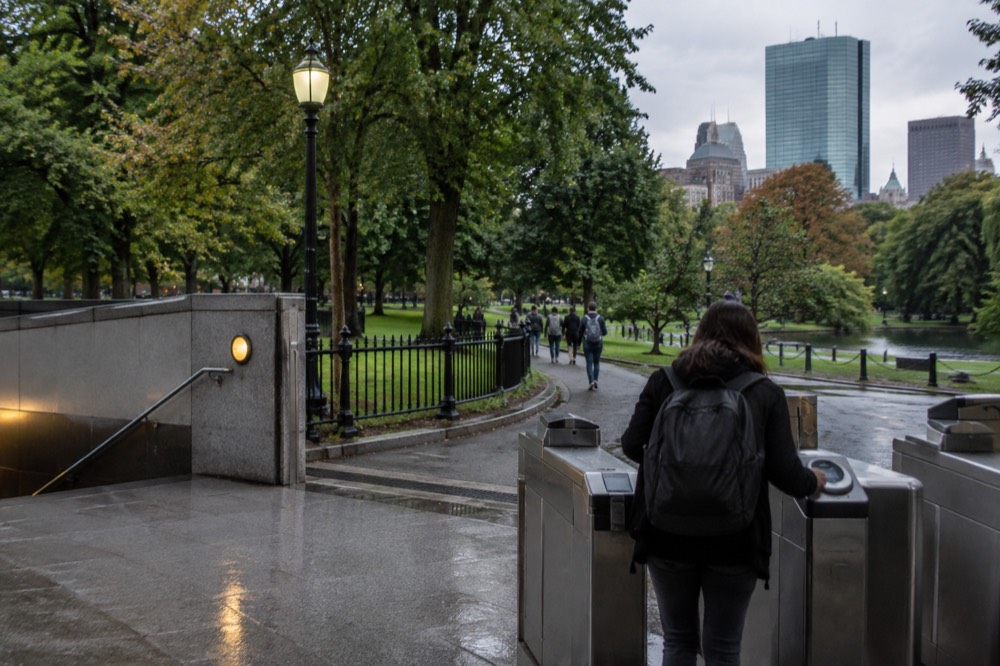
The full breakdown, including what transfers do and do not include, lives on the CharlieCard and fares page. The short version for a driver weighing options: a week of unlimited transit costs roughly what a single day of downtown parking costs, before gas, before tolls, before the ticket you did not mean to collect.
Sightseeing needs and parking are separate purchases. A Duck Tour or attraction pass does not provide parking or replace ordinary public transport. Compare attraction choices separately in the CityPASS versus Go Boston comparison.
What Is The Honest Parking Strategy For A Boston Trip?
If you bring a car, compare a legal garage at your hotel or near useful transit and park once when feasible. For a city-only weekend, compare arriving without a car. Use actual fare counts, party size, access needs and parking quotes; a seven-day pass is not automatically the cheapest choice for every visitor.
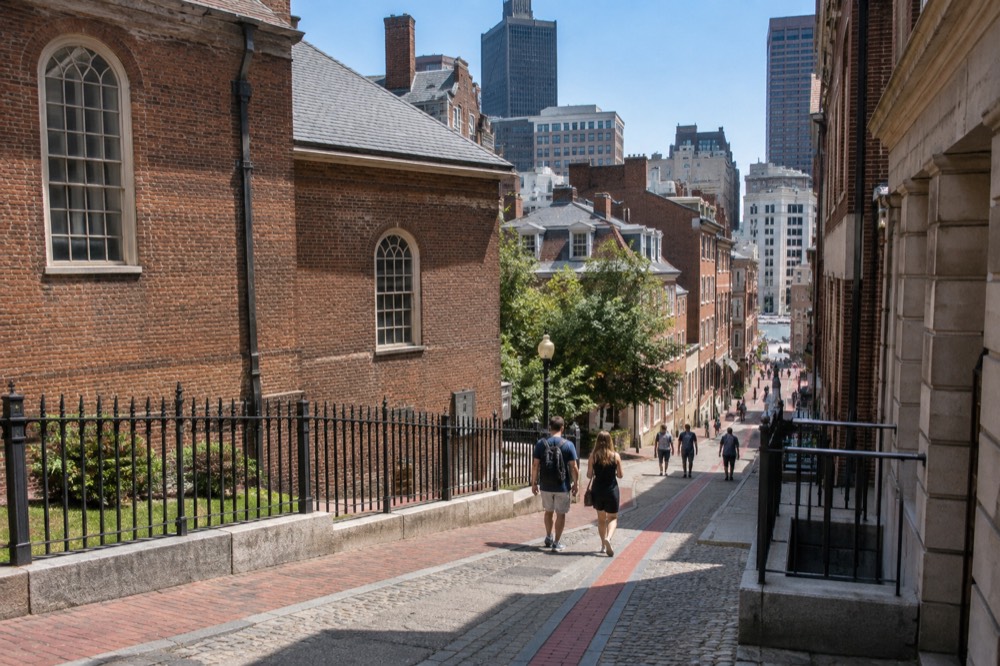
The main sights can usually be reached by walking and transit, with access needs and distances checked individually. Boats leave different docks, Long Wharf, Rowes Wharf, Fan Pier Marina or CambridgeSide depending on the product, so choose the actual departure point before parking.
| Trip type | Compare | Include |
|---|---|---|
| City-only weekend | No car versus garage | Actual party transit fares |
| City stay plus road trip | Rental only for road-trip days | Office hours and parking |
| Winter visit | Legal garage or no car | Snow-emergency restrictions |
| Game or event | Transit versus reserved garage | Event hours and exit time |
| Family trip | Garage location and transit access | Walking, stroller/access needs and party total |
For the walkable core itself, things to do in Boston is the main activities guide, and the Freedom Trail tours guide compares guided walks against doing the red line on your own. A weekend-specific plan is in things to do in Boston this weekend.
The pattern across every scenario is the same: the car's job in Boston is to get you to the city and to get you out to the mountains or the Cape. In between, it sits in a garage and bills you by the night while the subway does the actual work for $2.40 a ride, or less once the transfer window does its arithmetic.
Compare the complete hotel-and-parking total before reserving an overnight base. Confirm whether parking is on site, separately charged, height-limited or subject to re-entry rules. This city hotel search does not filter for free parking or guarantee garage availability. Compare Boston stays
Common Questions About Boston Parking
is boston parking really that bad
Downtown, yes. Garage rates commonly run $40 to $60 a day, most residential streets are resident-permit zones, and event nights surge everything around Fenway and TD Garden. Outside the core and on day trips, parking is ordinary. The honest fix is transit: a 7-Day MBTA pass costs $22.50.
can you park on the street in boston
Only where the full set of posted rules permits your vehicle at that time. Some areas have designated visitor or metered spaces; resident-only restrictions do not grant a general grace period. Check time limits, street cleaning, temporary notices and snow-emergency restrictions.
where is the cheapest place to park in boston
Compare actual garage quotes, hotel packages and peripheral parking plus transit. Meters can be free outside chargeable hours, including Sundays; other posted restrictions still apply. No option is always cheapest or guaranteed available.
do i need a car in boston
For Boston and Cambridge, no. The subway, buses and ferries reach everything on a first-visit itinerary, and the Silver Line SL1 is free from Logan's terminal curb. Rent a car only for day trips to places like the Berkshires or Cape Cod, and rent it for those days alone.
how much is parking at logan airport
Compare Massport’s current lot rate for your exact duration and any advance-booking terms. Off-airport quotes need their own fees and shuttle timing. Dropping off or collecting someone is different from storing a car; follow the airport’s designated curb and waiting rules.
is parking free at hotels in boston
Almost never downtown. Hotel garages commonly add $40 to $60 per night, and some smaller properties have no parking at all. When comparing hotel prices, add the garage rate before deciding which deal is actually cheaper, and check whether the hotel sits near a subway stop, because that matters more than the parking line item.
Choose Whether You Need A Car Before Paying To Park It
These options do not match your choice. Adjust the selection or reset to explore the starting recommendation.
Compare Your Complete Car-And-Parking Versus Transit Estimates
Reader-entered estimates in USD, not live quotes. Use the same dates and travelers for both options. Include all relevant tickets, rooms, taxes, mandatory fees and transport for the entire trip once in each total. Do not add a transfer twice if your rate already includes it.
Boston Car Rental
Compare Boston pickup offices for a driving day trip. Check license, deposit, card, fuel and pickup conditions for the specific rental.
A starting option to explore. Choose dates, travelers and the exact booking option with the provider; availability and eligibility are confirmed there.
Compare Boston car rentals