What Food Is Boston Famous For? The Dishes, Bakeries And Neighborhoods That Define The City
Ask ten people what food Boston is famous for and you will get a short, consistent list: clam chowder, lobster rolls, cannoli, Boston cream pie, and baked beans. The city earned that list honestly. It sits on one of the most productive cold-water fisheries in the country, it absorbed one of the oldest Italian communities in America into a single square half-mile neighborhood, and its hotel kitchens invented at least one dessert that went national. The purpose of this guide is to take each item on that list seriously: what the real version is, where it came from, and where a visitor should go to eat it well rather than eat it at all.
Short answer
Boston's five signature foods are New England clam chowder, the lobster roll, North End cannoli, Boston cream pie, and baked beans, with a strong supporting cast of oysters, scrod, Italian pastry, and the Boston cream donut. The list draws on regional seafood, Italian-American traditions and the city’s hotel and colonial food history.
What Food Is Boston Famous For? The Dishes, Bakeries And Neighborhoods That Define The City
Ask ten people what food Boston is famous for and you will get a short, consistent list: clam chowder, lobster rolls, cannoli, Boston cream pie, and baked beans. The city earned that list honestly. It sits on one of the most productive cold-water fisheries in the country, it absorbed one of the oldest Italian communities in America into a single square half-mile neighborhood, and its hotel kitchens invented at least one dessert that went national. The purpose of this guide is to take each item on that list seriously: what the real version is, where it came from, and where a visitor should go to eat it well rather than eat it at all.
Explore Classic Boston Bites for several traditional dishes, including chowder, lobster roll and Boston cream pie. Choose a seafood, Italian, pizza or pastry route if you want a narrower focus. Check dietary fit first; an independent order is simpler if you only want one dish. Check classic Boston food walk dates
What Dishes Is Boston Actually Famous For?
Boston's five signature foods are New England clam chowder, the lobster roll, North End cannoli, Boston cream pie, and baked beans, with a strong supporting cast of oysters, scrod, Italian pastry, and the Boston cream donut. The list draws on regional seafood, Italian-American traditions and the city’s hotel and colonial food history.
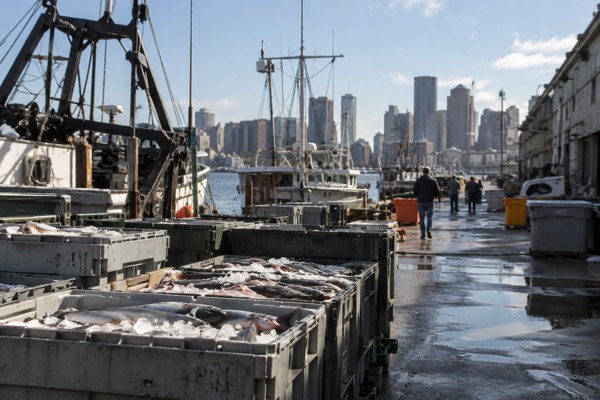
Chowder and the lobster roll are harbor food. The city's fishing fleet and its historic fish pier supplied restaurants within walking distance, and still do. Cannoli and the pastry culture around them are North End food, the product of an Italian community that settled the neighborhood generations ago and never left. Boston cream pie is a hotel-kitchen invention, credited to the old Parker House hotel's kitchen, and it is the official state dessert of Massachusetts. Baked beans are the oldest item on the list, a colonial-era dish slow-cooked in molasses that gave the city its "Beantown" nickname.
The useful framing for a visitor is geography. Seafood belongs near the waterfront and the Seaport. Pastry belongs in the North End. The classic dishes show up all over the city, but many well-known versions are clustered in the neighborhoods where the ingredients and the traditions actually live. Our Boston Travel Guide homepage covers the full sightseeing picture; this page stays on the plate.
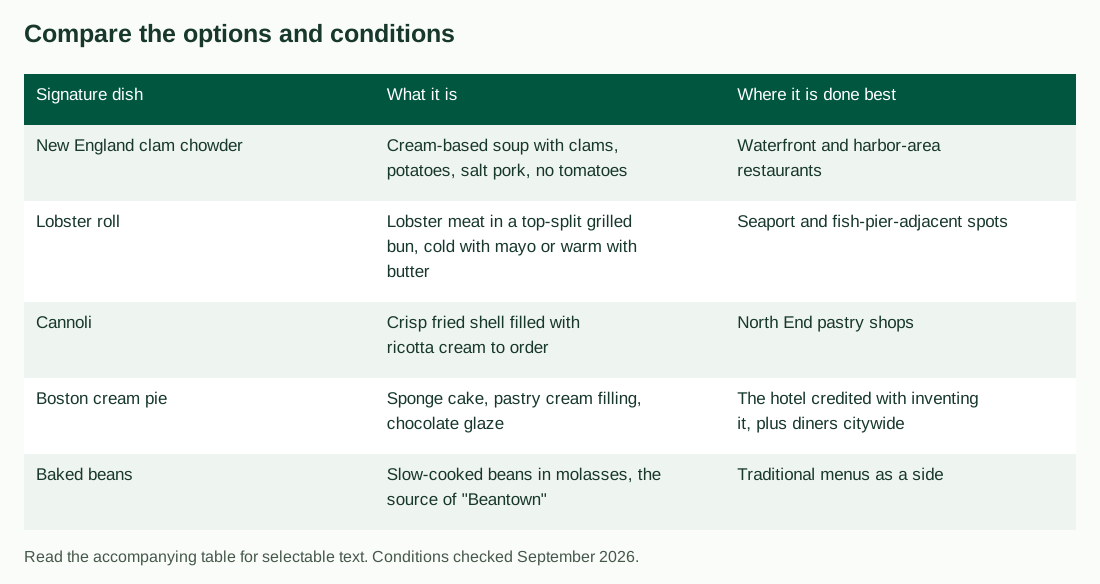
| Signature dish | What it is | Where it is done best |
|---|---|---|
| New England clam chowder | Cream-based soup with clams, potatoes, salt pork, no tomatoes | Waterfront and harbor-area restaurants |
| Lobster roll | Lobster meat in a top-split grilled bun, cold with mayo or warm with butter | Seaport and fish-pier-adjacent spots |
| Cannoli | Crisp fried shell filled with ricotta cream to order | North End pastry shops |
| Boston cream pie | Sponge cake, pastry cream filling, chocolate glaze | The hotel credited with inventing it, plus diners citywide |
| Baked beans | Slow-cooked beans in molasses, the source of "Beantown" | Traditional menus as a side |
Where Did Boston Cream Pie And Baked Beans Come From?
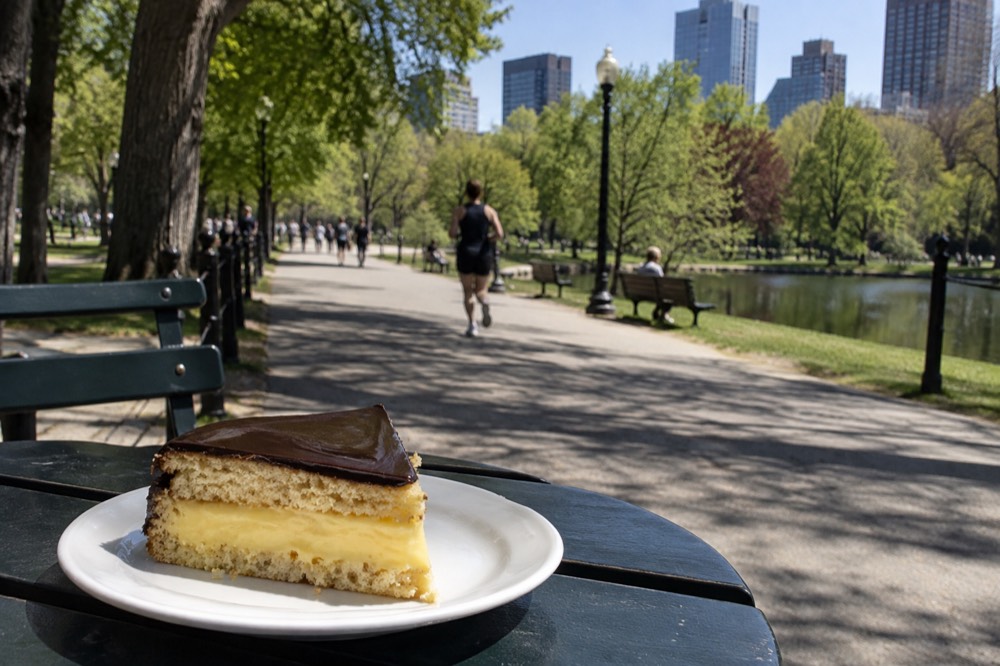
Boston cream pie is a sponge cake layered with pastry cream and glazed with chocolate, invented at the Parker House hotel and now the official dessert of Massachusetts, despite being called a pie. Baked beans date to the colonial era, when molasses, also used in rum production, made slow-cooked beans a Boston staple and earned the city its Beantown nickname.
The cream pie story is the cleaner of the two. The Parker House, which still operates as the Omni Parker House on School Street, is the standard source for the claim, and its kitchen is where the cake-and-custard dessert is said to have first been served. Chocolate was added over a custard-filled sponge cake, and the "pie" name stuck from an era when cakes and pies were baked in the same pans. The Boston cream donut, a yeast donut filled with custard and topped with chocolate, is the mass-market descendant, sold in donut shops across the country but eaten at its best in the city that named it.
Boston-style baked beans are slow-cooked with molasses and commonly salt pork. Their popular origin stories are contested: food historians caution against treating a simple Puritan or Native American recipe-transfer story as established fact. The Commonwealth Museum connects the dish’s molasses with Boston’s wider Atlantic trade history. Beans remain part of the city’s identity even when they are only a side dish. The what is Boston most famous for page covers the wider history.
Trying these dishes in Boston adds local context, but neither geography nor a historic name guarantees preparation quality. Choose the style you enjoy, compare portions and prices, and ask about ingredients when dietary needs matter.
Why Is The North End The Center Of Boston Food?
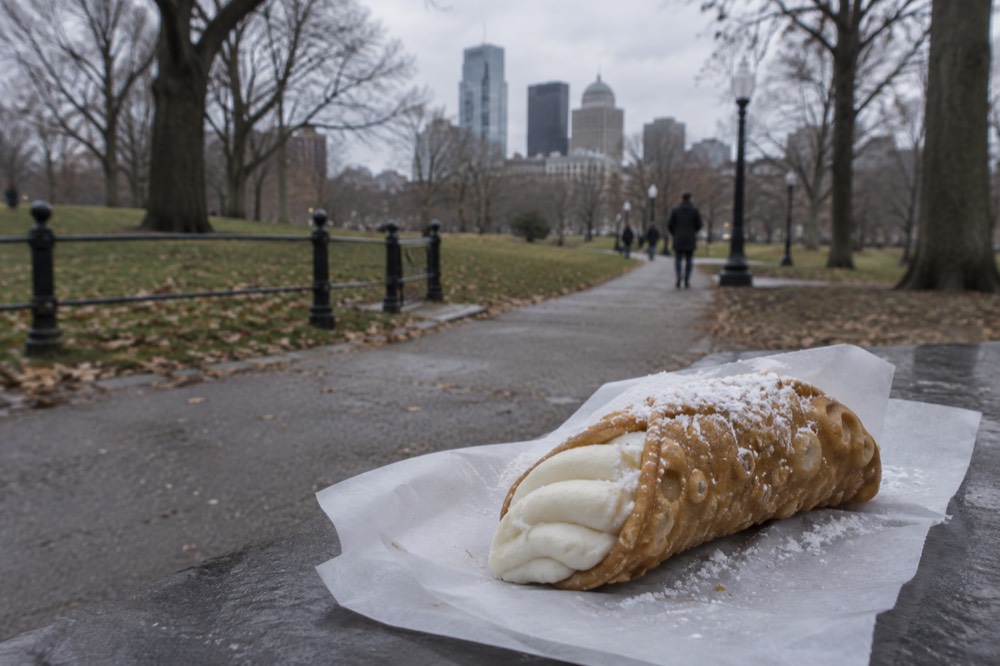
The North End is a roughly half-square-mile neighborhood that has been Boston's Italian district for well over a century, and it holds the densest concentration of pastry shops, salumerias, and old-school Italian restaurants in the city. Hanover Street and Salem Street are the two main food corridors, and the cannoli sold there, filled to order, are the pastry most visitors come specifically to eat.
The North End’s pastry shops include Mike’s and Modern on Hanover Street, with Bova’s nearby on Salem Street. Cannoli fillings and preparation vary, so ask how a pastry is made rather than assuming every shop fills every shell to order. Trying more than one bakery is an easy independent outing.
Pizza is another reason to visit. A broader Italian food walk combines selected tastings with neighborhood history, while a pizza-specific walk focuses on slices and cannoli. The food tour guide compares those formats; neither guarantees a stop at every restaurant in the neighborhood.
The tour is one way in, not the only one. The same neighborhood rewards a slow independent morning just as well, and the walk between the two main streets takes minutes. The tour’s selected stops may differ from your independent bakery choices.
The North End also sits directly on the Freedom Trail, so a food walk doubles as a history walk. The trail's own visit page describes a 2.5-mile red-lined route past 16 historic sites, and the Old North Church and Paul Revere House, two of them, are inside or on the edge of the neighborhood. The National Park Service's hours-and-fees page for Boston National Historical Park lists the Paul Revere House at $6.00 adult admission and the Old North Church Discovery Pass at $10.00, with the church's Bell Chamber Tour at $15.00, per the NPS published fees page. Eating cannoli two doors from a building that predates the Revolution is the whole North End experience in one sentence.
Check the North End Italian walk if you want selected tastings with neighborhood history. Submit dietary requests at least 24 hours ahead and review the current foods. It is not a promise to visit every bakery or include historic-house admission. Check North End food walk dates
What Is A Real Boston Lobster Roll?
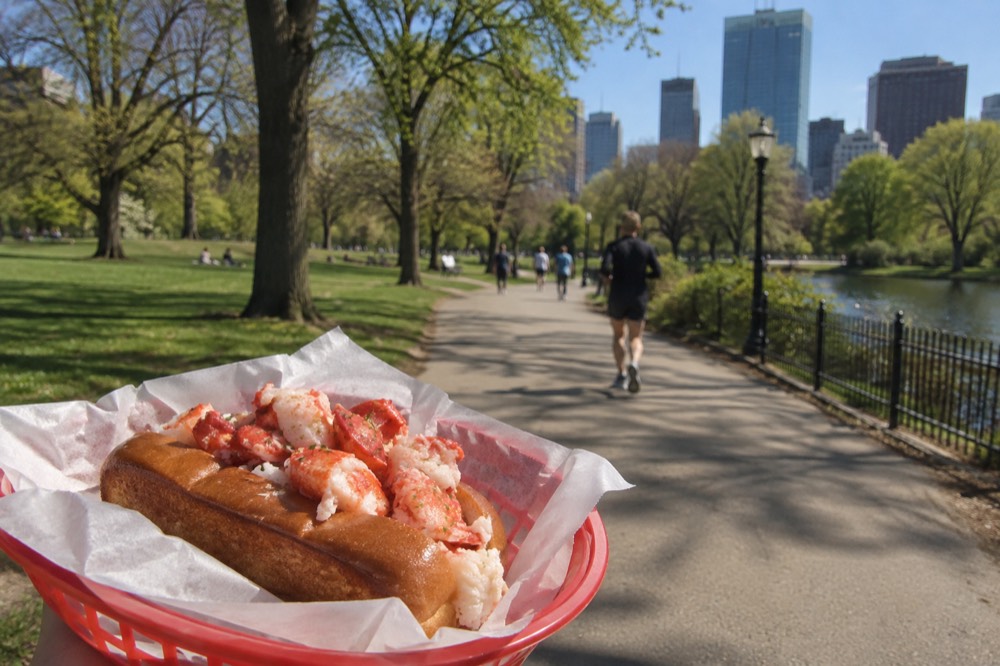
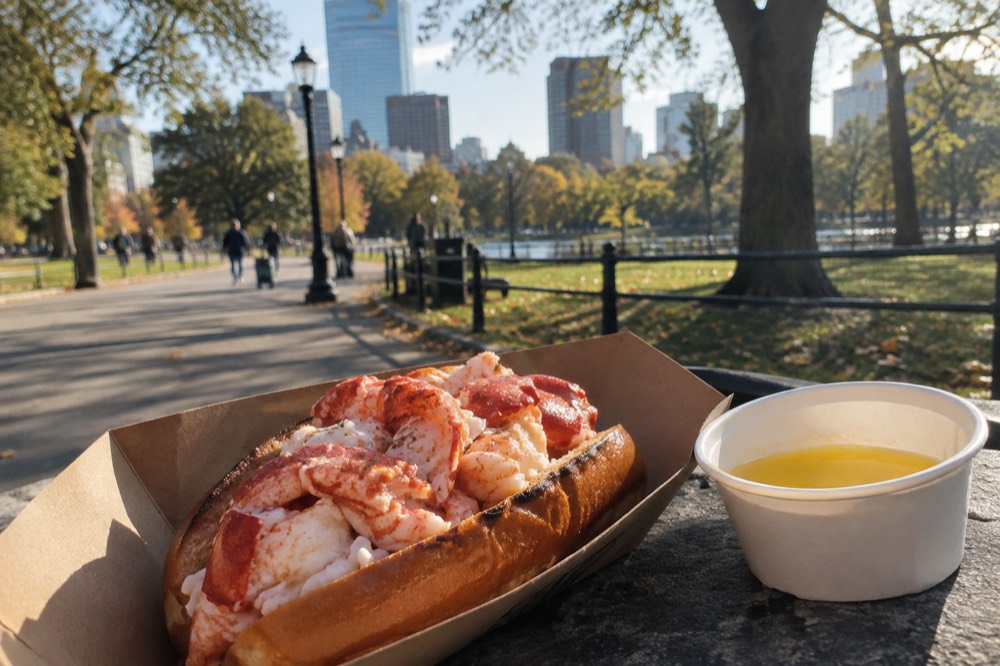
A real Boston lobster roll is chunks of fresh, cooked lobster meat in a top-split, buttered and grilled New England-style bun, served either chilled with a light touch of mayonnaise or warm with drawn butter. The two styles are the Connecticut, warm and buttered, and the classic Maine-influenced cold version, and in Boston both are widely available. What separates a good one is the ratio: lobster forward, dressing barely there.
The bun matters as much as the lobster. The top-split style, hinged along the top rather than the side, is a regional shape that holds a pile of meat without collapsing. The meat should be visible in large pieces, not shredded into a salad. Dressing and celery are matters of recipe and preference, not proof of poor ingredients, and the restaurants that do it well tend to say so on the menu by naming the catch.
The Seaport seafood walk combines waterfront history and meal-sized tastings over about two and a half hours. Its published foods include lobster roll, chowder, fried clams and a scallop tasting, subject to the operator’s current arrangements. It is not suitable for shellfish allergies or vegetarian and vegan diets. For independent dining, compare the lobster roll guide and restaurant guide.
Price expectations deserve honesty. Lobster is not cheap anywhere in the city, and a good roll in a tourist corridor costs real money. The value move is not to hunt a bargain, it is to hunt freshness: compare the portion, preparation and sourcing instead of using distance from the pier as proof of freshness.
Is Clam Chowder Really A Boston Dish?
New England clam chowder, the milk- or cream-based version with clams, potatoes, salt pork, and no tomatoes, is the chowder Boston and the region are famous for, and the city has been its most visible ambassador even though the dish predates the city's claim to it. In Boston it is served everywhere from white-tablecloth dining rooms to paper cups on the harbor, and the local standard is thick, briny, and never red.
The red version is Manhattan chowder, and the regional rivalry is real: Maine and Massachusetts both claim the white chowder as their own, and the tomato-based variant is treated locally as an intruder. The Boston standard is a cream or milk base, chopped clams, diced potato, salt pork or bacon for depth, and oyster crackers served on the side. What separates a good bowl is clam flavor in the broth itself rather than just in the meat, and restaurants that make it daily rather than hold it in a steam table are the ones worth ordering from.
Boston’s seafood traditions connect to the wider New England fishing industry. The Stellwagen Bank sanctuary explains the offshore marine environment, but its existence does not establish the source of clams in a particular restaurant’s chowder. Ask the restaurant about sourcing if that matters to your choice.
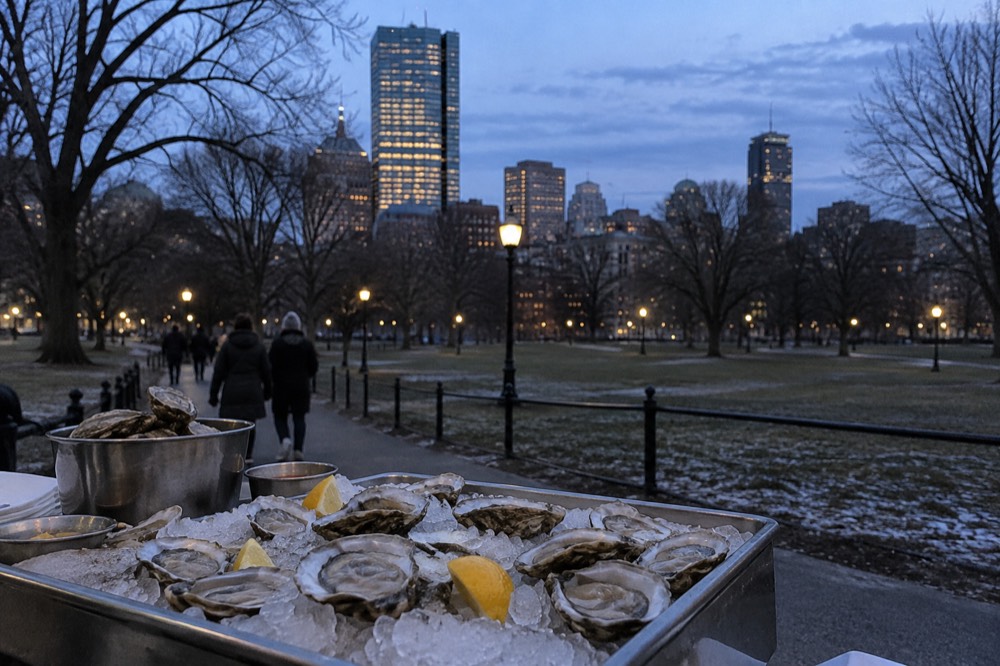
For visitors building a full seafood day rather than a single bowl, the oyster is the other item to order. Boston's raw bars shuck local oysters by name of the growing area, and ask about the growing area, harvest and handling rather than treating a state boundary as proof of freshness. Our best clam chowder in Boston page ranks the bowls, and it pairs with the lobster roll guide for a full seafood crawl.
What Candy And Sweets Is Boston Known For?
Boston's sweet list is led by Boston cream pie and its donut descendant, followed by North End cannoli, Italian pastries like sfogliatelle, and the candy bars and wafers historically produced in Massachusetts, a state with one of the oldest candy manufacturing histories in the country. The candy question has its own answer page on this site, because the state's confectionery history is long enough to deserve separate treatment.
The pastry side is easy to eat well. Beyond cannoli, the North End's display cases hold sfogliatelle, the shelled, ricotta-filled pastry that is the connoisseur's alternative order, plus rum cakes, biscotti, and torrone sold by the slice. The cream pie itself is on dessert menus across the city, and the Omni Parker House, the hotel credited with inventing it, still serves the original version, which is the one place where ordering it is a historical act as well as a dessert.
The candy side is a state story more than a city one. Massachusetts was a center of American candy manufacturing going back generations, and the region produced boxed chocolates, wafers, and candy bars that became national names. The details, brands, and where to buy the survivors today are covered on our what candy is Boston famous for page, and the broader state food picture, including the three foods Massachusetts is most known for, is on our three things Massachusetts is famous for food page.
Check the two-hour pastry walk for a bakery-and-café-focused North End outing. Confirm the current tastings and dietary requirements before paying. This is not a candy-factory visit or a guaranteed Boston cream pie tasting. Check bakery walk dates and tastings
Where Should First-Time Visitors Eat In Boston?
First-time visitors should eat seafood near the waterfront, pastry and pizza in the North End, and one classic hotel dessert downtown, in that order of priority. The neighborhoods are close together: the North End, the Seaport, and downtown are all within a short subway ride or a brief walk of each other, so a single well-planned day can cover all three food cultures without losing time to travel.
The practical plan is to anchor on geography. Start in the North End in the morning, when the pastry shops are quiet and the coffee is fresh. Walk the Freedom Trail sites in the neighborhood while the morning crowds are thin, then take lunch as pizza or a sit-down Italian meal on Hanover Street. In the afternoon, move toward the waterfront for chowder or a lobster roll, and finish with a cream pie or a harbor view at dinner. Our things to do in Boston page covers the sightseeing that fills the gaps between meals.
| Neighborhood | Food specialty | Best time of day | Getting there |
|---|---|---|---|
| North End | Cannoli, sfogliatelle, thin-crust pizza | Weekday morning for pastry, evening for dinner | Orange or Green Line to Haymarket |
| Seaport | Lobster rolls, raw bar, harbor-view dining | Afternoon into evening | Silver Line or Red Line to South Station |
| Downtown / Financial District | Classic hotel desserts, chowder at lunch counters | Lunchtime | Any downtown station |
| Waterfront / Long Wharf | Chowder cups, ferry-day seafood | Midday | Blue Line to Aquarium |
| Chinatown | Dumplings, bakeries, late-night noodles | Evening | Orange Line to Chinatown |
A pizza-and-history walk combines three slices, cannoli and a guided route. Compare its current foods, dietary restrictions and meeting point before booking. The Freedom Trail explanation gives context for the historic sights along an independent North End visit.
If the guided version of that route appeals, book a North End pizza walking tour here.
Getting between the food neighborhoods is simple on the MBTA, and our getting around Boston guide explains the system in full. The one seasonal note worth knowing: harbor-adjacent eating is best in the warmer months, and the Boston Harbor Islands ferry, which turns a food day into a harbor day, runs a fall schedule of Thursdays through Sundays through 27 September 2026 and ends its season entirely on 12 October 2026, per the ferry schedule published by the Harbor Islands.
Prefer a pizza-focused route? Explore the 2.5-hour walk with three slices, cannoli and water. Public tours offer no gluten-free, dairy-free or vegan substitutions. Meet downstairs at Modern Pastry Underground; confirm any stair-access needs first. Check pizza walk dates and dietary requirements
How Much Should A Food-Focused Trip To Boston Cost?
Food spending depends on your actual meals, portions, drinks and chosen tours. Build a party total from current menus and checkout prices, then add excluded fees or tips. A lobster dinner and a pastry walk are different purchases; neither a historic starting price nor a generic daily range establishes what your trip will cost.
For an independent day, price the dishes you want from current menus. For a tour, check whether the included food is a snack, several tastings or meal-sized. A pub crawl may exclude drinks entirely. Avoid adding a full meal twice when comparing a meal-sized tour with independent eating.
| Food experience | Enter your current estimate | Check |
|---|---|---|
| Pastry and coffee | Menu total for your party | Individual items and sizes |
| Pizza | Slices or whole pies you intend to buy | Portion and dietary fit |
| Chowder | Cups or bowls for your party | Size, ingredients and tax |
| Lobster roll or dinner | Current menu or market quote | Actual portion and extras |
| Guided tasting | Full party checkout total | Included food, drinks and tips |
The comparison that matters for value is against the city's paid attractions. The National Park Service's published fees put the Paul Revere House at $6.00 and the Old North Church Discovery Pass at $10.00, while USS Constitution and Bunker Hill Monument are free, so the history that surrounds the food costs very little. Visitors weighing a pass against individual tickets should read our Boston CityPASS vs Go Boston card comparison, and anyone stretching the whole trip budget should start with the cheap things to do in Boston page, which pairs free sights with inexpensive eating.
Further reading: Boston CityPASS.
| Guided experience | Included focus | Main restriction |
|---|---|---|
| North End Italian walk | Selected Italian tastings | Dietary requests at least 24 hours ahead |
| Pizza walk | Three slices, cannoli and water | No gluten-free, dairy-free or vegan public option |
| Seaport seafood walk | Meal-sized seafood tastings | No shellfish-allergy, vegetarian or vegan fit |
| History pub crawl | Guided tavern history | Ages 21+; food and drinks extra |
| Brewery tour | Tastings, snack and between-stop transport | Ages 21+; ID and closed-toe shoes |
What Should You Skip, And What Is Overrated?
Choose food by the dish, portion and preparation you want, rather than assuming a chain is always poor or a low price proves inferior lobster. A freshly filled cannoli may suit someone who wants a crisp shell. Ask about ingredients and compare actual menus instead of judging quality solely from location or price.
The pre-filled cannoli is the clearest example. The shell is meant to stay crisp, which means the filling goes in at the counter, and the shops that do this make a small show of it. A case cannoli with a soft shell is not a scam, it is just a worse version of the same pastry, and it is avoidable by ordering anywhere the staff fills it in front of you.
For chowder and lobster rolls, ask about preparation and portion size. Heavy dressing may not suit your taste, but it does not prove ingredients are poor; “fresh picked” wording alone is not verification. Compare what is actually served and disclose any allergy before ordering.
The last overrated category is timing. The North End on a summer Saturday evening is a crowd, and the same pastry shops are calm on a weekday morning. Visitors who structure the day around food rather than around dinner get the better version of every dish on this list, and the neighborhood rewards early arrivals with shorter lines at the same counters.
Common Questions About Boston Food Specialties
What food is Boston famous for?
Clam chowder, lobster rolls, North End cannoli, Boston cream pie, and baked beans. The supporting cast includes oysters, scrod, thin-crust North End pizza, and Italian pastries like sfogliatelle. The dishes reflect several strands of regional and immigrant food history.
What candy is Boston famous for?
Massachusetts has one of the oldest candy manufacturing histories in the country, and the region produced boxed chocolates, wafers and bars that became national names. The city's most famous sweet of all is Boston cream pie, the official state dessert, and its donut descendant. The full candy story has its own page on this site.
What is a must eat in Boston?
A cannoli filled to order in the North End, a bowl of white clam chowder near the harbor, and a lobster roll with visible chunks of meat. If there is room for one more, a slice of Boston cream pie at the hotel credited with inventing it is the dessert with a story attached.
Is Boston a good food city beyond the famous dishes?
Yes. The North End alone holds one of the densest concentrations of Italian restaurants and pastry shops in the country, the Seaport and the waterfront carry the seafood tradition, and neighborhoods from Chinatown to the South End add their own food cultures. The famous five dishes are the headline, not the whole menu.
What are three things Massachusetts is famous for food?
The three foods most often named are clam chowder, baked beans, and the lobster roll, with Boston cream pie as the official state dessert close behind. The state-level list, including its candy history, is covered on its own answer page on this site.
Choose The Foods You Want To Taste
These options do not match your choice. Adjust the selection or reset to explore the starting recommendation.
Compare Your Tasting Tour And Independent Food Totals
Reader-entered estimates in USD, not live quotes. Use the same dates and travelers for both options. Include all relevant tickets, rooms, taxes, mandatory fees and transport for the entire trip once in each total. Do not add a transfer twice if your rate already includes it.
Boston Classics Food And History Walk
A three-hour downtown walk with four food stops: baked beans and brown bread, chowder, lobster roll and Boston cream pie. Most tastings are seated; walking between venues is outdoors. Vegan and gluten-free diets cannot be accommodated. Recommended ages 12+; no infants, toddlers or strollers. Alcohol is an optional paid upgrade.
A starting option to explore. Choose dates, travelers and the exact booking option with the provider; availability and eligibility are confirmed there.
Check classic Boston food walk dates