What Are Three Things Massachusetts Is Famous For Food?
New England clam chowder is a thick, milk or cream based soup of clams, salt pork, potatoes and onions, and Massachusetts treats it as the definitive version of the dish, to the point that a tomato based chowder is treated as a rival from another region entirely.
What Are Three Things Massachusetts Is Famous For Food?
Clam chowder, lobster rolls and Boston baked beans are three familiar Massachusetts foods. They represent different parts of the region’s food history, from coastal seafood to molasses-sweetened beans. This page explains each dish and how to find it in Boston, with other local specialties worth considering.
Want to try the three dishes in one guided outing? Explore the Boston classics walk, whose listed tastings include baked beans, chowder and a lobster roll. Check the age and dietary limits before booking; independent restaurant stops remain an alternative. Check classic Boston food walk dates
If you want the wider food picture, the Boston food specialties guide covers the full menu, and the must-eat in Boston answer narrows it to a single plate.
Why Is New England Clam Chowder The First Answer?
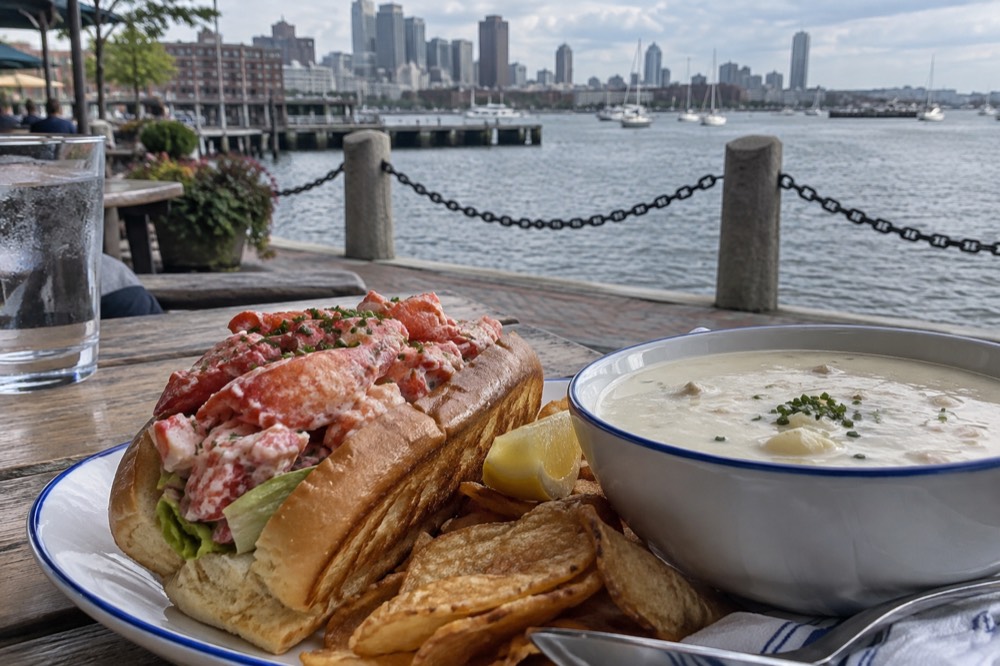
New England clam chowder is a thick, milk or cream based soup of clams, salt pork, potatoes and onions, and Massachusetts treats it as the definitive version of the dish, to the point that a tomato based chowder is treated as a rival from another region entirely. The creamy style is the one on virtually every Boston menu, from the waterfront tourist restaurants to neighborhood diners, and it is the one most visitors mean when they say chowder.
The chowder story is a working-coastline story. Massachusetts has been pulling clams and cod out of the Atlantic for as long as there has been a Massachusetts, and chowder was a fisherman's pot dish before it was a restaurant course. The cream base that defines the New England style is what separates it from the tomato-heavy Manhattan version, a distinction people in this state take seriously. Practically, that means you should not expect red chowder anywhere in Boston, and you should be a little suspicious of a place that offers both.
Where to eat it matters less than where you are standing when you do. The tourist corridor around Faneuil Hall and Quincy Market serves a lot of chowder in bread bowls, and the waterfront near Long Wharf has a dense cluster of seafood rooms with harbor views. The National Park Service counts Faneuil Hall among the free Freedom Trail sites, per its own hours and fees page, so a chowder stop there costs nothing but the soup. For a fuller route through the historic district, the famous walk around Boston answer explains the red-lined trail that connects it all.
What Makes A Massachusetts Lobster Roll Worth Ordering?
A lobster roll is lobster meat in a split-top bun, commonly served warm with butter or cold with mayonnaise. Portion size and preparation vary by restaurant; one roll does not necessarily contain the meat of exactly one whole lobster.
The honest version of the advice is that the best lobster rolls are usually a drive out of the city, along the North Shore in towns like Gloucester and Rockport, where the boats land the catch. But Boston proper holds its own. Seaport and the waterfront have the highest concentration of seafood restaurants inside the city, and the North End serves lobster rolls alongside its Italian food. What you are paying for is the meat, and the meat is the whole point: a roll that is mostly mayonnaise and celery is a salad in a bun, not a lobster roll.
The seasonal question matters here too. Lobster is available year round, but summer is when the roll is a cultural institution, and that overlaps with the warmest stretch of the Boston calendar. July is the warmest month at an average high of 82.1 °F, per the NOAA climate normals recorded at Logan, so a cold lobster roll on a hot afternoon is the correct pairing. If you are planning the timing around food rather than weather, the best month to visit Boston answer breaks down the rest of the year.
Why Do Baked Beans Define Boston Itself?
Boston baked beans are commonly slow-cooked with molasses and salt pork and are associated with the city’s Beantown nickname. Recipes and serving sizes vary. The dish has a long local history, but Red Sox songs do not establish a tradition of singing about beans.
The history is genuinely local. Colonial Boston sat at the center of the triangular molasses trade, and molasses was the sweetener available in quantity, so the Saturday night bean pot became a Massachusetts household institution. The Puritan practice of not cooking on the Sabbath fed the tradition: beans baked overnight Saturday were eaten Sunday. That is why the dish carries the city's name, and why a Boston version means molasses, not the tomato-heavy styles elsewhere. More of these guides are collected on Boston Travel Guide.
Eating baked beans in Boston today is more of a side-dish mission than a destination one. They appear at traditional seafood houses, at some Quincy Market counters and at restaurants leaning into colonial-era cooking. The city's food reputation has broadened far beyond one pot, though, and the things to do in Boston overview is the better place to start if beans are one stop on a longer trip.
The verified Boston classics food-and-history walk lists baked beans with brown bread, chowder, a lobster roll and Boston cream pie across four stops. It takes about three hours, is recommended for ages twelve and up and does not accommodate infants, toddlers, strollers, vegan diets or gluten-free diets. The North End Italian walk is a separate menu, not a substitute guarantee of these dishes.
Confirm the classics walk’s date and dietary requirements before planning other meals. Its listed stops include baked beans and brown bread, chowder, a lobster roll and Boston cream pie; vegan and gluten-free diets cannot be accommodated. Check classic Boston food walk dates
Where Should You Actually Eat These Three Foods In Boston?
Choose restaurants by their current menus rather than assuming one neighborhood serves all three dishes at every counter. Waterfront and market stops can work for chowder and lobster rolls; confirm baked beans before making a special trip. A named tasting tour is useful only when its actual menu matches what you want.
The North End's role in the state's food story goes beyond the three classics. It is the Italian neighborhood that gave Boston its cannoli culture, and the two rival bakeries on Hanover Street are a standing local argument. A small-group walk like the Boston's North End Food Tour, Italian Flavors and Heritage Walk, listed from $70 per person and rated 4.9 across 1,635 reviews, moves through those counters with a guide who can explain the heritage part as well as the tasting part. The Boston food tours guide compares the full field, including pizza walks and seafood tours.
To try the cannoli where they are filled to order, book a North End pizza tour here.
Here is how the three foods map onto the city:
| Food | Where to look | Check before ordering |
|---|---|---|
| Clam chowder | Waterfront seafood restaurants or market counters | Cream, shellfish and other ingredients |
| Lobster roll | Seafood restaurants in Boston and coastal towns | Portion, butter or mayonnaise, price |
| Boston baked beans | Traditional menus or the verified classics walk | Current availability and pork ingredients |
A practical note on getting between them: the North End, Quincy Market and the Seaport are all walkable from downtown, but the North Shore lobster shacks are not. The MBTA's fare table shows a subway ride at $2.40 and a 1-Day pass at $11.00, and the commuter rail reaches the coast, per the MBTA fares page. For a longer food-focused plan, the how many days for Boston answer helps you decide how much of this fits.
Curious about the North End’s Italian food instead? Explore its bakery, pizza and deli tastings. This is a different menu from the three-dish Boston classics walk. Check North End food walk dates
What Else Is Massachusetts Famous For Eating?
Beyond the big three, Massachusetts is known for cannoli from Boston's North End, roast beef sandwiches from the North Shore, cranberry products from the southeastern bogs, and Boston cream pie, which was invented in the city at the Parker House hotel and is the official state dessert. Each of these has a specific place attached, and unlike the big three they are foods you plan a stop around rather than foods that are simply everywhere.
The cannoli deserve special mention because they are the dessert most associated with a single street. Hanover Street's rival bakeries fill shells to order, and the filling is ricotta, not the whipped cream some out-of-state imitators use. The what candy is Boston famous for answer covers the sweeter end of the state's list separately, including the chocolate and candy traditions tied to the region.
Boston cream pie is the one with the clearest paper trail: it originated at the Parker House in the nineteenth century, and the commonwealth has since designated it the official state dessert. Cranberries belong to the southeastern part of the state, where the bogs are, and the harvest season in fall is the time the fruit shows up fresh in everything. Roast beef sandwiches are the North Shore's contribution, a thin-sliced, sauced construction that Bostonians argue about with the same energy the city spends on cannoli.
Common Questions About Famous Massachusetts Foods
What are three things Massachusetts is famous for food?
New England clam chowder, lobster rolls and Boston baked beans. Clam chowder is the creamy soup on nearly every Boston menu, lobster rolls are the summer lobster sandwich that spread from the coast, and baked beans are the molasses-sweetened colonial dish behind the city's Beantown nickname.
Is clam chowder from Boston or from New England generally?
Cream-based clam chowder is a wider New England tradition associated strongly with Boston. Other styles can appear on menus too, so read the description instead of assuming every restaurant serves only one version.
Where is the best place to eat a lobster roll near Boston?
Inside the city, the Seaport waterfront and the North End have the densest selection. The classic experience is a shack on the North Shore, in Gloucester or Rockport, where the catch lands, and those towns are reachable by commuter rail or a day trip.
Why is Boston called Beantown?
Because of Boston baked beans, navy beans slow-cooked with molasses and salt pork. Colonial Boston was a molasses trading port, and the overnight Saturday bean pot became a household tradition, so the dish and the nickname stuck together.
Are cannoli one of the famous Massachusetts foods?
They are the most famous dessert attached to a specific Boston place, the North End, where Hanover Street's rival bakeries fill shells to order with ricotta. They sit just behind the big three in recognition but ahead of them for dessert.
Can you try all three famous foods in one day in Boston?
Yes, and mostly on foot. Quincy Market and the waterfront cover chowder, the Seaport or North End covers a lobster roll, and a traditional seafood house or market counter covers baked beans as a side, all within a walkable downtown loop.
Choose Your Boston Food Tasting Route
These options do not match your choice. Adjust the selection or reset to explore the starting recommendation.
Compare Your Food Walk And Other Meals
Reader-entered estimates in USD, not live quotes. Use the same dates and travelers for both options. Include all relevant tickets, rooms, taxes, mandatory fees and transport for the entire trip once in each total. Do not add a transfer twice if your rate already includes it.
Boston Classics Food And History Walk
A three-hour downtown walk with four food stops: baked beans and brown bread, chowder, lobster roll and Boston cream pie. Most tastings are seated; walking between venues is outdoors. Vegan and gluten-free diets cannot be accommodated. Recommended ages 12+; no infants, toddlers or strollers. Alcohol is an optional paid upgrade.
A starting option to explore. Choose dates, travelers and the exact booking option with the provider; availability and eligibility are confirmed there.
Check classic Boston food walk dates