Visiting Boston's University Campuses
Boston hosts more than fifty colleges and universities, and the cluster along the Charles River is unlike any other concentration of campuses in the United States. Boston University's stretch of Commonwealth Avenue, Harvard's yard in Cambridge and MIT's riverside dome sit within a few miles of one another, all reachable by subway. A campus visit here doubles as a city tour, because the universities are woven into the street grid rather than sealed off behind gates. This guide from Boston Travel Guide covers how to plan those visits: which campuses welcome the public, what the transit costs, which tours are worth booking and how to fit several schools into one trip.
Short answer
Public streets around Boston’s campuses are open for ordinary walking, while university grounds and buildings have their own access rules. Harvard visitor tours, admissions events and paid historical walks are distinct activities.
Boston hosts more than fifty colleges and universities, and the cluster along the Charles River is unlike any other concentration of campuses in the United States. Boston University's stretch of Commonwealth Avenue, Harvard's yard in Cambridge and MIT's riverside dome sit within a few miles of one another, all reachable by subway. A campus visit here doubles as a city tour, because the universities are woven into the street grid rather than sealed off behind gates. This guide from Boston Travel Guide covers how to plan those visits: which campuses welcome the public, what the transit costs, which tours are worth booking and how to fit several schools into one trip.
For a historical visit, explore the student-led Harvard walk and compare its date with the free university visitor-tour calendar. Neither is an admissions appointment. Arrange prospective-student events directly with the university, then fit any paid walk around them. Check Harvard walk dates
Which Boston University Campuses Can You Actually Visit?
Public streets around Boston’s campuses are open for ordinary walking, while university grounds and buildings have their own access rules. Harvard visitor tours, admissions events and paid historical walks are distinct activities. Check the university’s current access and registration guidance; a sightseeing booking does not provide an admissions appointment.
Boston University occupies a long, linear strip of Commonwealth Avenue in the Fenway-Kenmore area, running roughly from Kenmore Square west toward Packard's Corner. The campus is urban in character: no walls, no quad enclosed from the street, just a chain of brick buildings along the Green Line's B branch tracks that run straight down the middle of the avenue. The Marsh Chapel and the BU Beach, a grassy stretch facing the Charles River, are the two spots most casual visitors seek out.
Harvard and MIT are in Cambridge, a separate city. Harvard Yard can have controlled access; MIT’s riverfront buildings are roughly two miles from Harvard Square depending on the route, not one. Northeastern, Emerson and Suffolk have other urban campuses with their own indoor access rules.
The practical comparison looks like this:
| Campus | Area | Visitor planning |
|---|---|---|
| Boston University | Commonwealth Avenue | Public streets; building/admissions access separate |
| Harvard | Harvard Square, Cambridge | Yard rules and visitor-tour registration |
| MIT | Kendall and riverfront, Cambridge | Official visit guidance; museum separate |
| Northeastern | Huntington Avenue | Public routes; admissions event registration |
| Emerson | Downtown | Buildings and events have their own access |
Harvard Yard deserves particular attention from non-students. The yard holds Massachusetts Hall, the John Harvard Statue, the Widener Library steps and the Memorial Church, and the whole circuit takes under an hour at a relaxed pace. Our dedicated page on Harvard Yard and campus goes deeper on what to see there.
After the yard, a sweet break in Harvard Square sounds nice, book a food tour ticket here.
How Do You Get Between Boston's Campuses Without A Car?
The MBTA connects every major campus for a $2.40 subway fare per ride, with unlimited transfers inside a two-hour window since September 2026 when you pay only the highest-priced leg. A 7-Day Pass costs $22.50 and covers a full week of campus hopping. The Green Line B branch runs straight down Boston University's Commonwealth Avenue, and the Red Line stops at Harvard Square and Kendall/MIT, so no campus in the cluster requires a taxi.
Green Line B serves BU East and BU Central, with Amory Street and Babcock Street farther west; the former BU West stop has closed. On the Red Line from downtown, Kendall/MIT comes before Central and Harvard. Check your exact campus building and appointment time instead of relying on a universal fifteen-minute trip.
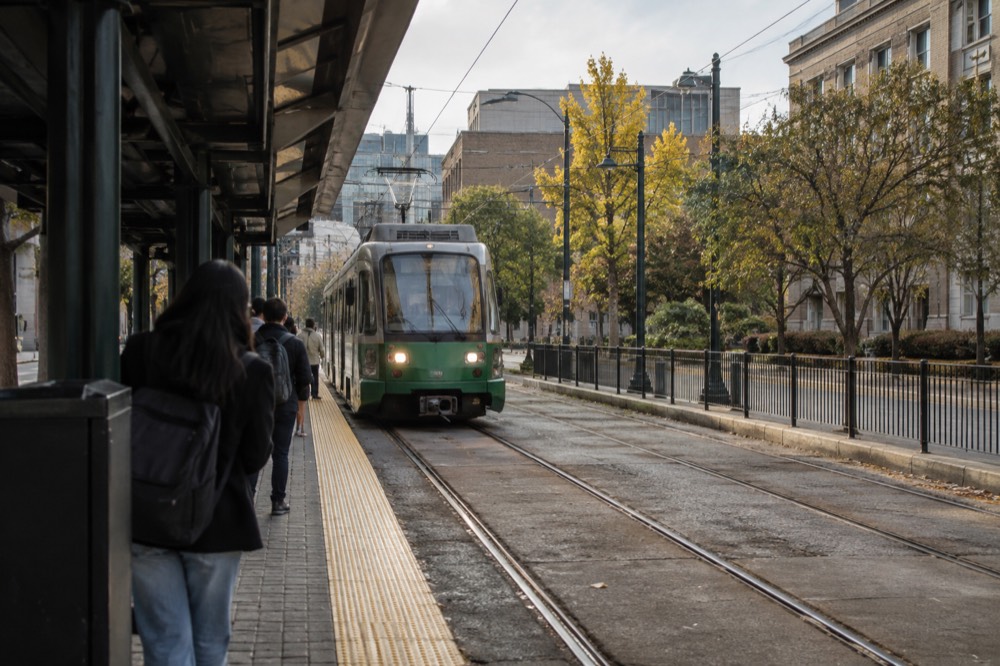
The fare rules changed on 1 September 2026, and older guides miss it. The MBTA's fare pages now describe an unlimited two-hour transfer window: riders can transfer between subway, bus and ferry as many times as they like within two hours, paying only the highest single fare, provided they use the same payment method throughout. Actual savings depend on the journeys, transfer eligibility and payment method. Contactless Tap to Ride with a credit card, phone or watch works on supported services, so a visitor does not need to buy a physical card at all. The MBTA's own fare pages carry the full table.
One detail matters when buying passes. A 1-Day or 7-Day pass loaded on a CharlieTicket starts at the moment of purchase, while the same pass on a CharlieCard starts at first use; ordinary contactless payment is not proof of buying that pass. A traveler arriving at Logan in the evening who taps on the next morning gets a full day of validity instead of losing a night. Our getting around Boston guide covers the whole system in more detail.
| Trip | Line | Typical Time | Fare |
|---|---|---|---|
| Downtown to Boston University East | Green Line B | About 12 minutes | $2.40 |
| South Station to Harvard Square | Red Line | About 15 minutes | $2.40 |
| South Station to Kendall/MIT | Red Line | About 13 minutes | $2.40 |
| Harvard Square to BU Central | Red Line to Green Line transfer | About 25 minutes | $2.40 with transfer window |
| Logan Airport to South Station | Silver Line SL1 | About 20 minutes | Free from the terminal curb |
That last row is the one that surprises people. Massport's own airport page states that the Silver Line SL1 provides free service between South Station and all airport terminals from the terminal curb, so a family flying in for college tours reaches downtown without paying a fare. The Massport airport transport page confirms it. Our Logan Airport to downtown Boston guide explains the full route.
For a prospective-student trip, book official admissions appointments first. A paid tourist walk can add history if time permits, but it does not replace university advising, an information session or admissions access.
The paid Harvard walk is an optional student-led sightseeing experience. The university also offers a free historical visitor tour with registration and a self-guided option; the free tour is not merely an admissions sales pitch.
What Does A Boston College Tour Trip Cost?
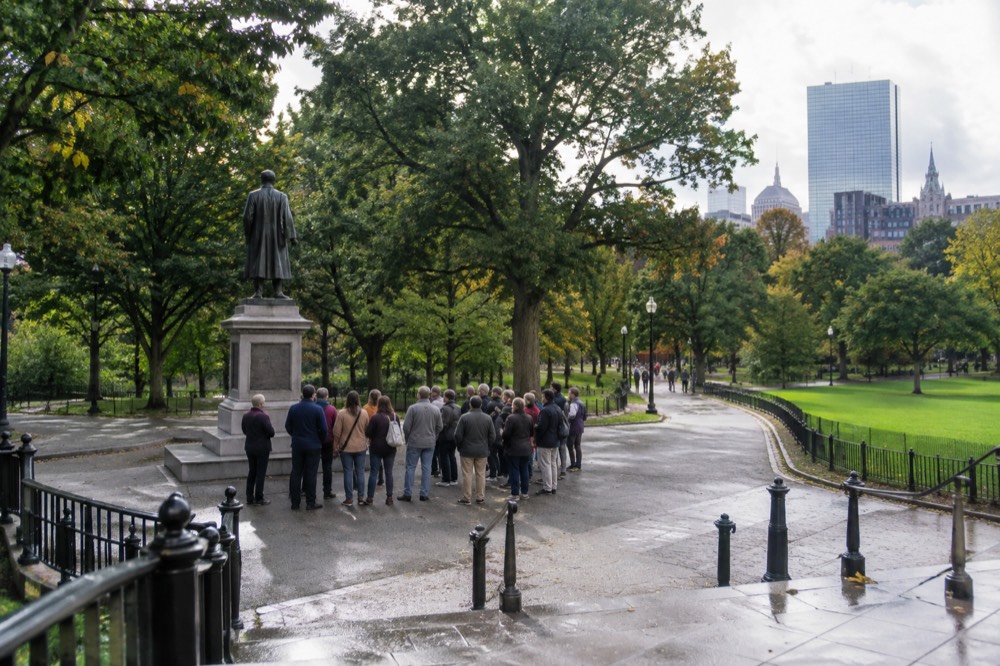
Public walking and eligible free university visitor tours can keep admission spending low. Budget transit, food and any overnight stay separately. A paid tourist walk is optional, and three admissions appointments may not fit one day even when casual outdoor visits do.
Distinguish public streets from university property and check access rules. Free tours can require advance registration and have limited dates. A family can explore public areas independently without buying a commercial sightseeing ticket.
| Expense | Budget basis | Check |
|---|---|---|
| MBTA seven-day pass | $22.50 | Actual paid rides and included modes |
| MBTA day pass | $11 | Actual separately charged fares |
| Paid campus walk | Dated party quote | Historical sightseeing, not admissions |
| Official visitor tour | Free where offered | Registration and calendar |
| Admissions visit | University’s own process | Prospective-student event availability |
| Food | Your menu estimate | Party total and taxes/tips |
Some Go City choices include commercial campus walks, while CityPASS has a different menu. Neither pass is necessary for free official visitor tours or admissions events. Use the pass comparison only if other actual purchases make it relevant.
Can You Tour Harvard And MIT Without Booking Anything?
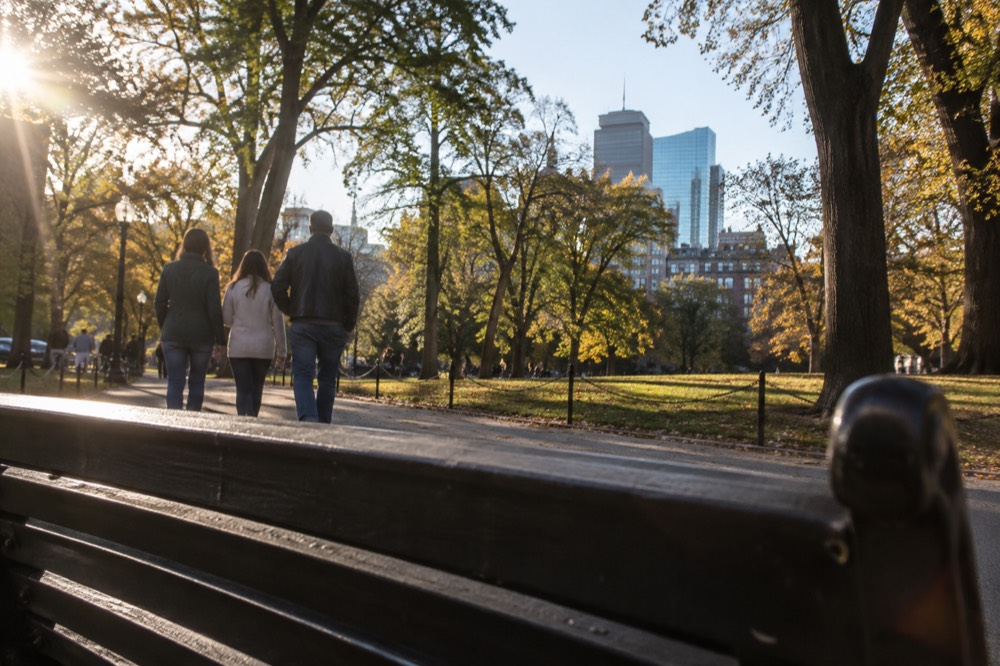
You can often explore permitted outdoor areas independently, but do not assume every gate is open or every guided tour accepts walk-ins. Harvard’s free historical visitor tour requires registration, and admissions events use a separate booking process. Check each university’s current instructions before traveling.
Admissions sessions at BU, Harvard and MIT serve applicants and families; ordinary historical visitor tours have a different purpose. Check the relevant university schedule and access rules rather than treating all free tours as recruitment events.
The commercial Harvard walk offers a student guide’s historical perspective. The university’s free visitor tour also covers history and student life, so choosing the paid option is about the actual date and format, not proof the free version lacks depth.
MIT’s outdoor architecture includes the Great Dome and Stata Center, subject to current access rules. The MIT Museum is at 314 Main Street in Kendall Square, not its former Massachusetts Avenue address. It requires a separate admission decision; see the MIT Museum guide.
When Is The Best Time To Visit Boston For Campus Tours?
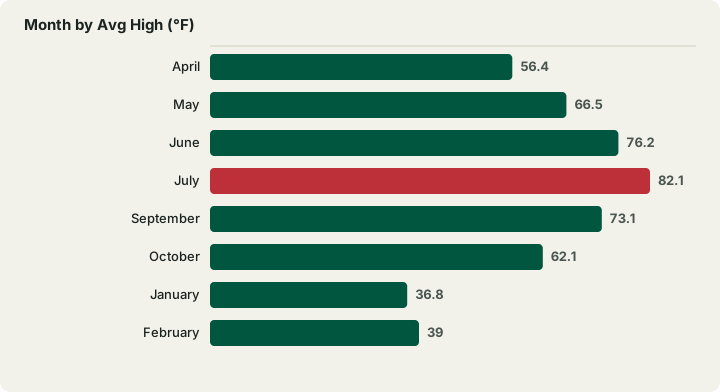
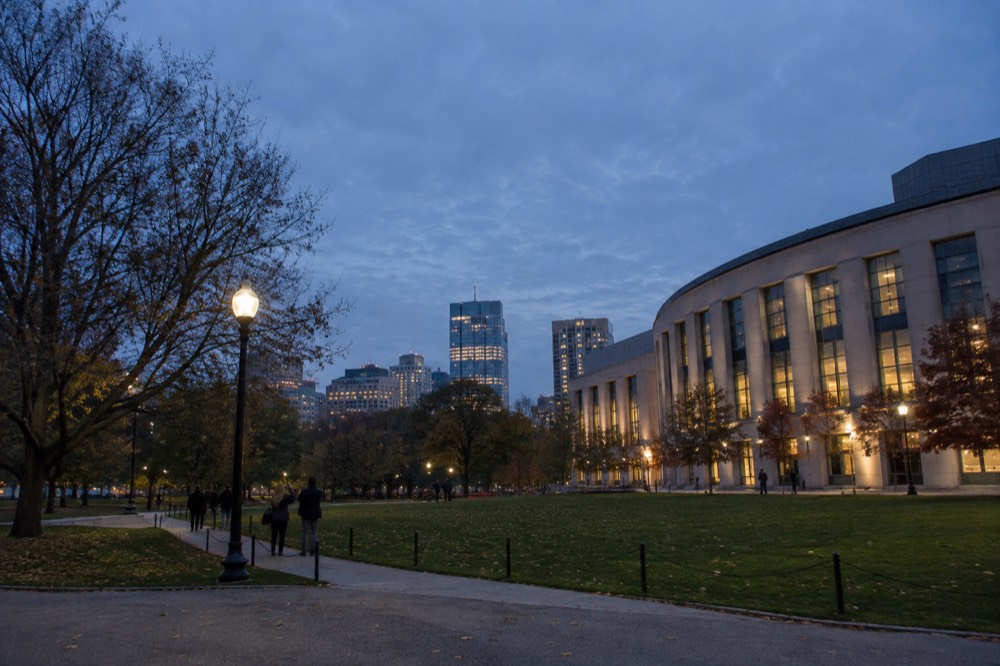
Late April through June and September through October offer the best campus visit weather, with average highs from the mid-50s to the low 80s and no month in Boston having a true rainy season. Summer brings the warmest temperatures, July averaging 82.1 degrees, but also the thinnest student presence, while fall semester visits show campuses at their liveliest. Snow concentrates heavily in January and February, which together account for 58% of Boston's annual 49.2 inches.
Climate averages help with packing; university appointment calendars determine available visit dates. NOAA's climate normals for Boston, measured at Logan Airport, show every month of the year receiving between 3.21 and 4.30 inches of precipitation, a spread of barely an inch, so there is no wet season to dodge. What actually varies is temperature and snow. April jumps to an average high of 56.4 degrees, May to 66.5, and the campus lawns and riverfront paths come alive. September averages a 73.1-degree high and October 62.1, both excellent for walking between campuses.
| Month | Avg High (°F) | Avg Low (°F) | Campus Visit Notes |
|---|---|---|---|
| April | 56.4 | 40.8 | Spring semester in session, trees budding |
| May | 66.5 | 50.3 | Warm, students outdoors, exams approach |
| June | 76.2 | 59.7 | Quiet campuses after commencement |
| July | 82.1 | 66.0 | Warmest month, thinnest student presence |
| September | 73.1 | 58.2 | Fall semester begins, campuses lively |
| October | 62.1 | 47.5 | Fall color along the Charles River |
| January | 36.8 | 23.1 | 14.3 inches of snow on average |
| February | 39.0 | 24.6 | 14.4 inches of snow on average |
January and February are the honest exceptions. Those two months average 14.3 and 14.4 inches of snow respectively, more than half the annual total, and a campus walk in that window means slush and wind rather than postcard brick. A winter visit is still workable, and our Boston in winter guide covers what stays rewarding, but families planning a first campus trip should aim for the shoulders of the year. Our month-by-month Boston weather breakdown carries the full table.
Where Should You Stay And Eat Between Campus Visits?
Choose a base near the campuses and appointments you actually need. Fenway–Kenmore suits BU, while Harvard Square or Kendall can suit Cambridge-focused plans. Back Bay is connected by transit, but a Red–Green transfer does not guarantee a fifteen-minute door-to-door journey.
Map the exact building-to-hotel journey and include walking and waiting. BU’s campus is long, and “near BU” does not necessarily mean near the relevant department. From parts of BU to Harvard, a cross-river bus may be useful as well as Green–Red travel through downtown.
| Base Area | Nearest Campus | Transit to Other Campuses | Best For |
|---|---|---|---|
| Back Bay | BU via Green Line B | Red Line transfer to Harvard/MIT | First-time visitors, shopping, dining |
| Fenway-Kenmore | BU, walking distance | Green Line to Red Line transfer | Families prioritizing BU |
| Harvard Square, Cambridge | Harvard, walking distance | Red Line to MIT and downtown | Cambridge-focused trips |
| Downtown / Waterfront | None adjacent | Green or Red Line to all | Balanced city-plus-campus trips |
Harvard and Kendall squares have local dining options. The North End is a separate trip involving a walk or connection; Red Line does not stop inside it. The restaurant guide sorts choices by neighborhood.
Keep sightseeing separate from campus appointments and leave time for meals and transfers. A river tour does not provide access to university facilities or guarantee a view of every campus.
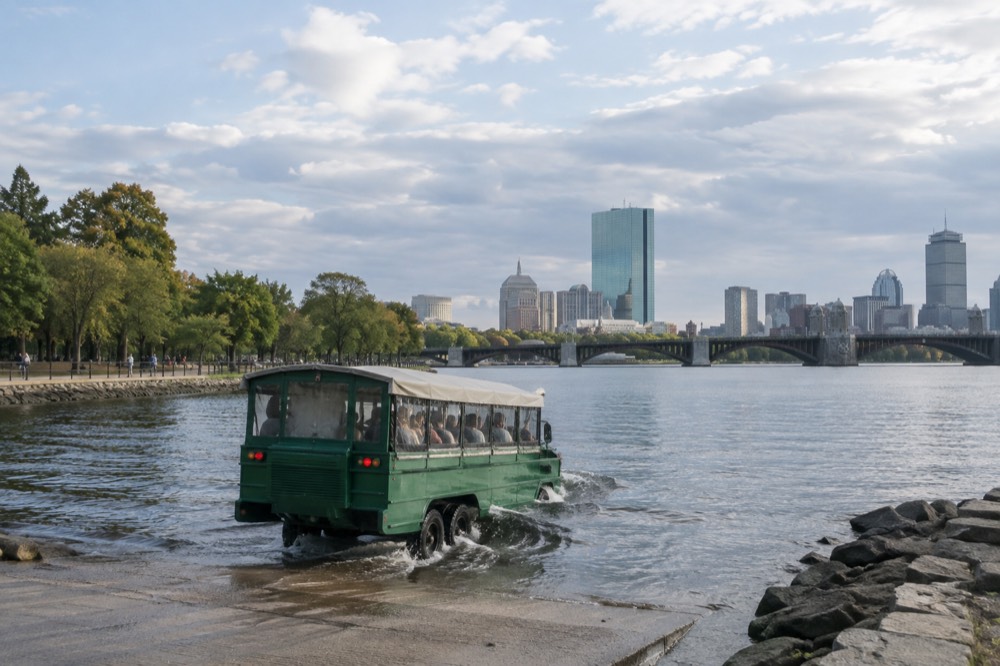
A Duck Tour is an optional eighty-minute street-and-river outing. Its current route and departure time, rather than campus appointment locations, determine whether it fits your day.
Check rooms at The Verb on Boylston Street if a Fenway base suits your BU visit. Map the exact department or appointment building first; BU extends well beyond Kenmore. Confirm room capacity, full fees and cancellation terms before booking. Check rooms at The Verb Hotel
What Does A One-Day Boston Campus Itinerary Look Like?
A full day can sample permitted outdoor areas at Harvard, MIT and BU if you keep each visit short and allow travel time. Official appointments or longer museum visits can make two campuses a more practical limit. A day spanning morning and afternoon is not covered by one two-hour transfer fare.
For an independent visit, one possible order starts at Harvard around 9am, subject to access. Put any registered appointment first when ordering the day. Ninety minutes covers the yard, the statue and the Widener steps. The Red Line from Harvard Square to Kendall takes about seven minutes, and MIT's dome, Stata Center and riverfront fill another ninety minutes. Lunch options cluster around Kendall Square and along Massachusetts Avenue toward Central Square.
The afternoon crosses the river. The Red Line back to Park Street, then the Green Line B branch outbound, lands a visitor at Boston University East with time for waiting, the transfer and the walk from the stop. Commonwealth Avenue's brick corridor, Marsh Chapel and the BU Beach riverfront fill the late afternoon, and Kenmore Square sits at the end of the walk for dinner. Families with a second day should fold in the Freedom Trail, and our one day in Boston itinerary shows how to split a visit when campus tours share the trip with sightseeing.
A guided history walk slots into either the first evening or the second morning:
A separate Freedom Trail walk adds downtown Revolutionary history, but the sites do not all predate every university: Harvard was founded in 1636. Choose another day or a real available departure rather than assuming it fits after three campus visits.
For a weekend built around the same idea, our things to do in Boston this weekend page tracks what is actually running, and the full things to do in Boston roundup places the campuses in the wider context of the city's attractions.
Want a guided look at MIT architecture and campus history? Explore the seventy-minute walk meeting near Kendall Square’s Marriott at 255 Main Street. It does not include the MIT Museum, an admissions session or unrestricted building entry; allow travel time around appointments. Check MIT campus walk dates
Common Questions About Boston Campus Visits
is it free to walk around Harvard campus?
Permitted outdoor visits do not require a commercial tour ticket, but Yard access can change. Harvard’s free historical visitor tours require registration; check the current calendar and gate rules.
can you visit Boston University without a tour?
You can walk its public streets independently. Buildings, chapel events and admissions sessions have their own access rules. Green B serves BU East and BU Central, with Amory and Babcock farther west; BU West is no longer a stop.
how do I get from Boston University to Harvard?
Green Line B to Park Street and Red Line toward Alewife is one option. A cross-river bus may suit some BU buildings better. Check the exact origin, live service and transfer rules; include walking and waiting instead of assuming a fixed door-to-door time.
is MIT campus open to visitors?
Public outdoor routes allow an independent architecture visit, subject to current access rules. Check MIT’s official visitor and admissions calendars for the appropriate event. A paid historical walk does not provide lab access, an admissions appointment or MIT Museum admission.
what is the best month for Boston college tours?
May, September and October combine comfortable walking weather with campuses in session. July is the warmest month at an 82.1-degree average high but campuses are quietest then. January and February average over 14 inches of snow each, making them the hardest months for walking tours.
do you need a car to visit Boston campuses?
No. Every major campus sits on the MBTA: the Green Line serves Boston University, and the Red Line stops at Harvard Square and Kendall/MIT. A 7-Day Pass at $22.50 covers a full week of campus visits, and parking in Boston is expensive enough that the subway is the better plan.
Book Official Campus Appointments Before Optional Sightseeing
These options do not match your choice. Adjust the selection or reset to explore the starting recommendation.
Compare Your Optional Campus-Visit And Stay Totals
Reader-entered estimates in USD, not live quotes. Use the same dates and travelers for both options. Include all relevant tickets, rooms, taxes, mandatory fees and transport for the entire trip once in each total. Do not add a transfer twice if your rate already includes it.
Harvard Student-Led Campus Walk
A student-led walking tour of Harvard in Cambridge. Review the route and meeting point; a free independent campus visit remains an alternative.
A starting option to explore. Choose dates, travelers and the exact booking option with the provider; availability and eligibility are confirmed there.
Check Harvard walk dates