Somerville And Davis Square
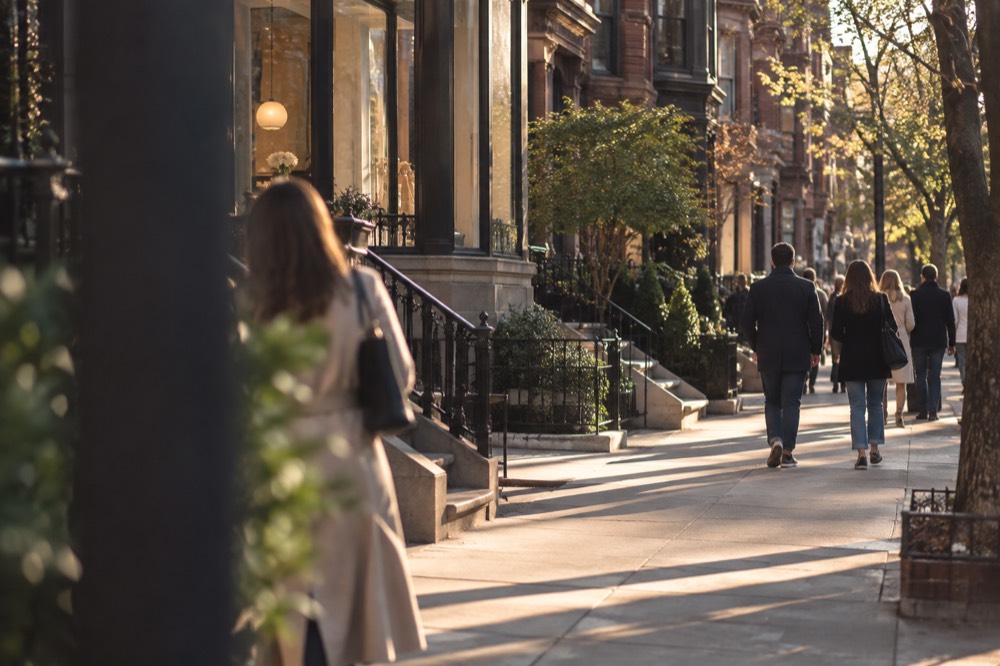
Somerville sits immediately north of Cambridge and west of Charlestown, and it is one of the most densely populated cities in New England. For a visitor staying in Boston, it usually arrives as a short Red Line ride that ends at Davis Square, where the subway comes up into a compact cluster of cafes, bookstores, bars, and music venues. The city has changed enormously over the past few decades, from a working-class industrial base of brickyard and factory buildings into one of the most talked-about food and arts addresses in the metro area, but it has kept a genuinely local pace that central Boston lost long ago.
Short answer
No. Somerville is a separate city in Middlesex County, not a Boston neighborhood, even though it borders Boston at Charlestown and shares the same subway system. It has its own municipal government, its own police and fire departments, and its own parking and permitting rules. Cambridge and Somerville are independent cities, and Brookline is an independent town, around Boston, and confusing them changes which local regulations apply; MBTA subway fares are regional.
Somerville sits immediately north of Cambridge and west of Charlestown, and it is one of the most densely populated cities in New England. For a visitor staying in Boston, it usually arrives as a short Red Line ride that ends at Davis Square, where the subway comes up into a compact cluster of cafes, bookstores, bars, and music venues. The city has changed enormously over the past few decades, from a working-class industrial base of brickyard and factory buildings into one of the most talked-about food and arts addresses in the metro area, but it has kept a genuinely local pace that central Boston lost long ago.
Want a guided introduction to Somerville’s food? Explore the Union Square tasting walk, starting locally at Bloc Cafe. Allow roughly 2.5–3 hours and check the date carefully: this booking is nonrefundable. Check Union Square food walk dates and terms
One point needs settling before anything else, because almost every guide gets it wrong: Somerville is not a Boston neighborhood. It is its own incorporated city, with its own mayor, its own city hall, its own school system, and its own municipal rules. The practical consequences for a visitor are real. A parking permit, a trash rule, or a residential parking restriction in Somerville belongs to Somerville, not to the City of Boston. The same is true of Cambridge and Brookline, and these three municipalities together form the inner ring around Boston proper. This page, from the Boston Travel Guide desk, treats Somerville the way a Boston visitor experiences it: as a short, easy side trip that rewards an afternoon.
Is Somerville Part Of Boston?
No. Somerville is a separate city in Middlesex County, not a Boston neighborhood, even though it borders Boston at Charlestown and shares the same subway system. It has its own municipal government, its own police and fire departments, and its own parking and permitting rules. Cambridge and Somerville are independent cities, and Brookline is an independent town, around Boston, and confusing them changes which local regulations apply; MBTA subway fares are regional.
The distinction matters more here than in most American metro areas because the boundaries are invisible on the ground. You can walk from Cambridge into Somerville without a sign or a change in the streetscape, and the Red Line threads through all of it. But the legal line is real. Somerville's city government makes its own decisions about everything from winter parking bans to liquor licensing, and a visitor who assumes Boston's rules apply can end up with a ticket or a misunderstanding.
The history explains the shape. Somerville was carved out of Charlestown in the nineteenth century and grew as an industrial suburb serving Boston, with brickyards, meatpacking plants, and rail yards packed onto a small land area. When the industries left in the mid-twentieth century, the city went through decades of disinvestment before becoming, in recent decades, one of the most desirable addresses in the region. The brick factory shells and triple-decker houses from that industrial era are now exactly what gives the squares their character.
For trip planning, the honest framing is this: Somerville is to Boston what Brooklyn once was to Manhattan, a separate municipality that functions, for a visitor, as an extension of the city's cultural map. You go there for dinner, for a show, or for a Saturday afternoon, and the subway makes it feel effortless.
What Are The Best Things To Do In Somerville MA?
The best things to do in Somerville cluster around its squares: Davis Square for cafes, music and independent shops, Union Square for restaurants and a Saturday farmers market, and Assembly Row for waterfront shopping and dining along the Mystic River. Prospect Hill offers the city's best view and its most important Revolutionary War site, and the community path that runs through the city is one of the most pleasant walks in the inner metro area.
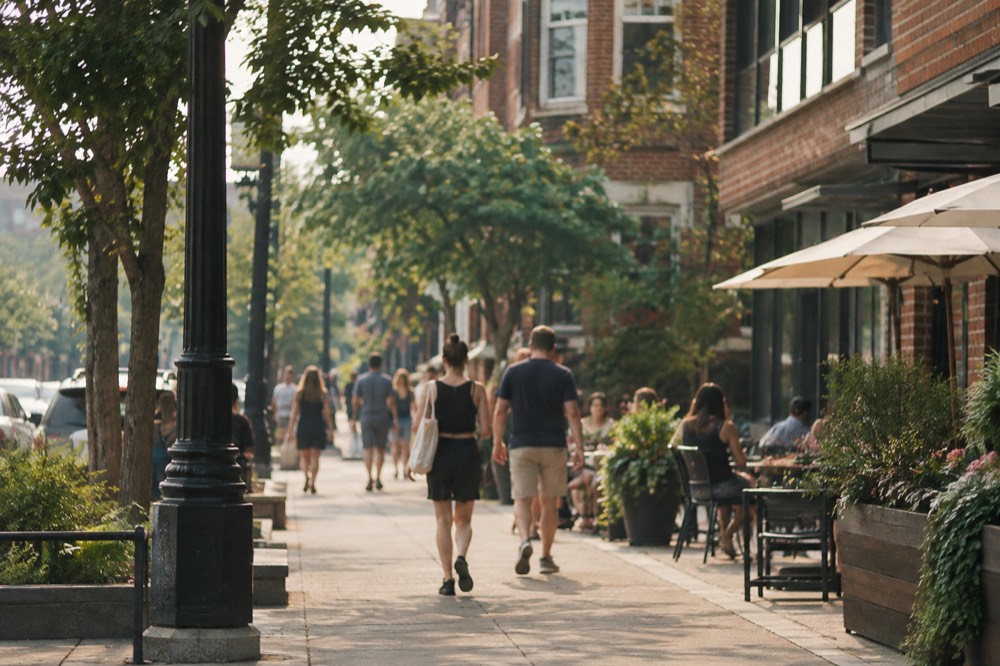
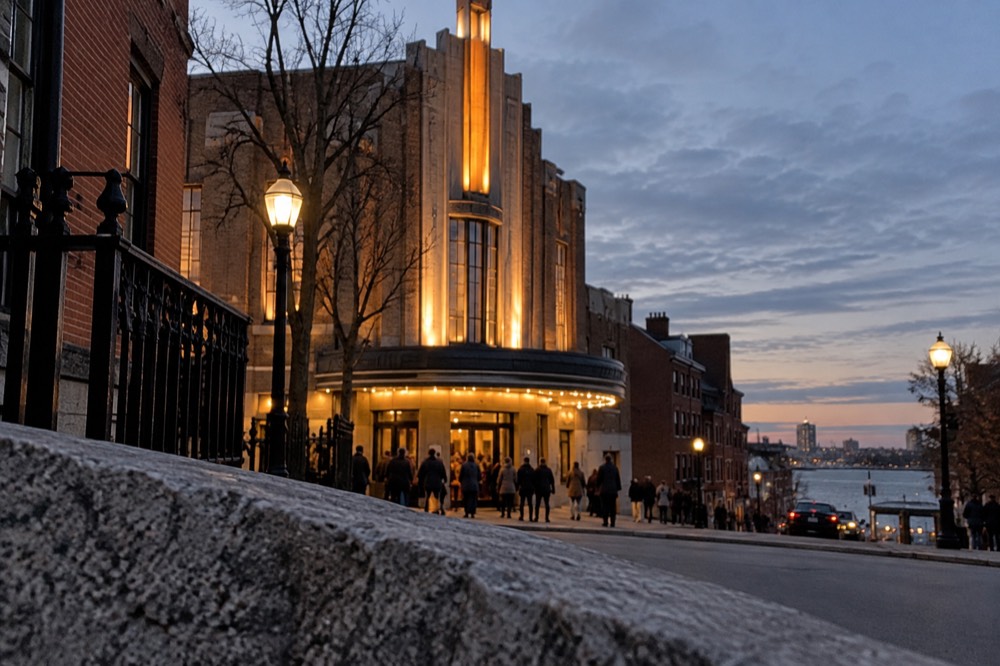
Davis Square is where most visits start, because that is where the Red Line deposits you. The square itself is small, a few blocks of College Avenue, Elm Street and Holland Street, but it carries an unusual density of independent businesses: a restored art-deco movie theater that also hosts live comedy and music, a long-running bowling-and-live-music institution, bookshops, record stores, and a deep bench of coffee. The surrounding streets of old Victorian houses are among the most photographed residential architecture in the area.
Union Square is southeast of Davis Square, requiring a longer walk or connecting transit rather than a quick stroll. Its restaurants, seasonal Saturday market and industrial streetscape support a visit of their own. Green Line D service reaches Union Square directly from downtown.
Assembly Row, on the Orange Line at Assembly station, is the newest face of the city: a large planned district of shops, restaurants, residences and a riverfront park along the Mystic, built on the site of a former Ford assembly plant. It is the least "Somerville" part of Somerville, but it is the easiest version for a visitor with a car or a stroller, and it connects to a pleasant waterfront path.
Prospect Hill, between Union Square and the highway, is where the colonial army fortified the high ground during the Siege of Boston; the flag flown there is one of the candidates for the first American flag. The hill's tower and small park give the best view over the city and toward downtown Boston. It is a short, steep walk and one of the most underrated stops in the inner metro area.
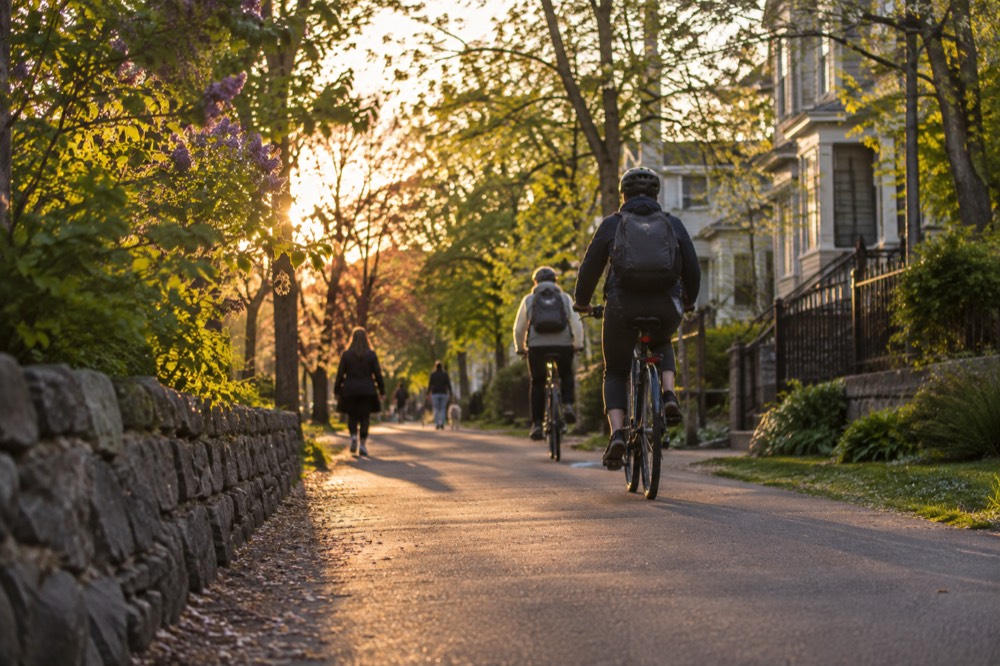
A sensible half day pairs one square with a walk along the community path, the former rail line that runs from Cambridge through Davis Square and out toward Somerville's western edge. Cyclists and pedestrians use it as a car-free spine, and it connects several of the city's neighborhoods with street crossings along some sections. If you are building a wider itinerary, our overview of things to do in Boston shows how a Somerville afternoon fits alongside the Freedom Trail and the waterfront.
How Do You Get To Somerville From Boston?
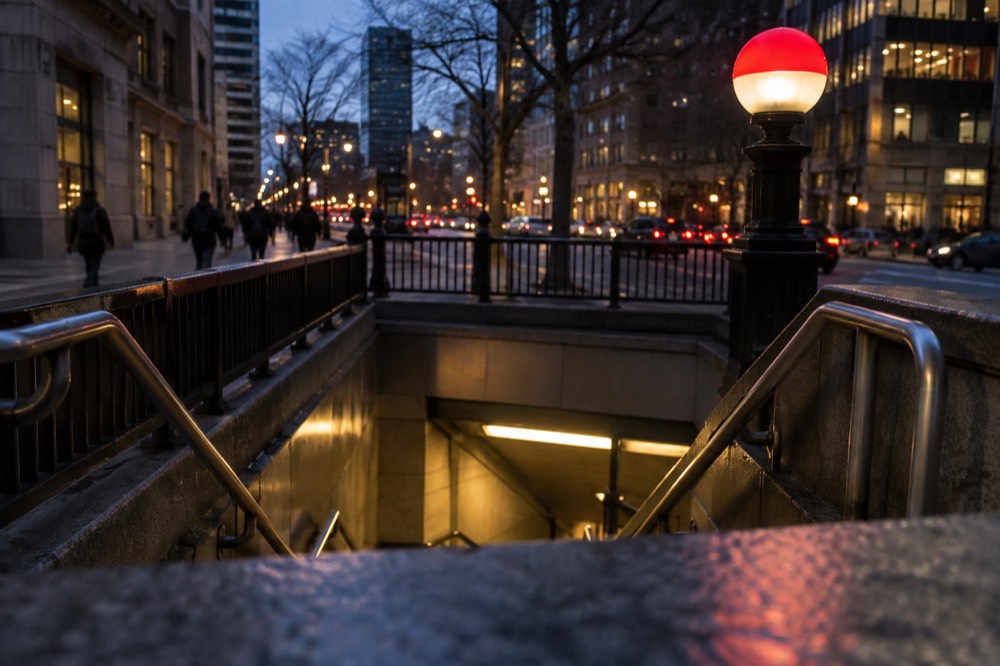
The MBTA Red Line is the main route: Davis Square station sits roughly 15 minutes from downtown crossings such as Park Street, and the Orange Line serves Assembly Row via Assembly station. A one-way subway fare is $2.40, and since September 2026 you can transfer freely between subway, bus and ferry within a two-hour window, paying only the highest-priced leg. Buses from Lechmere and Sullivan Square fill in the gaps between the squares.
The fare details come straight from the MBTA's own fare pages. A subway ride costs $2.40, a local bus $1.70, a 1-Day Pass $11.00 and a 7-Day Pass $22.50, per the MBTA fare table. The September 2026 pilot changed transfer rules significantly: unlimited transfers within a two-hour window, paying only the highest fare, provided you use the same payment method throughout, per the MBTA transfers page. For a Somerville day trip that means your subway ride plus any bus hops between the squares count as one fare if you tap the same card every time.
One pass detail that catches visitors: a 1-Day or 7-Day pass on a CharlieTicket starts at purchase, while the same pass on a CharlieCard starts at first use. If you buy on arrival and start sightseeing the next morning, the CharlieCard version saves most of a day. Contactless Tap to Ride with a card or phone also works on bus and subway.
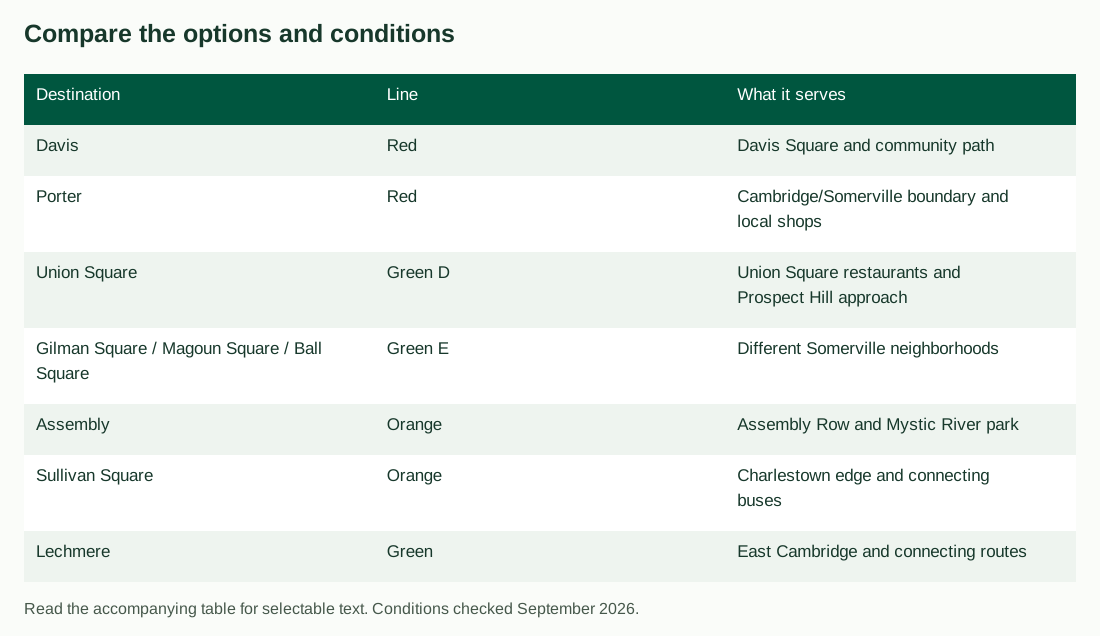
| Destination | Line | What it serves |
|---|---|---|
| Davis | Red | Davis Square and community path |
| Porter | Red | Cambridge/Somerville boundary and local shops |
| Union Square | Green D | Union Square restaurants and Prospect Hill approach |
| Gilman Square / Magoun Square / Ball Square | Green E | Different Somerville neighborhoods |
| Assembly | Orange | Assembly Row and Mystic River park |
| Sullivan Square | Orange | Charlestown edge and connecting buses |
| Lechmere | Green | East Cambridge and connecting routes |
Somerville sets its own parking restrictions, independently of Boston. Transit can simplify a square-focused outing, but drivers can compare legal street parking and garages for their destination. Assembly Row is not the city’s only parking option.
What Makes Davis Square The Center Of Somerville?
Davis Square is Somerville's de facto main street: a compact Red Line-adjacent cluster of independent restaurants, bars, a restored movie theater, a bowling alley that books live bands, and enough coffee shops to fuel a full afternoon. It is small enough to cross on foot in ten minutes and dense enough to fill an evening, which is why nearly every Somerville visit starts and ends there.
The square grew around a streetcar junction, and that origin still shows. The commercial blocks are short and tight, the side streets are lined with Victorian houses, and everything a visitor needs sits within a couple of blocks of the subway entrance. The theater, a restored film-and-performances venue from the early twentieth century, anchors one corner; the bowling-and-music venue anchors another; and the space between is filled with bookstores, record shops, and a remarkable number of places to eat.
The square's character is best understood as a college-town atmosphere without the college-town scale. Tufts University's campus sits just uphill on the Medford side of the city line, and students keep the square's cafes and cheap-eats scene busy, but Davis does not feel like a campus district. It feels like a neighborhood that happens to have excellent options.
Davis is two Red Line stops from Harvard Square. Combine a campus morning with Davis or Union Square later, allowing time between the Somerville squares. Harvard offers a free official historical tour with reservations and a self-guided option; a paid student-led walk is a separate choice.
Pairing Davis with Cambridge? Explore the student-led Harvard campus walk as a separate morning stop, two Red Line stops from Davis. It is not a Somerville tour and does not promise university interior admission. Check Harvard walk dates
Where Is Union Square Somerville And What Is There?
Union Square is a historic Somerville commercial district southeast of Davis, with restaurants, a seasonal Saturday farmers market and nearby Prospect Hill. The Green Line D branch serves Union Square directly; local bus and walking connections link it with other squares.
The square sits where several old roadways converged, and it kept the layered, slightly chaotic feel of a true neighborhood crossroads. The Green Line extension added a Union Square station in recent years, which finally put the district on the subway map and made it a one-seat ride from the downtown network. That change accelerated the restaurant and taproom openings that now define the square.
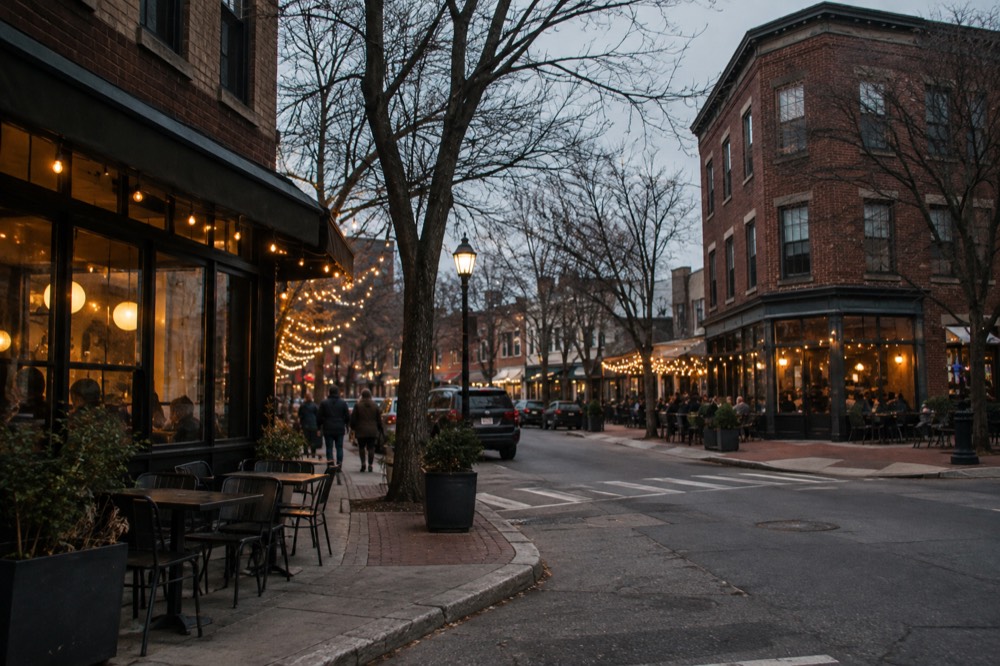
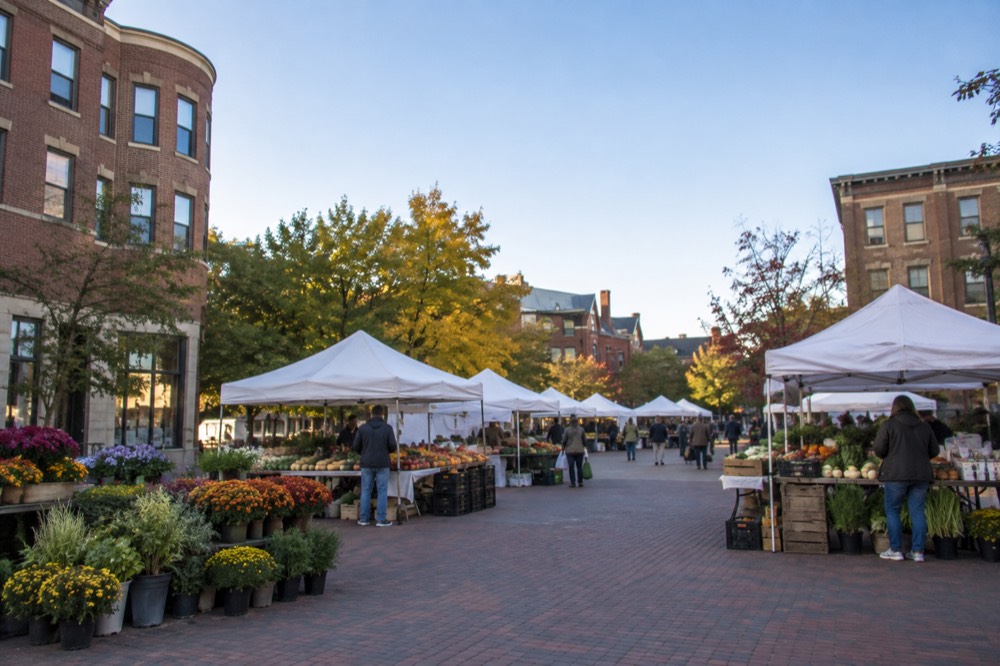
The farmers market runs Saturdays and draws producers from across the region; check the market's own schedule before planning around it. Around the square, the eating options range from long-standing neighborhood institutions to newer chef-driven rooms, and the taproom scene has made Union Square a legitimate evening destination in its own right. From Union Square, Prospect Hill is a short, steep walk uphill, and combining the two makes a satisfying two-hour circuit.
What Should You Eat In Somerville?
Eat in the squares, and eat specifically: Davis Square for brunch, coffee, ice cream and casual dinners, Union Square for the widest range of serious restaurants and breweries, and Assembly Row for reliable chains with a riverfront view. Somerville's food reputation rests on independent kitchens rather than famous single dishes, so the best strategy is to pick one square per meal and walk between options rather than committing to a single reservation.
The city does not have one signature dish the way Boston's North End owns Italian pastry. Its food identity is breadth: several cuisines represented within a few blocks, strong coffee culture, a serious ice cream scene that locals treat as civic infrastructure, and a growing number of breweries. Union Square's Saturday market is the best single snapshot of the regional food supply chain, with produce, cheese, bread and prepared foods from Massachusetts and neighboring states.

| Square | Best for | Character | Evening scene |
|---|---|---|---|
| Davis Square | Coffee, brunch, ice cream, casual dinner | Independent, student-adjacent, walkable | Live music, comedy, bars |
| Union Square | Restaurants, breweries, farmers market | Industrial brick, food-first | Taprooms, dinner spots |
| Magoun Square | Neighborhood eats, quieter meals | Local, low-key | A few bars, relaxed |
| Assembly Row | Waterfront dining, shopping | New-build, polished | Restaurant patios, river walks |
A North End Italian food walk and a Somerville meal cover different neighborhoods. The North End has no Red Line station; plan the walk or transfer to reach Davis, or use Green D service for Union Square. Allow room in the day and appetite for both.
When Is The Best Time To Visit Somerville?
Late spring through early fall suits patios, the community path and outdoor markets. Colder months still offer restaurants and cultural venues. Logan Airport normals provide regional temperature context, but use the actual forecast for an outdoor day in Somerville.
The table uses NOAA’s 1991–2020 Logan Airport climate normals. Precipitation includes the water equivalent of snow, and similar monthly totals do not mean equal daily rain risk. Somerville is inland from the airport and can experience different local conditions.
Further reading: National Weather Service forecast office.
| Month | Avg high (°F) | Avg low (°F) | Precip (in) | Snow (in) |
|---|---|---|---|---|
| Jan | 36.8 | 23.1 | 3.39 | 14.3 |
| Apr | 56.4 | 40.8 | 3.63 | 1.6 |
| Jul | 82.1 | 66.0 | 3.27 | 0.0 |
| Oct | 62.1 | 47.5 | 4.03 | 0.2 |
Winter visits are workable but different. The squares' restaurants and taprooms stay busy, and the brick streets under snow are genuinely pretty, but the community path loses its charm and the farmers market pauses. If a winter trip is on the table, our Boston in winter planning page covers indoor options across the whole metro area, and the Museum of Science and MFA require their own routes, usually involving Green Line travel and a walk.
How Does Somerville Fit Into A Boston Itinerary?
Give Somerville a half day, attached to Cambridge or Charlestown rather than standing alone: Harvard Square and a campus walk in the morning, Davis Square for lunch and browsing, Union Square for dinner, or Assembly Row as an easy stop if you are already on the Orange Line. It is a 15-minute subway ride from downtown, so it slots into almost any itinerary without costing a full day.
Cambridge and Somerville connect easily by the Red Line at Harvard, Porter and Davis; Union Square uses the Green D branch. A Charlestown pairing needs more care: Bunker Hill and USS Constitution require a walk from the station, and Assembly is two Orange Line stops from Community College, with Sullivan Square between them.
A Duck Tour is a separate Boston overview before a Somerville outing. The standard trip lasts about 80 minutes with roughly 20 on the Charles, and boards at the Museum of Science, Prudential Center or Aquarium. Plan the onward route from your actual boarding location; not all three are beside the Red Line.
| Itinerary shape | Morning | Afternoon | Evening |
|---|---|---|---|
| Cambridge and Somerville | Harvard Square, campus walk | Davis Square, community path | Union Square dinner |
| Charlestown and Somerville | USS Constitution, Bunker Hill | Assembly Row, riverfront walk | Davis Square bars and music |
| Food-focused | North End pastry and market | Somerville farmers market (Sat) | Union Square taprooms |
| Rainy day | Museum of Science | Coffee and bookshops in Davis | Dinner and a movie in the square |
Neighborhood comparisons help visitors who are choosing where to spend evenings. Somerville is livelier and cheaper than Back Bay, more food-focused than Beacon Hill, and less polished than the Seaport, which is precisely why locals defend it so fiercely. It rewards the visitor who has already seen the Freedom Trail and wants the city as it is actually lived in.
Common Questions About Somerville MA Things To Do
is somerville ma walkable?
Yes, highly. The squares are compact, the community path gives a car-free spine through the city, and the Red Line puts Davis Square about 15 minutes from downtown Boston. Union Square and Assembly Row each have their own stations, so a car-free visit is entirely normal here.
is somerville part of boston?
No. Somerville is a separate incorporated city in Middlesex County with its own mayor, city hall and municipal rules. It borders Boston at Charlestown and shares the MBTA, but Cambridge and Somerville are independent cities, while Brookline is an independent town, rather than Boston neighborhoods.
what is somerville ma known for?
Davis Square's independent shops and music venues, Union Square's restaurants and breweries, Assembly Row's riverfront shopping district, and a dense stock of Victorian and triple-decker houses. Historically it was an industrial brickyard city; today it is one of the most talked-about food addresses in the metro area.
how do i get from boston to somerville?
Take the Red Line to Davis or Porter, the Green Line to Union Square, or the Orange Line to Assembly. A one-way subway fare is $2.40, and since September 2026 transfers within a two-hour window are unlimited, with only the highest-priced leg charged.
is somerville worth visiting?
For a second or third day in the Boston area, yes. It offers the region's best neighborhood-square atmosphere within a 15-minute subway ride of downtown, and it pairs naturally with Harvard Square or Charlestown. Visitors with only one or two days should see central Boston first.
Choose Your Somerville Food Walk Or Cambridge Add-On
These options do not match your choice. Adjust the selection or reset to explore the starting recommendation.
Compare Your Food Walk And Transport Totals
Reader-entered estimates in USD, not live quotes. Use the same dates and travelers for both options. Include all relevant tickets, rooms, taxes, mandatory fees and transport for the entire trip once in each total. Do not add a transfer twice if your rate already includes it.
Union Square Somerville Food Walk
A 2.5–3-hour guided neighborhood walk with local tastings, meeting at Bloc Cafe in Union Square, Somerville. Request vegetarian options and disclose dietary needs when booking. Children need an accompanying adult; alcohol is for ages 21+. Tips are extra. All sales are final, so check dates and cancellation terms carefully.
A starting option to explore. Choose dates, travelers and the exact booking option with the provider; availability and eligibility are confirmed there.
Check Union Square food walk dates and terms