Harvard Art Museums
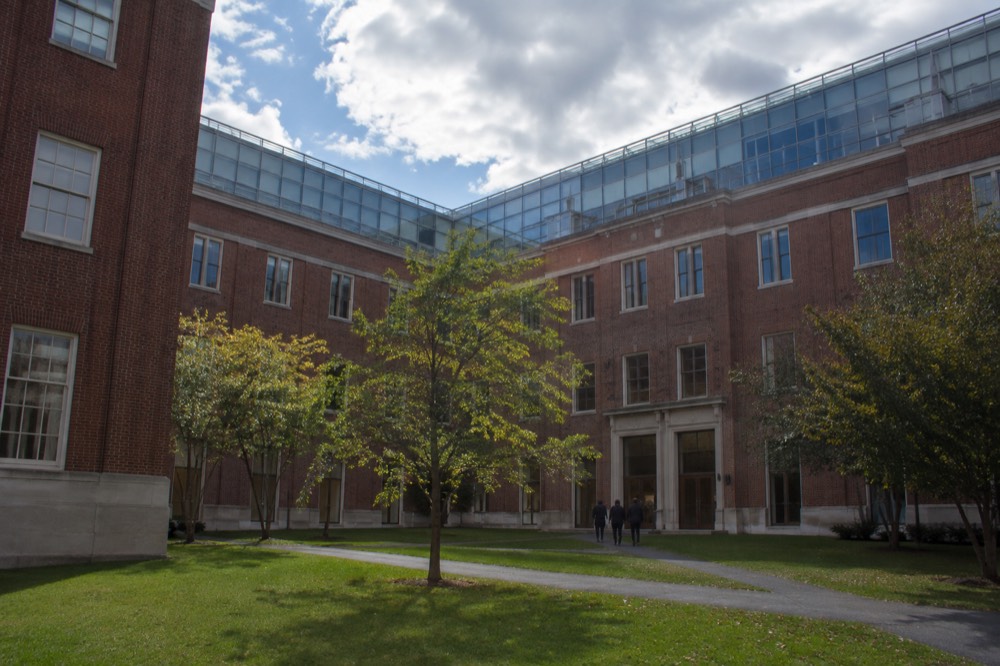
The Harvard Art Museums sit on Quincy Street in Cambridge, directly beside Harvard Yard, and they hold one of the largest university art collections in the world. Three museums, the Fogg, the Busch-Reisinger and the Sackler, share a single building following a major renovation that united their galleries, conservation labs and study centers under one roof. Cambridge is a separate city from Boston, its own municipality with its own rules, though the two run into each other along the Red Line so closely that most visitors experience them as one region. Admission is free for all visitors; the museum’s own visit page gives opening hours and exhibition schedules; this guide covers what the collections hold, how to reach them, and how to fold them into a wider Boston trip.
Short answer
The Harvard Art Museums are a single building at 32 Quincy Street in Cambridge that combines three formerly separate museums, the Fogg Museum, the Busch-Reisinger Museum and the Sackler Museum, into one complex of galleries, study rooms and conservation labs attached to Harvard University. The collections span ancient Mediterranean art through European and American painting to German expressionism and Asian art, and the building faces Harvard Yard directly.
Harvard Art Museums
The Harvard Art Museums sit on Quincy Street in Cambridge, directly beside Harvard Yard, and they hold one of the largest university art collections in the world. Three museums, the Fogg, the Busch-Reisinger and the Sackler, share a single building following a major renovation that united their galleries, conservation labs and study centers under one roof. Cambridge is a separate city from Boston, its own municipality with its own rules, though the two run into each other along the Red Line so closely that most visitors experience them as one region. Admission is free for all visitors; the museum’s own visit page gives opening hours and exhibition schedules; this guide covers what the collections hold, how to reach them, and how to fold them into a wider Boston trip.
Harvard Art Museums are free for everyone. Want campus stories before or after the galleries? Explore the student-led Harvard walk; this is an optional outdoor experience, not museum admission. Check Harvard walk dates
What Are The Harvard Art Museums?
The Harvard Art Museums are a single building at 32 Quincy Street in Cambridge that combines three formerly separate museums, the Fogg Museum, the Busch-Reisinger Museum and the Sackler Museum, into one complex of galleries, study rooms and conservation labs attached to Harvard University. The collections span ancient Mediterranean art through European and American painting to German expressionism and Asian art, and the building faces Harvard Yard directly.
The Fogg collection is the oldest of the three and carries the European and American weight: Italian Renaissance painting, French impressionism, American work from the colonial period forward, and important holdings of impressionist and post-impressionist art. The Busch-Reisinger holds German, Austrian and Central European art, with particular depth in German expressionism and the Bauhaus, and it is one of the few museums outside the German-speaking world where that material is the core mission rather than a sidebar. The Sackler collection covers Asian and Islamic art, ancient Mediterranean objects and Islamic later-period works.
What makes a university museum different from a civic one is the teaching function. Works live in study centers where Harvard students and visiting scholars can examine them up close, and the galleries rotate far more of the permanent collection than a museum that has to keep its famous names on permanent display. The practical effect for a visitor is that repeat trips genuinely show different things.
What Will You Actually See Inside The Building?
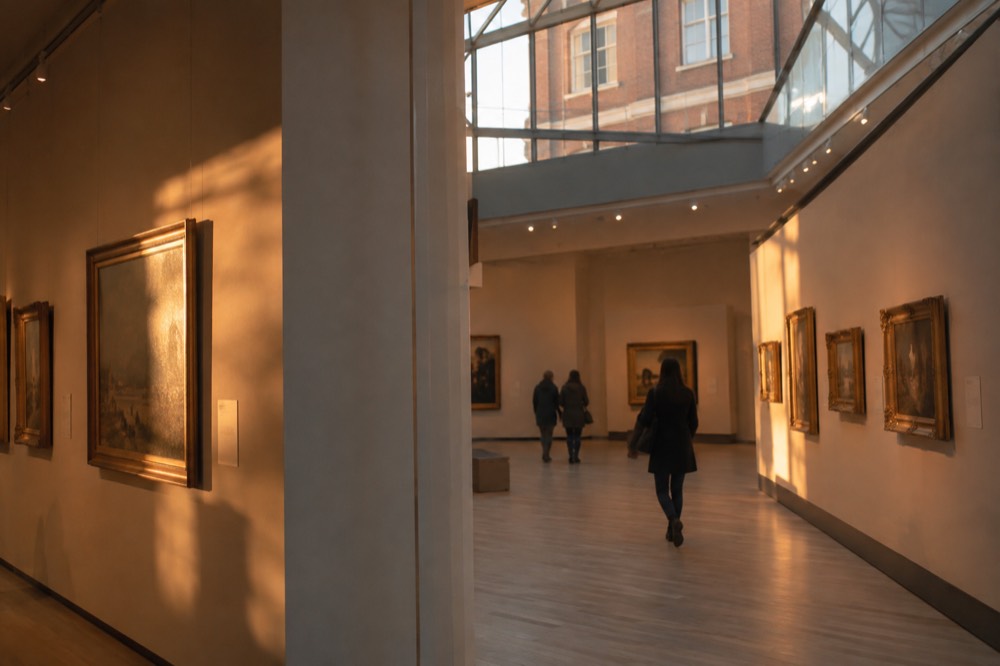
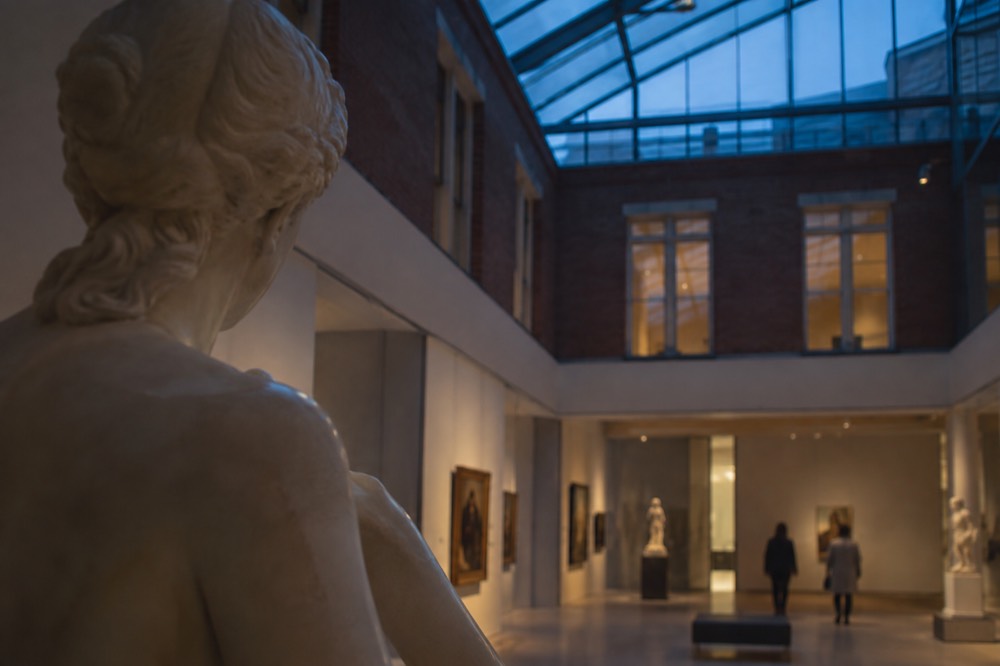
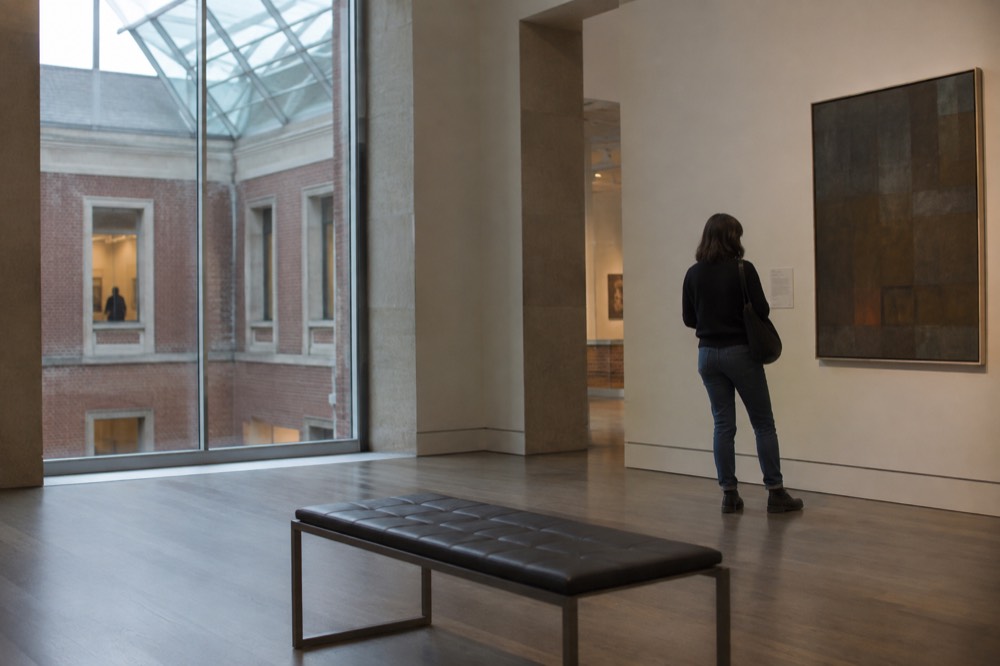
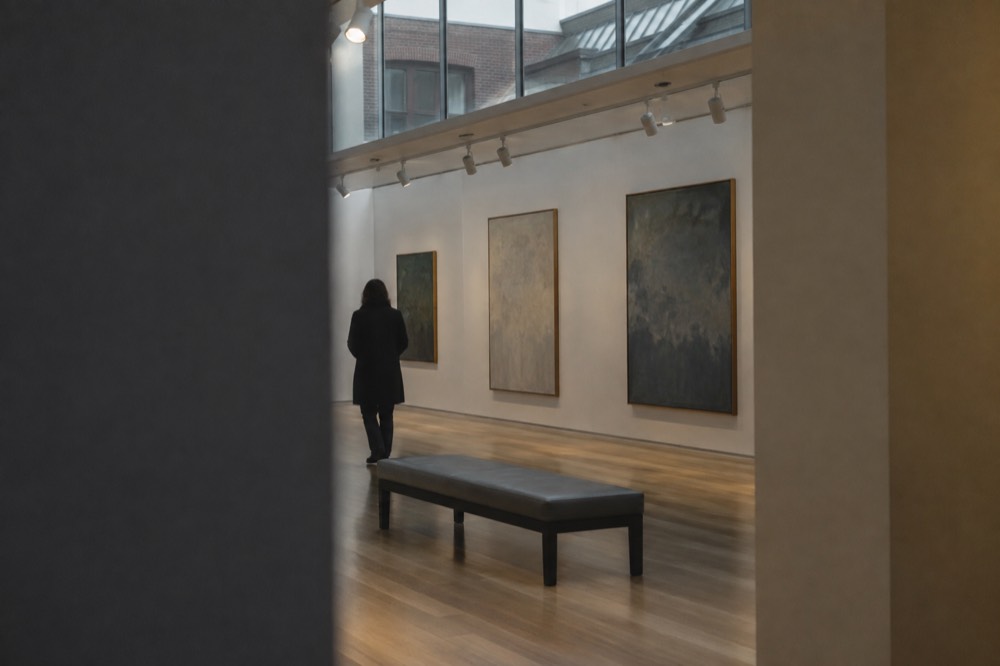
Expect a mix of European old-master and impressionist painting, German expressionist and Bauhaus material, and Asian and ancient art, arranged across several floors of galleries around a central stairwell lit from above. Highlights regularly cited by the museum include works by impressionists and post-impressionists in the Fogg collection, major German expressionist canvases from the Busch-Reisinger, and Chinese jades, bronzes and ceramics from the Sackler. Rotations mean the exact hang changes.
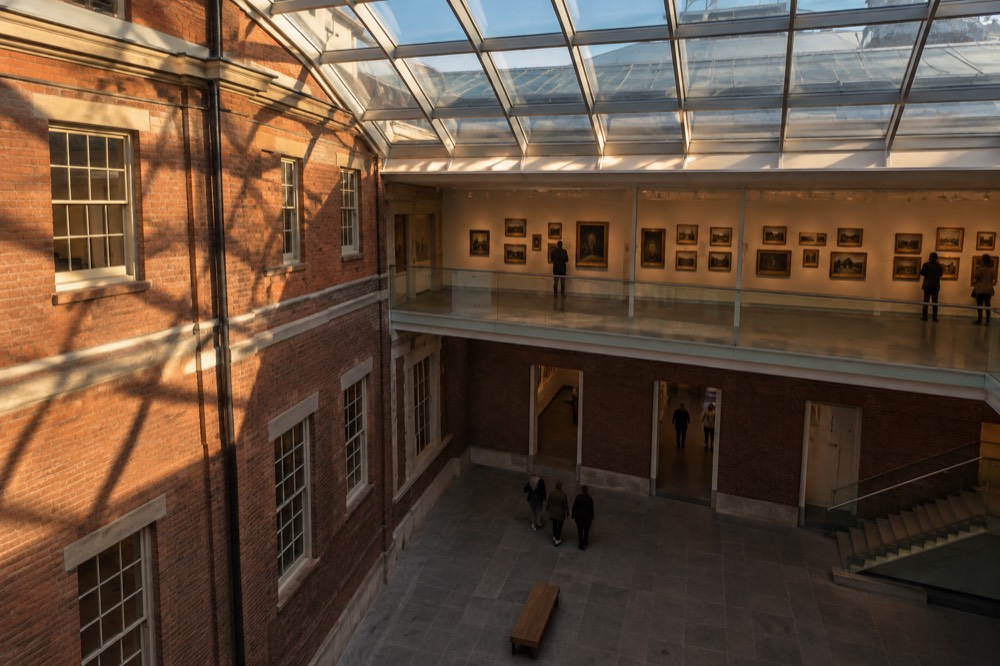
The building's design rewards wandering. Galleries wrap the light well at the center, and the curatorial habit is to place European painting beside objects from other traditions to make comparisons visible rather than keeping each culture in a sealed wing. A visitor who moves floor to floor will cross from a German expressionist gallery into a room of ancient Mediterranean objects without a hard boundary.
The upper levels include conservation facilities and the Art Study Center. Gallery admission does not provide unrestricted access to working labs or study rooms; check appointment requirements and scheduled public programs for a closer look.
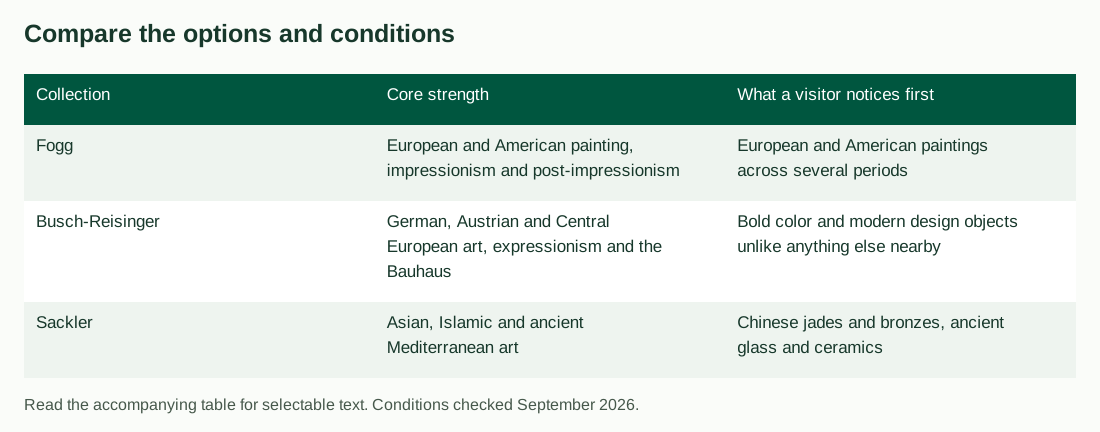
| Collection | Core strength | What a visitor notices first |
|---|---|---|
| Fogg | European and American painting, impressionism and post-impressionism | European and American paintings across several periods |
| Busch-Reisinger | German, Austrian and Central European art, expressionism and the Bauhaus | Bold color and modern design objects unlike anything else nearby |
| Sackler | Asian, Islamic and ancient Mediterranean art | Chinese jades and bronzes, ancient glass and ceramics |
One honest caution: this is a teaching collection, not a blockbuster museum. There is no single iconic painting that defines the visit the way a Vermeer or a Rothko room might elsewhere. The pleasure is cumulative, and two hours is a realistic window for a first pass.
How Do You Get To The Harvard Art Museums?
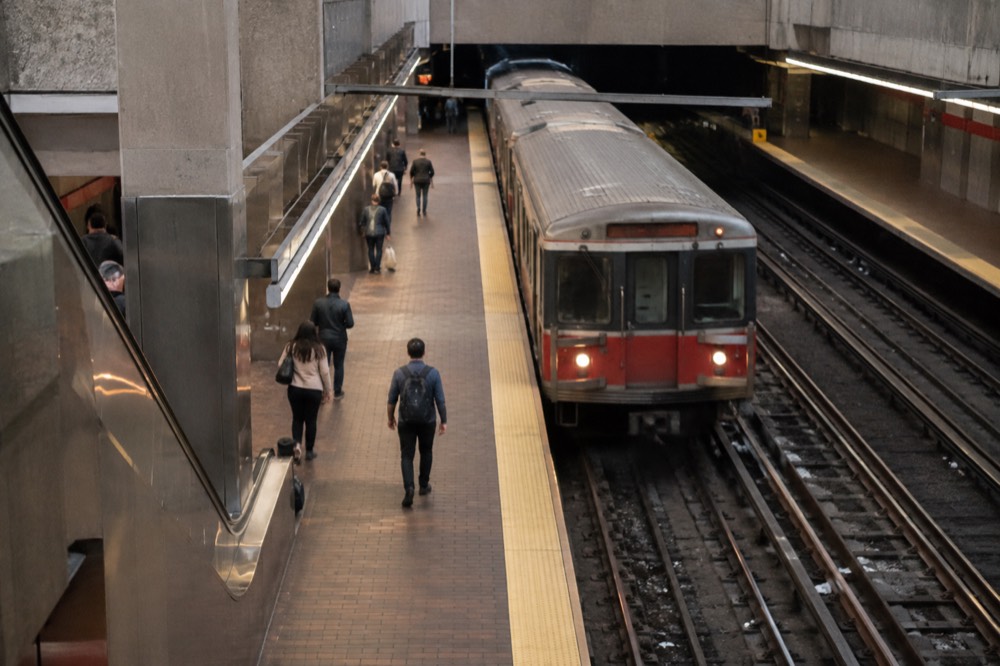
Take the MBTA Red Line to Harvard Square station and walk about five minutes: the museum sits on Quincy Street at the edge of Harvard Yard, and a subway ride costs $2.40 each way per the MBTA fare table.
From downtown Boston, Porter or Davis Square connections all run through Harvard Square, and a 1-Day pass at $11.00 or a 7-Day pass at $22.50 covers unlimited rides if the museum is one stop on a bigger sightseeing day.
The Red Line is the only subway that reaches Harvard Square, and it runs from South Station through Kendall Square and Central Square before arriving there, so most downtown hotels are a single seat ride away. The MBTA's fare page publishes the current numbers: $2.40 for subway, $1.70 for local bus, with the 1-Day and 7-Day visitor passes priced as above. Since 1 September 2026 the fare rules also include an unlimited-transfer pilot: within a two-hour window you can transfer between subway, bus and ferry as many times as you like and pay only the highest-priced leg, provided you use the same payment method throughout.
One pass detail that catches visitors: a 1-Day or 7-Day pass loaded on a CharlieTicket starts at the moment of purchase, while the same pass on a CharlieCard starts at first use. Buy on arrival evening, sightsee the next morning, and the difference is most of a day. Contactless Tap to Ride with a card or phone is live on bus, subway and ferry as well.
| From | Route | Approximate ride |
|---|---|---|
| South Station | Red Line direct to Harvard Square | Under 25 minutes |
| Park Street (Freedom Trail start) | Red Line direct to Harvard Square | About 20 minutes |
| Back Bay | Orange Line to Downtown Crossing, Red Line to Harvard Square | About 30 minutes |
| Logan Airport | Silver Line SL1 (free from the terminal curb) to South Station, Red Line out | About 45 minutes |
The Silver Line detail is worth knowing: Massport states that SL1 is free between the airport terminals and South Station when boarded at the terminal curb, and the in-station transfer to Red is also free when arriving on SL1, so this public-transit arrival can cost nothing. Check the Logan-to-downtown transfer guide for the full picture.
How Much Do Admission Tickets Cost, And Is It Ever Free?
Harvard Art Museums are free for all visitors, including tourists and students from any university. You do not need a city attraction pass. Check opening days, holiday closures and any registration required for a specific program.
Other institutions have their own eligibility rules. MFA resident open houses, New England Aquarium regional discounts, Card to Culture and Boston Family Days do not apply to every tourist. Some national EBT/SNAP benefits can apply across state lines, while Harvard Art Museums admission is free for everyone.
Further reading: MFA's own free and discounted admission page.
| Free or cheap admission | Who it is actually for | Tourist-accessible? |
|---|---|---|
| MFA Open House days | Massachusetts residents with a valid MA zip code, in person | No |
| New England Aquarium discount | Residents of the six New England states and NE college students | No |
| Card to Culture (MFA and others) | Massachusetts EBT, ConnectorCare or WIC cardholders | No |
| Boston Family Days | Boston K-12 students plus up to 2 guests | No |
| MFA $5 Third Thursdays | Anyone, pay-what-you-wish with a $5 minimum, third Thursday evenings | Yes |
| ICA Thursday nights | All visitors, 5 to 9pm, advance ticket required | Yes |
| Gardner free access | Under-18s, anyone named Isabella, and all visitors Thursday 5–9pm (reserve) | Yes |
Harvard Art Museums offer free general admission every opening day. This is different from the residency-limited programs at some other institutions. The Highland Street summer program is now August Adventures rather than Free Fun Fridays; check the current calendar for those separate events.
How Do The Harvard Art Museums Compare With Boston's Other Big Museums?
Against the Museum of Fine Arts at $30 adult admission, the Isabella Stewart Gardner at $25 and the ICA at $20, the Harvard Art Museums hold a smaller but genuinely deep collection in a quieter building, with the advantage of sitting beside Harvard Yard. The MFA is the encyclopedic heavyweight, the Gardner is a single collector's palace hung as she left it, the ICA is contemporary work on the waterfront, and Harvard is where you go for German expressionism, Bauhaus material and a teaching collection you can actually breathe in.
The comparison matters because most visitors have time for one or two art museums, not five. If your interest is impressionism and American painting, the MFA's galleries, including the eight Art of the Americas galleries that reopened on 19 June 2026 after a January closure with new displays for the America 250 anniversary, are the deeper pool. If your interest is atmosphere, the Gardner is unmatched. If you want modern German art at a level almost nowhere else in the country, Cambridge is the stop.
| Museum | Neighborhood | Adult admission | The one-line pitch |
|---|---|---|---|
| Harvard Art Museums | Cambridge, beside Harvard Yard | Free for all visitors | Three collections, German expressionism, teaching galleries |
| Museum of Fine Arts | Fenway | $30 | The encyclopedic giant, Art of the Americas reopened 2026 |
| Isabella Stewart Gardner | Fenway | $25, free 17 and under | A collector's palace around a planted courtyard |
| ICA | Seaport | $20, free Thursday nights | Contemporary art on the harbor |
Depth over size is the honest summary. The MFA can absorb a full day; the Harvard Art Museums reward two focused hours followed by a walk through the Yard.
What Else Should You See Around Harvard Square?
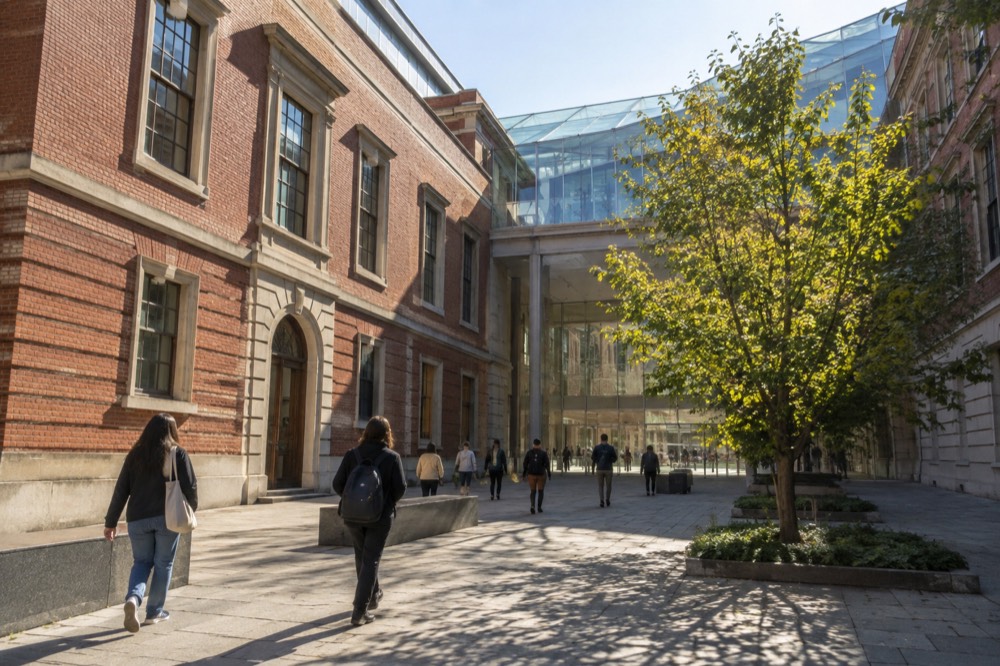
Harvard Yard, the Harvard Museum of Natural History and Harvard Square itself are all within a ten-minute walk of the museum's front door, which makes this corner of Cambridge one of the densest half-days in the region. Harvard Yard is free to walk, the natural history museum holds the famous glass flowers collection, and the square's bookstores, coffee shops and street life sit between the museum and the Red Line station.
Start with Harvard Yard and campus, which wraps around the museum on two sides: the Yard's gates, Widener Library's steps and the Johnston Gate are all steps away. The Harvard Museum of Natural History is a short walk across the campus and is the family favorite in this cluster, especially for its Blaschka glass flowers. Then Harvard Square itself for food and bookstores.
Remember the geography: Cambridge is not a Boston neighborhood. It is a separate city, and saying so is not pedantry, it changes which transit connections make sense and how you read a map. The Red Line is what ties the two together.
Curious about Harvard Square through its food as well as its galleries? Explore the three-hour neighborhood food walk. Meet at Smith Campus Center, disclose dietary needs before booking, and allow time for the listed tastings; museum guiding is not included. Check Harvard Square food walk dates
What Tours Pair Well With A Harvard Art Museums Visit?
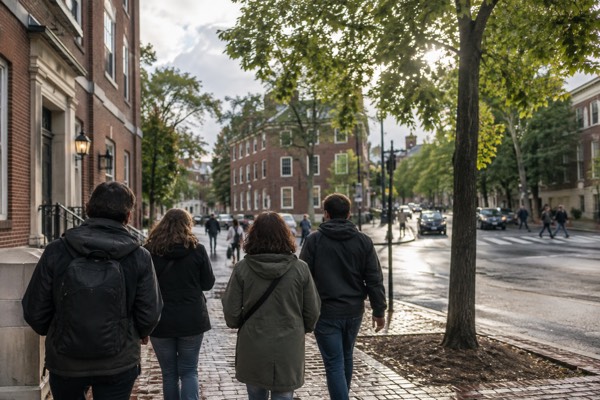
An optional student-led Harvard campus walk pairs naturally with the free galleries. It is an outdoor history tour lasting roughly 70–75 minutes, with university interiors and museum guiding excluded. Harvard also offers its own free tours with registration and free self-guided resources.
Compare the paid tour’s meeting point and available departure with museum opening hours. Campus access restrictions can change the route, and neither a paid nor a free campus tour guarantees library entry.
For a separate Boston outing, a Duck Tour offers city-and-river sightseeing and Old Town Trolley uses a 17-stop Boston loop. Neither is transport from Harvard Square. Harvard Art Museums are free, so never count their admission as pass savings.
| Option | Main planning condition |
|---|---|
| Paid Harvard walk | Roughly 70–75 minutes outdoors; compare free official tours |
| Duck Tour | About 80 minutes; travel to the selected Boston boarding point |
| Old Town Trolley | 17-stop Boston route, not a Harvard Square shuttle |
| CityPASS | Any four of seven included paid attractions; Harvard Art Museums need no pass |
Harvard’s own free visitor tours require registration when available; self-guided resources provide another free option. Paid third-party student-led tours are separate experiences.
How Should You Plan The Day Around A Visit?
Allow about two hours for the galleries, then explore Harvard Yard and the Square as access allows. Choose a separate afternoon visit according to interests and energy. Compare transit passes with actual paid journeys after eligible transfers; ten separate $2.40 fares exceed the $22.50 seven-day pass.
The sequencing advice is simple. Cambridge mornings are calmer than Cambridge afternoons, and the museum's galleries are quietest in the first hours after opening, whenever those are on the current schedule. Lunch in the Square runs from quick slices to proper restaurants. Then the Red Line runs you straight back to the tourist core in about 20 minutes.
The free outdoor Freedom Trail is one possible afternoon outing, with paid interiors optional and free sites subject to opening hours. The Aquarium and waterfront require a separate journey and enough time for the chosen visit.
Common Questions About The Harvard Art Museums
How much does it cost to get into the Harvard Art Museums?
General admission is free for everyone. Check the museum’s visit page for opening days and any registration needed for a particular event.
Is the Harvard Art Museums free for students?
Yes. All students and all other visitors receive free general admission, regardless of university or residence.
How long does a visit to the Harvard Art Museums take?
About two hours covers a first pass through all three collections at a normal pace. Visitors who read labels closely or who want to see the study centers and light well at leisure should budget three.
How do I get to the Harvard Art Museums from downtown Boston?
Take the Red Line to Harvard Square station, about a 20-minute ride from Park Street, then walk about five minutes to Quincy Street beside Harvard Yard. A subway ride costs $2.40 per the MBTA fare table, and since September 2026 a two-hour unlimited-transfer window means you pay only the highest-priced leg of a multi-leg trip.
Are the Harvard Art Museums in Boston?
No, they are in Cambridge, which is a separate city from Boston even though the two share the Red Line and feel continuous. That distinction matters for transit planning and for anything address-dependent, but not for getting there: the Red Line connects Harvard Square to downtown Boston in about 20 minutes.
What is the difference between the Fogg, the Busch-Reisinger and the Sackler?
They are the three collections that share the one building. The Fogg holds European and American art including impressionist paintings, the Busch-Reisinger holds German, Austrian and Central European art with strength in expressionism and the Bauhaus, and the Sackler holds Asian, Islamic and ancient Mediterranean material.
The Harvard Art Museums reward exactly the kind of visitor Boston otherwise wears out: after a morning of crowds on the Freedom Trail, a teaching collection beside a quiet college yard is a different register entirely. Pair it with the campus walk, ride the Red Line back for the afternoon, and the day balances both cities. More on planning the whole region is in Boston Travel Guide, including the full things-to-do roundup and how many days a Boston trip really needs.
Choose An Optional Outing Around The Free Art Museums
These options do not match your choice. Adjust the selection or reset to explore the starting recommendation.
Compare Your Cambridge Outing Totals
Reader-entered estimates in USD, not live quotes. Use the same dates and travelers for both options. Include all relevant tickets, rooms, taxes, mandatory fees and transport for the entire trip once in each total. Do not add a transfer twice if your rate already includes it.
Harvard Student-Led Campus Walk
A student-led walking tour of Harvard in Cambridge. Review the route and meeting point; a free independent campus visit remains an alternative.
A starting option to explore. Choose dates, travelers and the exact booking option with the provider; availability and eligibility are confirmed there.
Check Harvard walk dates