What's The Secret To The Best Boston Baked Beans?
Molasses gives Boston baked beans their characteristic flavor, but it does not rule out brown sugar.
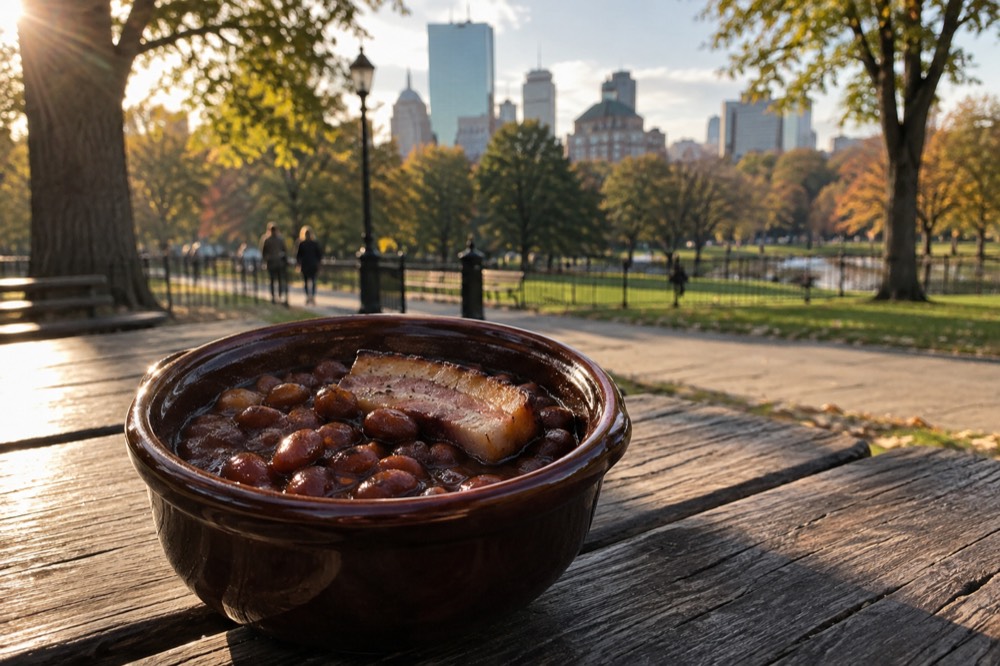
Boston baked beans are not just beans with barbecue sauce, and the difference is the whole story. The classic dish is small white navy beans baked for hours in a covered ceramic beanpot with molasses, salt pork, onion and a little mustard, sweetened dark and cooked until the sauce is thick rather than soupy. The name "Beantown" stuck to the city because of this recipe, and the recipe itself stuck because of the colonial molasses trade that made Boston one of the busiest sugar ports in the world. The Freedom Trail Foundation describes the city's sites as spanning "over 250 years" of history, and beans run quietly through nearly all of it, from the Old South Meeting House era to the Saturday night bean suppers that carried the tradition into living memory.
Want to taste the dish while visiting Boston? Explore the downtown classics walk, whose menu includes baked beans and brown bread alongside other local dishes. This is a tasting tour, not a cooking class. Check classic Boston food walk dates
Why Does Molasses Make Beans "Boston"?
Molasses gives Boston baked beans their characteristic flavor, but it does not rule out brown sugar. The Smithsonian’s Boston baked beans recipe uses both. B&M’s Boston’s Best product also includes molasses, sugar and brown sugar, so calling every sugar-containing version inauthentic would be misleading.
This is also why the dish is tied to the city's identity rather than being a generic New England food. The nickname "Beantown" comes from that same history. Molasses was so much a part of the local economy that a tank of it once flooded the North End in one of the strangest industrial accidents in American history, and the beanpot tradition had already been running for two centuries by then.
The colonial-era connection still shows up on the ground today. The sites along the 2.5-mile Freedom Trail, as the Foundation's own visit page describes it, include meeting houses and homes from exactly the period when the bean supper was becoming a weekly institution, and Revolutionary Spaces, which runs the Old State House and Old South Meeting House, keeps those buildings open to visitors. You can read more about the city's food identity in what Boston is most famous for.
What Is The Traditional Boston Baked Bean Method?
Soak small white navy beans overnight, then bake them covered, low and slow, for several hours with molasses, salt pork, onion and dry mustard, adding hot liquid as the pot dries so the beans never scorch and never dry out. The old New England method was designed around the Puritan Sabbath, when no cooking was allowed on Sunday: beans went into the beanpot on Saturday, baked in a bakery's retained heat or a home brick oven overnight, and came out ready for Saturday supper and Sunday lunch. That is why the dish is called a Saturday night bean supper, and why patience is genuinely part of the recipe rather than a virtue.
The beanpot itself matters. A tall, narrow, ceramic pot with a lid keeps the top layer of beans from drying out while the bottom layer stays submerged, which is the shape the dish was built around. A wide casserole dish will work, but the beans cook unevenly and the sauce reduces too fast. The salt pork sits on top or is stirred through, and it renders slowly into the sauce, which is where most of the body comes from.
Choose a recipe suited to your starting ingredients. Already-cooked canned beans need a different cooking time from dried beans; they are not automatically a failed shortcut. Ketchup or barbecue sauce changes the flavor, while bacon and salt pork are both used in published Boston-style recipes.
| Element | Useful choice | What to watch |
|---|---|---|
| Sweetener | Molasses, sometimes with brown sugar | Balance sweetness against the rest of the recipe |
| Pork | Salt pork or bacon | Adjust seasoning to the ingredient |
| Pot | Covered oven-safe pot | Check liquid level as it cooks |
| Beans | Dried beans for a long bake | Use a different timing for already-cooked beans |
| Seasoning | Mustard, onion and pepper | Follow the proportions of a tested recipe |
Why Were Beans A Saturday Night Ritual In Boston?
Beans became the Saturday night meal because Puritan households could not cook on the Sabbath, so a pot that baked unattended overnight on Saturday fed the family straight through Sunday, and the tradition outlived the religious rule that created it by generations. The bean supper solved a religious problem with a practical pot. Families who kept the Sabbath strictly needed food that required no work on Sunday, and a beanpot that went into the oven Saturday afternoon and came out Sunday morning did exactly that. Long after the religious reason faded, Saturday baked beans remained a working-class Boston institution served at home, in diners and in church basements.
The dish also traveled with the city's reputation. Boston's association with beans and brown bread became a standing national joke about the city, and locals eventually wore it with pride. Today the beanpot is as much a symbol as a food: the annual Beanpot hockey tournament between Boston University, Boston College, Northeastern and Harvard borrows the name precisely because the pot is unmistakably Boston's.
If you are planning a trip around the city's food culture, the North End is the natural place to eat your way through it, and the North End food and heritage walk covers the neighborhood's Italian flavors and older history in one guided walk. For a broader eating agenda, see the must-eat list for Boston.
How Do You Fix Beans That Come Out Wrong?
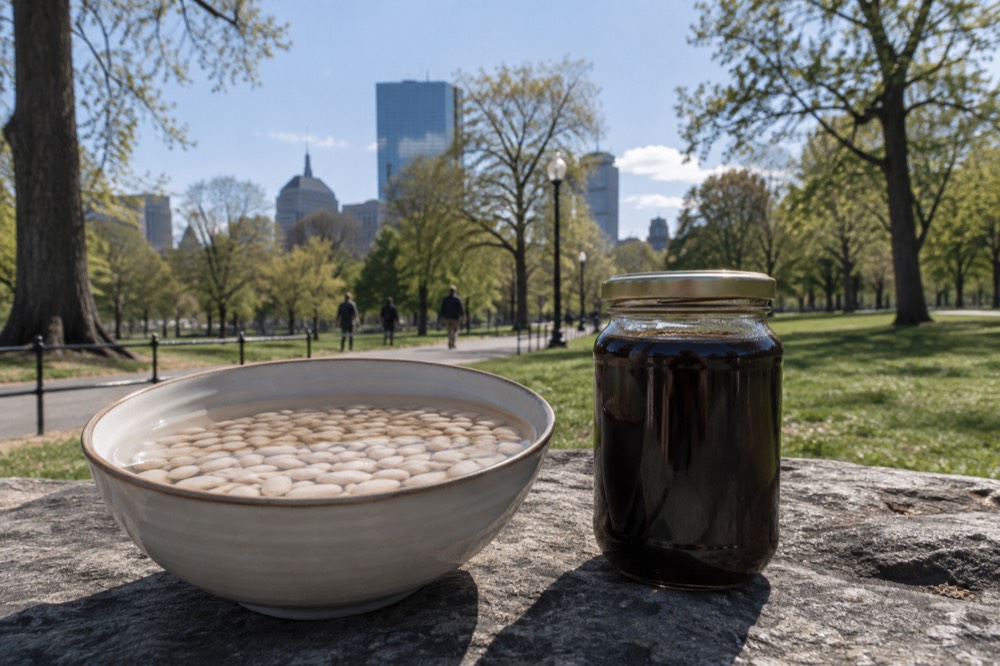
For hard beans, check their age, preparation and cooking time; for thin sauce, finish uncovered while watching the liquid. Mushiness can result from prolonged cooking or rough stirring. These are troubleshooting possibilities, not a guarantee that every problem has one cause or that all year-old beans can never soften.
Temperature is the other lever. A real Boston bake runs low, well below a moderate roasting heat, for four hours or more. Higher heat breaks the bean skins before the interiors soften, which is the exact opposite of what the dish needs. Check the pot once an hour, add boiling water if the beans are exposed, and stir no more than once or twice in the whole bake. Everything else covered here is indexed on Boston Travel Guide.
| Problem | Likely Cause | The Fix |
|---|---|---|
| Beans stay hard | Old dried beans or short soak | Buy fresh beans, soak overnight, simmer gently before baking |
| Sauce is thin | Pot covered the whole time, or too much liquid | Uncover for the final stretch of the bake |
| Beans are mushy | Over-stirring or oven too hot | Stir once, drop the heat further |
| Top layer dried out | Wide dish, no lid | Use a tall lidded pot, keep beans barely covered |
| Too sweet | Ketchup or excess sugar | Cut sweetener, keep molasses as the base |
Where Should You Eat Baked Beans In Boston Today?
Honest answer: beans are no longer the easiest dish to find in Boston, and the places that still bake them properly are the old-line diners, cafeteria-style institutions and some North End and chowder houses, so call ahead rather than assuming any given menu carries them. The Saturday bean supper has faded from restaurant menus, and many visitors who arrive expecting beans everywhere are surprised. The dish survives in pockets, often alongside cod cakes and brown bread, which is the traditional pairing.
A food walk only answers a bean-focused visit if beans are actually on its menu. Italian tasting routes in the North End offer a different food experience; do not assume they include Boston baked beans.
For a wider sweep of the city, the things-to-do overview at things to do in Boston covers the landmarks, and if food is the whole point of your trip, the best-kept secret answer has a few directions worth borrowing.
What Goes With Boston Baked Beans?
The classic pairings are Boston brown bread, steamed in a can and sliced round, plus cod fish cakes, and together they make the full old Saturday supper rather than a side dish on somebody else's plate. Brown bread is the partner most people outside New England have never met: a dark rye-and-cornmeal bread sweetened with molasses, steamed in a coffee can, and served sliced with the beans. The molasses in both is why the pairing works, one sweet and cakey, the other savory and slow.
Modern plates are more flexible. Beans work with roast pork, with a fried egg on toast for breakfast, or spooned over a baked potato. The one pairing that purists defend is the simplest: beans, brown bread, a little mustard and nothing else competing. Mustard on baked beans is a genuine old Boston habit, cut through the molasses with a sharp spoonful.
Common Questions About Boston Baked Beans
What's the secret to the best Boston baked beans?
Dark molasses instead of sugar, salt pork rendered slowly into the sauce, navy beans soaked overnight, and a low covered bake for several hours in a tall beanpot. The sweetener and the patience are the two things that make it Boston.
Why is Boston called Beantown?
Because of the colonial molasses trade. Boston was a major port for molasses headed for rum distilleries, molasses was cheap and abundant, and the local baked bean recipe built around it became so identified with the city that the nickname stuck.
What kind of beans are used in Boston baked beans?
Small white navy beans, also called pea beans. They hold their shape through a long bake better than larger beans like kidney or great northern, which is why the traditional recipe specifies them.
Is molasses or brown sugar the authentic sweetener?
Molasses is characteristic, but brown sugar can appear alongside it. The Smithsonian’s published Boston baked beans recipe uses both; brown sugar does not automatically make the dish inauthentic.
Can you make Boston baked beans without salt pork?
Yes. Bacon or a smoked ham hock will render fat into the pot, and a vegetarian version can use smoked paprika and a spoon of oil for body. The texture changes slightly, but the molasses base keeps the dish recognizable.
Why were beans traditionally eaten on Saturday in Boston?
Puritan households did not cook on the Sabbath, so a pot of beans baked slowly overnight Saturday fed the family through Sunday. The habit outlived the religious rule and became a weekly institution in its own right.
Taste The Boston Classics Downtown
These options do not match your choice. Adjust the selection or reset to explore the starting recommendation.
Boston Classics Food And History Walk
A three-hour downtown walk with four food stops: baked beans and brown bread, chowder, lobster roll and Boston cream pie. Most tastings are seated; walking between venues is outdoors. Vegan and gluten-free diets cannot be accommodated. Recommended ages 12+; no infants, toddlers or strollers. Alcohol is an optional paid upgrade.
A starting option to explore. Choose dates, travelers and the exact booking option with the provider; availability and eligibility are confirmed there.
Check classic Boston food walk dates