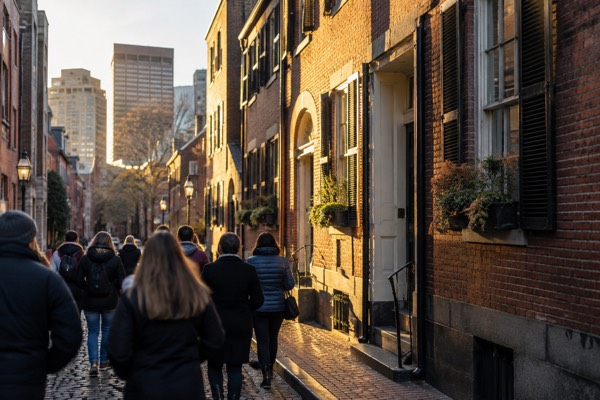
What Is The Toughest Area In Boston?
There is no useful single “toughest area” label for planning a Boston visit.
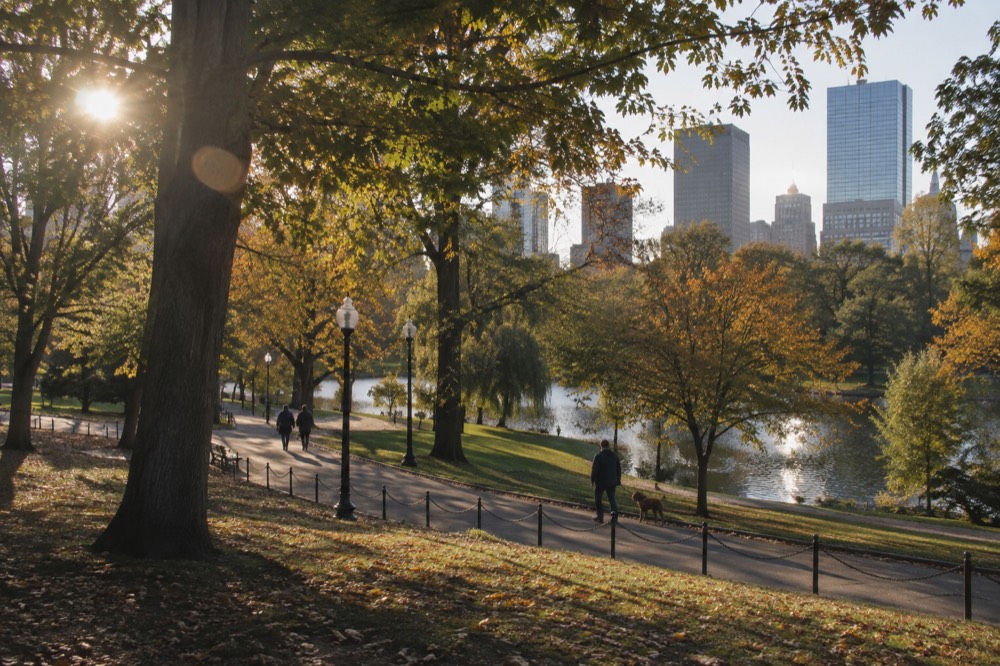
What Is The Toughest Area In Boston?
Boston is a compact, heavily walked city where most visitors spend their entire trip within a triangle bounded by the Freedom Trail, Back Bay and the waterfront. That is also why the question of the "toughest area" produces such different answers depending on who you ask: a lifelong resident and a first-time tourist are usually describing two entirely different cities. This page separates the neighborhoods that come up in local safety discussions from the ones a visitor is ever likely to set foot in, and it explains what practical difference any of it makes to a trip.
For choosing a base, compare the exact hotel address, nearby transport and total stay cost. Neighborhood reputation is not a safety guarantee, and a hotel booking should be based on the needs of your trip. Compare Boston stays
What Is The Toughest Area In Boston?
There is no useful single “toughest area” label for planning a Boston visit. Conditions vary within neighborhoods and over time. Evaluate the actual address, route, time and current local information rather than inferring safety from a neighborhood’s reputation or visitor popularity.
The honest complication is that "toughest" is doing a lot of work in that sentence. It can mean crime statistics, and those shift year to year and block to block. It can mean economic disinvestment, visible poverty or abandoned buildings. It can also just mean a neighborhood that feels unfamiliar to someone from the suburbs. Boston is a city of roughly 90 square miles where the census tract with the most reported incidents can sit half a mile from a street of million-dollar brownstones, so any single-name answer flattens a place that does not flatten well.
What can be said plainly is geographic. Roxbury sits directly south of the South End, Mattapan lies in southern Boston along the Neponset River near Milton, and Dorchester is Boston's largest neighborhood, stretching from South Boston's border all the way to Quincy. Within Dorchester the character changes street by street: the Savin Hill and Fields Corner areas have very different reputations from the apartment blocks along Morrissey Boulevard near the water. Lumping any of them together tells a visitor almost nothing useful.
Boston's police department publishes its own incident data, and anyone who wants a block-level picture should read that rather than a travel site's shorthand. What a travel guide can usefully do is tell you where these neighborhoods sit relative to the places you came to see, and that answer is simple: a few miles away, on transit lines you would only ride deliberately.
Which Boston Neighborhoods Come Up Most In Safety Discussions?
Roxbury, Mattapan, Dorchester and South Boston are substantial communities with residential, cultural and visitor destinations. A reputation-based ranking does not establish the risk at a particular hotel or transit stop. Use current incident data carefully: reported counts are not a direct measure of risk for an individual visit.
The table below is a rough orientation, not a verdict. Every one of these neighborhoods contains quiet residential streets, families, parks and long-term residents who would strongly object to their home being called tough.
| Area | Orientation and visitor interests |
|---|---|
| Roxbury | South of South End; cultural and historic destinations |
| Mattapan | Southern Boston near the Neponset River |
| Dorchester | Large southern neighborhood; varied food, museums and parks |
| South Boston | East of Fort Point Channel; residential areas, Seaport and Castle Island |
| Chinatown/Downtown | Central dining, lodging and transit |
Cambridge and Somerville are separate cities, and Brookline is a town. High hotel prices, policing claims or a familiar city name do not guarantee safety. Compare the specific property and journey with your plans.
If you are weighing where to sleep, the companion piece is our rundown of where to avoid staying in Boston, which approaches the same question from the hotel side.
Is Boston Actually Dangerous For Tourists?
A central Boston itinerary is common and practical, but no route is risk-free and this page does not establish a safest-city ranking. Check current conditions, keep track of belongings and plan the return journey. Adjust plans when weather, service disruptions or local information warrant it.
The Freedom Trail, MFA and Faneuil Hall/Quincy Market lie in different central areas. Dorchester, Roxbury and Mattapan also contain visitor destinations; their distance from the trail is not a reason to dismiss them or an indicator of danger.
That is not a claim that bad things never happen downtown. Late-night incidents near bar districts, transit hubs and the Common occur, as they do in any large American city. The standard advice holds everywhere: keep your phone out of your back pocket, be aware after midnight, and do not leave bags visible in a parked car. That is Boston-specific only in that the streets are old, crooked and easy to get turned around on at 1 am.
A guided tour can provide orientation and historical context, but it cannot guarantee personal safety. Choose an itinerary for your interests and assess the actual route and conditions.
Where Should First-Time Visitors Stay Instead?
Back Bay, Beacon Hill, the North End, the Seaport and downtown along the Waterfront are the areas first-time visitors should concentrate on, and they offer convenient access to many frequently visited sights. Back Bay offers the widest hotel selection and direct Green Line access, Beacon Hill is the quietest and most picturesque, and the Seaport is the newest and most expensive. A car is often unnecessary, but check the exact property location and late-evening transport arrangements.
| Area | Best For | Character | Watch Out For |
|---|---|---|---|
| Back Bay | First-timers, shoppers | Brownstones, Newbury Street, hotels at every price point | Higher nightly rates near Newbury |
| Beacon Hill | Quiet, photos | Cobblestones, gas lamps, Acorn Street crowds at golden hour | Few budget options |
| North End | Food lovers | Italian bakeries, Paul Revere House, narrow streets | Very noisy on weekends and feast days |
| Seaport | Modern hotels, waterfront | New construction, harbor views, restaurants | The least historic part of the city |
| Downtown / Waterfront | Freedom Trail access | Steps from Faneuil Hall and the harbor | Business-district quiet on weekends |
The deeper comparison, including the downtown-versus-Back Bay debate, lives in our guide to which is the best part of Boston to stay in, and the Fenway side of that question is covered separately in is Fenway a good area to stay in Boston. Jamaica Plain, which borders Roxbury on its western edge but has its own distinct, well-loved character around Jamaica Pond, gets its own assessment in is Jamaica Plain a good area in Boston.
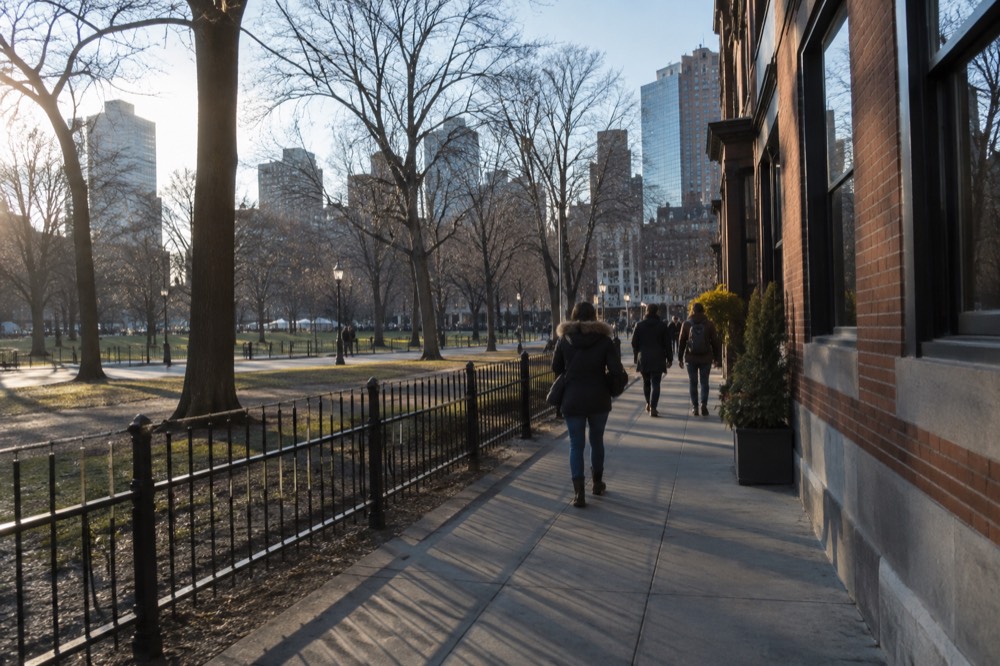
Want a base close to the places you will actually visit? Explore the Boston hotel map, then check each property’s address, transport connections and full stay total. The search is citywide, not a safety ranking. Compare Boston stays
How Do You Get Around Boston Without A Car?
The MBTA is the practical answer: a subway ride costs $2.40, a local bus $1.70, and a 1-Day pass is $11.00 while a 7-Day pass is $22.50. Since September 1, 2026, riders can make unlimited transfers within a two-hour window and pay only the highest-priced leg, using the same payment method for every leg. Contactless Tap to Ride with a card or phone works on bus, subway and ferry.
The fare table is published by the MBTA at mbta.com/fares, and the transfer pilot is the single most useful recent change for visitors: a trip that involves a bus and a train now costs the train fare, not the sum of both. One wrinkle worth knowing is that a 1-Day or 7-Day pass on a CharlieTicket starts at the moment of purchase, while the same pass loaded on a CharlieCard starts at first use. Buy it the evening you arrive and that difference is meaningless; buy it at 9 am and start sightseeing at noon and you have thrown away three hours.
The Red Line serves Cambridge, downtown and Dorchester; Mattapan uses the connecting Mattapan trolley from Ashmont. The Orange Line serves Roxbury-area stations, while Silver Line buses reach Nubian Square, formerly Dudley Square. Franklin Park Zoo needs a bus or onward journey from subway stations; it is not at an Orange Line terminus.
What Should You Actually Watch Out For In Boston?
Plan around actual weather, traffic, belongings and transit conditions. Snow or ice can affect walking routes, and construction can change a familiar journey. It is appropriate to change plans when conditions require it; historic snowfall averages do not predict a particular day.
The construction point is genuinely current. The MBTA is running a schedule of weekend line closures for track work through the fall, and Symphony station on the Green Line E branch has been closed since early June with closure scheduled through spring 2029. Check the T's service alerts the morning you travel rather than trusting a map printed in an older guide. At Logan Airport, meanwhile, Massport states that the Silver Line SL1 provides free service from the terminal curb to South Station, so the ride into downtown from a landing flight costs nothing; details are on Massport's own airport page.
Common Questions About Boston's Tough Areas
What is the toughest area in Boston?
No single label usefully describes the city’s varied neighborhoods. Assess the actual address, time, route and current local information; visitor popularity does not guarantee safety.
Is Boston safe for tourists?
Many visitors use its central neighborhoods and transit without incident, but no area guarantees safety. Plan actual journeys, attend to belongings and check relevant conditions instead of relying on a citywide label.
Is Dorchester a rough neighborhood?
Dorchester is Boston's largest neighborhood and varies block by block, so a single label does not fit. Parts of it appear in local crime reporting while other parts, including the streets near the waterfront, are quiet and residential. Our Jamaica Plain and Dorchester pages cover the nuance in more detail.
Is South Boston still a tough neighborhood?
Its old reputation has faded considerably. The Seaport district on its northern waterfront is now one of the most expensive and heavily visited parts of the city, and Castle Island at its southern tip is a popular family destination. The peninsula is not the place depicted in older films about the city.
Should a first-time visitor avoid any part of Boston?
Choose destinations by interests and current conditions. Roxbury, Mattapan and Dorchester have cultural and outdoor attractions too. Assess a specific route or lodging address rather than excluding a whole neighborhood by reputation.
Is Cambridge part of Boston?
No. Cambridge and Somerville are separate cities; Brookline is a separate town. Harvard and MIT are in Cambridge. Municipal boundaries do not establish personal safety.
If this page has narrowed your plans, the natural next reads are how many days is enough to visit Boston and the classic 10 must-see things to do in Boston. For a first day that stays entirely inside the comfortable core, start with a good one-day itinerary for Boston, and let Boston Travel Guide handle the rest of the route.
Compare A Convenient Base For Your Itinerary
These options do not match your choice. Adjust the selection or reset to explore the starting recommendation.
Compare Your Full Stay Totals
Reader-entered estimates in USD, not live quotes. Use the same dates and travelers for both options. Include all relevant tickets, rooms, taxes, mandatory fees and transport for the entire trip once in each total. Do not add a transfer twice if your rate already includes it.
Boston Hotel Search
Compare Boston hotels for the same dates and party. Use the map to check the actual property location; taxes, room types and cancellation conditions vary.
A starting option to explore. Choose dates, travelers and the exact booking option with the provider; availability and eligibility are confirmed there.
Compare Boston stays