Is Bar Pizza A Massachusetts Thing? Boston's Thin-Crust Favorite Explained
Yes, bar pizza is a Massachusetts thing, and more specifically a South Shore Massachusetts thing.
Is Bar Pizza A Massachusetts Thing? Boston's Thin-Crust Favorite Explained
Bar pizza, the small, thin, pan-cooked pizza served in neighborhood bars, is a Massachusetts thing in the truest sense: it is a food that barely exists outside the state, anchored in the South Shore towns south of Boston, and most Americans have never heard of it. Ask a bartender in Quincy or Braintree and you will get a confident answer. Ask one in Chicago or Los Angeles and you will likely get a blank stare. That gap between total familiarity at home and total obscurity everywhere else is what makes it a genuine regional food rather than a national one with a local accent.
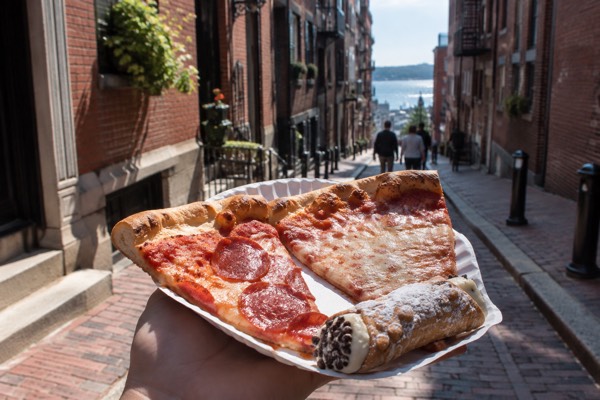
Curious about the North End’s different pizza tradition? Explore a separate city pizza walk with three slices and a cannoli. It does not visit South Shore bar-pizza venues. Check pizza walk dates and dietary requirements
This page on Boston Travel Guide covers what bar pizza actually is, why it belongs to Massachusetts, how it differs from the pizza most visitors know, and where a traveler should look for a slice of the tradition, including how it relates to the Italian-American pizza culture of the North End, which you can read more about in what is a must-eat in Boston.
Is Bar Pizza A Massachusetts Thing?
Yes, bar pizza is a Massachusetts thing, and more specifically a South Shore Massachusetts thing. It is a small, personal-sized pizza with a very thin, crispy crust, cooked in a shallow metal pan and served directly in that pan at neighborhood bars and pubs, and the tradition is concentrated in the working-class communities south of Boston along the coast. It is not a Boston city-center food, not an Italian North End food, and almost unknown outside New England, which is exactly why the question gets asked.
The distinction matters. Boston's most famous pizza identity is the Italian-American one centered on the North End, the old immigrant neighborhood with its pastry shops and red-sauce restaurants. Bar pizza is a different lineage entirely. It grew up in bars, not restaurants, in towns like Quincy, Braintree, Weymouth and the other South Shore communities where shipyard and factory workers drank after shifts. The pizza was the bar food: cheap, fast, cooked in the pan it was served in, sized for one person, and sturdy enough to eat with one hand.
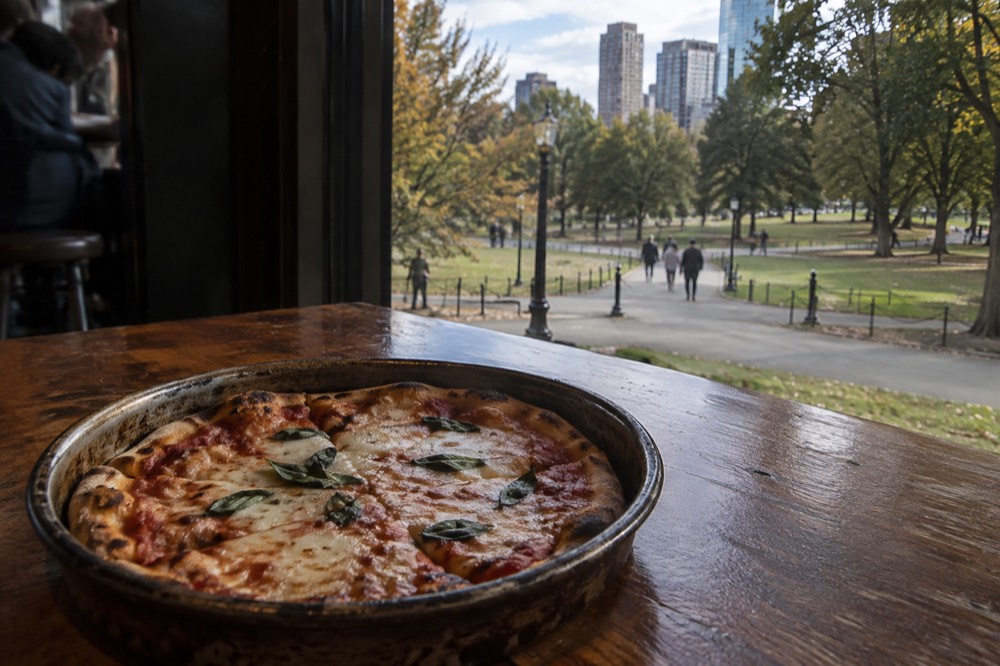
The pan is the tell. A bar pizza arrives on a well-seasoned, darkened steel pan, usually around ten inches, and the crust is cracker-thin at the center with slightly raised, fried edges where the dough meets the oil in the pan. It is closer in spirit to a Detroit-style pan pizza or a cracker-crust tavern pie than to a Neapolitan or New York slice, though it predates most of the crisp-crust styles people now compare it to.
Where Did Bar Pizza Come From?
Bar pizza emerged on the South Shore of Massachusetts in the mid-twentieth century, in the bars and taverns of towns south of Boston, as a simple pan-cooked pizza that a bar could serve without a full kitchen. It spread through the region's working-class pub culture rather than through restaurants, which is why it never traveled the way New York or Chicago pizza did. Its exact first bar is disputed, with several South Shore towns claiming it.
The honest version of the origin story is that nobody owns it. Several old South Shore bars are credited by their regulars as the original, and the claims are local lore more than documented history. What is documented is the pattern: a cluster of bars in the communities between Boston and Cape Cod serving the same style of small pan pizza, a style that stayed put. Regional foods that live in bars travel slowly, because a bar is a place you have to walk into, and the South Shore is a region most travelers drive through on the way to somewhere else.
That geography is why visitors miss it. A tourist's Boston trip usually touches the Freedom Trail, the North End, Fenway Park and the harbor, all within a few miles of downtown. Bar pizza lives fifteen to twenty miles south, in strip-mall pubs and veterans' clubs that no itinerary passes by accident. If you want a fuller picture of the city's food identity first, what is Boston most famous for covers the headline foods, and what are three things Massachusetts is famous for food widens the lens to the whole state.
What Makes Bar Pizza Different From Regular Pizza?
Bar pizza differs from regular pizza in four ways: it is small, typically a personal size around ten inches; the crust is extremely thin and crisp, closer to a cracker than to bread; it is cooked and served in the same oiled steel pan, which fries the bottom and edges; and it is a bar food made to be eaten at the counter or stool, not a restaurant pie cut for sharing. The result is a pizza where the crust is the point, not the topping.
Because the dough is rolled or pressed so thin, there is no fold, no chew, no New York-style slice behavior. The cheese and sauce sit directly on a crisp base, and a properly made bar pizza can be picked up whole without sagging. Regulars often judge a bar by its pizza the way other regions judge a bar by its wings or its chili, and the toppings stay deliberately plain: plain cheese is the canonical order, with pepperoni the accepted upgrade.
| Feature | Bar Pizza | Typical New York Slice | Typical Neapolitan Pie |
|---|---|---|---|
| Size | Personal, around 10 inches | Large, sold by the slice | 10 to 12 inches, shared |
| Crust | Very thin, crisp, cracker-like | Thin, foldable, chewy | Soft, blistered, airy |
| Cooked in | Oiled steel pan, served in it | On a deck or stone | Wood-fired oven |
| Where served | Bars and pubs | Corner slice shops | Restaurants |
| Eating style | One person, at the bar | Folded, on the go | At a table, knife and fork |
| Typical order | Plain or pepperoni | Cheese or topping by the slice | Margherita and variations |
The comparison is not a ranking, and locals will tell you that comparing bar pizza to Neapolitan pizza misses the point. Bar pizza is not trying to be great pizza in the national sense. It is trying to be the right food to eat with a beer at a specific kind of place, and it has held that job for generations.
For a separate Italian-American outing, the small-group North End food walk offers neighborhood tastings. It does not visit South Shore bar-pizza venues; compare the actual route and dietary conditions rather than an old price or rating.
Where Can You Find Bar Pizza Around Boston?
The South Shore is the tradition’s home, but check an actual venue rather than assuming every bar south of Boston serves it. Quincy and Braintree are on the Red Line’s Braintree branch; Ashmont is a different branch and does not reach those stations. Weymouth needs a separate regional or bus journey.
Getting there is genuinely easy. The Red Line runs from downtown stations like South Station and Downtown Crossing directly into Quincy and Braintree, and the MBTA fare table shows a one-way subway fare of $2.40, with a 1-Day pass at $11.00 and a 7-Day pass at $22.50 for visitors making multiple trips. Since 1 September 2026 the MBTA also runs an unlimited-transfer pilot: within a two-hour window you can transfer between subway, bus and ferry as many times as you like and pay only the highest-priced leg, using the same payment method throughout. Details are on the MBTA's fares page.
Use a current menu and opening hours to find the style. Keno screens, a sports banner or an old building do not establish that a bar serves it. Venues differ in toppings, service and dining format, so choose by the food you want rather than a stereotype.
| Area | Planning approach |
|---|---|
| South Shore towns | Identify a current bar-pizza menu, then plan the complete journey |
| Quincy / Braintree | Red Line Braintree branch plus the actual last-mile route |
| Weymouth | Check bus or regional rail connections for the venue |
| Somerville | Hot Box’s listed menu includes South Shore bar pizza |
| North End | Distinct Italian-American pizza tradition; not a bar-pizza tour |
Is Bar Pizza Worth Tracking Down On A Boston Trip?
Bar pizza is worth tracking down only if you have the time and curiosity for a half-day detour, because it is a food of the region rather than of the tourist city, and the detour is the experience. A visitor with one or two days in Boston should eat in the North End and skip the pilgrimage; a visitor with three or more days, or one with a car, gets a memorable, cheap meal in a part of Massachusetts almost no tourist sees.
Choose the food stop by your priorities and available time. What are 10 must-see things to do in Boston and things to do in Boston give other options. Some bar-pizza venues offer takeaway or delivery; it is not a food that can only be eaten standing at a South Shore bar. Budget the actual round-trip subway fare or other transport, plus the meal.
One honest caveat: bar pizza is plain food, and it should be judged as plain food. If you go expecting artisan pizza you will be disappointed. If you go expecting a crisp, cheesy, pan-fried thing with a beer in a room with wood paneling and a lottery machine, you will understand why Massachusetts keeps this one to itself.
Check the route and dietary arrangements before choosing a separate North End tasting walk. Allow about two hours and two kilometers, and notify the operator of dietary requests at least twenty-four hours ahead. It does not include a South Shore visit. Check North End food walk dates
Common Questions About Bar Pizza In Boston
Is bar pizza a Massachusetts thing?
Yes. Bar pizza is a South Shore Massachusetts tradition, a small, thin, pan-cooked pizza served in neighborhood bars in the towns south of Boston, and it is largely unknown outside the region.
Is bar pizza the same as Boston pizza?
No. Boston's best-known pizza is the Italian-American style of the North End. Bar pizza is a separate tradition from the bars of the South Shore, with a thin crisp crust cooked and served in a steel pan.
Can you get bar pizza in downtown Boston?
The style is associated with the South Shore, but it is not geographically exclusive. Check actual menus around Greater Boston; Hot Box in Somerville lists South Shore bar pizza. A North End pizza tour should not be booked as a bar-pizza crawl.
What do you order on a bar pizza?
Plain cheese is the canonical order, because it shows off the crisp crust. Pepperoni is the accepted upgrade. Anything heavily topped works against the cracker-thin base.
How is bar pizza different from tavern-cut pizza?
Tavern-cut refers to how a pizza is sliced, in squares, and is common in the Midwest. Bar pizza is defined by its pan-cooked thin crust and its bar setting, not by the cut, though it is often sliced in squares too.
Explore A Separate Boston Food Walk
These options do not match your choice. Adjust the selection or reset to explore the starting recommendation.
North End Pizza And History Walk
A 2.5-hour walk with three full-size pizza slices, cannoli and bottled water. Meet downstairs at Modern Pastry Underground, 257 Hanover Street; do not join the bakery queue. Public tours have no gluten-free, dairy-free or vegan options. Confirm stair/boarding needs despite the stroller-friendly route. Historic interiors and guide tips are excluded. If fewer than four guests book, the operator offers another date or a refund.
A starting option to explore. Choose dates, travelers and the exact booking option with the provider; availability and eligibility are confirmed there.
Check pizza walk dates and dietary requirements