How To Park In Boston Cheaply?
Boston parking costs vary by garage, duration and event date.
How To Park In Boston Cheaply?
Boston is a city where the cheapest parking decision is usually made before you arrive, not at the garage entrance. The streets are narrow, much of the downtown grid predates the automobile by two centuries, and the attractions most visitors come for sit within a couple of miles of each other. The MBTA fare table shows a subway ride at $2.40 and a local bus at $1.70, which means a full day of hopping between neighborhoods costs less than a single hour in most downtown garages once you factor in what garages actually charge at the curb.
Want to reduce the number of parking stops? Compare hotel locations near the places you plan to visit, then add the property’s actual parking charge to the room total. Compare Boston stays
Operators do publish garage rate cards, although there is no single citywide price for every garage and date. Compare the operator’s current rate or a dated reservation, including entry/exit windows and in/out privileges. Event dates can change the price near Fenway Park. Public transit and walking provide useful alternatives, but compare costs for the whole party.
Further reading: Massport's own airport access page.
Why Is Parking In Boston So Expensive?
Boston parking costs vary by garage, duration and event date. Compare a dated advance reservation with the operator’s posted rate; neither fewer hours nor a farther-away garage automatically means the lowest total. For example, MCCA publishes Boston Common Garage rates, including a weekend rate subject to entry and exit times.
At the September 20, 2026 check, MCCA lists Boston Common Garage’s weekend and holiday parking over three hours at $20 when entering after 6am and leaving before 6am the next day. Its $5 late-night offer requires online reservation, entry after 9pm and exit by 8am. These are different products; confirm the exact dated terms before paying.
The second reason is structural. Boston's downtown and North End streets follow colonial footpaths and 19th-century fill, not a planned grid, so the supply of curb space and garage entrances is physically capped. When supply is capped and demand is not, prices do the adjusting. This is why the cheapest strategy in Boston is almost always a perimeter one: park once, far from the core, and move around on foot or by train.
Is It Cheaper To Skip The Car And Ride The MBTA?
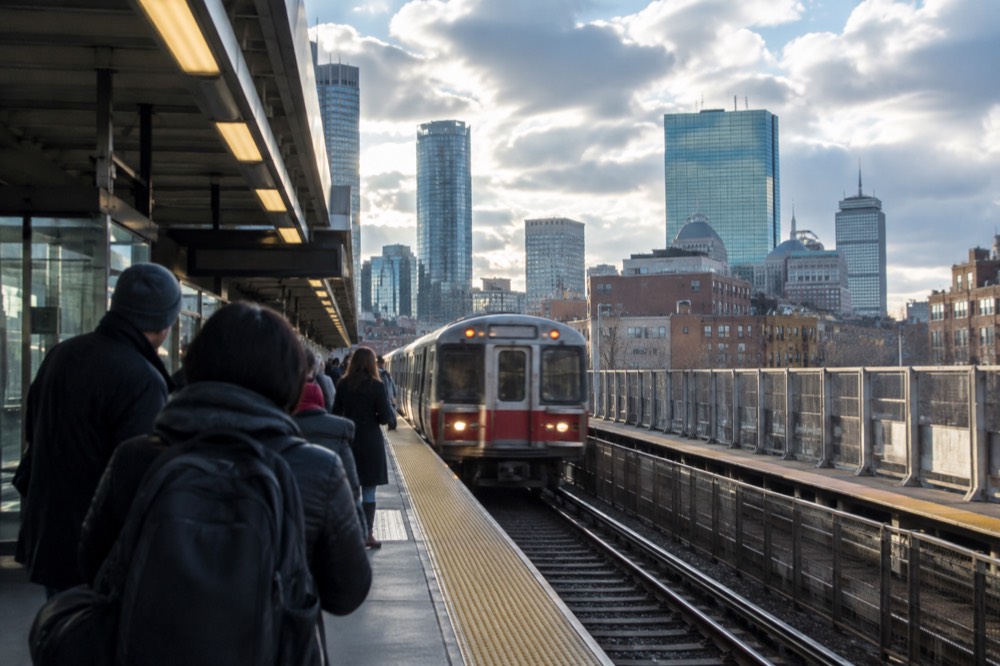
Transit often costs less than downtown parking, but compare the whole party’s fares with the actual garage total. A subway ride is $2.40, local bus $1.70, one-day local pass $11 and seven-day local pass $22.50. Transfers depend on route and payment method; a three-day stay alone does not make a pass cheaper.
The pass arithmetic deserves a moment, because the two media behave differently and the MBTA's own fare page spells it out. A 1-Day or 7-Day pass loaded on a CharlieTicket is valid from the date and time of purchase. The same pass on a CharlieCard is valid from its first use. For a visitor who buys a pass on arrival evening and starts sightseeing the next morning, that difference is most of a day of validity. Contactless Tap to Ride with a card or phone is also live on bus, subway, and ferry, per the MBTA's fare pages.
| Option | Cost | Planning condition |
|---|---|---|
| Subway one-way | $2.40 | Count each separately charged journey and paying traveler |
| Local bus | $1.70 | Check applicable transfer rules |
| 1-Day local pass | $11 | Compare actual trips during validity |
| 7-Day local pass | $22.50 | Ten full subway fares cost $24; six cost $14.40 |
| Garage reservation | Actual dated quote | Match entry, exit, vehicle and re-entry rules |
Compare one parking stay plus walking with separate parking transactions at each stop. Garages can charge by duration, event or a reservation window; the full things-to-do rundown helps locate attractions before choosing a parking base.
Attraction passes do not include ordinary parking or local MBTA fares. Keep admission, parking and transit as separate budget lines, and compare any attraction pass with the specific visits you would otherwise buy.
Where Should You Park Once, Then Stop Driving?
The cheapest workable pattern is to park once at the edge of the city or at your hotel, then commit to transit and walking for everything else. Hotels outside the downtown core may offer parking, but compare their full room-and-parking totals rather than assuming it is included or cheaper, the MBTA's commuter rail runs from suburban stations into the city for $2.40 to $13.25 one-way depending on zone, and Boston's attraction density means most days need no car at all after you arrive.
Neighborhood choice matters as much as garage choice. The question of where to avoid staying in Boston is partly a parking question, because a hotel in a walkable transit-rich district removes the temptation to drive at all. Staying near a subway stop on the Red, Orange, Green, or Blue lines means the car sits still while you move, but hotel or garage parking can still accrue charges while the car is stationary.
A car can help with scattered regional stops, but Salem is also reachable by rail or seasonal ferry and its October parking can be difficult. Compare the actual destination’s parking, fares and last return; do not assume every out-of-city parking market is cheaper.
Curious whether a transit-accessible hotel works out better overall? Compare the room total plus the hotel’s stated parking and in/out terms. This search does not guarantee free parking. Compare Boston stays
Does Arriving At Logan Change The Parking Math?
Flying into Logan can remove the need for parking entirely. SL1 is free when boarded at airport terminals toward South Station. Free airport shuttles reach the paid Blue Line. Logan Express serves Back Bay, Braintree, Danvers, Framingham and Woburn; check the selected route’s fare and timetable.
Read the Silver Line quirk carefully, because guides get it backwards. The free leg is the one leaving the airport: you board SL1 at the terminal curb, no fare is collected, and the route runs into South Station where you join the subway network. Heading toward Logan later, you are inside the paid system and pay the ordinary $2.40 subway fare. The practical effect is that many visitors never need a car on arrival day at all, and the guide to getting from Logan to downtown territory is covered elsewhere on this site in detail.
Check current Massport roadway and terminal alerts before driving. Runway 9–27’s second construction phase began August 31, 2026 with very limited runway availability for about seventy-five days; that does not itself establish a specific curb detour or terminal-bridge closure. Do not rely on undated construction lists.
If you prefer a booked arrival ride, check a Logan-to-hotel quote before reserving a rental car. Compare it with the free outbound SL1 and keep airport parking out of the calculation if you are not bringing a car. Get a Logan pickup quote
Can You See Boston Without A Car At All?
Yes, and it is the standard advice rather than a compromise. Twelve of the sixteen Freedom Trail sites are free to enter, the Freedom Trail itself is a 2.5-mile red-lined walking route, and the MFA offers $5 pay-what-you-wish Third Thursday admission to anyone after 5pm. A visitor who stays near a subway stop can fill three or four days without ever paying a garage, which is why so many Boston itineraries on this site assume no car at all.
Museum eligibility varies by institution. MFA’s $5-minimum Third Thursday evenings, reserved free ICA Thursday evenings and Harvard Art Museums’ free admission are useful options. Aquarium accessibility, military, library and other offers mean residence is not the only eligibility test. Check the actual conditions before budgeting.
Walking covers more of Boston than most visitors expect. If you are weighing how many days are enough to visit Boston, the answer leans shorter when you skip the car, because you are not losing half-days to parking searches, garage queues, and the loop back to retrieve the vehicle.
Tip-based walks can provide a guided orientation without an advance ticket charge, but allow for tips and check the actual route and duration. A self-guided walk is the option with no guide payment; neither requires parking at each landmark.
What About Game Days, Events, And Winter?
Game days and event weekends are when Boston parking is at its worst, and the cheap move is to plan around them rather than against them. Fenway Park tours and Red Sox games draw heavy demand to the Kenmore Square garages, winter brings snow emergencies that trigger city snow parking rules and temporary bans, and September and October 2026 carry rolling MBTA weekend diversions on the tourist lines, so check service before you commit to a park-and-ride plan.
The snow angle is real and quantified. NOAA's 1991-2020 climate normals for the Boston Logan station show an annual snowfall normal of 49.2 inches, and 28.7 inches of it, about 58%, falls in January and February alone. A winter visit means snow banks eating curb space, snow emergencies changing where you may legally park, and garages filling earlier. If you are visiting in the deep winter, the car-free case gets stronger, not weaker.
Event pricing also cuts the other way on the transit side: nothing about a Red Sox game or a holiday weekend raises the $2.40 subway fare. A packed train after a game is a different experience from a quiet midday one, but the price is the price, and that stability is exactly what garage rates do not offer.
| Situation | Parking decision | Alternative to compare |
|---|---|---|
| Red Sox game | Actual event garage quote | Green Line to Kenmore plus walk |
| Snow emergency | Posted bans and eligibility-based garage offers | Current transit service alerts |
| Convention weekend | Full parking stay and re-entry terms | Park-and-ride with all travelers’ fares |
| Island outing | Confirm ferry route and departure | Transit to the selected dock |
| Salem day | Actual parking and October restrictions | North Station rail or seasonal ferry |
Common Questions About Parking In Boston Cheaply
How to park in Boston cheaply?
Compare an operator’s dated reservation and posted rates with park-and-ride and hotel parking, adding all travelers’ transit fares. Check entry/exit windows, re-entry and overnight permission. Free meter periods do not override resident, loading, street-cleaning or snow restrictions.
Is it hard to park in Boston?
Yes, downtown Boston is one of the harder American cities to park in: narrow colonial-era streets, capped garage supply, and event-driven pricing. The workable strategies are parking once outside the core, using hotel parking where it is bundled, or skipping the car entirely, which most Boston itineraries comfortably allow.
Can you visit Boston without a car?
Yes, easily. The Freedom Trail is a 2.5-mile walking route, twelve of its sixteen sites are free, the subway connects every major neighborhood at $2.40 a ride, and the Silver Line SL1 from Logan to South Station is free from the terminal curb. Most visitors who arrive by plane never need a rental car at all.
Do Boston garages charge by the hour or a flat event rate?
Both are possible. Operators also sell reservations and evening or weekend offers with specific time windows. Confirm which product applies; a valid dated advance reservation need not equal the drive-up price.
Does the MBTA make parking cheaper in Boston?
It makes driving unnecessary, which is cheaper than any garage. Unlimited transfers within a two-hour window, paying only the highest leg, came in on September 1, 2026, and a 7-Day pass at $22.50 covers a week of unlimited subway and bus travel, which is less than many downtown garages charge for a single day.
What is the cheapest way from Logan Airport to downtown Boston?
SL1 is free when boarded at a Logan terminal toward South Station. Airport shuttles to the paid Blue Line are also free. Logan Express serves Back Bay, Braintree, Danvers, Framingham and Woburn at route-specific fares.
Compare A Base That Reduces Driving
These options do not match your choice. Adjust the selection or reset to explore the starting recommendation.
Compare Your Transport And Stay Costs
Reader-entered estimates in USD, not live quotes. Use the same dates and travelers for both options. Include all relevant tickets, rooms, taxes, mandatory fees and transport for the entire trip once in each total. Do not add a transfer twice if your rate already includes it.
Boston Hotel Search
Compare Boston hotels for the same dates and party. Use the map to check the actual property location; taxes, room types and cancellation conditions vary.
A starting option to explore. Choose dates, travelers and the exact booking option with the provider; availability and eligibility are confirmed there.
Compare Boston stays